


Antique Silver Etui
An antique silver etui holds the small necessities of daily toilette and writing, offering pocket-sized craftsmanship that rewards close inspection.
Understanding antique silver etui
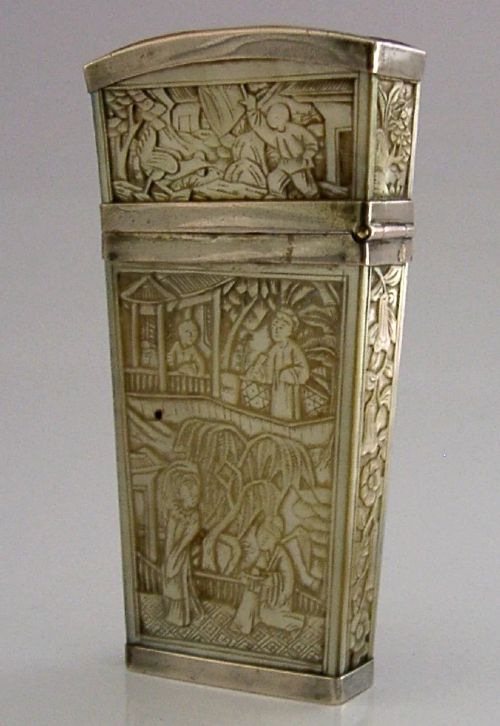
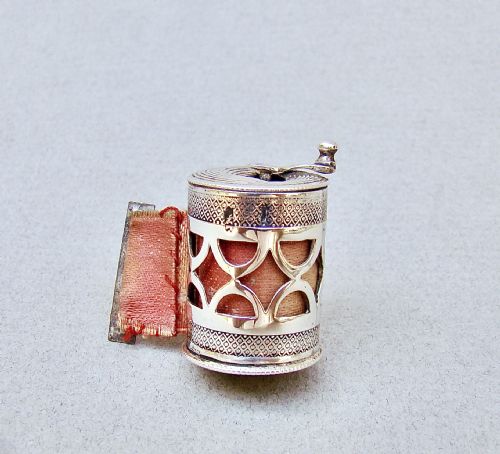
An antique silver etui is a compact decorative container designed to hold personal implements such as sewing tools, toothpicks, or writing instruments. These portable cases appear in various forms on this page, reflecting both Georgian and Chinese Export styles.
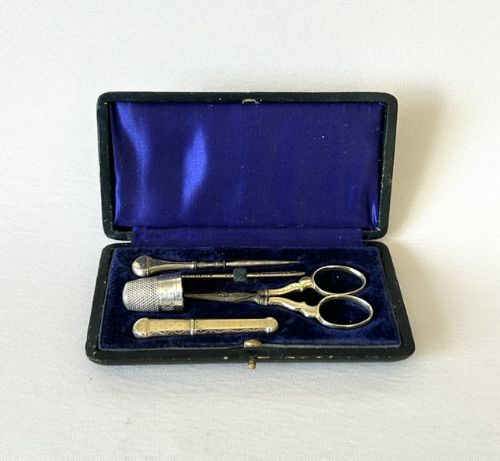
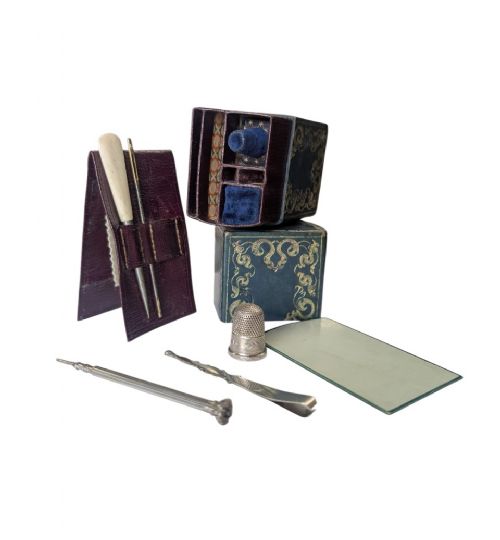
The materials recorded in the evidence encompass silver, bone, and steel, often combined within a single fitted case. Dating ranges from the eighteenth century up to the nineteenth century, including specific periods like the year 1800.
Buyers will encounter items originating from English, French, and Chinese makers, demonstrating diverse regional aesthetics and craftsmanship. These pocket containers served affluent owners who required practical tools close at hand during social engagements.
Materials and construction
The primary structure relies on solid silver or parcel gilt silver, shaped into rigid protective housings for delicate internal contents. Techniques such as fine engravings and engine turning adorn the exterior surfaces of many examples.
Internal components frequently incorporate steel implements and bone elements, demonstrating multi-material assembly by skilled metalworkers. Hinges, clasps, and fitted compartments require precise engineering to ensure the case secures its contents safely.
The listings on this site record items produced across the eighteenth and nineteenth centuries, utilising silver, bone, and steel.
Assessing quality and execution
The distinction between standard examples and superior pieces rests upon the crispness of the exterior engravings and the complexity of the engine turning. Finer items exhibit precise geometric patterns and deeply cut decoration that remains sharp under magnification.
Completeness of the internal contents elevates an item, particularly when the fitted tools match the period and style of the outer case. The integration of parcel gilding and the quality of the fastening mechanism further distinguish exceptional specimens from simpler utility containers.
Taylor and Perry
The Antique Silver Etui Glossary
- Etui
- A small ornamental case used for holding needles, cosmetics, or other minor personal accessories. These containers usually feature a hinged lid and fitted interior.
- Engine turning
- A mechanical decoration technique that produces intricate, precise geometric patterns on metal surfaces. This method creates textured finishes that catch the light.
- Parcel gilt
- A silver object that is partially covered with a thin layer of gold, typically highlighting specific decorative motifs or interior sections. This creates a contrasting two-tone visual effect.
- Chinese Export silver
- Silver items manufactured in China specifically for Western markets, often adopting European forms while retaining distinct regional decorative elements.
Frequently Asked Questions
What tools go inside an etui?
These cases traditionally held small personal implements such as sewing needles, bodkins, scissors, tweezers, and folding knives. The exact selection depended on the specific purpose of the container, whether for writing, grooming, or needlework.
Many surviving pieces retain only a portion of their original contents, while others are empty shells designed to protect specialised instruments.
How do I date an etui?
Dating relies on stylistic markers, decorative techniques like engine turning, and any maker marks or hallmarks stamped into the silver. Georgian and nineteenth-century pieces each display distinct decorative preferences that help establish their era of production.
Examining the construction methods of the hinge and interior fittings also provides reliable clues regarding the decade of manufacture.
Are these cases made of solid silver?
The evidence shows items formed from solid silver, often enhanced with parcel gilding where gold is applied to select areas of the metal. Some examples incorporate other materials such as bone and steel for internal tools or structural reinforcement.
French and English pieces frequently carry hallmarks that verify the silver standard used by the silversmith.
How were these cases carried?
Owners typically carried these compact containers in a pocket, suspended from a chatelaine, or tucked inside a reticule during social outings. Their portable nature made them essential fashion accessories for the upper classes.
The robust metal construction ensured that delicate internal implements remained safe during daily travel.