



Sterling Silver Thimble
A sterling silver thimble sits neatly in the palm, combining practical needlework with decorative craft across the Victorian, Edwardian, and mid-century periods.
Sterling Silver Thimble
When you search for a sterling silver thimble, you encounter sewing accessories alongside novelty items and barware shaped like oversized sewing tools. The pieces span Victorian, Edwardian, and mid-century Scandinavian eras, originating from English workshops and Norwegian makers.
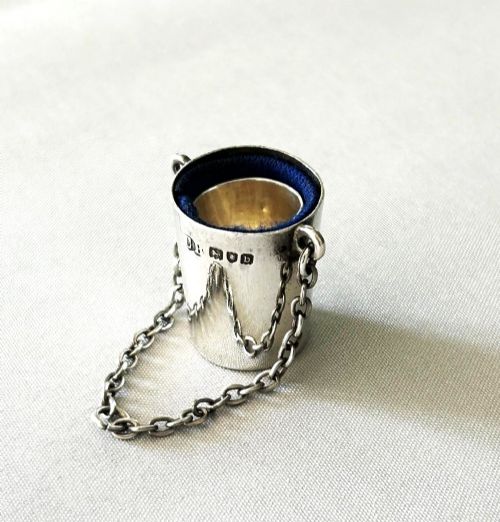
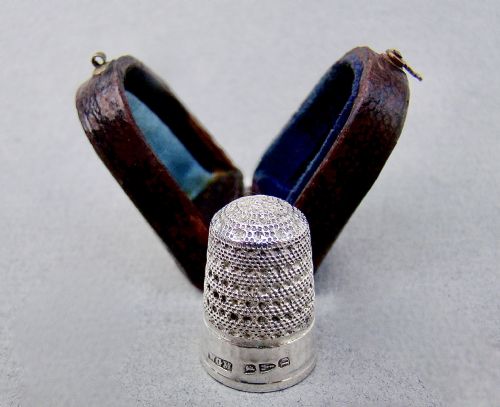
The standard sewing thimble appears frequently, often housed in fitted cases or attached to chatelaines made from leather, silk, velvet, or ormolu. Larger scaled examples double as tot shot cups, spirit beakers, or barware measures.
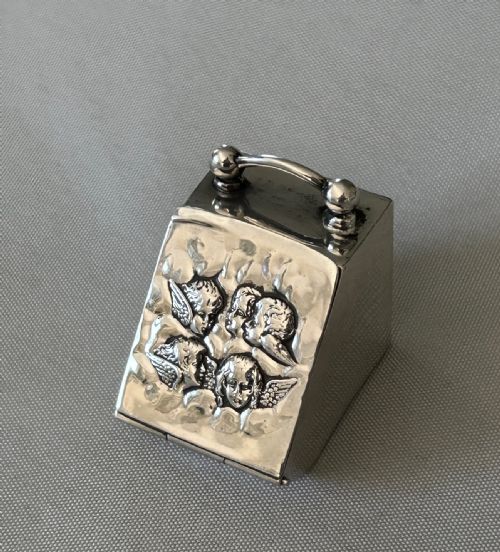
Novelty forms stretch the definition of the object into coal scuttles, buckets, and egg-shaped holders. These varied formats show how silversmiths adapted a utilitarian sewing item into decorative novelties and drinking vessels.
How they were made
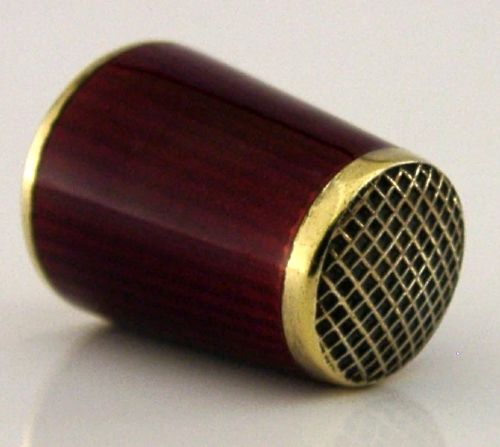
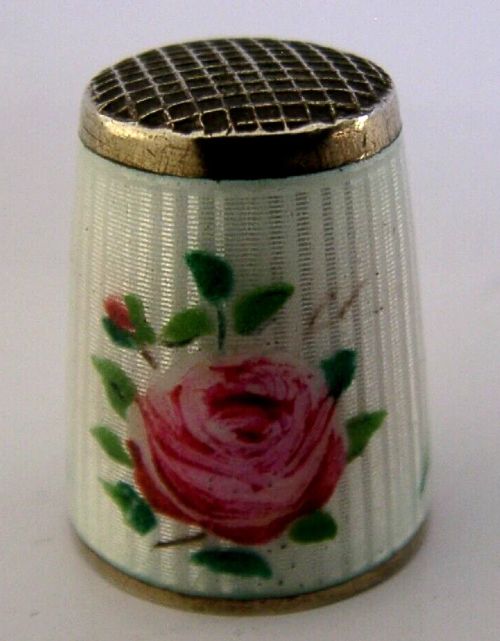
Silversmiths constructed these pieces from sterling silver, sometimes applying gold vermeil to interior surfaces or combining the metal with mother-of-pearl for chatelaine cases. Enamel work, particularly vitreous enamel in red, blue, green, and violet, added colour to Scandinavian and English designs.
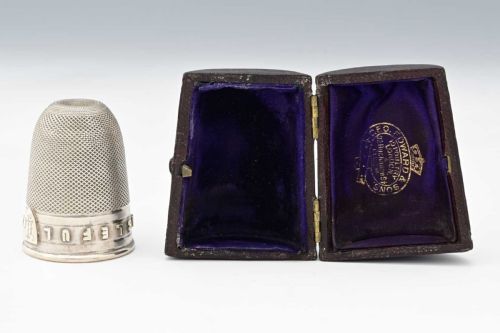
Makers utilised stamping, casting, and hand-finishing techniques to indent the characteristic dimples on the thimble crown while leaving smooth bands for hallmarks or engraved decoration. Fitted presentation cases incorporated textiles such as velvet, silk, and leather to cradle the silver securely.
Sterling Silver Thimble Retail Price Guide 2026
Typical asking prices for sterling silver thimble among the pieces listed under this phrase on Sellingantiques today, from the lower quarter to the upper quarter. They describe what is for sale here now, not the wider market.
Listings feature sterling silver, vitreous enamel, velvet, silk, and ormolu across Victorian, Edwardian, and mid-century periods.
What varies in quality
The calibre of a piece rests on the crispness of the dimpling and the integrity of any applied vitreous enamel. Intact enamel free from chipping distinguishes superior coloured examples from those with surface wear.
Maker attribution and the inclusion of original fitted cases or chatelaine holders elevate an item. Pieces bearing clear assay office hallmarks and attributed to known silversmiths demonstrate superior provenance.
David Andersen·Walter and George Myers·Charles Horner·Laurence Emanuel·Tiffany
The Sterling Silver Thimble Glossary
- Sterling silver
- An alloy containing 92.5 percent silver by mass, with the remainder usually copper. This standard composition provides the durability required for sewing implements and drinking vessels alike.
- Chatelaine
- A decorative belt hook worn with a series of suspended chains carrying small household utilities. Thimble cases and sewing implements often hung from these functional accessories.
- Vitreous enamel
- Glass fused to the surface of the silver through high-temperature firing. This technique produces vibrant, glossy decorative finishes in various solid colours.
- Gold vermeil
- Sterling silver plated with a thin layer of gold on the interior or exterior. This treatment protects the underlying metal and offers a rich two-tone appearance.
- Tot shot cup
- A small drinking vessel designed for spirits, often fashioned in the oversized shape of a sewing thimble. These barware items bridge the gap between novelty and utility.
Sterling Silver Thimble: Frequently Asked Questions
What is a silver thimble tot cup?
A silver thimble tot cup is an oversized novelty vessel shaped like a sewing thimble, designed to measure and hold spirits.
These barware pieces were produced in sterling silver during the mid-twentieth century and often carry humorous inscriptions like just a thimbleful.
Are Scandinavian enamel thimbles different?
Scandinavian enamel thimbles, notably those from the mid-twentieth century, feature brightly coloured vitreous enamel applied over sterling silver.
Maker signatures and floral motifs such as roses, violets, and abstract enamel patterns distinguish these Norwegian pieces from plain English counterparts.
How can I date an antique silver thimble?
Dating relies on assay office hallmarks stamped directly onto the sterling silver, indicating the year of manufacture and the maker's mark.
Stylistic shifts, from Victorian novelty buckets to Edwardian coal scuttles and later Scandinavian enamel work, provide additional chronological markers.