


Victorian Thimble Case
These Victorian thimble case pieces are compact personal containers designed to hold sewing gear, offering practical charm and skilled miniature metalwork or carving.
Victorian Thimble Case
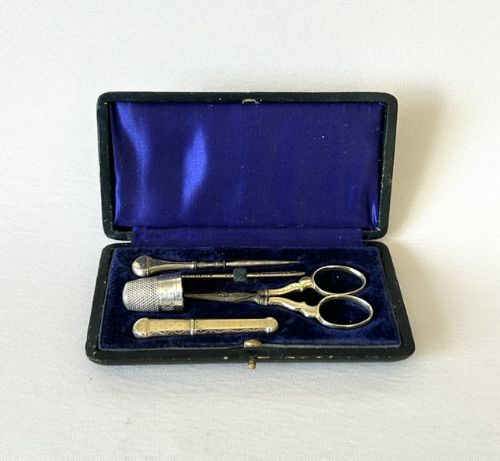
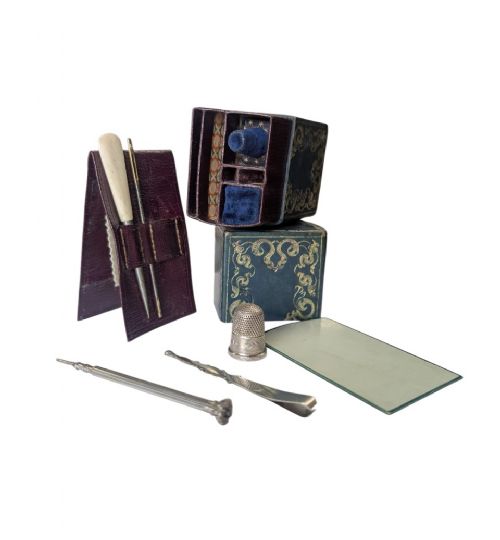
A victorian thimble case is a small personal container created to protect a sewing thimble, frequently appearing alongside fitted boxes, chatelaine holders, and sewing sets from the nineteenth century. These objects bridge utility and ornamentation, serving the detailed needlework of the period.
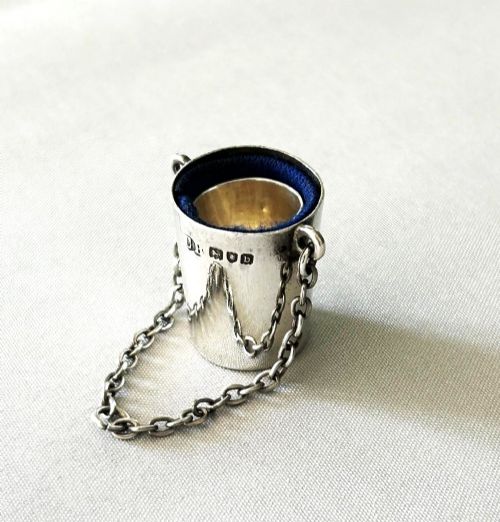
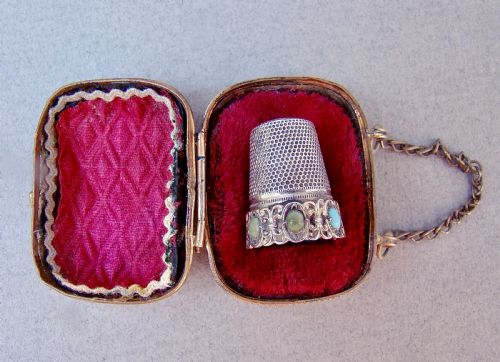
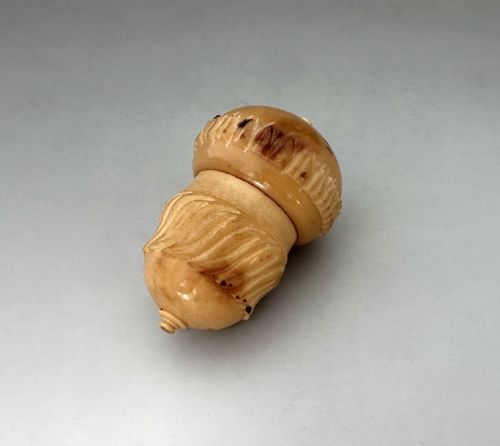
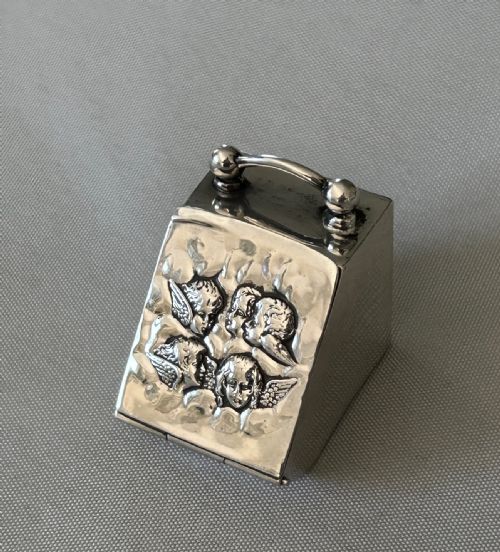
The versions most commonly met on this page include novelty silver containers shaped as buckets, coal scuttles, and eggs, alongside carved organic materials like corozo nut, fruit wood, and tortoiseshell. Many examples house a matching silver thimble inside their fitted interiors.
Origins span English workshops and French makers, with Edwardian adaptations carrying the form into the early twentieth century. Collectors encounter both standalone pocket items and hanging chatelaine designs meant to suspend from a belt.
How They Were Made
Metalsmiths shaped sterling silver and silver gilt through pressing and chasing, often pairing the precious metal with gilt bronze or ormolu mounts to form rigid protective shells. Interior linings utilised velvet, silk, and leather to cradle the delicate tools safely.
Organic materials required skilled carving and turning, producing tactile surfaces from tortoiseshell, bone, mother of pearl, corozo nut, and fruit wood. Artisans fitted metal hinges and tiny clasps to secure the lids of these miniature receptacles.
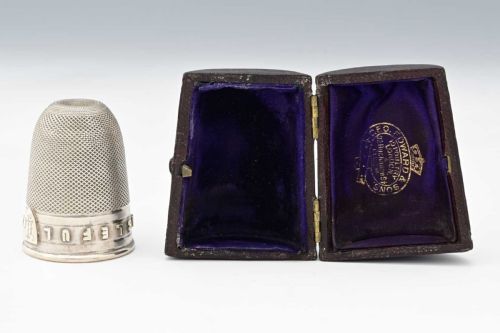
One tiny silver vessel is shaped precisely as a drinking tumbler bearing the engraved motto just a thimbleful.
What Varies in Quality
The distinction between standard containers and exceptional pieces rests upon the ambition of the design and the precision of the miniature work. Novelty shapes that mimic everyday objects require intricate manipulation of metal or wood to remain convincing at such a small scale.
Material combination also elevates a piece, particularly when sterling silver enclosures incorporate stone settings, agate, or fire gilt ormolu mounts. The presence of a matching maker-marked thimble inside a fitted case enhances the completeness of the object.
Walter And George Myers·Charles Horner·Laurence Emanuel·Samuel Foskett·Henry Griffith And Sons Ltd
The Victorian Thimble Case Glossary
- Chatelaine
- A decorative belt hook with suspended chains used to carry household and sewing implements. These were widely worn by women during the Victorian era for quick access to tools.
- Silver gilt
- Sterling silver that has been coated with a thin layer of gold through a chemical or electrochemical process. This treatment provides a rich golden appearance alongside the durability of silver.
- Ormolu
- Gilt bronze produced by applying a finely ground high-carat gold mercury amalgam to a bronze object. The technique was favoured for decorative mounts on nineteenth-century French and English boxes.
- Treen
- Small handmade wooden household objects and utilitarian wares. The term covers carved items such as acorn-shaped nut crackers and miniature sewing cases.
- Corozo nut
- The large seed of the tagua palm, often called vegetable ivory due to its dense white texture. It was carved into small Victorian containers and decorative items.
Victorian Thimble Case: Frequently Asked Questions
What is a victorian thimble case?
A victorian thimble case is a small, portable container made to protect a sewing thimble when not in use. These pieces reflect the high standard of nineteenth-century needlework accessories.
They appear in diverse forms, from plain leather pouches to ornate silver novelty shapes and carved wooden nuts. Many retain their original miniature thimbles inside fitted velvet or silk interiors.
How were these cases used?
Victorians used these small receptacles to store sewing thimbles safely within larger workboxes or while travelling. Some designs attached directly to a chatelaine belt hook for daily needlework tasks.
They served as both practical sewing tools and decorative personal accessories. The fitted interiors kept the silver thimbles from rattling and scratching during movement.
Are thimbles usually included?
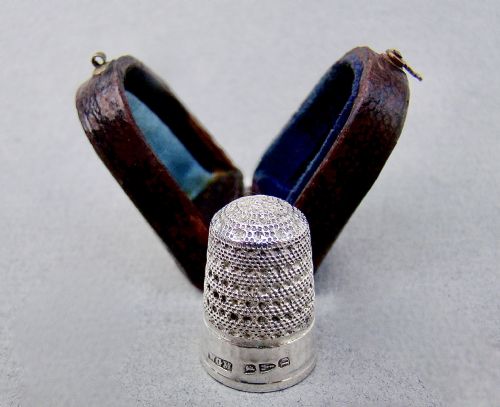
Many surviving examples retain their original matching thimbles nestled inside the fitted compartments. These thimbles often bear matching silver hallmarks or maker marks.
Other containers survive as standalone pieces or form part of larger sewing sets and compendiums. Complete sets with matching components command strong interest from collectors.
What materials are most common?
Sterling silver and silver gilt dominate the metalwork examples, frequently paired with ormolu mounts. Organic materials such as tortoiseshell, bone, mother of pearl, and carved wood also appear frequently.
Interiors typically feature velvet, silk, or leather linings tailored to the shape of the thimble. Corozo nut and fruit wood provide durable alternatives for carved wooden cases.
How do I identify Edwardian pieces?
Edwardian examples follow the Victorian tradition of novelty silver sewing wares but date from the early twentieth century. Makers continued producing whimsical shapes like coal scuttles and buckets.
Assessing the hallmarks and stylistic markers helps distinguish Edwardian production from earlier nineteenth-century work. Both periods share a high level of miniature craftsmanship.