


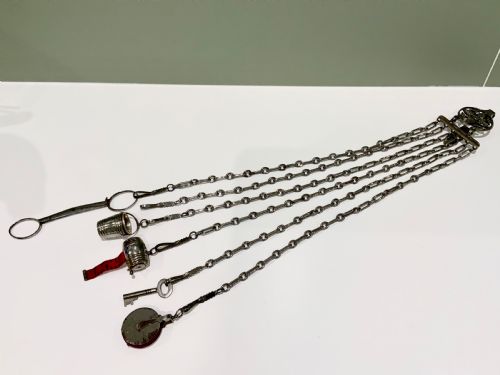


Victorian Silver Chatelaine Accessory
These victorian silver chatelaine accessory pieces are hanging tools and holders crafted during the nineteenth century to suspend from a belt.
Victorian Silver Chatelaine Accessory
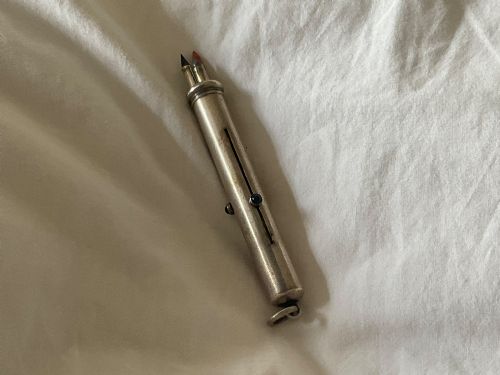
When you search for victorian silver chatelaine accessory, you are looking at functional items worn at the waist, including sewing accessories, prayer book holders, propelling pencils, and scent bottles. The examples you are most likely to meet on this page date from the Victorian period, spanning the mid to late nineteenth century.
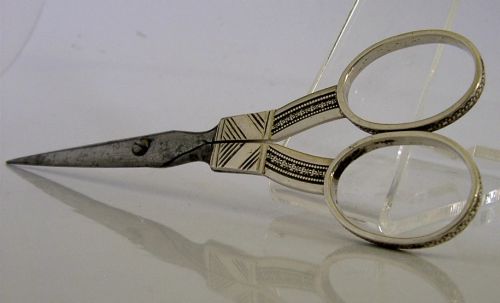
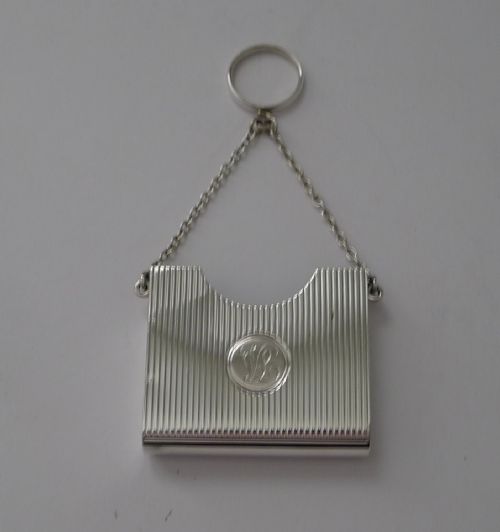
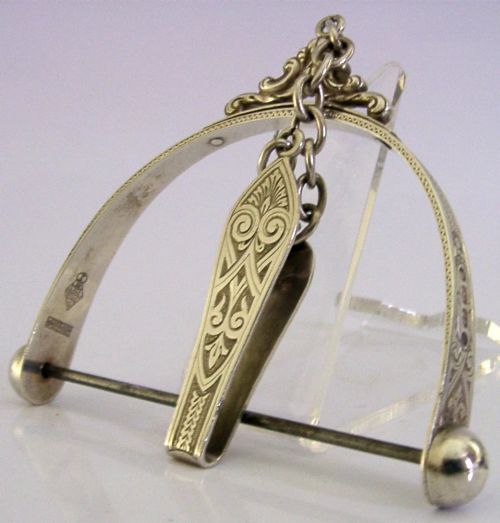
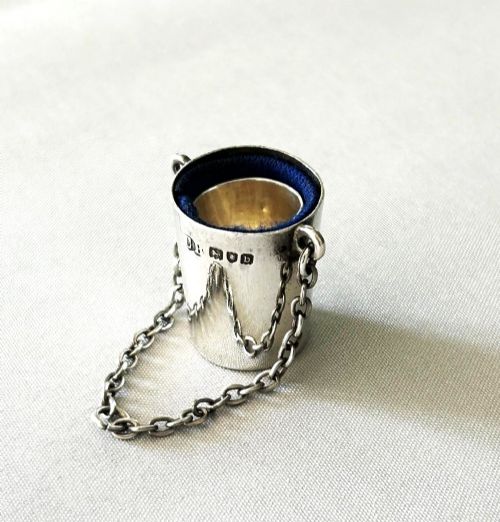
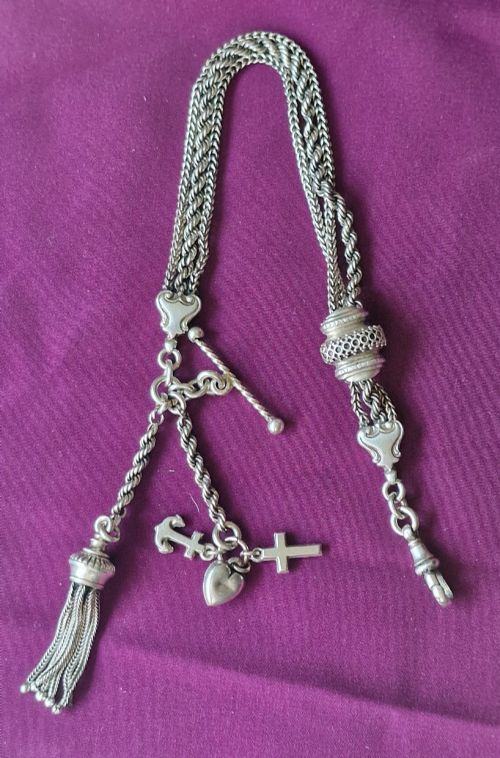
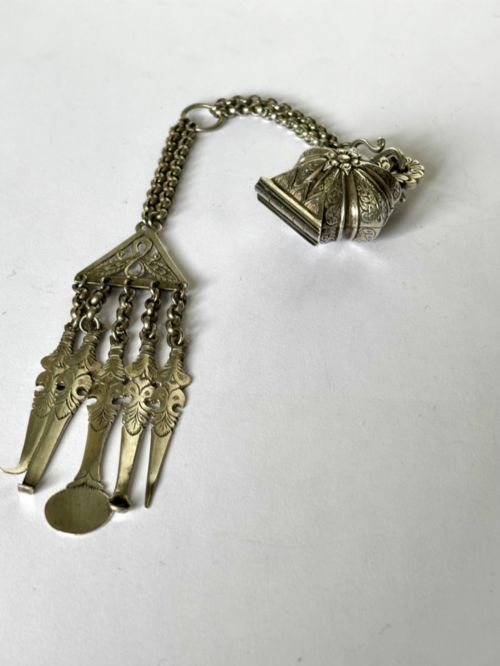
The selections include specific chatelaine components such as thimble buckets, scissor sheaths, pocket watch chains, skirt lifters, and purses. Many items originate from British makers, alongside 19th century Dutch and 19th century French examples.
Forms vary from utilitarian sewing tools to novelty silver pieces like wheel pin cushions and egg-shaped holders. These objects reflect the practical and decorative requirements of nineteenth-century dress.
What varies in quality
Quality in a victorian silver chatelaine accessory rests on the crispness of the chased or engraved detail and the integrity of the hinges, clasps, and suspension loops. Pieces produced by documented makers exhibit superior execution in their mechanisms and decorative motifs compared to unmarked workshop output.
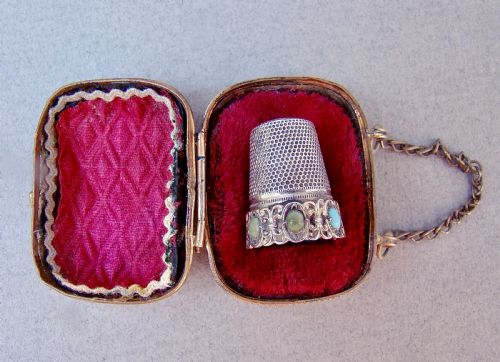
The choice of materials also divides the range, with solid sterling silver and stone-set ormolu housings representing higher manufacturing investment than plain white metal alternatives. Completeness and originality of the hanging tools further separate standard items from superior survivals.
Some Victorian ladies deployed silver wheel pin cushions to ensure their needles remained stationary while riding in horse-drawn carriages.
Sampson Mordan·Charles Horner·Wright and Davies
The Victorian Silver Chatelaine Accessory Glossary
- Chatelaine
- A decorative belt hook with suspended chains carrying household and personal accessories. It served as a practical toolkit for the Victorian housekeeper or seamstress.
- Vesta Case
- A small pocket container designed to hold wax matches. These cases often featured hinged lids and striking surfaces on the base.
- Skirt Lifter
- A mechanical device used to raise long skirts clear of mud and dirt during walking. It typically operated with a spring clip or clamp.
- Ormolu
- Gilded bronze or brass used as a mount or decorative housing. It provided a rich golden appearance for chatelaine cases and egg-shaped holders.
- Propelling Pencil
- A mechanical writing instrument with a sliding or twisting lead mechanism. Examples often formed part of a multi-accessory chatelaine set.
Victorian Silver Chatelaine Accessory: Frequently Asked Questions
What is a Victorian chatelaine accessory?
It is a functional tool or container suspended from a belt or waistband by chains during the nineteenth century. These items allowed wearers to keep sewing implements, writing tools, or prayer books close at hand.
Items range from needlework scissors and thimbles to scent bottles and skirt lifters. They combined utility with personal adornment in daily Victorian dress.
How were these items worn?
They were secured to the waist using a belt hook, slide, or ornate clip designed to anchor multiple hanging chains. Each chain held a specific functional tool or decorative case.
The arrangement kept essential implements accessible without occupying pockets or hands. The wearer could easily detach individual tools as needed during domestic tasks.
What materials did makers use?
Makers relied heavily on solid sterling silver, white metal, and steel for durability and structural support. Ormolu mounts and gemstone settings provided decorative contrast on specialised cases.
Velvet also appears as a lining material within protective holders for delicate items like thimbles and prayer books. These varied materials reflect both the practical demands and aesthetic tastes of the period.
How do I identify the period?
Dating relies on stylistic markers, materials, and official hallmarks stamped into the silver components. Victorian pieces often display Birmingham or London assay marks alongside specific date letters.
Design motifs such as classical scenes, nineteenth-century French styling, or Dutch silverwork patterns help establish the origin and approximate decade of manufacture.