


Antique Thimble Case
An antique thimble case protects a sewing essential while displaying the ornate craftsmanship of the Victorian and Edwardian eras.
Antique Thimble Case
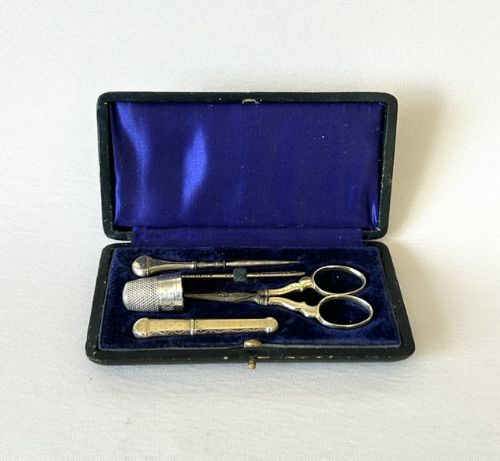
An antique thimble case is a small personal container designed to hold a sewing thimble safely when not in use. These pieces belong to sewing accessories, sewing sets, sewing boxes, novelty silver, barware, thimble cases, sewing collectables, and thimbles and cases.
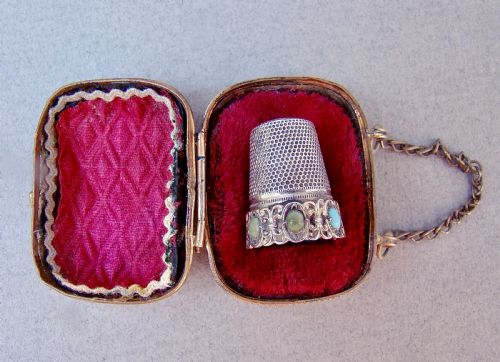
The versions most commonly met on this page date from the Victorian and Edwardian periods, stretching from the late nineteenth century into 1900. They appear in diverse forms including novelty items, chatelaine holders, and carved wooden housings.
Makers and origins span 19th Century French, Black Forest, and English workshops, utilising materials from precious metals to organic substances.
How they were made
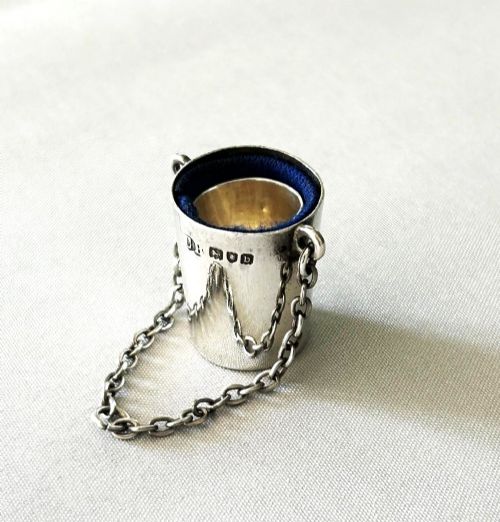
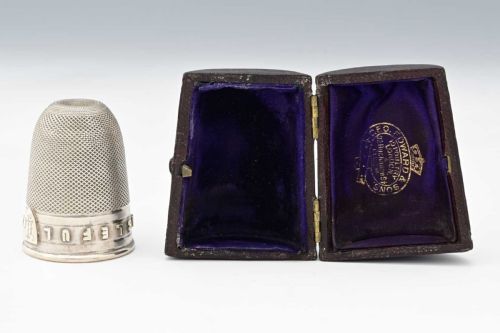
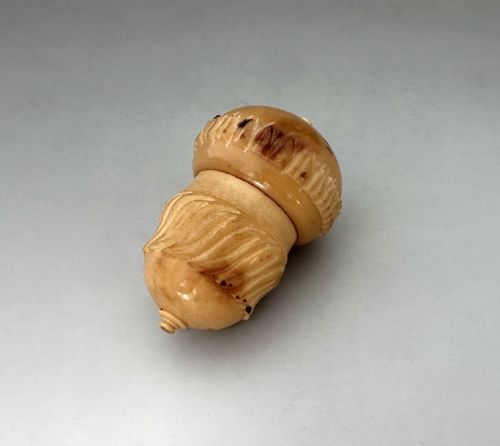
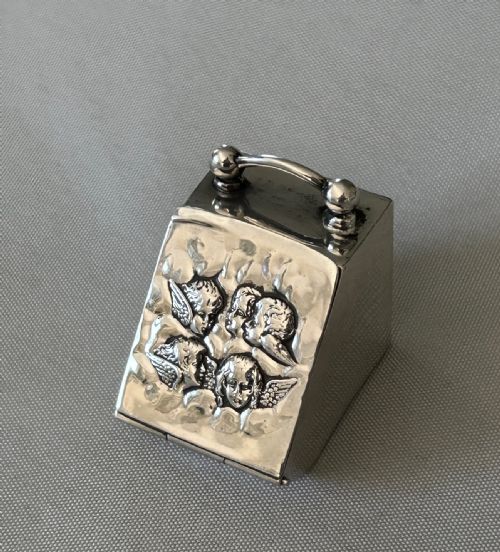
Artisans constructed these cases using sterling silver, silver, silver gilt, and ormolu, frequently shaping metal into novelty forms such as buckets, coal scuttles, and egg-shaped holders. Metalwork involves casting, chasing, and stone setting.
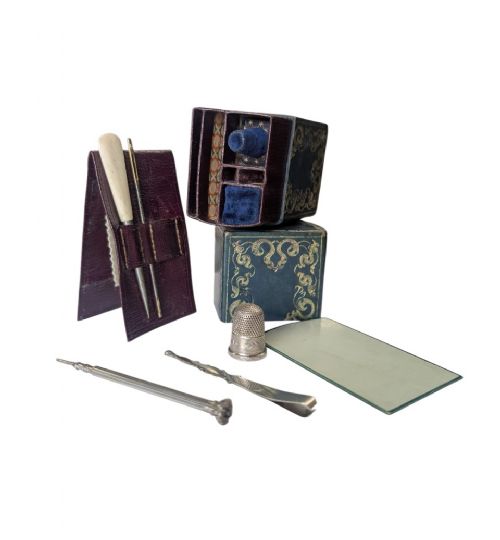
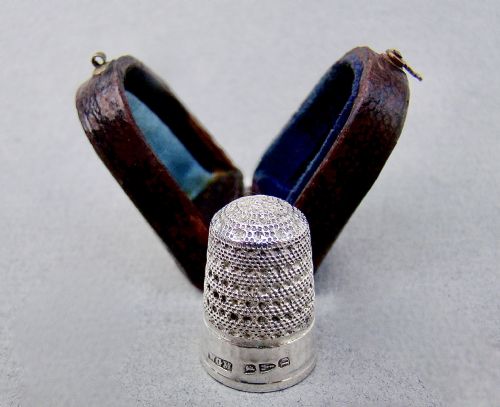
Organic materials also form the basis of construction, utilising velvet, leather, silk, bone, corozo nut, tortoiseshell, and carved fruit wood. Black Forest pieces employ detailed hand carving to shape natural wood.
Interiors are lined with delicate fabrics like silk and velvet to cushion the thimble and protect its finish during storage.
Object types span sewing compendiums, chatelaine holders, novelty silver buckets, and Black Forest carved wooden cases.
What varies in quality
The distinction between tiers rests upon the complexity of the material and the ambition of the design. Standard containers rely on simple leather or velvet coverings, whereas superior examples employ chased sterling silver, ormolu mounts, and inlaid stone settings.
Novelty forms show significant variation in execution. Common versions use straightforward shapes, while top-tier pieces take elaborate figurative or architectural forms, such as novelty silver coal scuttles or chatelaine egg-shaped holders.
The integrity of surface decoration and the precision of mechanical closures dictate the overall standard of preservation.
Walter and George Myers·Charles Horner·Laurence Emanuel
The Antique Thimble Case Glossary
- Chatelaine
- A decorative belt hook worn with suspended fittings such as sewing tools, keys, or thimble cases. It was a functional accessory of the Victorian period.
- Ormolu
- Gilded bronze or brass applied to decorative objects and mounts. It provides a bright golden finish on nineteenth-century metalwork.
- Novelty silver
- Silver items shaped to resemble everyday objects or animals. Victorian silversmiths utilised this style to create humorous or surprising sewing accessories.
- Corozo nut
- The hard seed of the ivory palm used as a natural alternative to ivory. Carvers utilised it for small turned containers and thimble cases.
- Silver gilt
- Sterling silver covered with a thin layer of gold on the surface. This technique adds a rich golden tone to decorative sewing items.
Antique Thimble Case: Frequently Asked Questions
What is an antique thimble case?
An antique thimble case is a small protective container designed specifically to hold a sewing thimble. These objects range from simple leather pouches to elaborate novelty silver items and carved wooden holders.
They reflect the domestic needlework habits of the nineteenth and early twentieth centuries, serving both a practical and decorative function for the owner.
How were antique thimble cases used?
Owners used these cases to store delicate thimbles securely when travelling or sitting down to sew. Many examples attach to chatelaines, allowing the wearer to carry sewing tools at the waist.
Novelty versions additionally functioned as amusing conversation pieces or disguised barware items such as miniature silver tumblers.
What materials are thimble cases made from?
Makers utilised a wide variety of materials depending on the period and origin. Common materials include sterling silver, silver gilt, ormolu, leather, velvet, silk, bone, tortoiseshell, and fruit wood.
Some pieces incorporate carved corozo nut or intricate Black Forest woodwork.
How do I identify Victorian thimble cases?
Victorian thimble cases often feature hallmarks on silver components, indicating the maker, assay office, and year of production. Stylistically, they align with nineteenth-century decorative trends such as novelty silver and ornate ormolu mounts.
Materials like tortoiseshell and velvet further point to manufacturing techniques popular during the reign of Queen Victoria.