
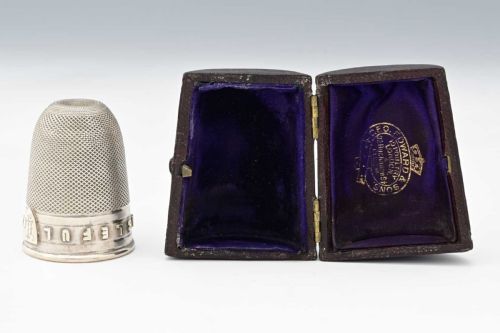
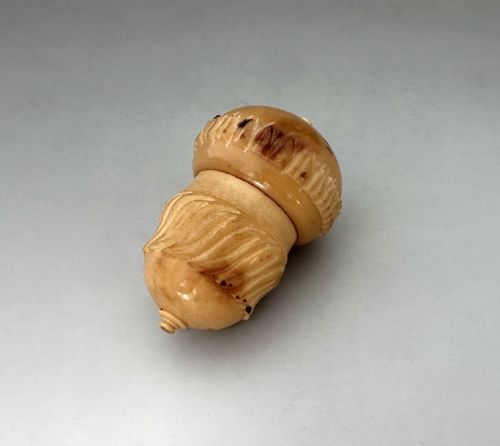
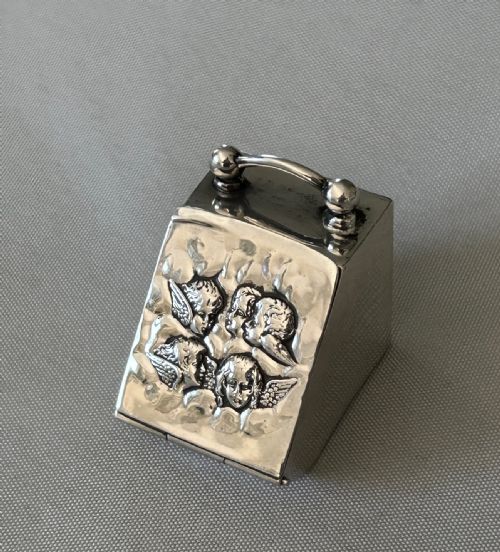
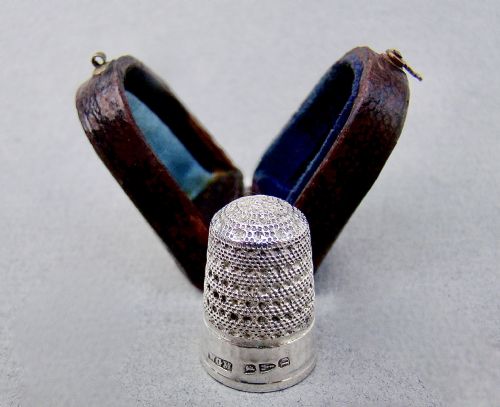


Cased Silver Thimble
A cased silver thimble brings together the quiet craft of the sewing room and the fine detail of Victorian and Edwardian metalwork.
Cased Silver Thimble
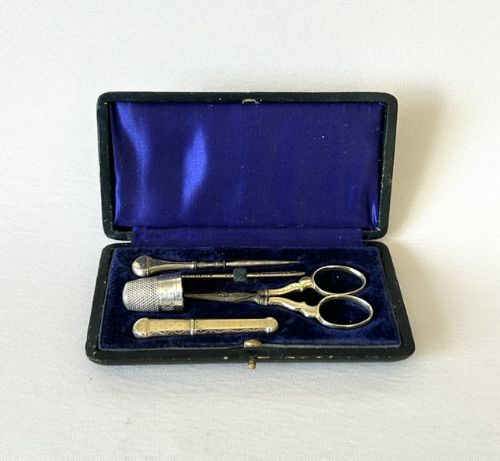
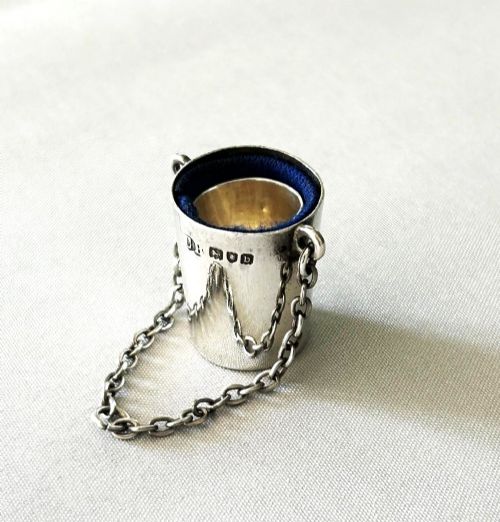
When you search for a cased silver thimble, you encounter small sewing instruments housed in protective containers made from materials such as leather, velvet, silk, or bone. These items range from simple fitted boxes to elaborate novelty forms like buckets, coal scuttles, and egg-shaped or chatelaine holders.
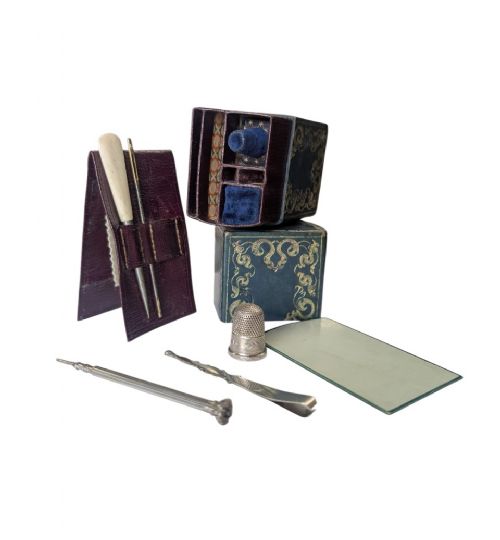
The pieces appearing on this page date primarily from the Victorian and Edwardian eras, alongside 19th-century French examples. Alongside standard fitted cases, you will find novelty silver thimbles paired with custom receptacles, as well as broader sewing sets and compendiums.
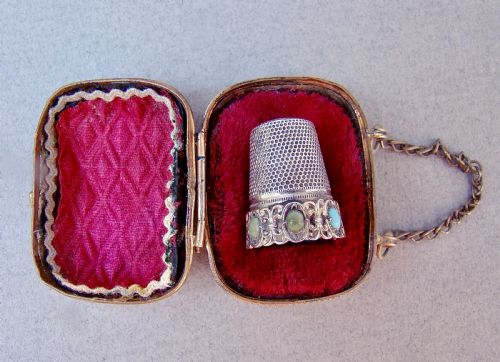
Many of these items combine sterling silver or silver gilt with decorative stones like agate, turquoise, or carnelian. The containers themselves often employ organic elements such as corozo nut or tortoiseshell alongside traditional metalwork.
How they were made
Silversmiths formed the thimbles using stamping and spinning techniques to create the characteristic dimpled exterior, frequently adding decorative rims or stone-set bands. Cases were constructed from rigid foundations covered in leather, silk, or velvet, lined internally to cradle the thimble securely.
Novelty holders often utilised cast or chased ormolu, brass, and sterling silver shaped into playful objects like coal scuttles and buckets. Artisans also worked with natural materials, carving corozo nut and tortoiseshell to house the silver implements within.
Listings feature silver thimbles housed in materials ranging from velvet, leather, and silk to tortoiseshell, corozo nut, and ormolu.
What varies in quality
The distinction between ordinary and superior pieces rests on the precision of the silversmith's work and the complexity of the housing. Examples bearing clear hallmarks from recognised makers and incorporating semi-precious stones or intricate ormolu chatelaine holders represent the upper tier.
Condition plays a central role in valuation, particularly the integrity of the internal lining and the exterior covering of the case. Novelty cases that retain their original mechanics and paired thimbles command greater attention from collectors than standard fitted boxes.
Walter and George Myers·Charles Horner·Laurence Emanuel·Henry Griffith and Sons Ltd·Carrington and Co·Samuel Foskett·James Swann and Son·Henry Fowler
The Cased Silver Thimble Glossary
- Chatelaine
- A decorative belt hook suspended with chains used to carry household and sewing implements. These often held small egg-shaped holders containing a thimble.
- Silver Gilt
- Silver that has been coated with a thin layer of gold on its surface. This technique provided the rich appearance of solid gold while utilising a silver base.
- Ormolu
- Finely chopped high-zinc brass applied as a surface finish to objects. It was frequently used for ornate chatelaine cases and decorative mounts during the 19th century.
- Corozo Nut
- The dense, hard seed of the tagua palm, often carved as an organic alternative to ivory. It served as a durable material for small protective thimble cases.
- Agate
- A cryptocrystalline variety of quartz utilised for decorative stones on thimbles and case handles. Makers selected these banded minerals for their colourful patterns.
Cased Silver Thimble: Frequently Asked Questions
What is a cased silver thimble?
A cased silver thimble is a sewing implement accompanied by a dedicated protective holder, ranging from simple leather boxes to ornate ormolu chatelaine eggs.
These sets were designed for portability and safe storage, often forming part of a lady's personal sewing equipment during the 19th and early 20th centuries.
How were novelty thimble cases used?
Novelty cases shaped like coal scuttles, buckets, or eggs served as decorative containers that could be hung from a chatelaine or kept on a dressing table.
They combined practical utility with playful design, reflecting the Victorian taste for imaginative silver objects.
How do I date a silver thimble?
Dating relies primarily on the assay office hallmarks stamped onto the silver, which indicate the specific year and city of manufacture.
Stylistic elements like stone settings, ormolu mounts, and case materials also help narrow down whether a piece is Victorian, Edwardian, or later.
How should I store these pieces?
These items should be kept in a dry environment away from direct sunlight to protect delicate internal velvet, silk, and leather linings.
Leaving the thimble inside its original case prevents loss and minimises the tarnishing of the silver.