


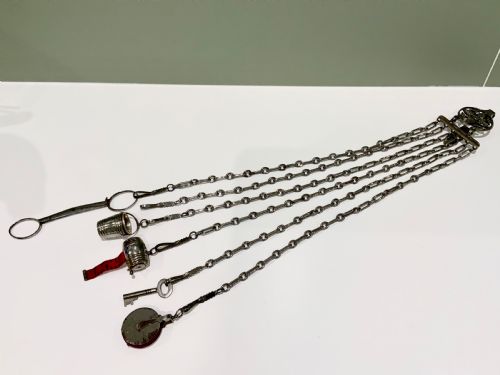

Victorian Silver Thimble
A victorian silver thimble brings small-scale metalwork and domestic history together, offering tangible charm for collectors of needlework tools.
Victorian Silver Thimble
When you search for a victorian silver thimble, you encounter items designed for needlework that span functional sewing implements and decorative small objects.
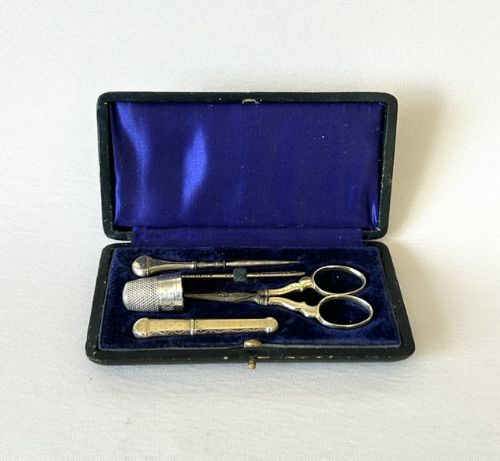
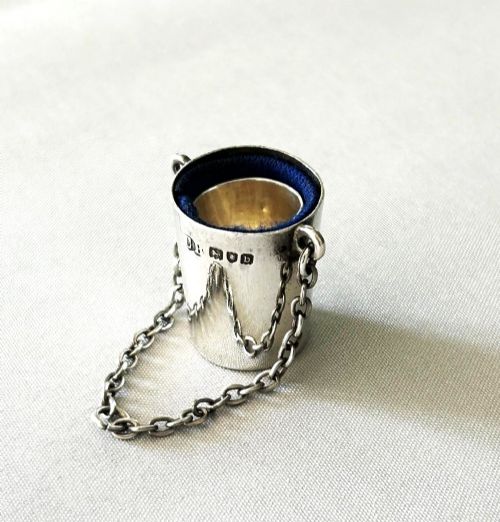
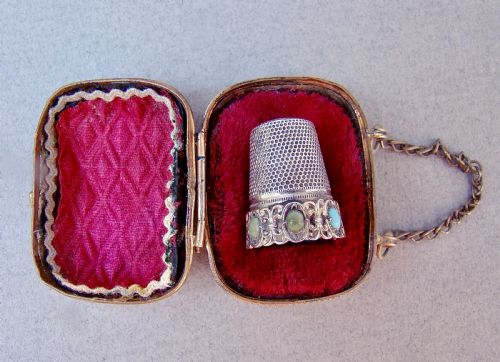
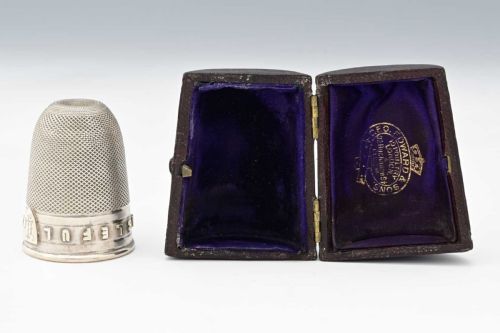
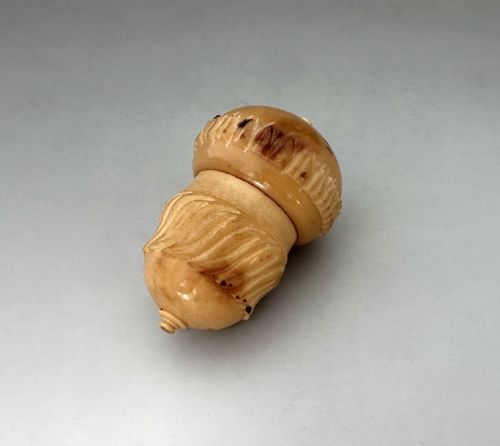
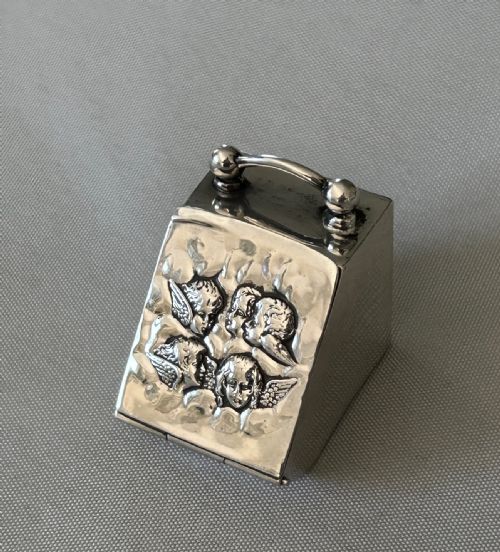
The pieces appearing here include standalone silver pieces alongside fitted holders, chatelaine cases, and novelty items shaped like buckets, coal scuttles, and tumblers.
Originating predominantly from the Victorian and Edwardian periods, these objects often combine sterling silver with materials like mother-of-pearl, tortoise-shell, and ormolu.
How They Were Made
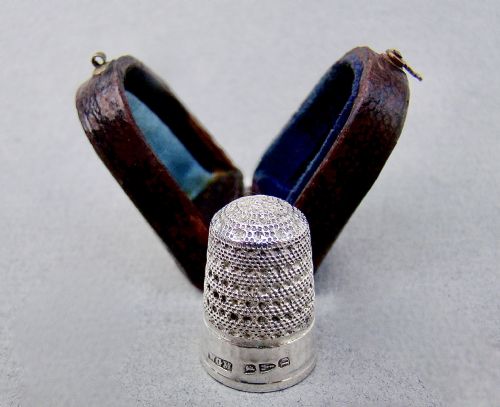
Makers fashioned these pieces using sterling silver and silver gilt, frequently applying indentation patterns by hand or machine to create the gripping surface of the thimble.
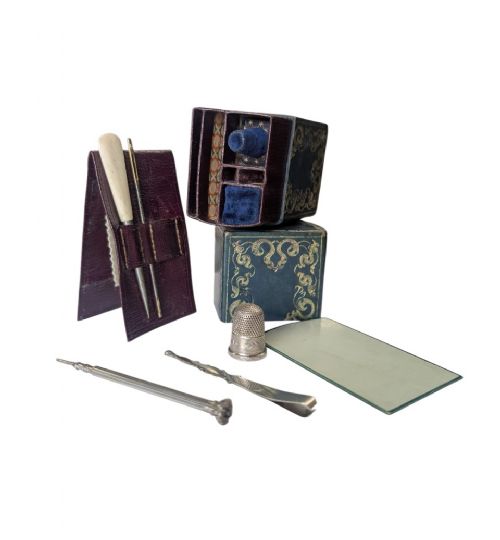
Cases and holders incorporate organic materials such as bone, corozo nut, leather, silk, and velvet, joined with metal hinges and clasps.
More ornate items integrate stone sets and ormolu mounts, reflecting the detailed metalworking techniques of nineteenth-century silversmiths.
Object forms span sewing boxes, compendiums, chatelaine cases, and novelty items shaped like coal scuttles and buckets.
What Varies in Quality
The distinction between standard items and superior examples rests on the crispness of the maker marks and the intricacy of the metalwork.
Novelty forms demonstrate quality through the cleverness of their design and the precision with which the thimble fits inside its container.
The survival of delicate subsidiary materials like silk linings, original leather, and fitted velvet interiors heavily influences the character of the piece.
Walter and George Myers·Charles Horner·Laurence Emanuel·Samuel Foskett·Levi and Salaman·Henry Griffith and Sons Ltd·Lionel Spiers·George Unite
The Victorian Silver Thimble Glossary
- Chatelaine
- A decorative belt hook suspended with chains to carry small domestic tools such as scissors, thimbles, and keys. It was widely worn by women in the nineteenth century.
- Silver Gilt
- Sterling silver covered with a thin layer of gold on the surface. This technique provided a rich appearance while utilising solid silver underneath.
- Corozo Nut
- The dense, hard seed of the tagua palm, often carved into small containers and thimble cases. It served as an organic alternative to ivory.
- Ormolu
- A gilt bronze finish applied to decorative metalwork mounts and small cases. It gained popularity for housing delicate chatelaine accessories.
- Novelty Silver
- Silver items shaped into humorous or unusual everyday objects rather than standard forms. Thimble cases modelled as coal scuttles and buckets belong to this group.
Victorian Silver Thimble: Frequently Asked Questions
What are victorian silver thimble cases made of?
These holders incorporate diverse materials including leather, velvet, silk, bone, corozo nut, tortoise-shell, and mother-of-pearl. Many also feature ormolu mounts and stone sets.
The choice of material often dictated whether the holder was designed for a chatelaine or a sewing box.
How do you date a silver thimble?
Dating relies heavily on hallmarks stamped directly into the silver, which record the assay office, date letter, and maker's mark.
Stylistic cues such as novelty shapes and associated cases also help narrow down the production era to the nineteenth century.
Were all thimbles sold with cases?
While many thimbles came paired with dedicated holders, numerous examples were produced independently and housed later or acquired separately.
Fitted cases and chatelaine holders represent a distinct subset intended for portable use.
What is a novelty silver thimble?
Novelty items take the form of everyday objects, such as miniature coal scuttles, buckets, or tumblers engraved with phrases like just a thimbleful.
These pieces combined practicality with Victorian humour and display skills.