
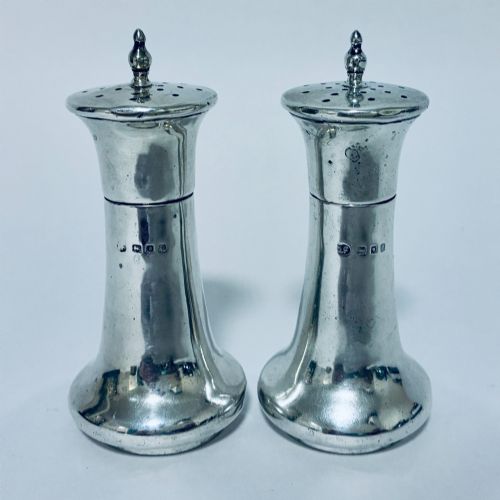
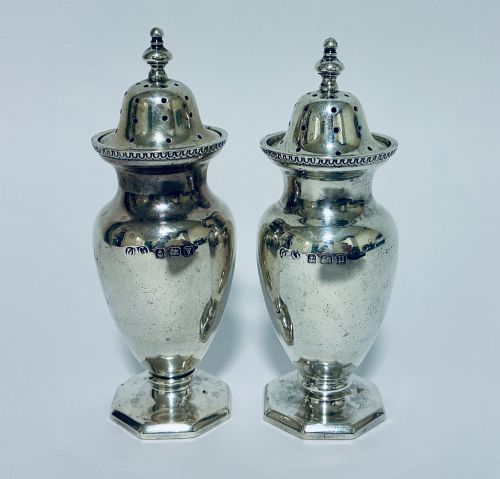
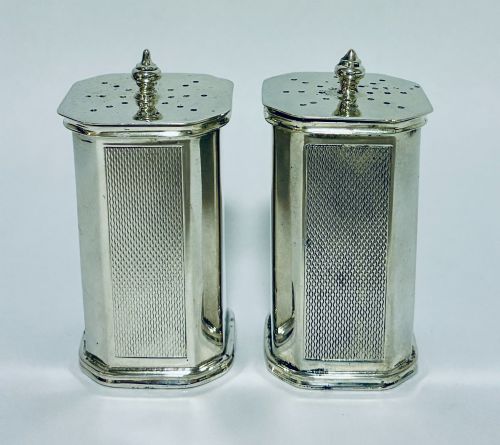


Antique Silver Caster Pair
An antique silver caster pair brings traditional dining elegance to the table, offering matched service for condiments across various historic periods.
Antique Silver Caster Pair
An antique silver caster pair comprises matched vessels used historically for dispensing sugar, pepper, or dry condiments at the dining table. These sets range from traditional cylindrical pepper pots and shakers to sugar shakers and novelty figural designs.
Buyers browsing this selection will most frequently encounter pieces dating from the Victorian and Edwardian eras, alongside items from the 1920s. Georgian Revival styles and George II pieces also appear, demonstrating enduring traditional forms.
The objects function as both tableware and decorative items, sometimes arriving as part of broader cruet sets or accompanied by glass components such as cobalt liners and table salts.
How they were made
Maker workshops utilised sterling silver and solid silver to form the body of each caster, often employing casting techniques for figural novelty pieces such as birds and characters. Pierced covers were carefully worked to allow the controlled sprinkling of contents.
Internal glass elements, including cobalt glass inserts for salt cellars and cruet components, were combined with metal frameworks and fitted velvet presentation boxes. Hallmarks stamped directly into the silver recorded the assay office, year, and maker.
Listings span the eighteenth century through the 1920s, featuring sterling silver, glass, and cobalt liners within Victorian and Edwardian styles.
What varies in quality
Quality in an antique silver caster pair rests upon the crispness of the chased or cast detail, particularly in novelty forms like pheasants or figural subjects. Plain cylindrical pots rely on balanced proportions, precise piercing of the top, and solid gauge metal.
The distinction between standard tableware and exceptional items often involves maker attribution, original matching components, and the survival of fitted boxes. Clear hallmarks and undamaged glass liners further elevate the standing of a set.
Thomas Johnson·Charles Alchorne·Samuel Wood
The Antique Silver Caster Pair Glossary
- Caster
- A small container with a pierced top used for sprinkling dry condiments like sugar or pepper over food. They typically feature removable lids for refilling.
- Cruet set
- A matched assembly of bottles, jars, or casters held together in a frame for holding condiments at the table. These often include provisions for mustard, oil, vinegar, and salt.
- Hallmark
- An official stamp applied by an assay office to guarantee the fineness of precious metal work. It usually includes marks for the maker, standard, and year of production.
- Novelty pepper
- A shaker designed in a whimsical or figural shape, such as an animal or character, rather than a standard domestic profile. These pieces were particularly popular during the Victorian period.
- Table salt
- An open vessel or small cellar used to hold salt on the dining table before free-flowing salt shakers became common. They frequently incorporate blue glass liners.
Antique Silver Caster Pair: Frequently Asked Questions
What is an antique silver caster pair used for?
These pieces were designed to serve dry seasonings such as pepper, sugar, or salt across the dining table. They allowed hosts to dispense condiments in a controlled manner during meals.
Today, collectors use them both as functional tableware and as decorative display items that reflect historic dining customs.
How do I clean antique silver casters?
Silver requires gentle cleaning with a specialised cloth or mild polish to remove tarnish without harming the underlying metal or wearing down chased details. Avoid abrasive cleaners that scratch the surface.
If the set includes glass liners or velvet presentation boxes, keep those components separate and dry during the cleaning process.
How do I tell Victorian casters apart from Edwardian ones?
Victorian pieces often display heavier ornamentation, elaborate chasing, or characterful novelty designs reflecting mid to late nineteenth-century tastes. Hallmarks stamped on the base provide exact dates for verification.
Edwardian examples frequently lean towards lighter Georgian Revival aesthetics, showing refined proportions and simpler decorative motifs suited to early twentieth-century dining.
Are novelty silver peppers rare?
Novelty pieces formed in the shape of animals, birds, or figures appear less frequently than standard cylindrical pepper pots. Maker marks and specific production years help determine their scarcity.
These whimsical designs were produced in smaller quantities, making them sought-after items for specialist silver collections.