


Baluster Silver Pepper Caster
A baluster silver pepper caster sits proudly on the dining table, offering both timeless elegance and practical seasoning.
Baluster Silver Pepper Caster
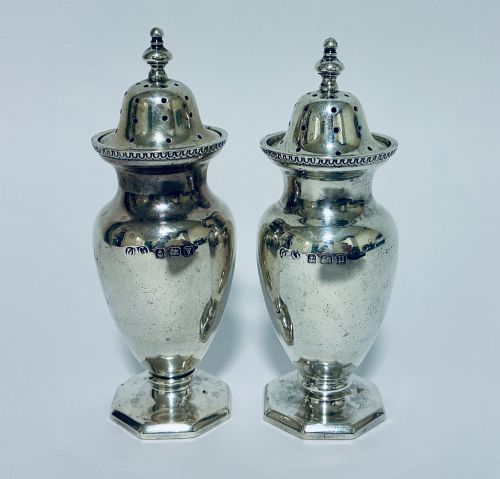
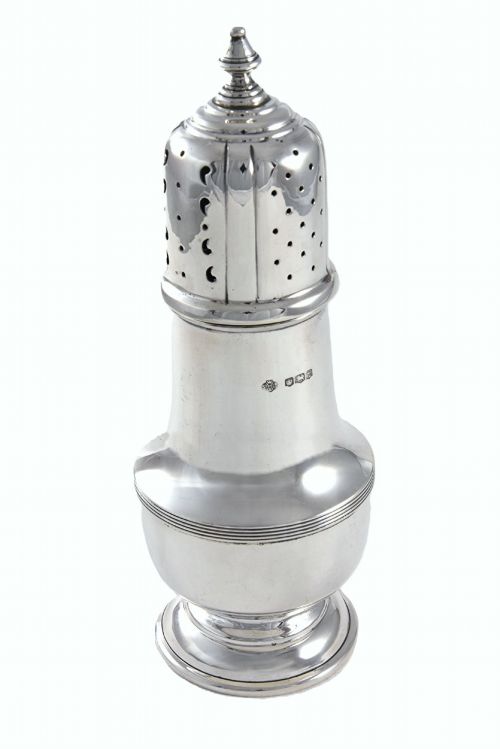
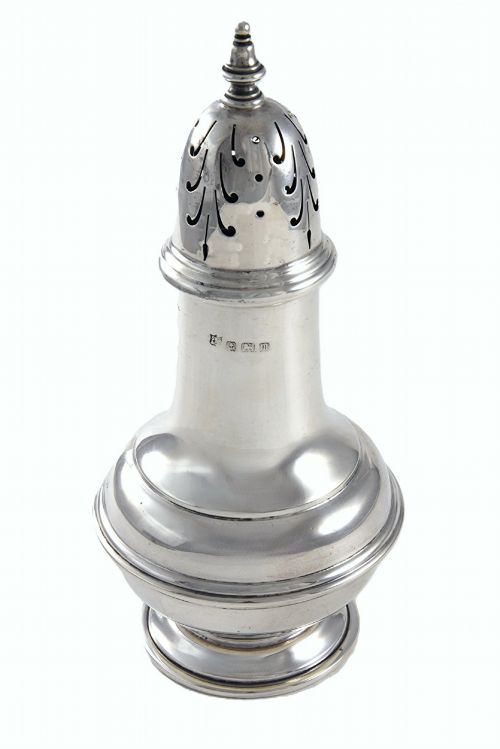
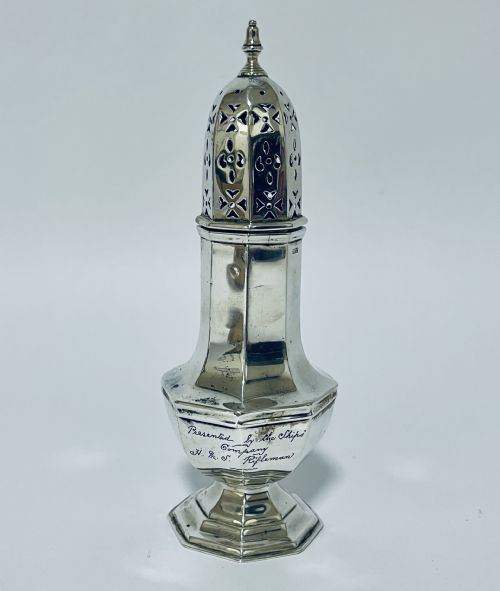
A baluster silver pepper caster is a refined tableware vessel designed to dispense ground pepper or sugar with precision. The form follows a graceful curved profile, swelling near the base before tapering upwards towards a pierced dome cover.
Collectors encounter single pots alongside matched pairs and larger groupings, reflecting the changing demands of formal dining over the centuries. The characteristic baluster shape remains constant, appearing across Victorian, Edwardian, and Art Deco iterations.
How they were made
Silversmiths shaped sterling silver into the characteristic swelling form using traditional techniques of raising from a flat sheet or spinning. The distinctive body profiles required considerable skill with the hammer on a metal stake.
Pierced tops were hand-drilled or meticulously pierced with intricate patterns of hearts, crescents, and dots to allow the condiment to flow freely. Secure bayonet fittings or screw threads often united the removable cover with the main body.
Listings feature sterling silver pieces spanning the Georgian era, Victorian period, Edwardian years, and mid-twentieth century.
What varies in quality
Quality rests upon the crispness of the piercing on the cover and the overall weight of the sterling silver used in the body. Thicker metal provides a substantial feel in the hand and resists denting during daily service.
The sophistication of the maker's mark and the elegance of the baluster silhouette distinguish standard production pieces from masterwork examples. Early eighteenth-century specimens by notable makers demonstrate superior proportions and hand-chased detailing.
Stephen Adams·James Goodwin·Simon Pantin·James Dixon And Sons Ltd·Charles Alchorne
The Baluster Silver Pepper Caster Glossary
- Baluster
- A vertical architectural form resembling a vase or pillar, which gives these casters their distinctive swelling contour. It provides a stable base and a pleasing grip.
- Muffineer
- A larger silver caster originally intended for dusting sugar over hot buttered muffins. These vessels share the same perforated cover design as pepper casters.
- Pounce Pot
- A small shaker used to sprinkle powdered resin or cuttlefish bone onto rough parchment to prepare the surface for writing. They share a similar pierced top construction with pepper casters.
- Sterling Silver
- An alloy of silver containing ninety-two point five percent pure silver and seven point five percent other metals, usually copper. This standard ensures both durability and a bright lustre.
Baluster Silver Pepper Caster: Frequently Asked Questions
How do I clean my silver caster?
Use a soft microfiber cloth with a dedicated silver polish to gently remove tarnish without harming the metal surface. Avoid harsh abrasive dips that can strip away fine chasing and hallmarks.
Rinse the piece thoroughly in warm water and dry it completely with a clean cloth to maintain its bright lustre.
Can I still use these for dining?
Many collectors happily use antique sterling silver casters for everyday dining or formal dinner parties. The pierced tops function just as well today as they did centuries ago.
Ensure you empty and clean the interior after use to prevent moisture and salt or pepper residue from damaging the silver.
How do I identify a Georgian piece?
Look closely for crisp hallmarks stamped into the metal, which typically include a date letter, a lion passant indicating sterling silver, and a maker's mark. Researching these assay marks reveals the exact year and city of manufacture.
Georgian examples often feature simpler, heavier forms with hand-cut piercing rather than machine-stamped patterns found on later wares.
Why are some casters sold as pairs?
Dining traditions of the eighteenth and nineteenth centuries required symmetrical table settings with matching condiments placed at opposite ends of the table. Wealthy households commissioned pairs of pepper pots and sugar shakers to achieve this balanced aesthetic.
Finding a surviving pair today offers a glimpse into historical dining arrangements and adds greater value for collectors.