



Antique Sideboard with Gallery
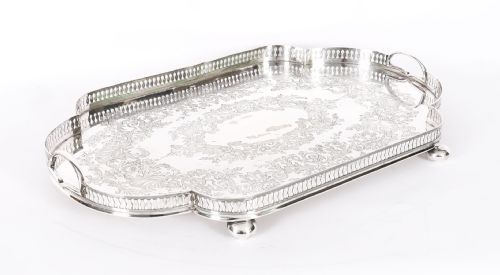
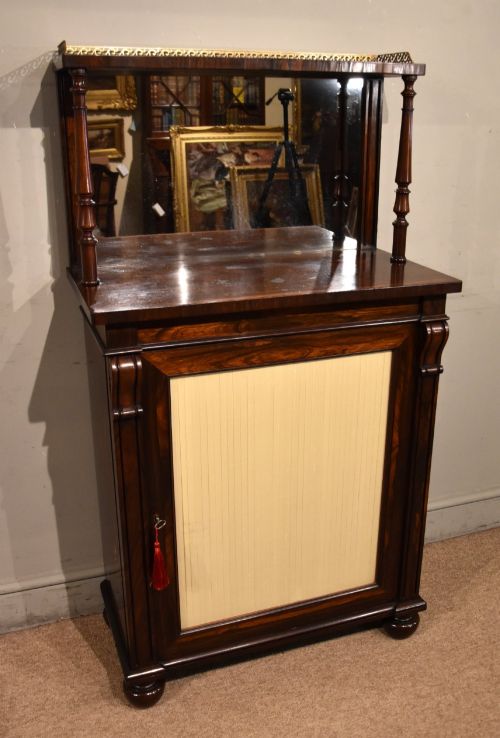
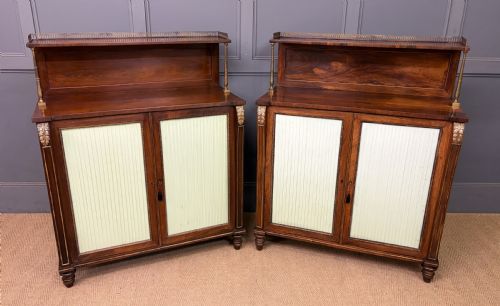
An antique sideboard with gallery brings architectural presence and formal display to a dining room through raised brass rails or timber upstands.
Antique Sideboard with Gallery
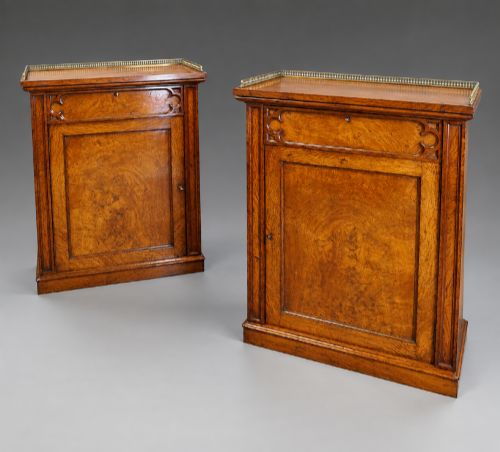
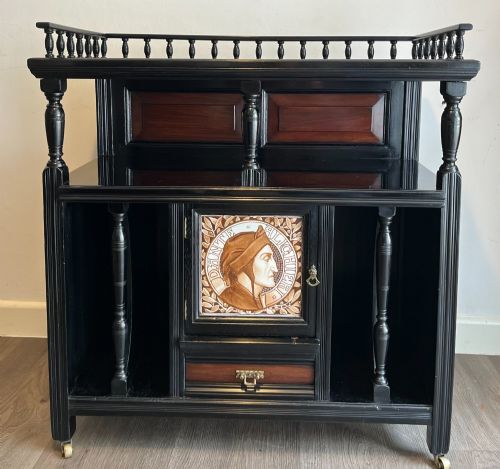
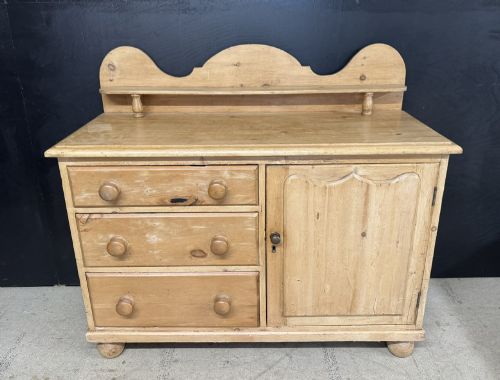
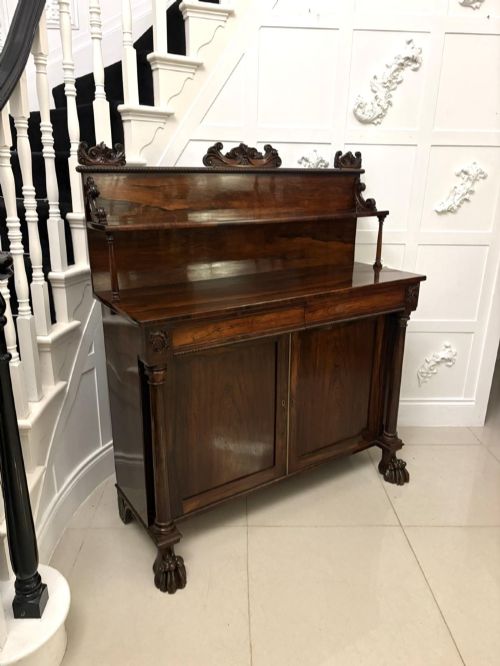
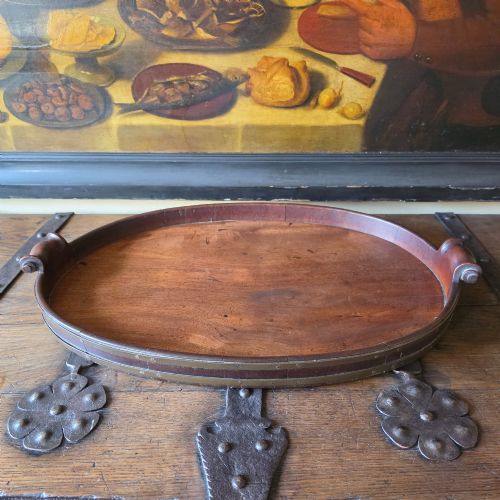
An antique sideboard with gallery combines utilitarian storage with raised upper structures, such as brass rails or timber upstands, designed to keep serving dishes or display items secure. These pieces span the Georgian, Regency, and Victorian periods, with mahogany and pine appearing frequently across the selection.
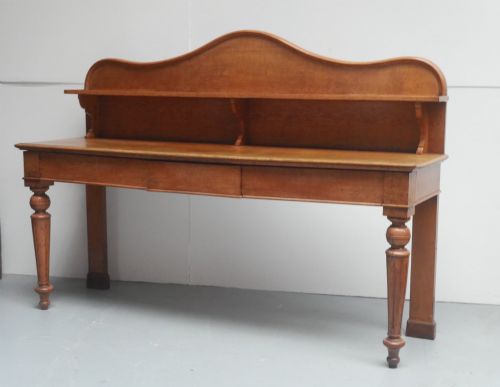
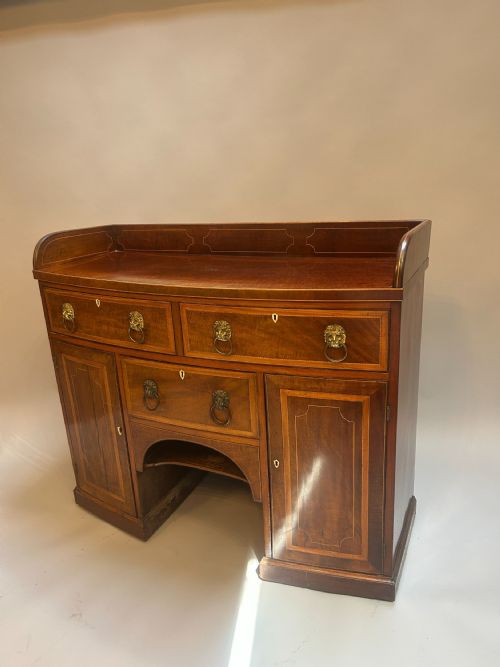
Buyers will encounter formal Georgian and Regency mahogany servers fitted with delicate brass gallery rails, alongside robust Victorian and Edwardian examples in mahogany, oak, and pine. Sideboards, chiffoniers, and serving tables dominate the forms, each offering distinct surface arrangements for dining rooms and halls.
The presence of a gallery alters the visual weight of the piece, turning a low serving surface into a structured focal point. Whether finished with a simple timber upstand or a multi-tier shelf back, these items reflect the dining customs of their respective eras.
Materials and construction methods
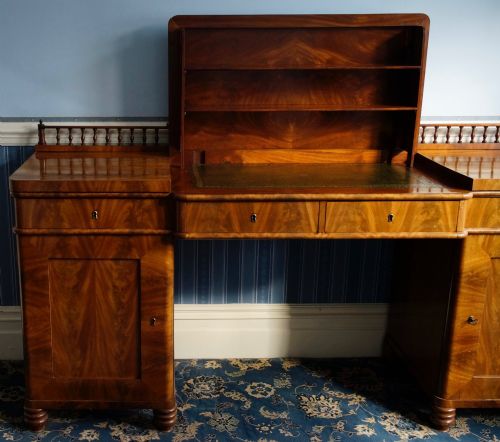
Cabinetmakers relied heavily on dense timbers such as mahogany, rosewood, and walnut for formal dining furniture, often employing flame mahogany veneers to create striking surface patterns on drawer fronts and doors. Carved oak and solid pine served both formal and vernacular pieces, demonstrating robust joinery suited to daily service.
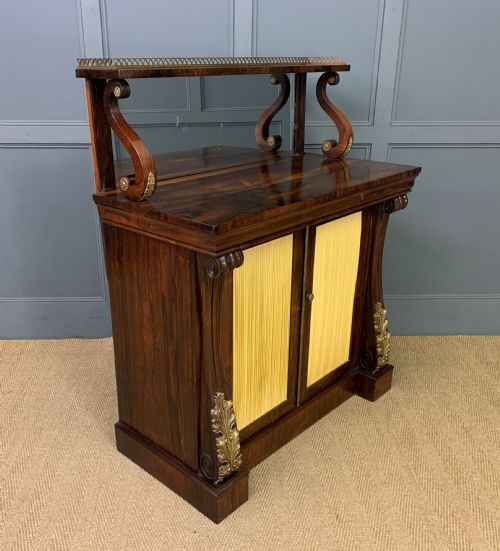
Metalwork played a defining role in the construction of gallery backs, utilising cast and polished brass for slender rails and support spindles. Timber upstands were integrated directly into the carcass or secured with traditional housing joints, ensuring stability for the elevated tiers.
Some nineteenth-century chiffoniers cleverly conceal small writing drawers behind their upper friezes, perfect for secret menu planning.
Distinctions in craftsmanship
Quality rests in the selection of timber and the precision of structural joinery, where finely figured veneers and tight dovetail joints separate superior workshops from simpler production. The integration of the gallery reveals the maker's care, with sturdy brass castings and well-fitted shelf supports demonstrating high execution.
Proportion and surface finish dictate the standing of a piece, as balanced carcass dimensions and preserved secondary timbers indicate original integrity. Secondary elements, from backboards to interior drawer linings, confirm the consistency of the construction.
The Antique Sideboard with Gallery Glossary
- Gallery
- A raised rail, shelf, or spindle structure mounted on the rear upper surface of a sideboard or serving table to prevent items from sliding off.
- Chiffonier
- A compact sideboard variant developed in the Regency and Victorian periods, typically featuring enclosed cupboards below and one or more display shelves above.
- Flame mahogany
- A veneer cut from the fork of the mahogany tree where the branch meets the trunk, producing a rippling, flame-like grain pattern.
- Upstand
- A vertical timber board attached to the rear edge of a serving table or desk surface, offering a simpler alternative to an open brass rail.
- Breakfront
- A cabinet or sideboard whose central section projects forward from the flanking outer cupboards, creating architectural depth.
Antique Sideboard with Gallery: Frequently Asked Questions
What is a gallery back?
A gallery back is an elevated structure attached to the rear of a sideboard, server, or dressing table. It typically consists of brass rails or timber shelves.
Historically, this feature prevented silver dishes and glassware from sliding off the surface during busy dining service. Today, it provides a decorative frame for displaying ceramics.
How do I date an antique sideboard?
Dating relies on observing timber choices, hardware styles, and structural construction methods. Georgian and Regency pieces often use solid mahogany or flame veneers with fine brass rails.
Victorian and Edwardian examples introduce wider varieties of pine, walnut, and heavier proportions. Secondary timbers inside drawers also help confirm the period of manufacture.
Where should I place a sideboard with a gallery?
These pieces suit dining rooms, large hallways, or living spaces where a substantial focal point is required. The raised gallery adds height, making them effective against blank walls.
Ensure the clearance above the piece accommodates the height of the gallery rail or shelf back before positioning it beneath artwork.
What is the difference between a sideboard and a chiffonier?
A sideboard is traditionally a larger dining room piece designed for serving food and storing heavy tableware. A chiffonier is generally smaller and often includes shelves above the main surface.
Chiffoniers emerged strongly during the Regency and Victorian eras, functioning as versatile side cabinets for both living rooms and dining spaces.