
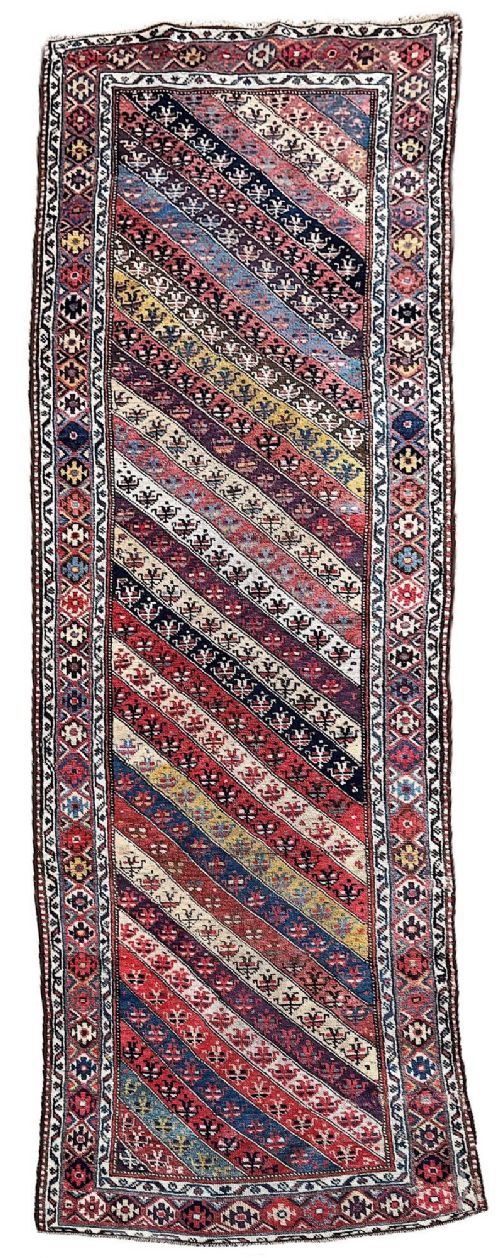
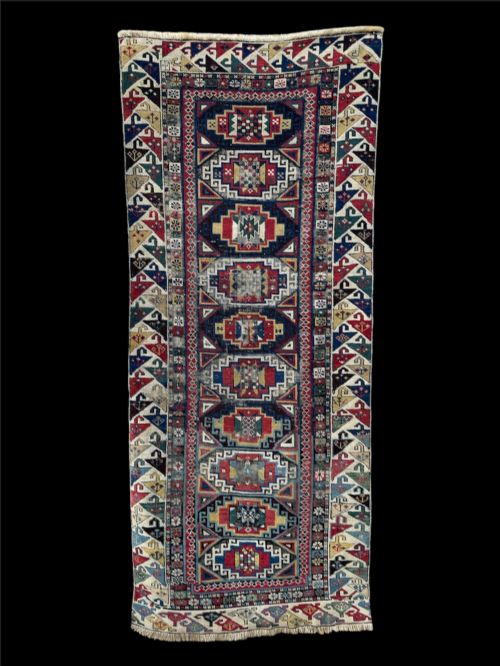


Antique Shirvan Rug
Woven in the Eastern Caucasus during the nineteenth and early twentieth centuries, an antique shirvan rug brings precise geometric motifs and saturated palettes to a room.
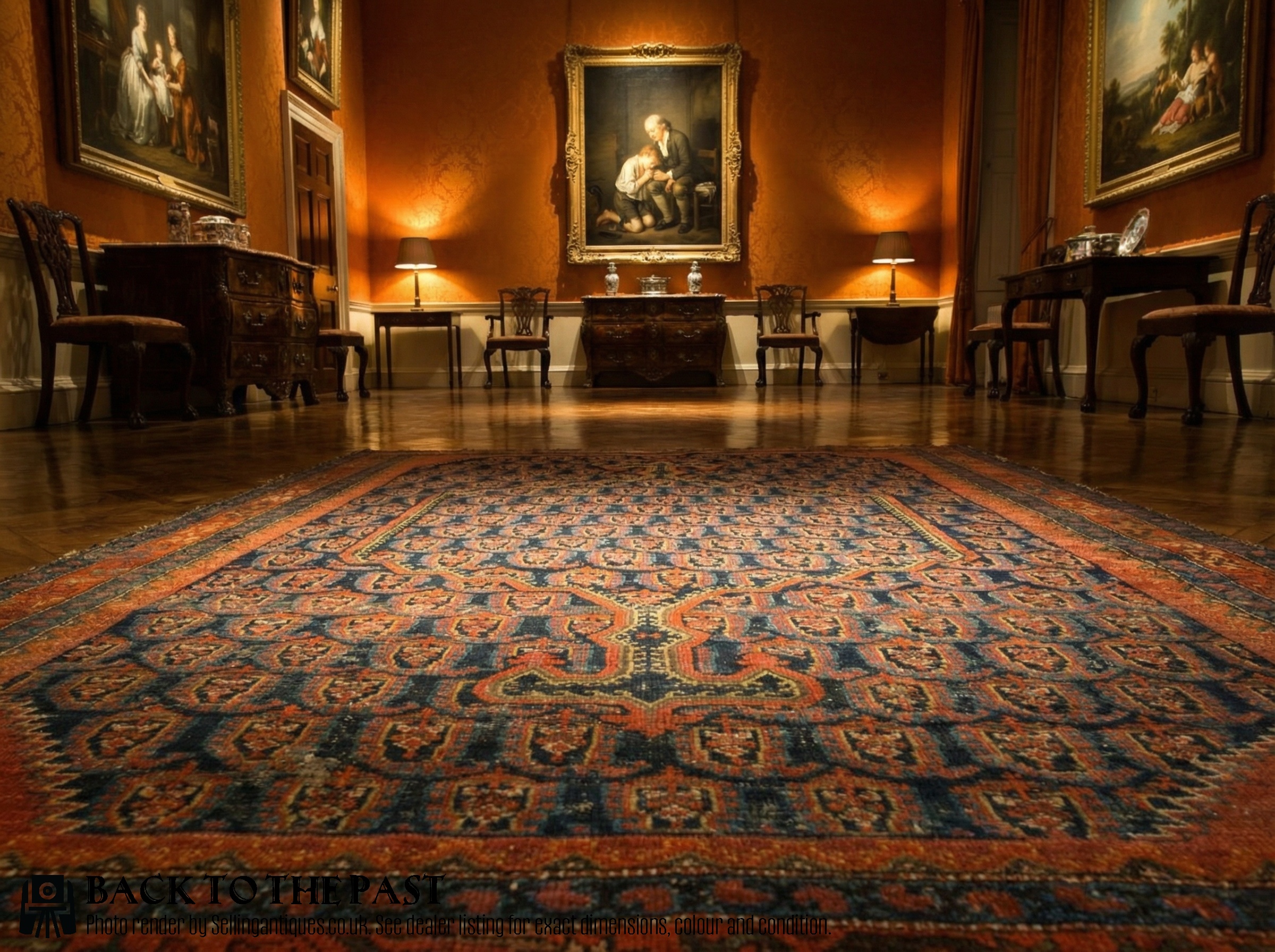
Antique Shirvan Rug
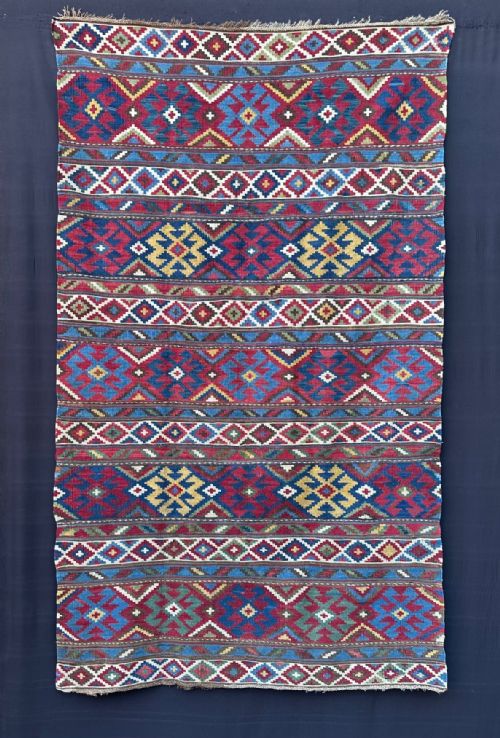
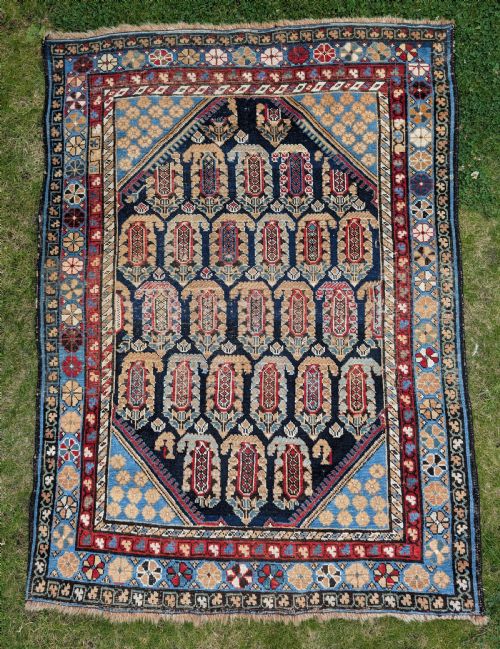
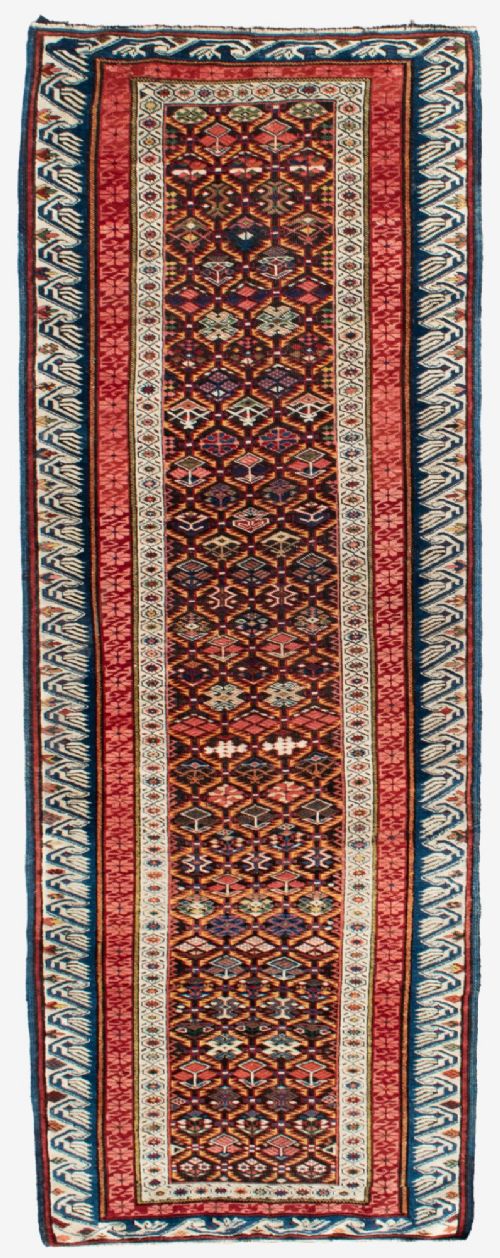
An antique shirvan rug represents the distinct weaving traditions of the Eastern Caucasus, encompassing standard formats, narrow runners, flatwoven kilims, and devotional prayer rugs. These pieces often feature geometric medallions, hooked polygons, and structured lattice compositions.
Most examples encountered date from the late nineteenth century to the early twentieth century, reflecting regional weaving idioms from towns and villages such as Marasali, Baku, and Khila. Collectors find both intimate small formats and elongated corridor carpets among these Caucasian textiles.

How they were made
Weavers constructed these pieces using hand-spun wool for both the pile and the foundational warps and wefts, creating a durable and slightly stiff handle. Cotton foundations appear in specific regional subgroups.
Dyeing relied on natural materials to produce deep blues, ivories, and warm accents, which yield characteristic abrash and subtle colour variations as the wool ages.
Antique Shirvan Rug Retail Price Guide 2026
Typical asking prices for shirvan rug among the pieces listed under this phrase on Sellingantiques today, from the lower quarter to the upper quarter. They describe what is for sale here now, not the wider market.
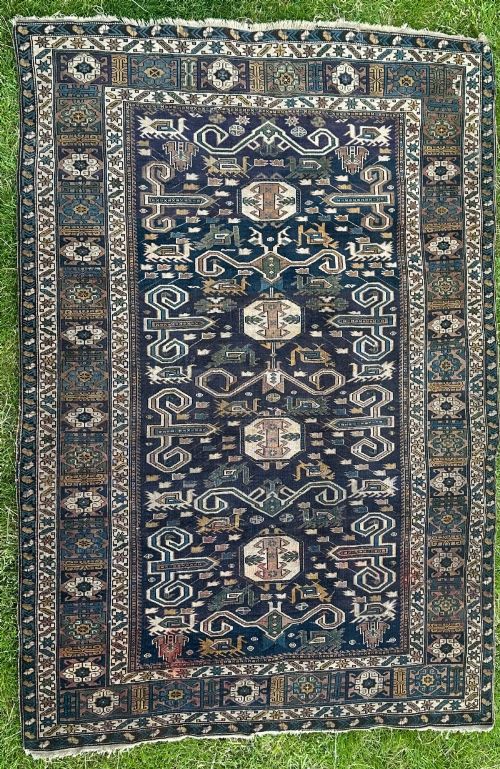
Several antique rugs display delightfully oversized peacocks striding across the field, proving that village weavers enjoyed inserting local fauna into strict geometry.
What varies in quality
Knot density and structural fineness dictate the clarity of intricate geometric patterns, separating standard village weaving from exceptionally finely executed workshop or regional examples. Tighter knotting allows sharper definition in complex bird borders and floral lattices.
The preservation of original wool pile and uncompromised selvedges heavily influences the integrity of each piece. Surviving examples retain crisp dye saturation and complete outer guards without extensive structural rebuilding.
The Antique Shirvan Rug Glossary
- Abrash
- Natural variations in wool colour caused by differences in dye batches or hand-spinning. This tonal shifting creates subtle horizontal bands of shading across the field.
- Boteh
- A teardrop or almond-shaped motif with a curved upper end, frequently repeated in rows across Caucasian weaving. It represents a traditional Persian fertility and floral symbol.
- Kilim
- A flatwoven textile produced without a pile by tightly interweaving warp and weft threads. Shirvan kilims feature sharp geometric bands and flat structures.
- Prayer rug
- A devotional textile defined by a characteristic mihrab or arch design at one end. These pieces were utilised for daily ritual prostration.
- Medallion
- A central symmetrical ornament anchored in the middle of the rug field. Regional weavers arranged geometric octagons and stars to anchor the composition.
Antique Shirvan Rug: Frequently Asked Questions
Where were antique shirvan rugs made?
These textiles originated in the Shirvan region of the Eastern Caucasus, situated between the Greater Caucasus mountains and the Caspian Sea. Local weavers in towns and surrounding mountain villages produced distinctive regional styles.
Production centres included Baku, Marasali, and Khila, each contributing specific design vocabularies and border motifs to the broader Caucasian weaving tradition.
What is a flatwoven kilim?
A kilim is constructed without a pile through a flat tapestry-weaving technique. The horizontal weft threads are pulled tightly across the vertical warps to form crisp geometric patterns.
Shirvan kilims typically display banded designs with soft, varied colours, offering a lighter alternative to traditional thick-pile carpets.
How should I care for an old wool rug?
Protect the textile by placing a breathable, high-friction underlay beneath it on hard floors to prevent sliding and reduce pile friction. Regular gentle vacuuming without a rotating power head removes embedded grit.
Keep the piece out of direct, harsh sunlight to prevent natural dye fading, and consult a specialist familiar with antique Oriental textiles for professional cleaning.