
Antique Serving Trolley
An antique serving trolley brings mobility and period character to dining spaces, offering tiered surfaces for drinks and afternoon tea.
Identifying an antique serving trolley
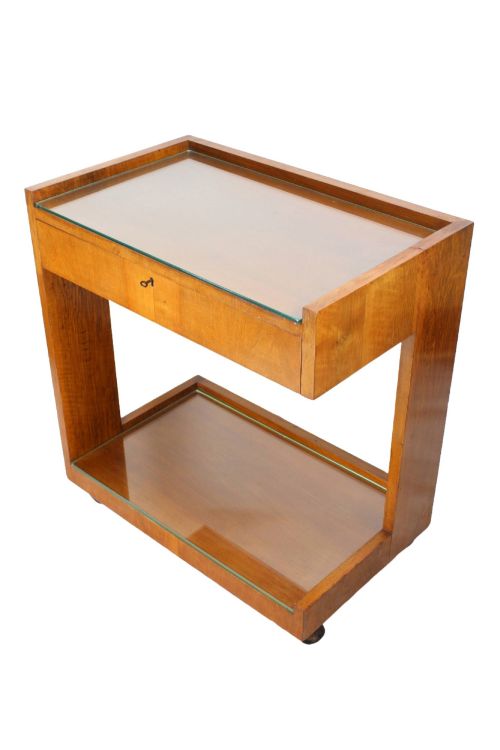
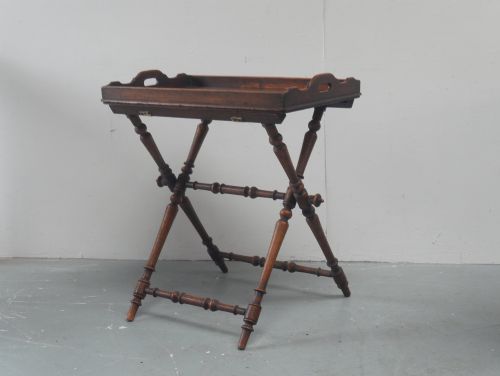
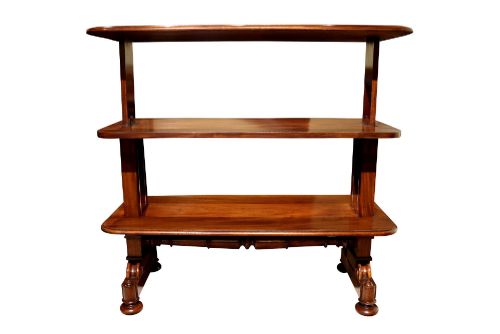
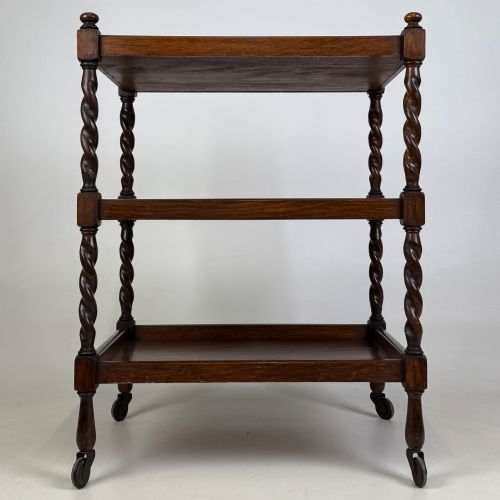
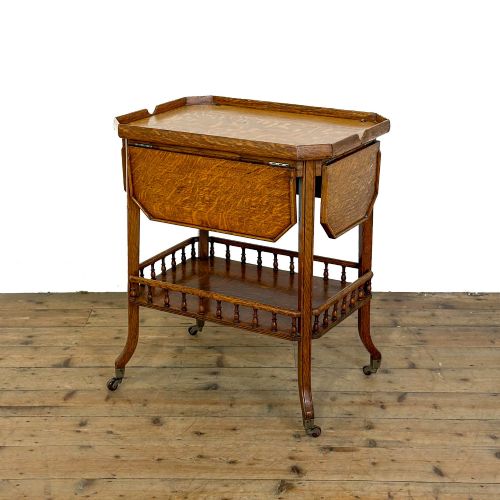
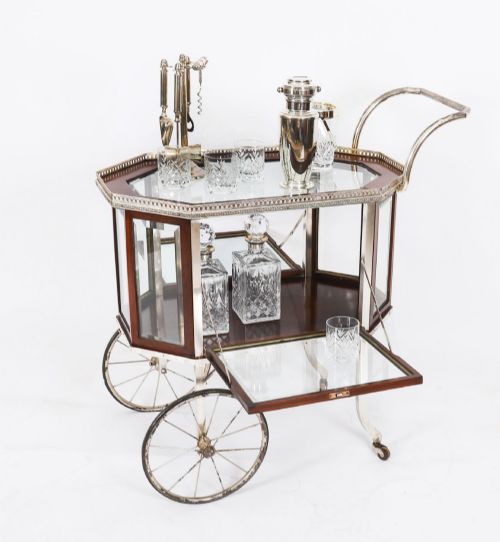
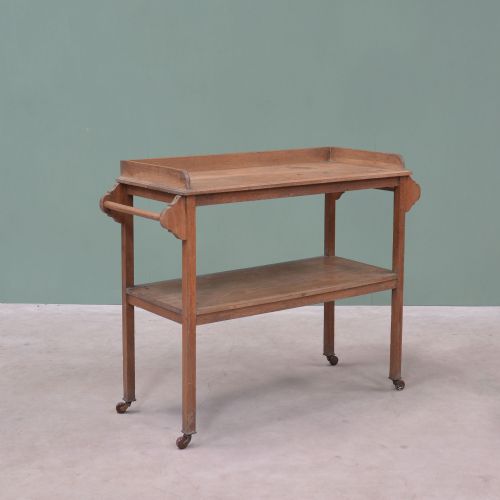
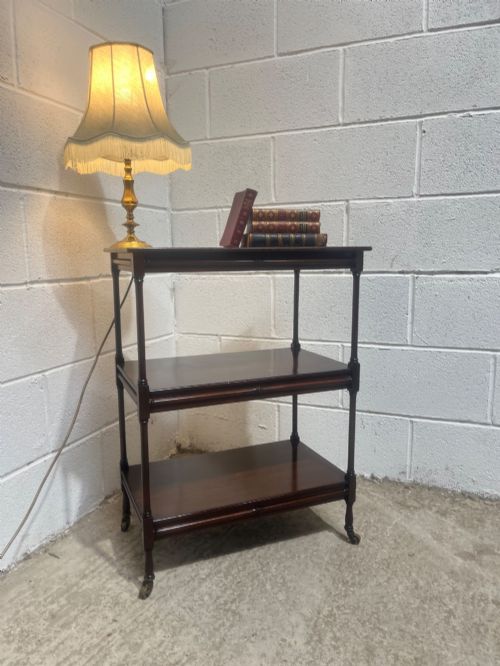
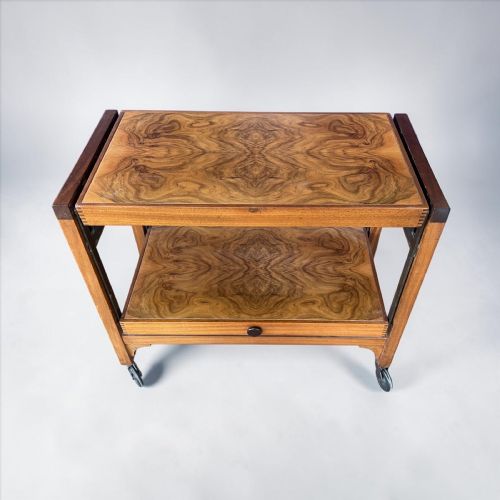
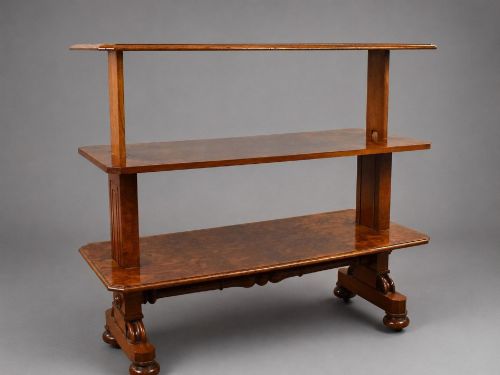
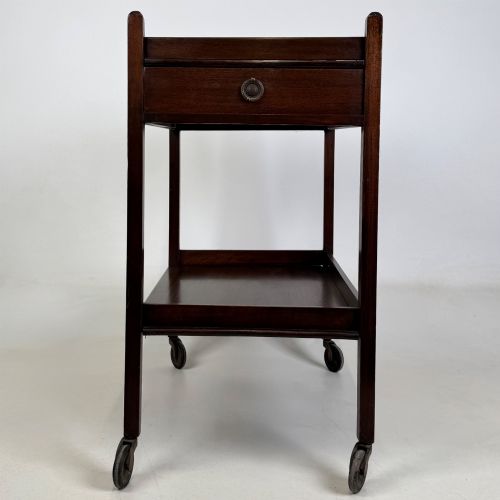
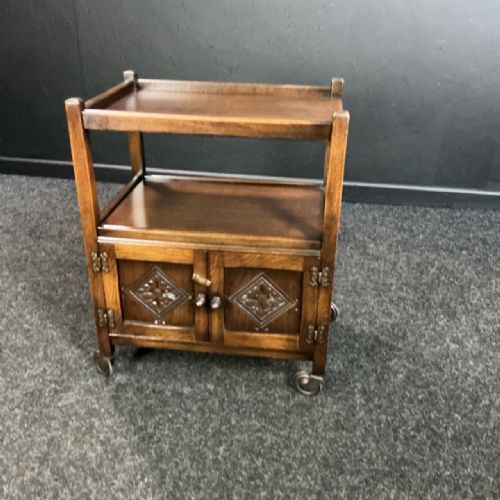
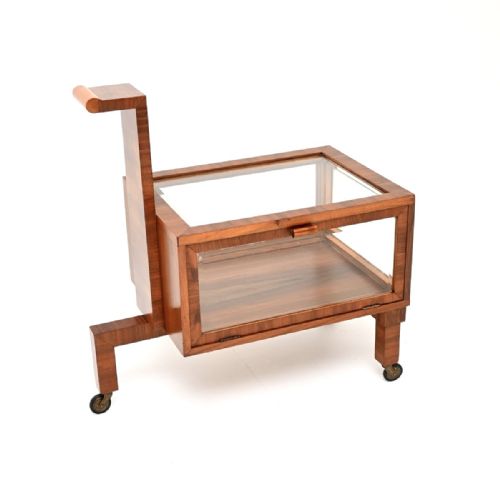
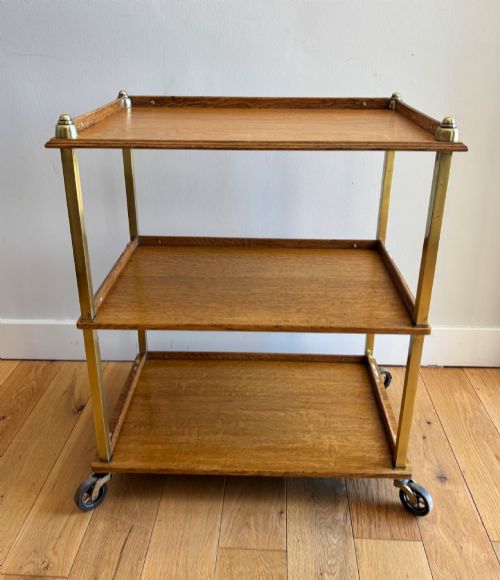
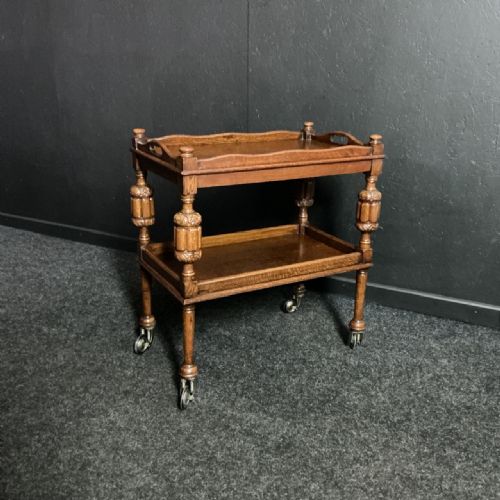
An antique serving trolley serves as a mobile tier or table designed for transporting and presenting food, tea, and drinks across dining rooms and drawing rooms. When searching for an antique serving trolley, buyers encounter forms ranging from heavy Victorian multi-tiered dumb waiters to Edwardian folding tea carts and streamlined Art Deco cocktail carriers.
The pieces on this page span the Victorian, Edwardian, and Art Deco periods, encompassing designs with drop sides, wheels, and revolving tiers. Oak, mahogany, and walnut dominate the construction, reflecting the prevailing domestic habits of their respective decades.
Materials and construction
Cabinet makers constructed these pieces using solid hardwoods such as oak, teak, and mahogany, alongside decorative veneers including amboyna, pollard oak, and flame mahogany. Ebonised wood, parcel gilt accents, and brass fittings appear across various examples to provide structural contrast and decorative detail.
Joinery methods include turned pillars for tiered dumb waiters, folding metal or wooden hinges for drop-sided tea carts, and fitted wheels for mobility. Glass inserts and metal handles are incorporated into later designs intended for dispensing drinks.
Retail Price Guide 2026
Typical UK retail prices for serving trolley, calculated from the Sellingantiques database of over a million retail prices indexed since 2003. This retail price guide relies exclusively on Sellingantiques data; no external sources or auction records are used, so the figures do not describe the wider market.
One recorded piece served aboard HMS Collingwood in 1911, proving that even naval officers required proper wheeled tea service.
Distinctions in craftsmanship
Quality in these pieces rests upon the selection of timber veneers, such as figured walnut or flame mahogany, and the precision of the turning on structural pillars. Heavier Victorian and Edwardian examples demonstrate substantial joinery in multi-tiered configurations, while Art Deco pieces rely on clean geometric lines and polished wood grains.
The Antique Serving Trolley Glossary
- Dumb Waiter
- A tiered serving stand designed to hold dishes or drinks without the need for a human attendant at the table. These often feature revolving or fixed circular shelves supported by a central column.
- Drop Sided
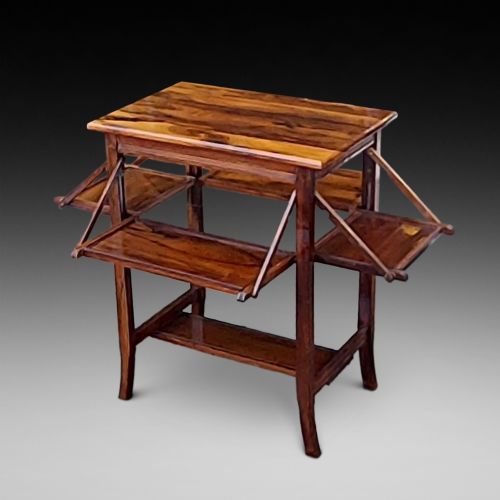
- A table or trolley design featuring hinged flaps that lower to save space or raise to extend the surface area. This mechanism appears frequently on tea and cake trolleys from the early twentieth century.
- Parcel Gilt
- A decoration method where specific carved or turned portions of a wooden object receive a thin application of gold leaf. This technique highlights architectural details against a darker timber background.
- Metamorphic
- Describing a piece of furniture designed to transform its shape or function through folding or pivoting mechanisms. These versatile items adapt from compact side tables into extended serving surfaces.
Frequently Asked Questions
What is a dumb waiter?
A dumb waiter is a multi-tiered stand used historically to hold food and drink near a dining table.
Victorian examples typically feature stacked circular shelves on a turned central pillar.
How do I date a trolley?
Dating relies on stylistic markers, such as heavy turned wood from the Victorian era versus streamlined geometric veneers from the Art Deco period.
Materials like pollard oak and ebonised wood also point to specific decades of manufacture.
Were these used for tea?
Edwardian models were frequently designed as tea or cake trolleys with drop sides for easy serving in the drawing room.
Many incorporate wheels to navigate domestic spaces during afternoon gatherings.
What is an Art Deco trolley?
Art Deco trolleys from the 1920s and 1930s often utilise figured walnut and circular configurations tailored for serving cocktails.
They emphasise clean lines and polished wood grains over traditional carved ornamentation.