
Antique Seating Project
An antique seating project gives you an authentic frame ready for restoration, offering armchairs, sofas, and chairs that await new textile work.
Antique Seating Project
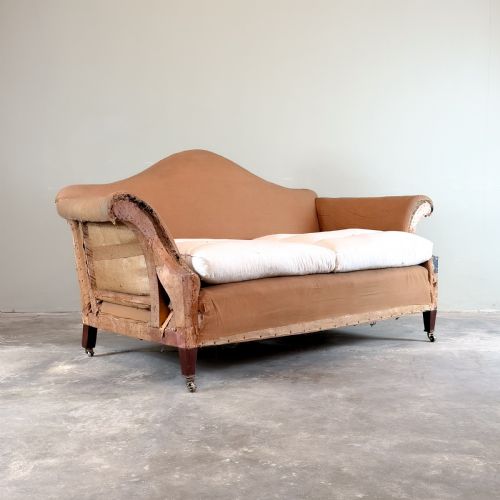
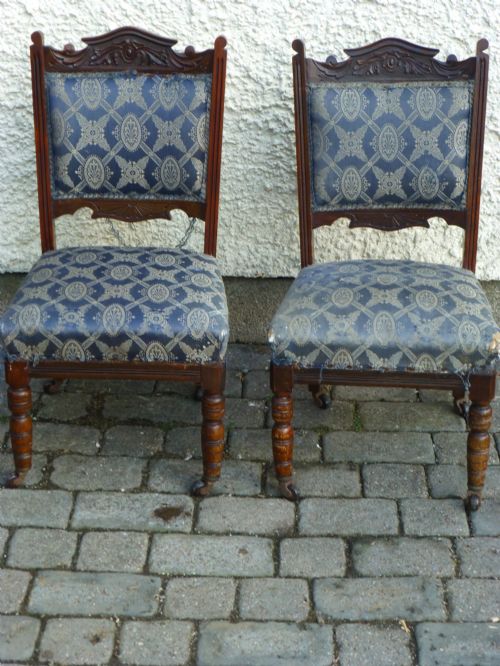
An antique seating project consists of frames awaiting restoration, which span armchairs, sofas, slipper chairs, and nursing chairs from the 19th Century, Victorian, Edwardian, and 1930 periods. Buyers searching for an antique seating project seek raw frames that require complete upholstery work, webbing repairs, or woodwork restoration before use.
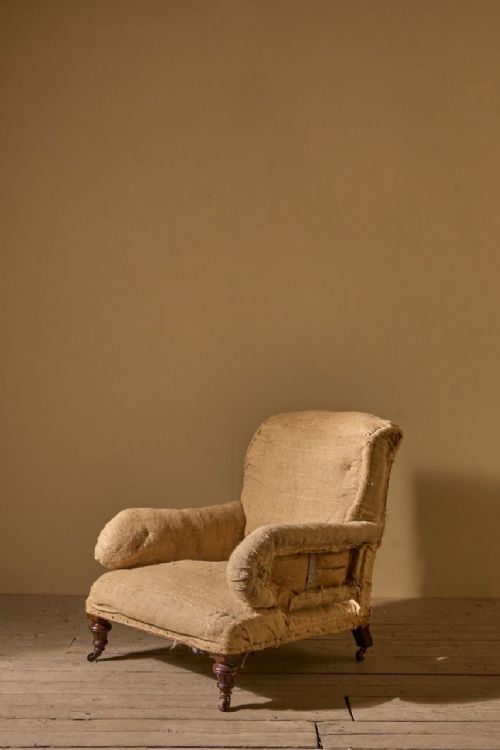
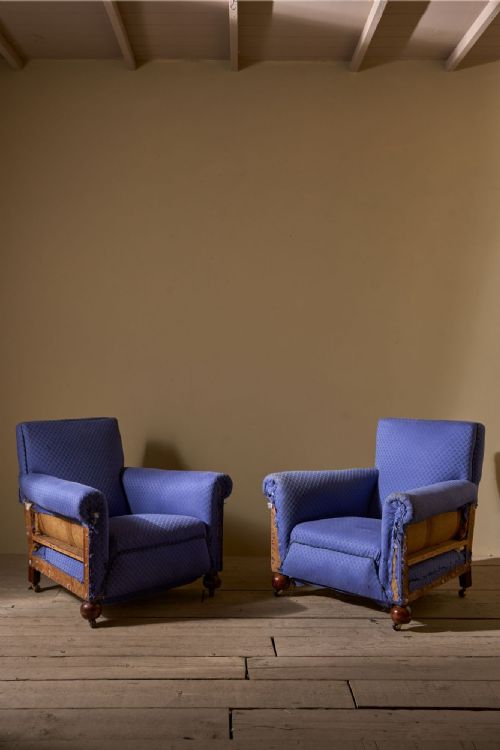
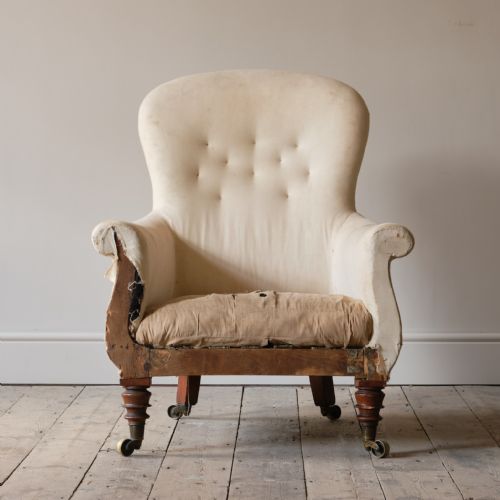
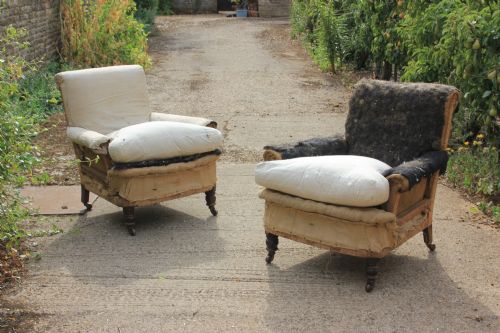
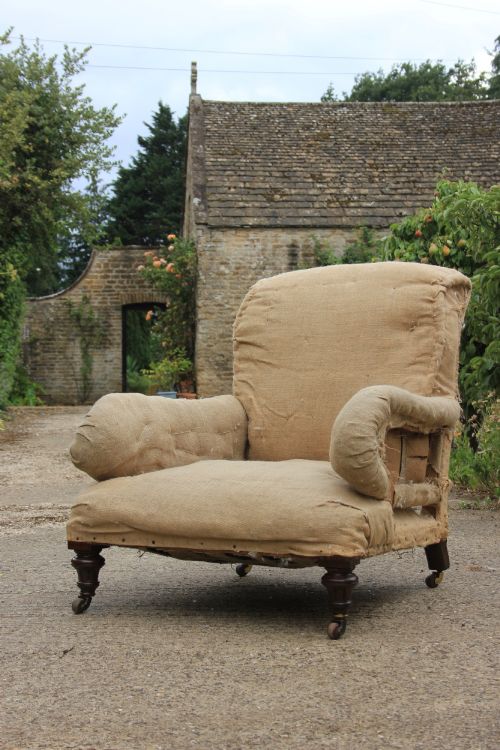
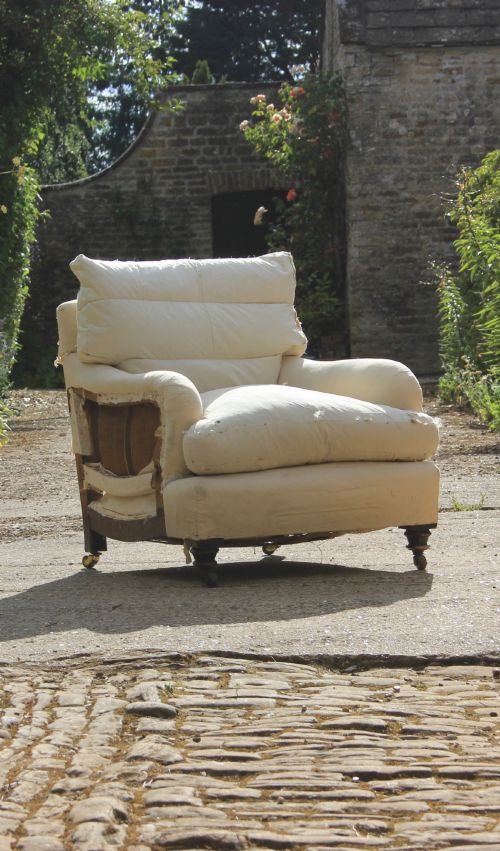
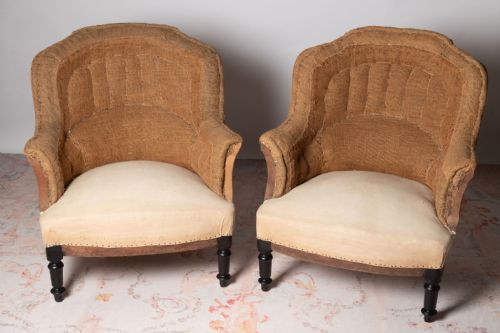
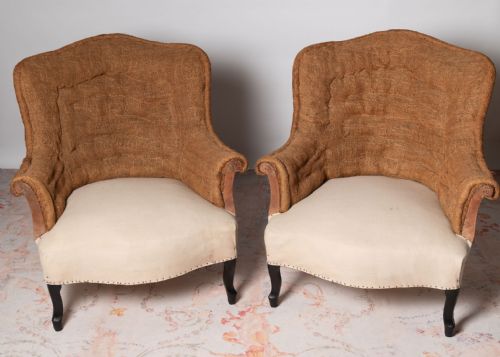
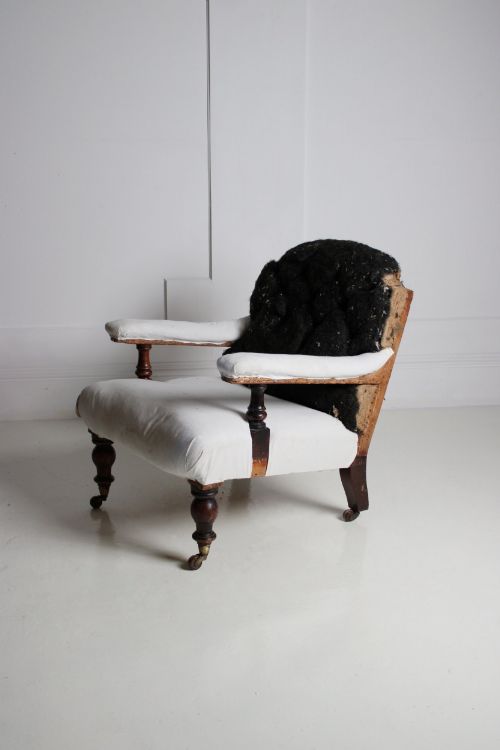
The most common forms on this page include country house armchairs, Howard style armchairs, and French chairs that retain their original character beneath worn fabric. These pieces arrive stripped or partially covered in calico and hessian, showing the underlying construction of the period.
Makers such as Gillows, Hindley & Sons, and Howard and Sons appear among the Victorian and 19th Century listings, providing branded frameworks for restoration enthusiasts. Alongside these, numerous unbranded English and French frames offer substantial proportions and classic silhouettes.
Materials and Construction
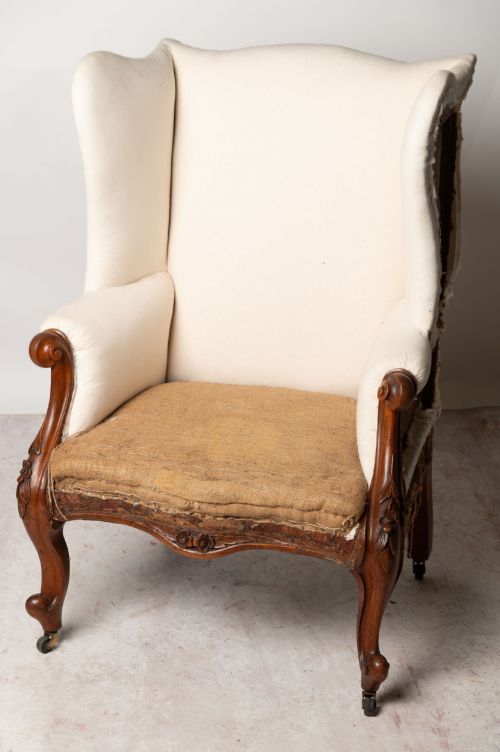
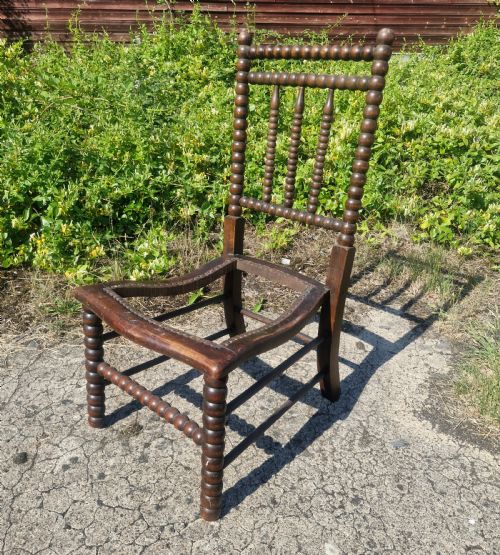
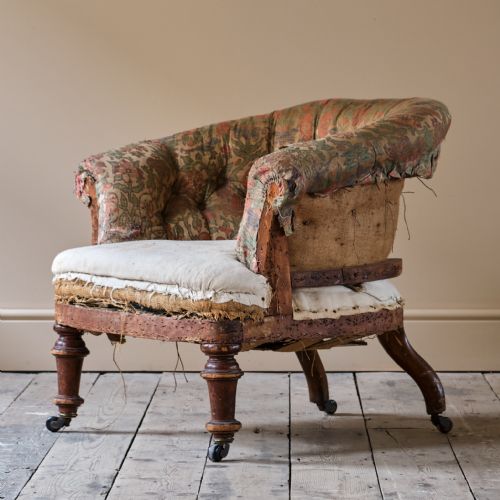
Makers built these frames using hardwoods such as mahogany and walnut, shaping them into curving cabriole legs, bobbin frames, and camel backs. Structural integrity relies on traditional joinery within the wood, which often requires tightening during a restoration project.
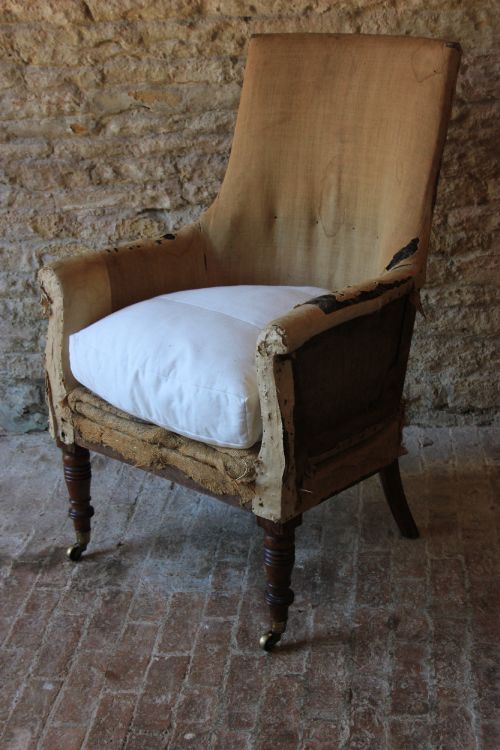
Internal support layers utilise traditional materials including hessian and calico to hold the underlying stuffing before the final fabric layer goes on. Brass castors and detailed wood carving frequently accent the lower frames of Victorian and Edwardian armchairs.
Listings feature frames constructed from mahogany, walnut, and hardwood, paired with traditional internal layers of hessian and calico.
Assessing Frame Quality
The distinction between standard frames and superior examples rests upon timber selection, carving depth, and the original proportions of the piece. Deep-seated country house armchairs and substantial sofas demonstrate finer joinery and more ambitious silhouettes than smaller occasional chairs.
Makers' stamps, factory marks, and distinguished provenance elevate specific armchairs above anonymous workshop productions. Frames retaining their original castors, springs, and intact structural woodwork command greater interest from restorers.
SF CULLEN·Howard and Sons·Gillows·Hindley & Sons
The Antique Seating Project Glossary
- Calico
- A plain-woven cotton fabric used as an inner lining beneath decorative upholstery. It provides a tight, neutral base layer for traditional seating projects.
- Hessian
- A coarse woven fabric made from jute fibres, traditionally used for webbing and stuffing containment within antique chair frames.
- Re-upholstery
- The complete renewal of interior stuffing, springs, webbing, and outer fabric on a chair or sofa frame. This process restores comfort and visual appearance to antique seating projects.
- Slipper chair
- A low-framed bedroom chair designed without arms, historically used for ladies dressing. Their compact proportions make them popular restoration subjects.
- Nursing chair
- A low-seated Victorian chair designed to allow comfortable holding of infants. They typically feature button backs and sprung seats.
Antique Seating Project: Frequently Asked Questions
What is an antique seating project?
An antique seating project is a chair, sofa, or stool sold in original condition that requires professional upholstery, webbing, or woodwork restoration before it is usable.
These pieces let restorers choose their own fabrics and finishing techniques while preserving an authentic 19th-century or Edwardian wooden frame.
How do I choose the right frame?
Look closely at the proportions, wood type, and structural shape of the armchair or sofa to ensure it fits your interior space.
Consider whether you want a deep-seated country house armchair, a low nursing chair, or a French slipper chair, depending on your restoration goals.
Can I use modern fabrics?
Modern textiles are commonly applied to antique frames during the reupholstery process to suit contemporary home interiors.
Traditional stuffing methods can be paired with current fire-retardant fabrics to meet modern safety standards while maintaining the vintage silhouette.
How do I identify a Howard style armchair?
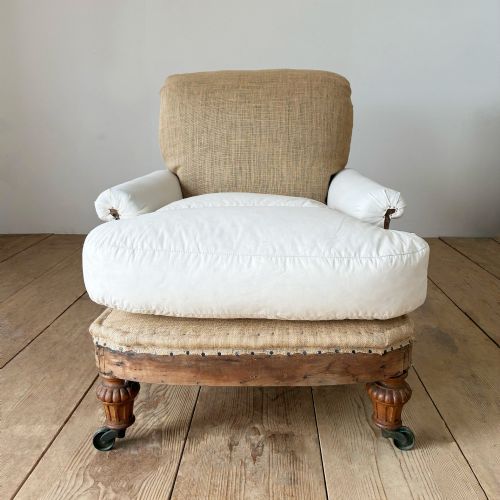
Howard style armchairs typically feature deep, comfortable proportions, low rolled arms, and exposed wooden legs often fitted with brass castors.
Original examples may bear stamps on the castors or frame, though many later country house armchairs adopted this distinctive comfortable aesthetic.