


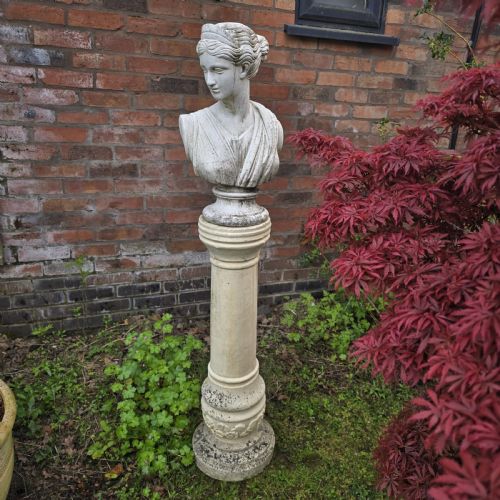

Antique Sculpture Column
An antique sculpture column elevates a bust or bronze so it commands the room.
Antique Sculpture Column
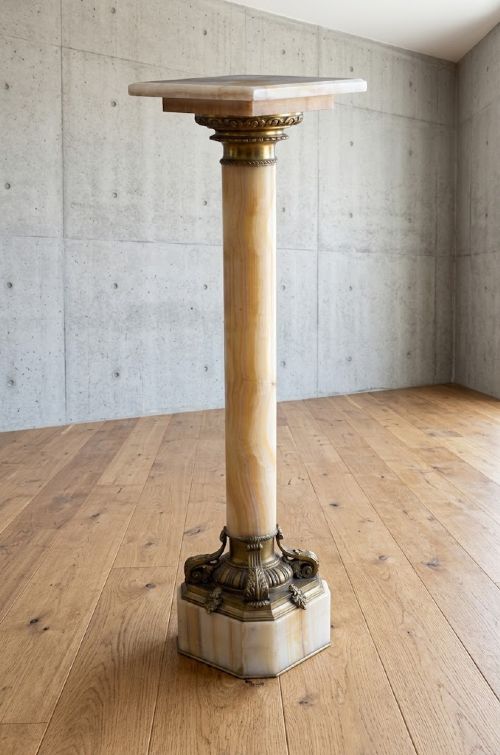
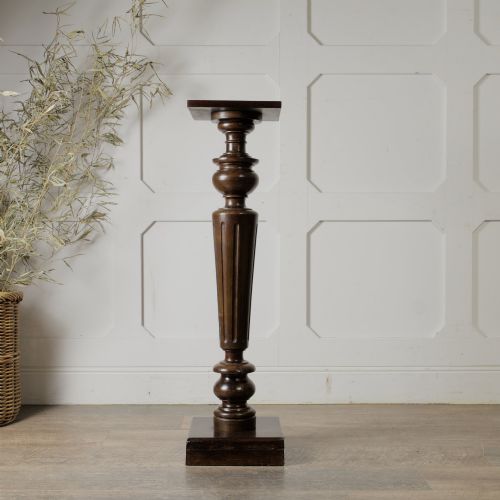
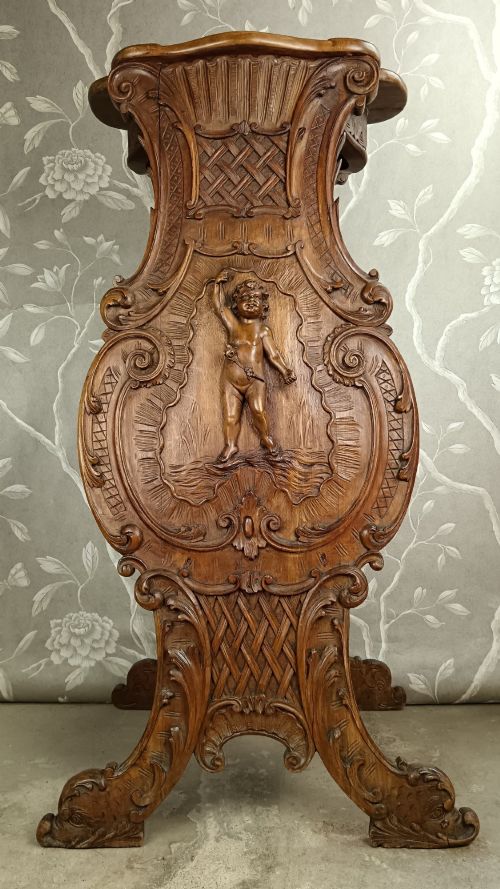
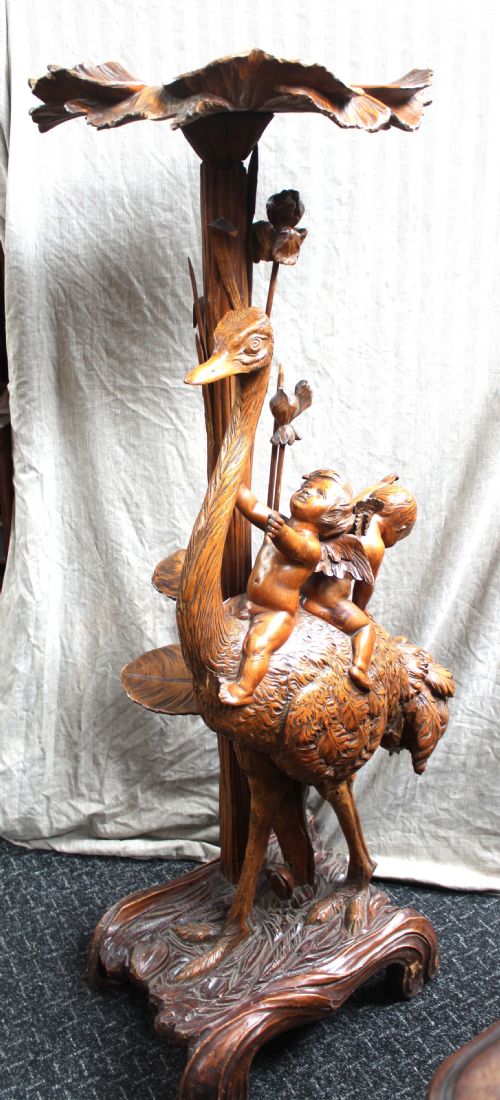
An antique sculpture column provides a raised platform to display art objects, urns, and portrait busts at eye level. The pieces found here span the nineteenth century up through the nineteen-thirties, taking the form of sturdy pedestals, tapered plinths, and carved torchieres.
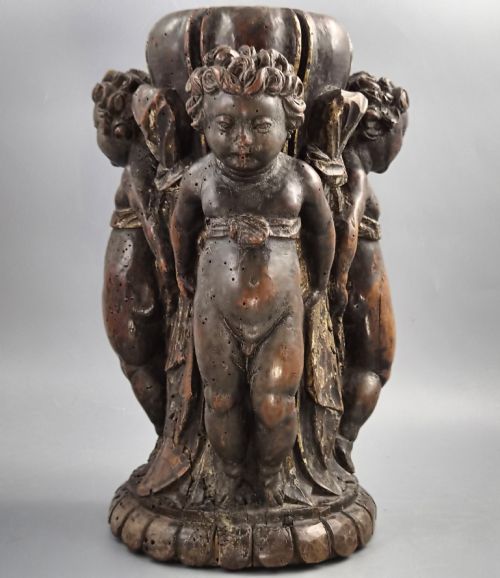
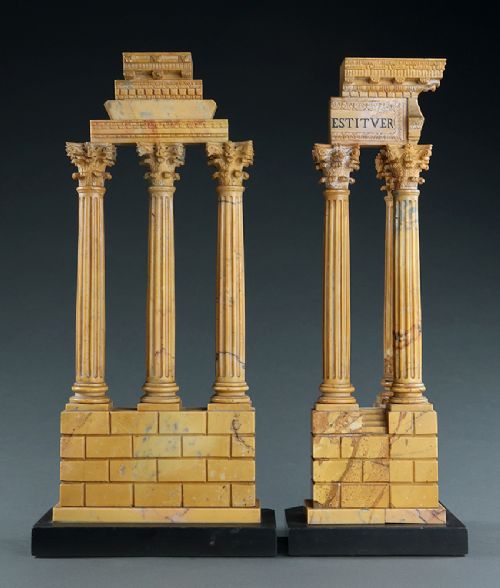
Makers drew from classical design languages, producing Neoclassical shafts, Italian Baroque walnut bases, and Grand Tour marble columns. Victorian examples sit alongside Empire revival pieces and early twentieth-century wooden stands.
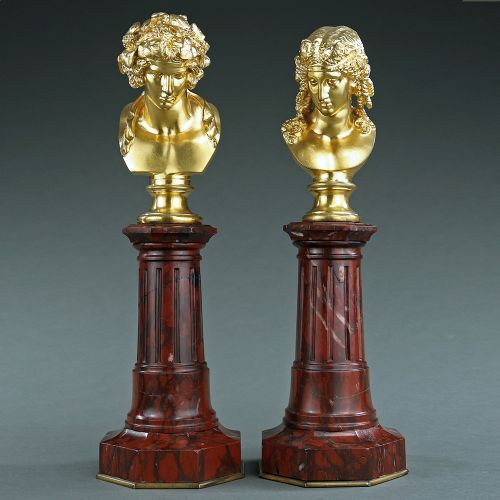
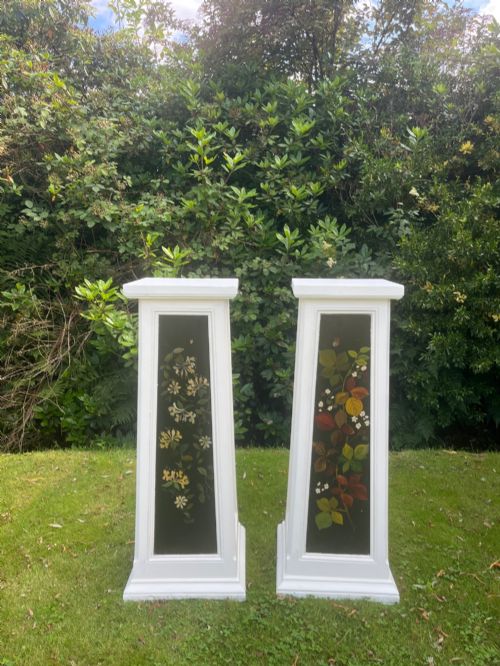
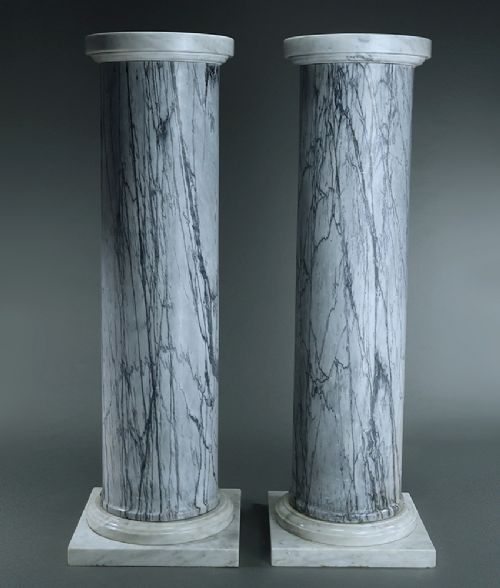
Buyers meet varied heights and configurations, from slender single columns to matched pairs intended for flanking doorways or fireplace mantles. Each serves to lift decorative objects into prominence.
Materials and Technique
Natural stone dominates the construction of these supports, utilising solid marble, variegated stone, and striking mineral varieties like verde antico, bardiglio, and rouge marble. Masonry work involves turning shafts on lathes and polishing the stone to a high sheen.
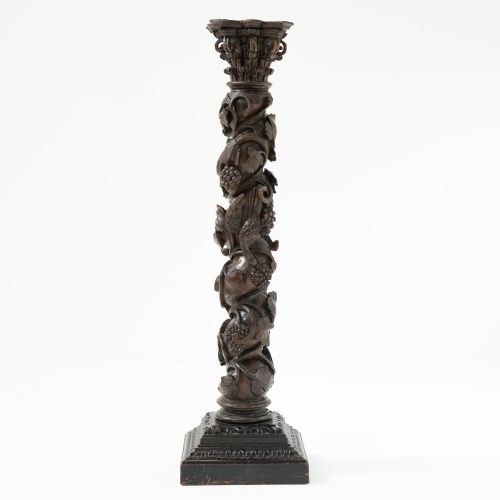
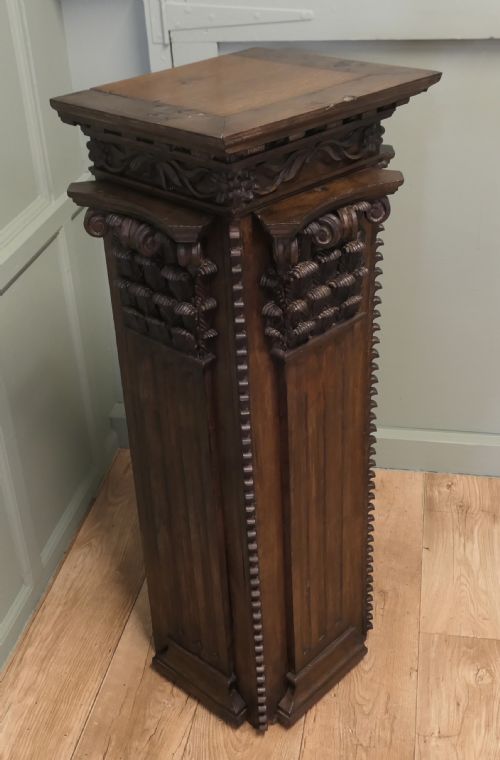
Woodworking traditions appear in carved walnut, solid mahogany, satinwood, and ebonised timber, often shaped with turned details, applied ormolu collars, and grain painting to imitate costlier stones. Joinery relies on traditional pegged and dowelled assemblies to bear heavy loads.
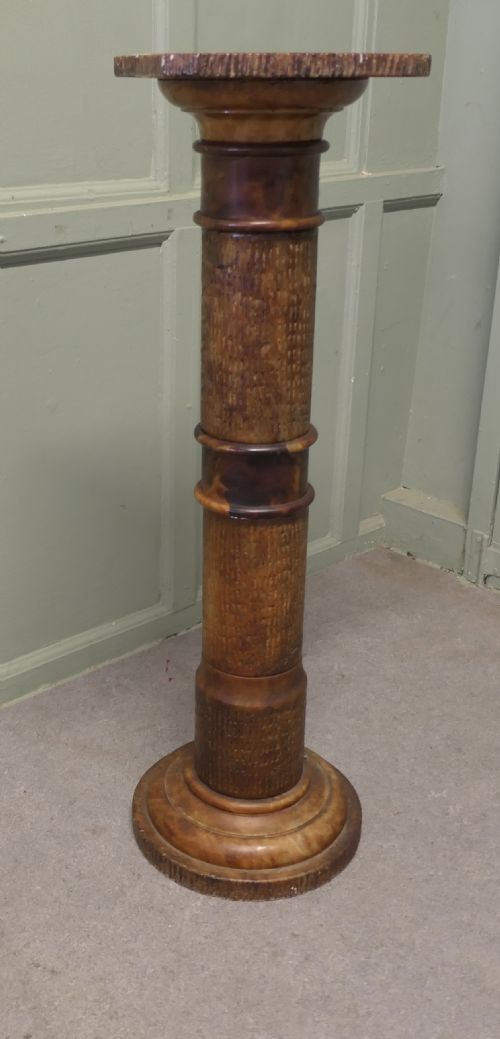
Several columns disguise themselves as expensive marble through clever paintwork, proving that Victorian decorators loved a practical illusion just as much as solid stone.
Craft and Proportion
Quality rests in the harmony of proportion between the capital, the supporting shaft, and the heavy base plinth. Finer examples display crisp, hand-carved detailing in wood or precise stone lathe-turning, whereas simpler utility stands rely on plain planes and straightforward painted finishes.
The selection of materials dictates distinction, separating standard pine or grain-painted pieces from solid exotic hardwoods, finely figured marbles, and columns accented with cast bronze or ormolu mounts.
Gillow & Co.·Humphrey Hopper·Paul Ponsard
The Antique Sculpture Column Glossary
- Torchiere
- A tall stand or pedestal originally designed to hold a candle or oil lamp. These pieces now commonly support small sculptures or bronze figures.
- Plinth
- The square or rectangular base block at the bottom of a column, or a standalone low block supporting a bust.
- Ormolu
- Gilded bronze mounts applied to furniture and decorative columns for ornamentation. The technique involves mercury amalgamation on cast bronze.
- Solomonic
- A helical or twisted column shaft resembling a spiral vine. This form appears frequently in Baroque and revival furniture carving.
- Grand Tour
- Souvenirs and architectural models brought back by nineteenth-century travellers from continental Europe. These include small marble columns and bronze monuments.
Antique Sculpture Column: Frequently Asked Questions
How do I choose the right height?
Match the height of the column to the size of the sculpture or bust it carries and the room ceiling height. Standard display heights place the art piece at comfortable viewing level for standing observers.
Shorter plinths suit heavier, larger bronzes, while tall slender columns elevate smaller portrait busts and decorative objects so they draw the eye.
Can these columns support heavy marble busts?
Solid marble and hardwood columns offer substantial weight capacity designed specifically for heavy sculptural loads. Check that the top plate area matches the footprint of the object.
Wood-turned pedestals and solid stone columns distribute weight evenly down to the base plinth, ensuring stability on flat flooring.
Where should I place a pedestal in a room?
Position columns in corners, against blank wall spaces, or flanking architectural openings to create balanced focal points. Ensure adequate clearance so foot traffic does not bump the display.
Lighting matters significantly, so place columns where natural daylight or directional lamps highlight the contours of the supported sculpture.