

Antique Satinwood Bureau
An antique satinwood bureau brings warm golden timber and clever fitted writing compartments into a room.
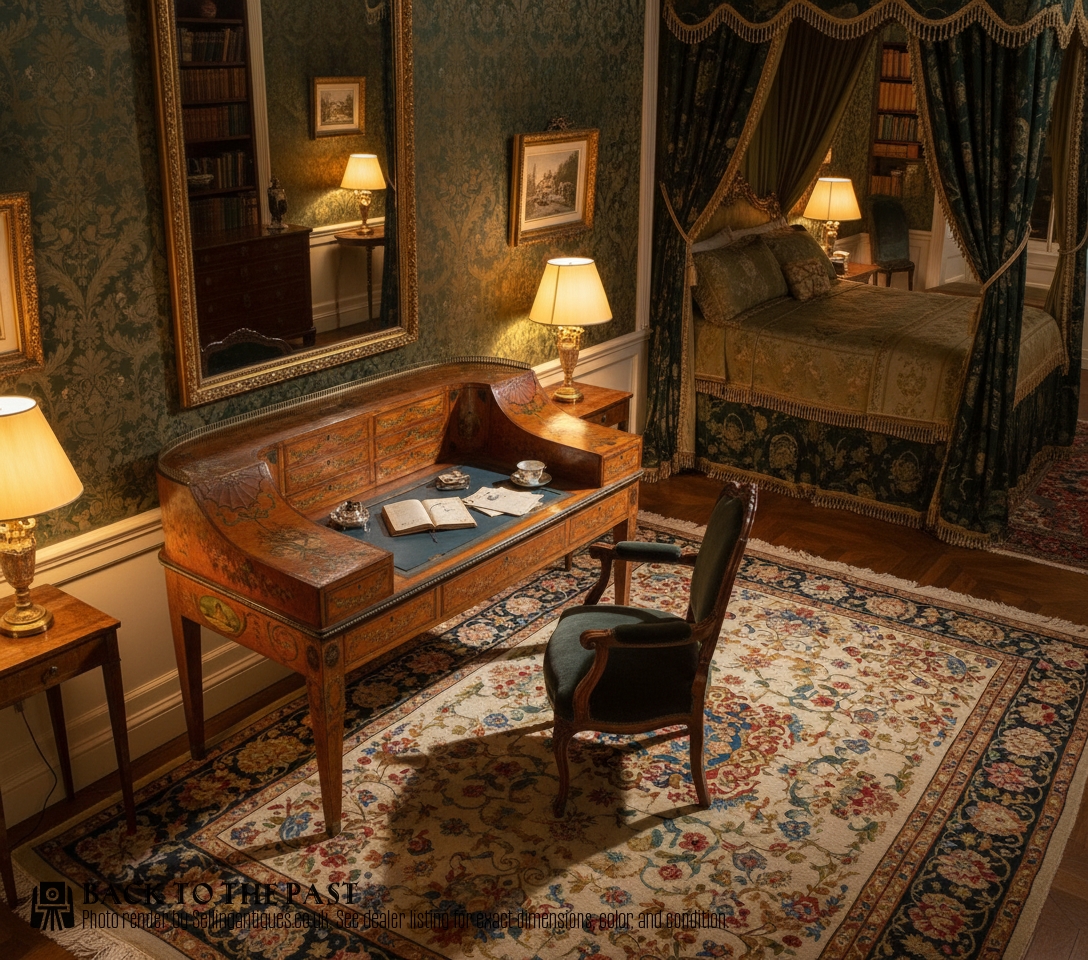
Antique Satinwood Bureau
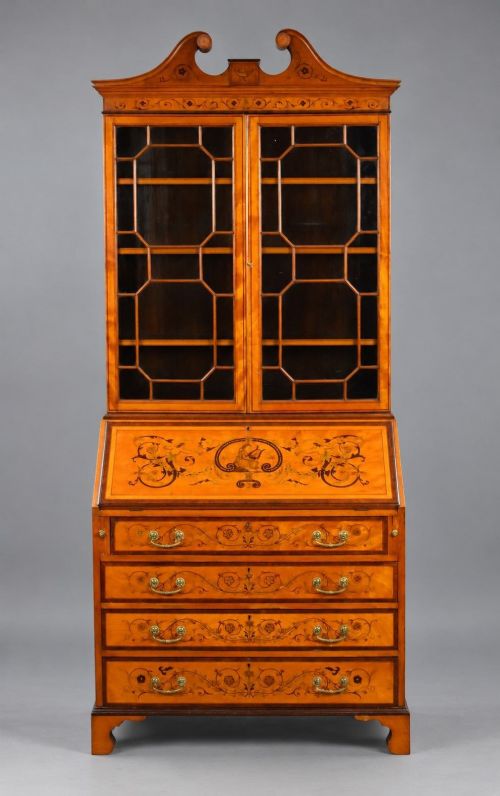
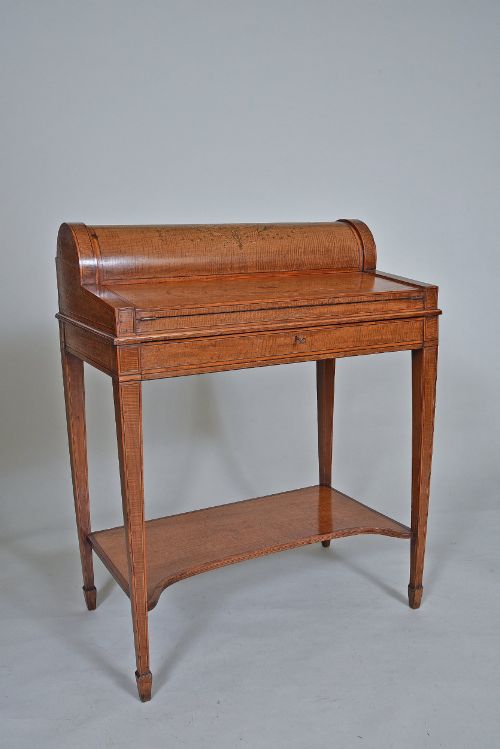
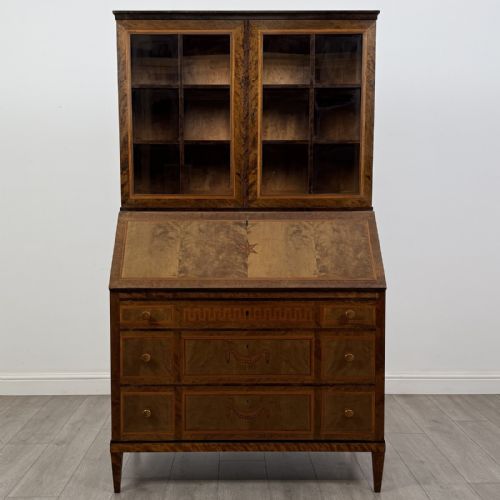
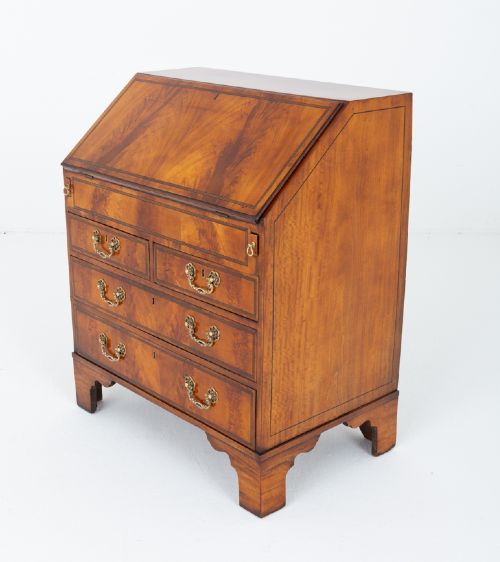
An antique satinwood bureau typically combines a sloping fall-front writing flap with internal pigeonholes and drawers, resting atop further drawers or a cabinet base. These writing pieces range from compact ladies' writing tables and cylinder desks to larger bureau bookcases built during the eighteenth, nineteenth, and early twentieth centuries.
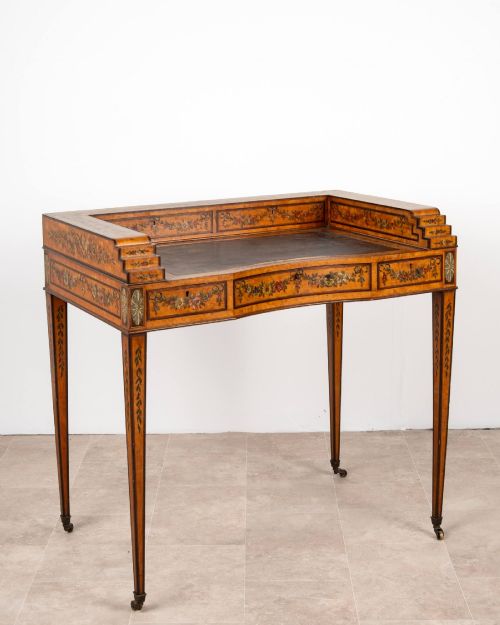
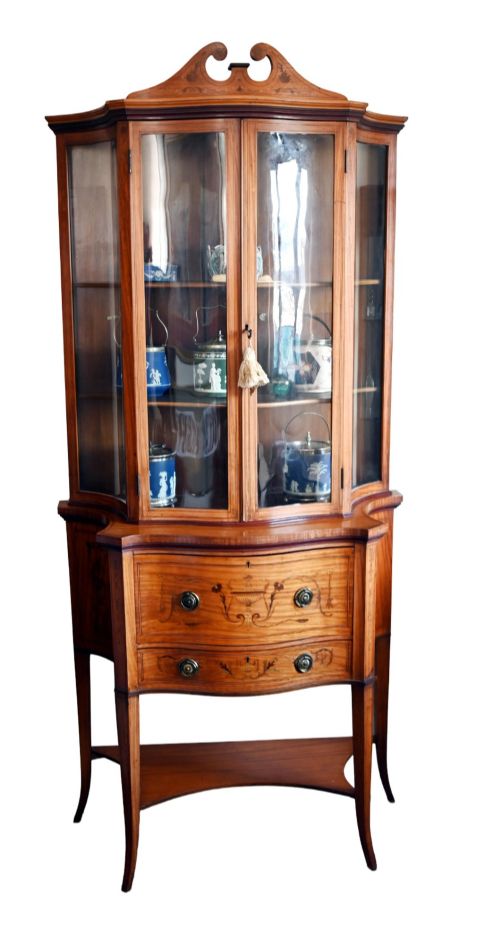
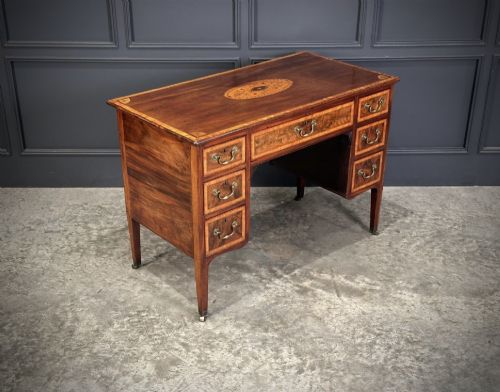
The version most frequently met on this page is the Edwardian or Sheraton Revival piece from around nineteen hundred, often displaying delicate painted floral motifs or contrasting mahogany banding alongside the bright yellow satinwood ground. Earlier Georgian and George III examples appear too, showing restraint in their veneer work and linear inlay rather than painted decoration.
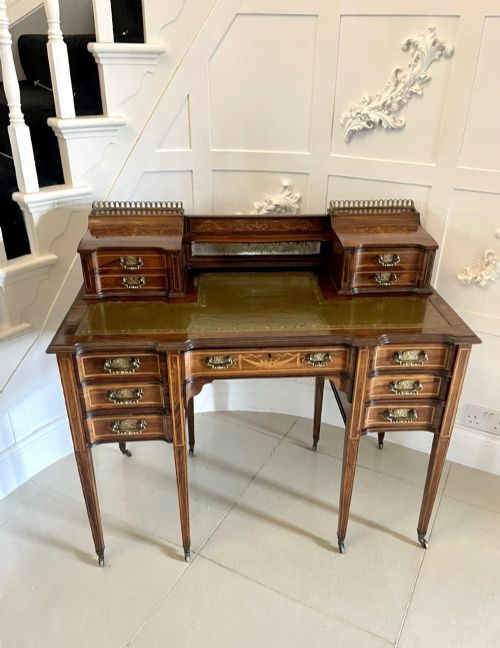
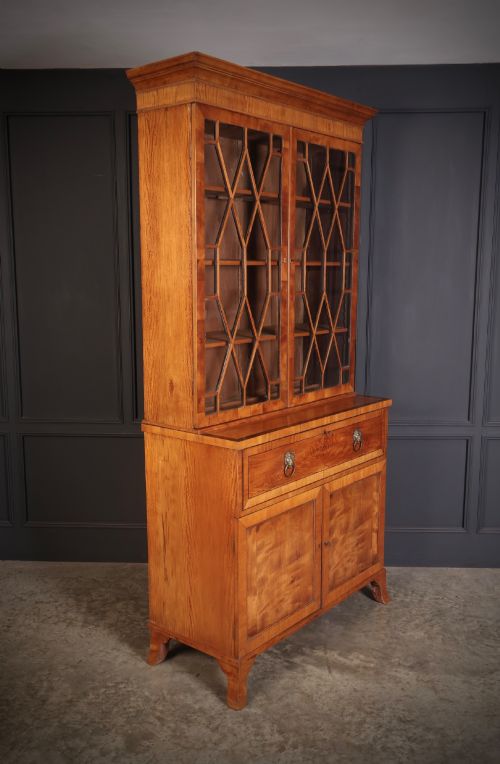
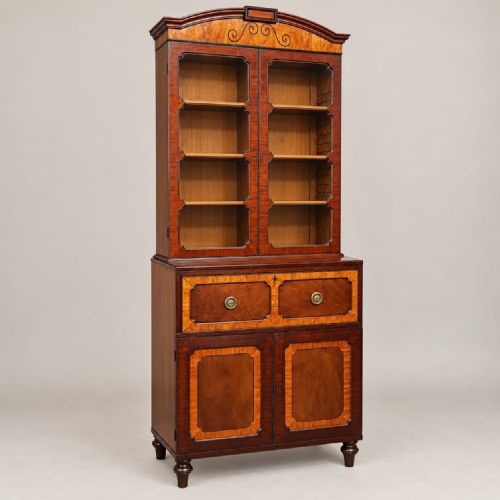
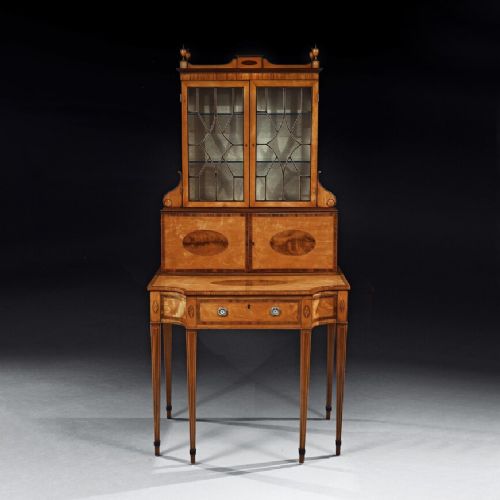
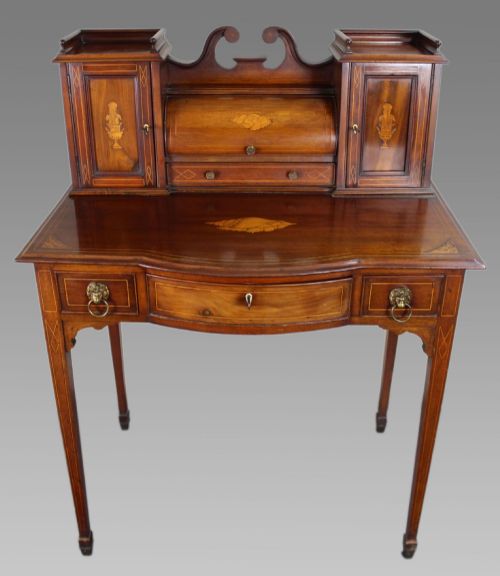
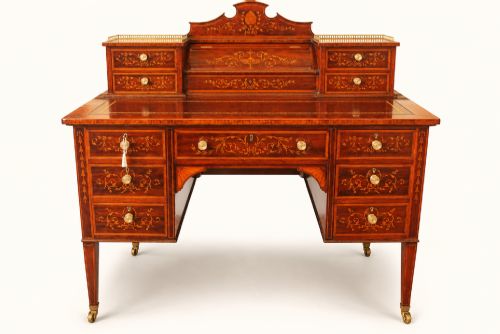
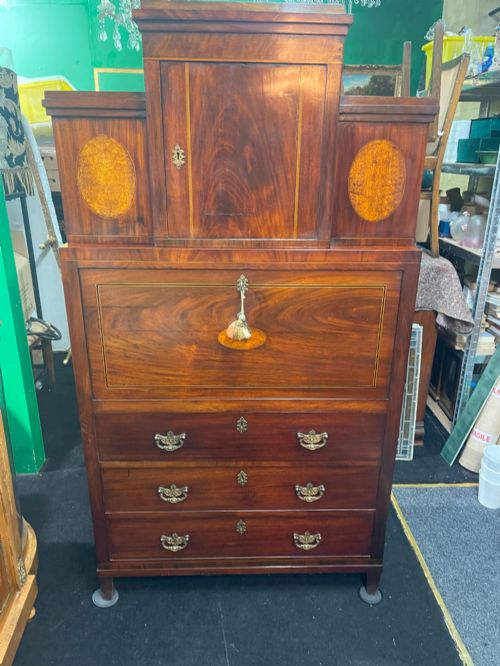
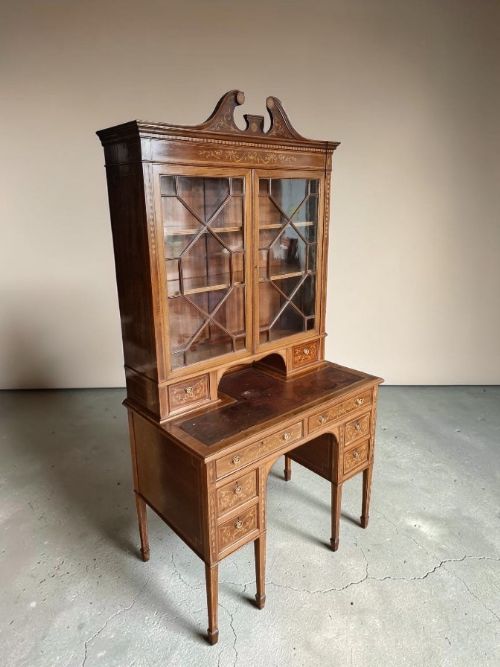
Beyond the classic fall-front form, the selection encompasses related writing furniture sharing the same pale exotic timber, including Carlton House desks, bonheur du jour writing tables, and secretaire bookcases. Each variant offers a dedicated writing surface combined with compartments for stationery and correspondence.
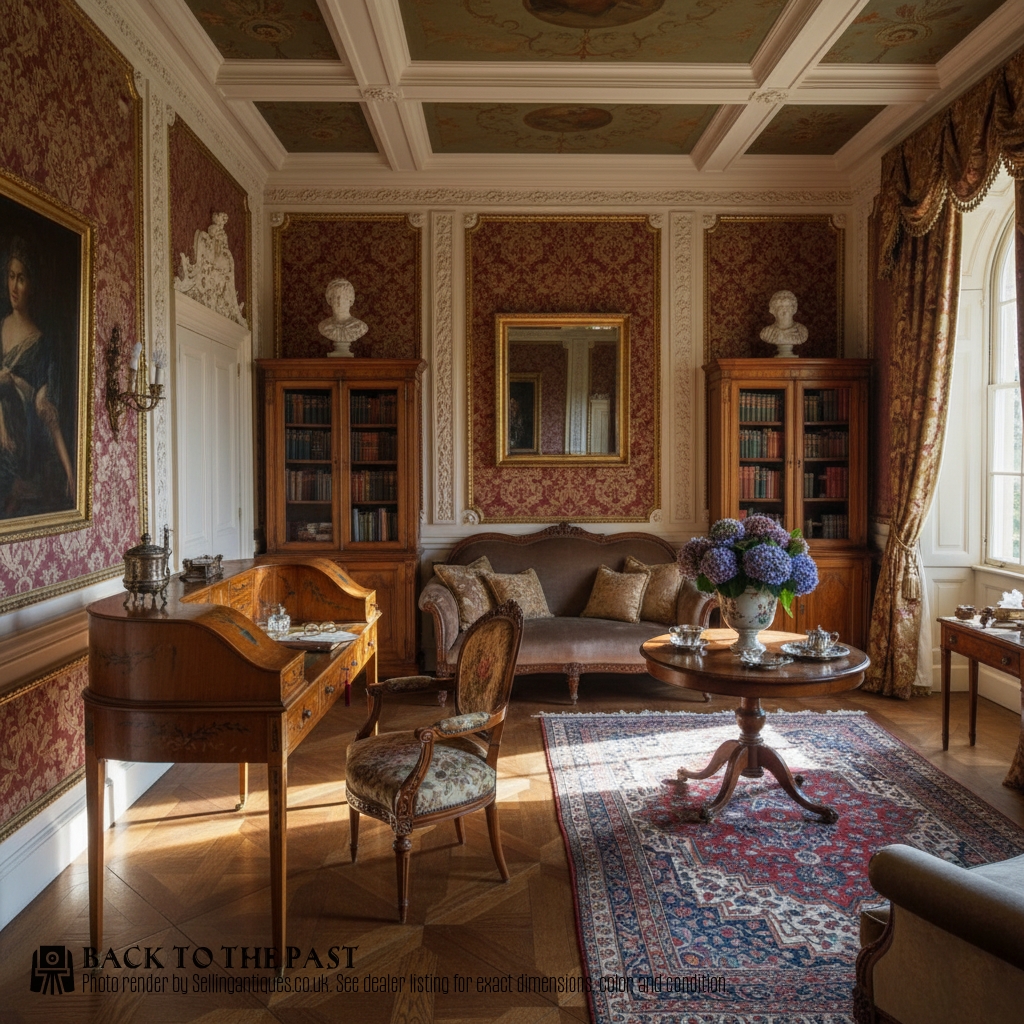
Materials and construction methods
Cabinetmakers utilised dense native or imported carcases, often pine or mahogany, as a stable foundation for laying down thin veneers of smooth, mottled satinwood. This timber was frequently enhanced with contrasting crossbanding, ebony stringing, or marquetry panels depicting floral ribbons and classical urns.
Advanced joinery is visible in the internal fittings of these desks, where small drawers feature hand-cut dovetails and tambour shutters slide smoothly in hidden grooves. Brass handles, key escutcheons, and occasional ormolu mounts secure the openings and add metallic contrast to the pale polished wood.
Antique Satinwood Bureau Retail Price Guide 2026
Typical asking prices for satinwood bureau among the pieces listed under this phrase on Sellingantiques today, from the lower quarter to the upper quarter. They describe what is for sale here now, not the wider market.
Several ladies' writing tables retain hidden compartments behind secret panels, designed for keeping private correspondence safe from prying eyes.
Markers of quality and craftsmanship
Quality rests upon the selection and matching of the satinwood veneer, where superior pieces exhibit a strong natural chatoyancy and careful grain continuation across the drawer fronts and writing flaps. The crispness of the marquetry and the precision of hand-painted details separate standard production furniture from ambitious cabinet work.
Structural integrity and the retention of original brass hardware and working locks dictate the standing of a bureau. Well-executed secondary timbers inside the hidden compartments and smooth action within the sliding cylinders or fall-front hinges point to skilled construction.
Maple & Co. London·Harris Lebus of Tottenham·Edwards and Roberts
The Antique Satinwood Bureau Glossary
- Satinwood
- A lustrous tropical hardwood native to Ceylon and the West Indies, prized for its pale yellow colour and shimmering reflective grain. It was heavily employed by Georgian and Edwardian cabinetmakers for high-status veneer and inlay.
- Carlton House desk
- A distinctive writing table shape featuring a curved superstructure of small drawers and compartments wrapping around the back and sides of the writing surface. The configuration originated in the late eighteenth century.
- Marquetry
- The decorative technique of arranging small pieces of coloured veneers into pictorial or geometric patterns on a wooden ground. Craftsmen cut contrasting woods together to achieve tight, seamless joints.
- Cylinder desk
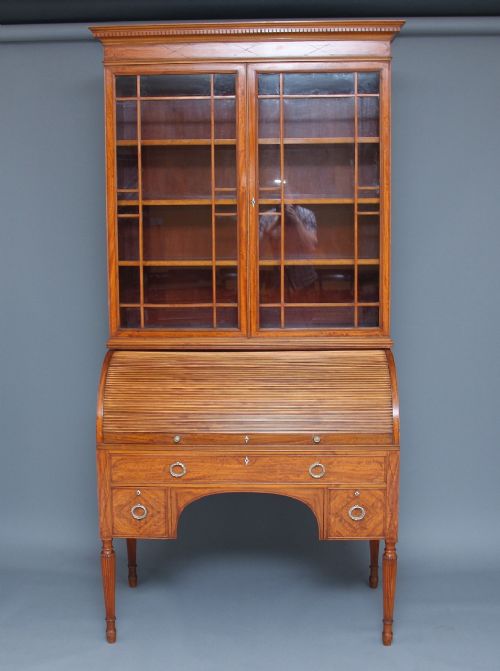
- A writing desk featuring a quarter-circle wooden cylinder that rolls backward into the body of the desk to reveal a pull-out writing slide and pigeonholes. It keeps the workspace tidy when closed.
- Bonheur du jour
- A small, light ladies' writing table featuring a raised set of drawers or a cabinet on the upper surface. The form gained popularity during the eighteenth century and saw a major revival in the Edwardian period.
- Stringing
- Thin inlay lines of contrasting wood or bone used to outline drawer edges, tabletops, and panels. This linear detail defines the geometric geometry of Sheraton and neoclassical furniture.
Antique Satinwood Bureau: Frequently Asked Questions
What is a satinwood bureau?
A satinwood bureau is a writing cabinet finished in pale, golden tropical hardwood, featuring a sloping flap that opens to reveal inner compartments.
These pieces range from Georgian workspace furniture to Edwardian painted examples made for writing letters and storing papers.
How do I use a cylinder desk?
A cylinder desk operates by rolling a curved wooden shutter back into the body of the desk to uncover the writing surface.
This mechanism exposes the inner pigeonholes and small drawers while keeping the main surface protected when closed.
Where were these desks placed?
These desks typically stood in private sitting rooms, bedrooms, or libraries where correspondence and personal accounts were managed.
Freestanding nineteenth-century examples were often positioned toward the centre of a room to display finished back veneers.
How do I distinguish Edwardian from Georgian pieces?
Edwardian satinwood pieces often display delicate hand-painted floral swags, colourful marquetry, and lighter overall proportions influenced by the Sheraton revival.
Georgian examples rely more on architectural restraint, linear stringing, and rich figured grain without painted decoration.