

Antique Salon Furniture
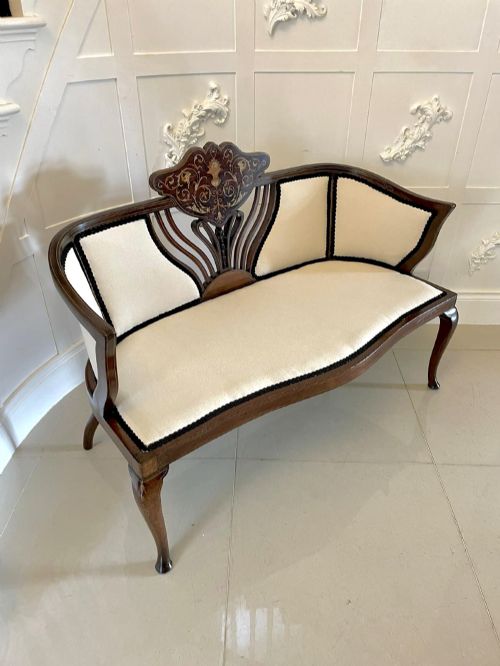
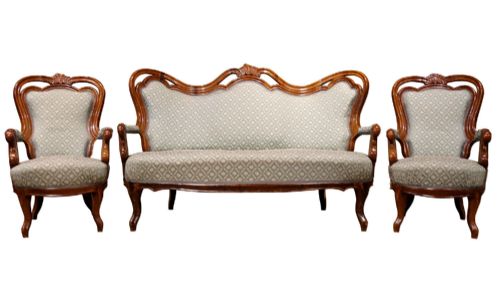
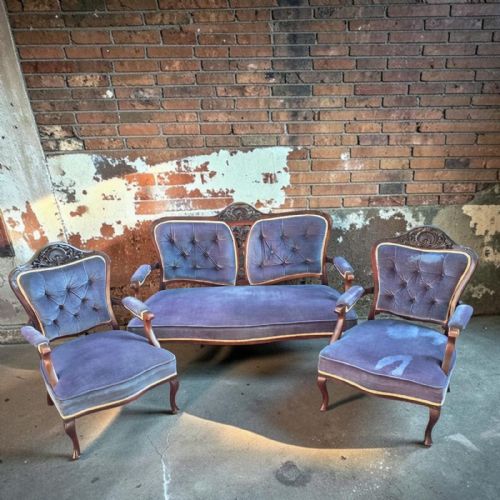
These antique salon furniture pieces bring formal reception rooms to life with generous seating suites, elegant armchairs and richly carved settees.
Antique Salon Furniture
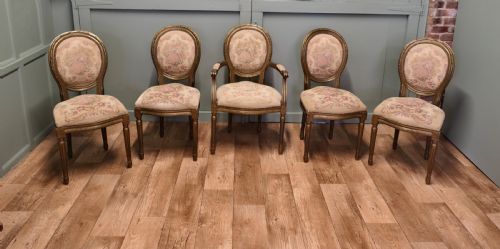
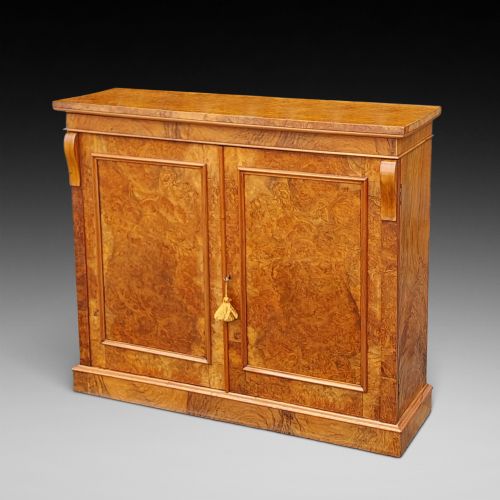
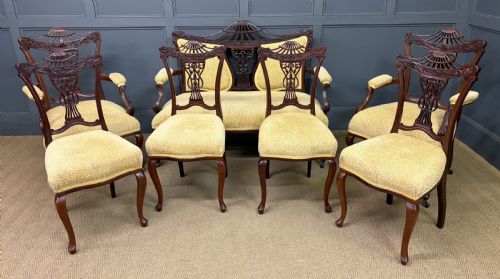
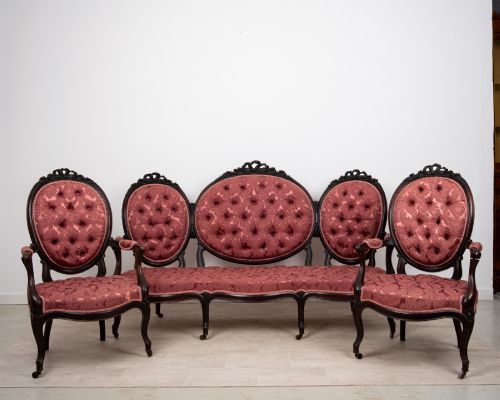
Buyers encounter complete multi-piece suites with matching settees and armchairs, as well as individual salon chairs and cabinets. The forms span robust mahogany and walnut frames to gilded French revival pieces.
Origin varies from British workshops to French ateliers and Scandinavian makers, encompassing stylistic revivals from Louis XVI to the Aesthetic Movement.
Materials and construction
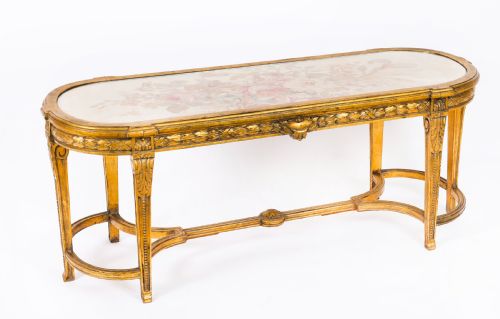
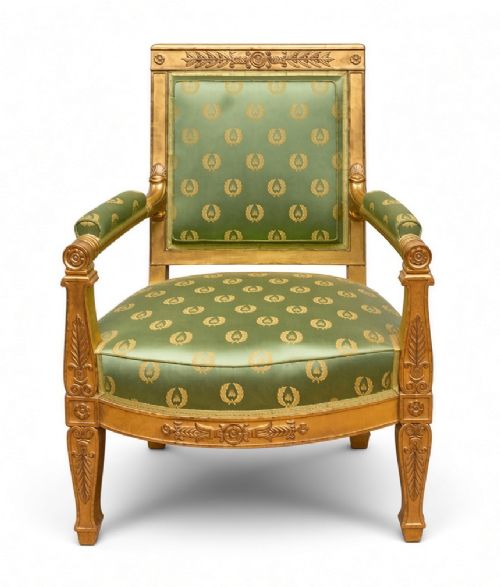
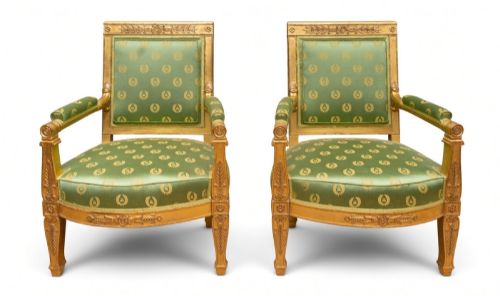
Makers utilised dense timbers including mahogany, walnut, satin birch and oak, often shaping them into curved chair backs and cabriole legs. Giltwood frames required skilled carving and application of gold leaf over gesso.
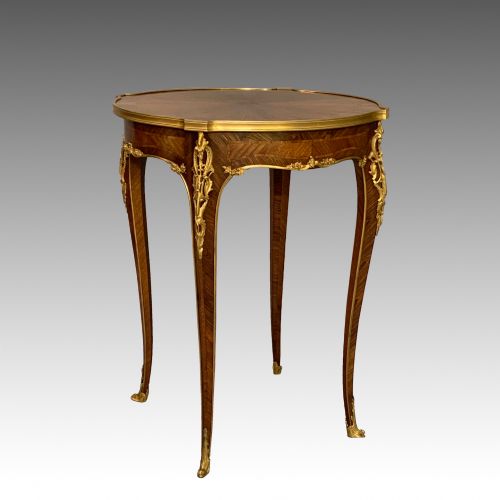
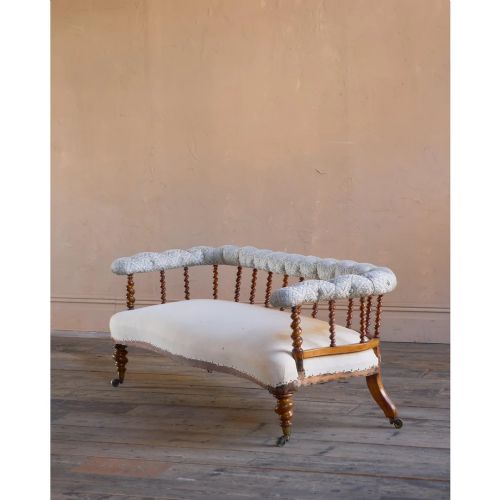
Upholstery formed a central part of the construction, employing deep buttoning, textile covers, velvet and traditional stuffing over sprung bases. Inlaid details incorporated contrasting wood veneers and brass mounts.
Antique Salon Furniture Retail Price Guide 2026
Typical asking prices for salon furniture among the pieces listed under this phrase on Sellingantiques today, from the lower quarter to the upper quarter. They describe what is for sale here now, not the wider market.
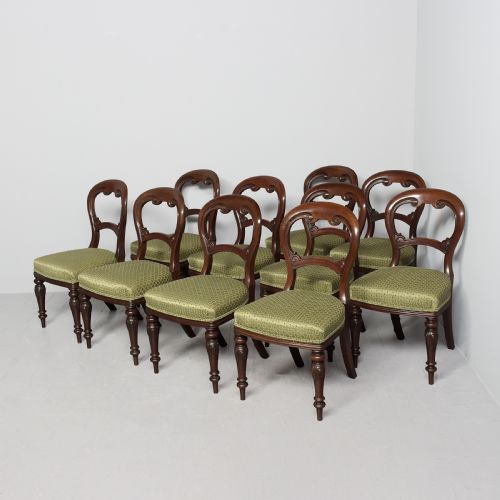
Some nineteenth-century drawing rooms required eleven separate matching chairs just to ensure nobody had to stand during a lengthy piano recital.
Judging quality in salon pieces
Quality rests in the crispness of the timber carving and the architectural proportion of the frame, where superior examples display fluid lines and balanced ornamentation. Finer suites show cohesive design across every component, from the central settee to the smallest side chair.
The standard of upholstery and the retention of original textiles or proper period-appropriate re-covering elevate a piece. Cabinetwork reveals superior skill through tight joinery and precise marquetry or inlay.
Joseph-Emmanuel Zwiener·Jacob-Desmalter·C. Hindley & Sons·Blyth & Sons·Morison & Co - Edinburgh·Holland & Sons
The Antique Salon Furniture Glossary
- Salon suite
- A matched set of seating furniture, typically comprising a settee and multiple armchairs or side chairs designed for a drawing room.
- Giltwood
- Timber carved and coated with gold leaf, frequently seen on French revival chairs and tables from the nineteenth century.
- Aesthetic movement
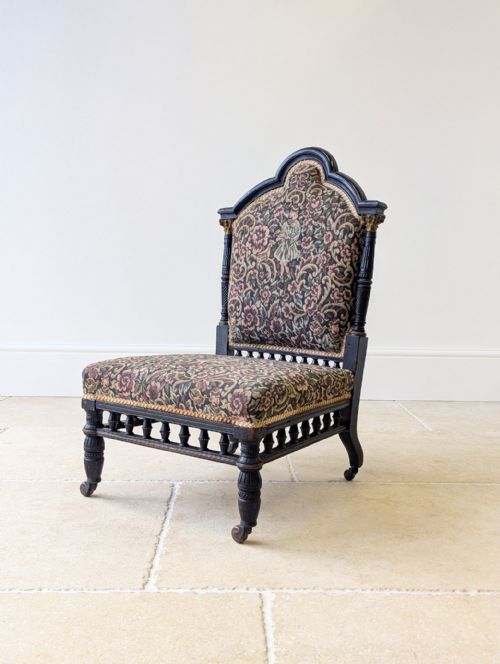
- A late nineteenth-century design style focusing on visual beauty, often resulting in ebonised wood frames with minimal ornamentation.
- Biedermeier
- A Central European style from the mid-nineteenth century prioritising clean lines and blonde wood grains such as birch.
- Fauteuil
- An open-armed upholstered armchair with exposed wooden armrests, originating in France.
Antique Salon Furniture: Frequently Asked Questions
What is an antique salon suite?
A salon suite is a matched group of seating furniture made for formal reception rooms, usually consisting of a sofa or settee paired with several matching armchairs and side chairs.
These suites were produced in larger numbers during the nineteenth and early twentieth centuries, utilising matching woods and upholstery fabrics to create a cohesive interior.
How do I identify Victorian salon chairs?
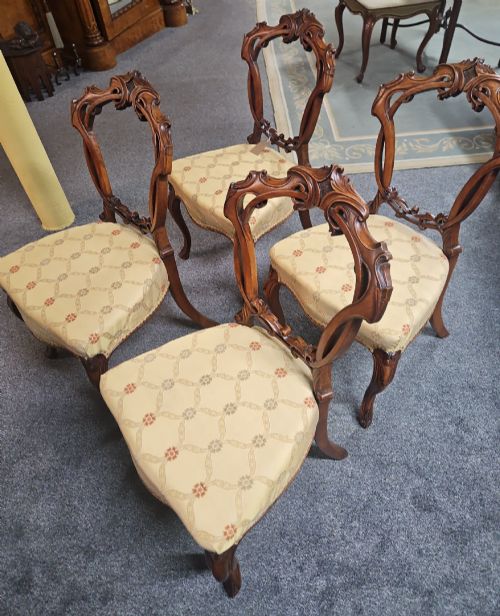
Victorian salon chairs typically feature dark hardwoods like walnut and mahogany, often shaped into balloon backs or heavily carved frames with buttoned upholstery.
They frequently display influences from earlier periods such as the Rococo Revival, showing curved legs and floral motifs carved directly into the timber.
Where were these pieces used?
These items belonged in the formal drawing rooms and receiving parlours of large houses, where hosts entertained guests.
They served both a functional seating purpose and a social one, demonstrating the household's taste and wealth through high-status materials like giltwood and satin birch.
How do I care for antique upholstery?
Protect antique textiles by keeping them out of direct sunlight to prevent fading and degradation of fragile fibres like velvet and silk.
Vacuum gently using a low-suction attachment with a brush guard, and consult a specialist restorer for deep cleaning or structural repairs to the internal springs.