
Antique Rustic Bench Seat
An antique rustic bench seat brings practical vernacular seating into a room, offering honest construction and centuries of daily utility.
Antique Rustic Bench Seat
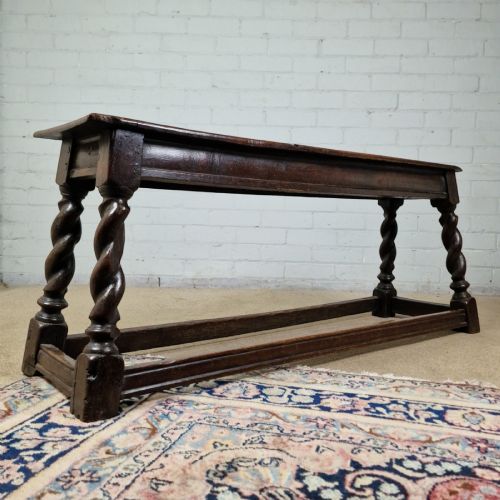
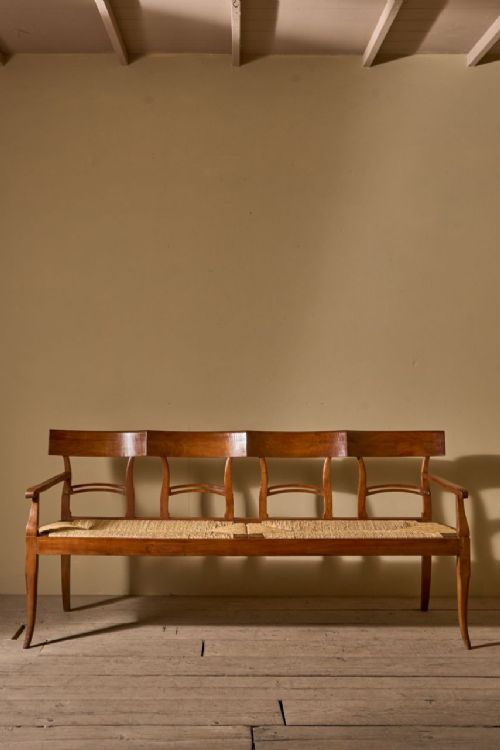
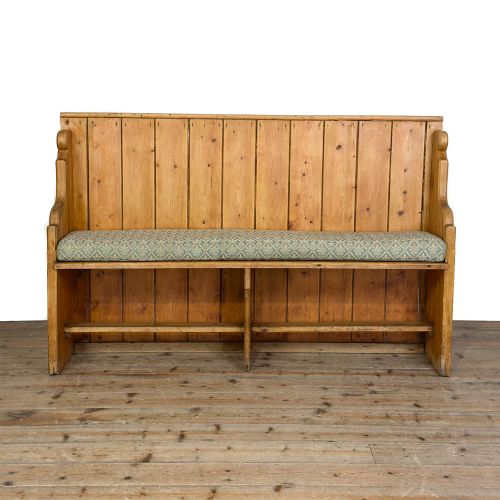
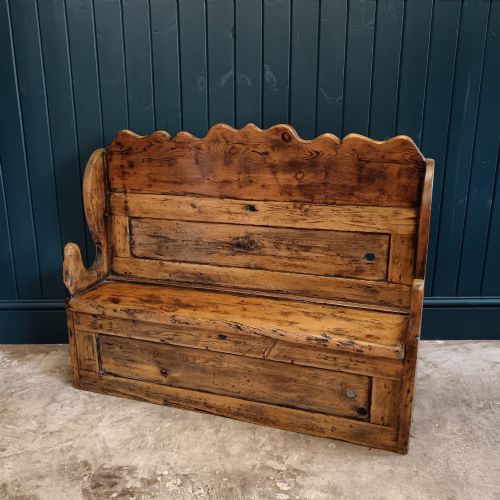
An antique rustic bench seat encompasses utilitarian seating forms created for everyday domestic, agricultural, and institutional life. When searching for an antique rustic bench seat, buyers encounter long pine church pews, solid elm box settles, and oak hall benches spanning several centuries. These pieces originate from diverse European and provincial traditions, including Welsh, French, and Austrian workshops.
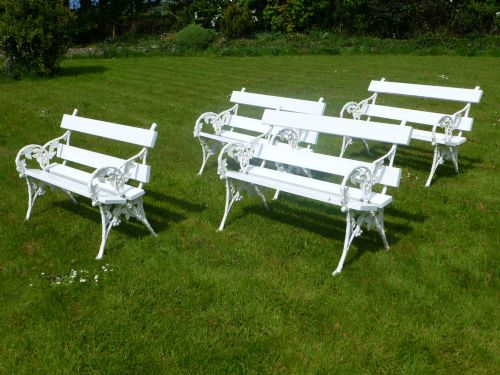
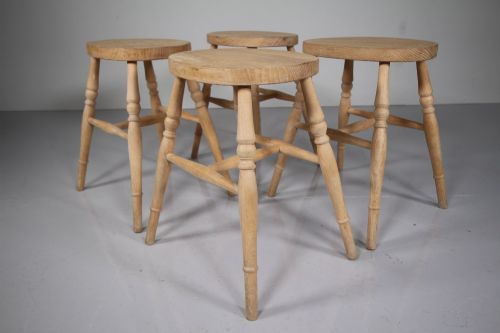
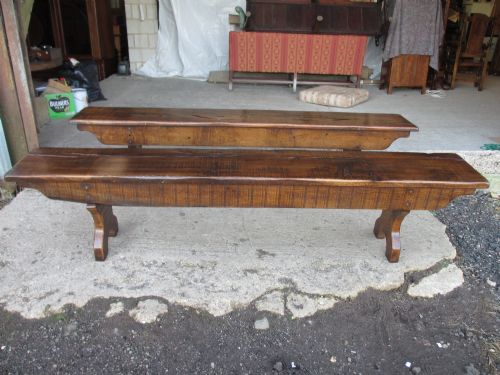
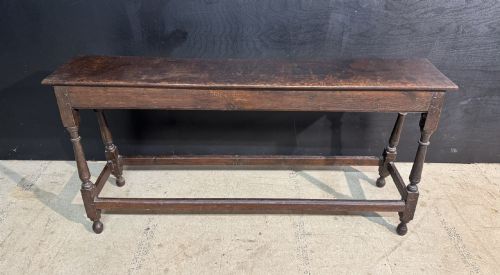
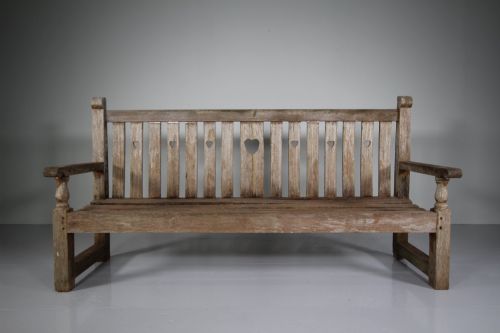
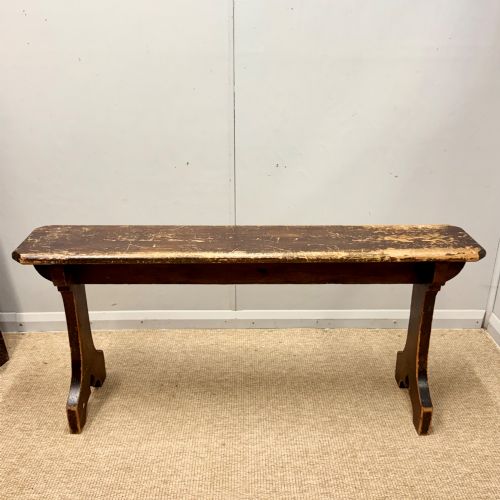
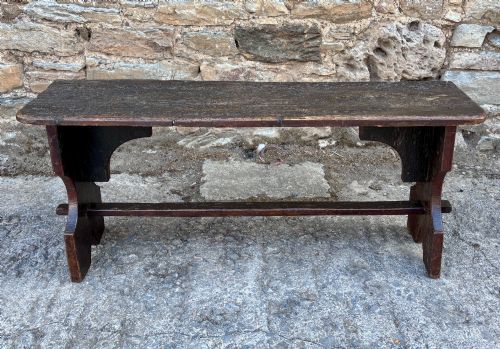
The most common examples on this page are nineteenth-century pine pews and oak hall benches shaped by country makers. Form follows function closely in these objects, leading to designs that incorporate high backs, storage boxes, or simple trestle ends. Garden variations utilise cast iron and weathered teak alongside faux bois metal structures.
Materials and construction
Makers relied heavily on native timbers such as pine, oak, elm, ash, and cherrywood selected for local availability and structural strength. Planks were joined using traditional methods including mortise and tenon joints, dovetails, and pegged construction to withstand heavy daily use. Iron components, particularly in garden pieces, involved foundry casting to create botanical patterns like blackberry and leaf motifs.
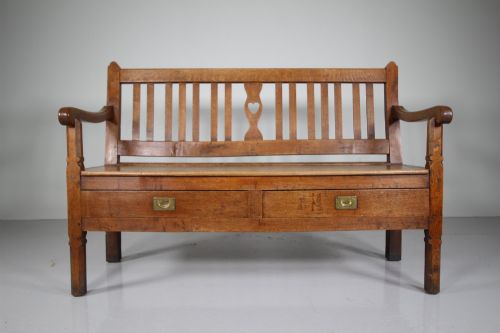
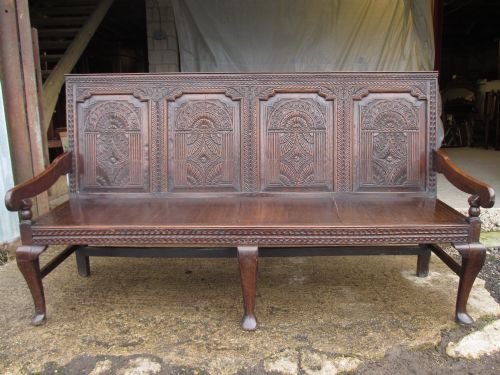
Surfaces often display original paint, wax, or natural patination developed through decades of handling and exposure. Some vernacular examples incorporate rush seating or carved decorative details like heart motifs into the solid wooden backs and panels.
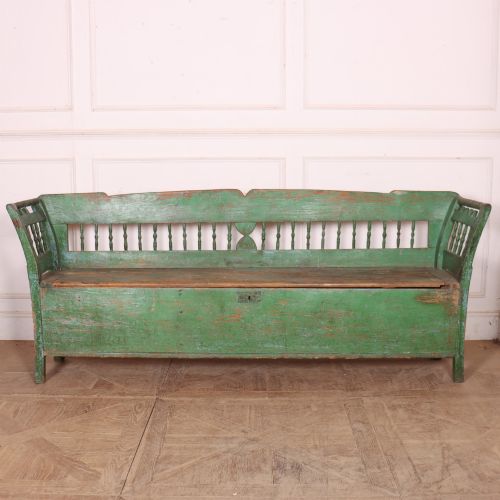
Several pieces preserve original green and ochre paint, reminding us that country folk loved a splash of bright colour.
Assessing the examples
Quality in these benches rests upon the integrity of the original timber and the retention of honest surface wear. Pieces that retain their original painted finishes, honey brown patination, or untouched waxed surfaces hold greater character than stripped or overly restored equivalents.
Structural honesty distinguishes superior examples from lesser ones, particularly where joins remain firm without excessive modern intervention. The balance of proportions, thoughtful shaping on trestle ends, and the clever integration of storage boxes elevate simple utility items into accomplished country furniture.
Falkirk foundry·Coalbrookdale
The Antique Rustic Bench Seat Glossary
- Settle
- A wooden bench with a high back, solid arms, and often a storage box beneath the seat. This form protected sitters from draughts in vernacular interiors.
- Pew
- A long wooden bench traditionally found in churches and chapels. These heavy seats are constructed from solid pine or oak.
- Faux bois
- An artistic technique imitating wood, frequently utilised in nineteenth-century cast iron garden benches. This French term translates to false wood.
- Trestle
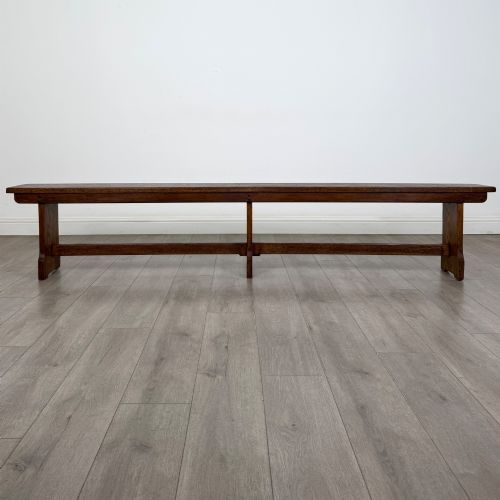
- A structural support consisting of a horizontal beam fixed to two splayed legs. These ends provide sturdy support for long dining or hall benches.
- Patina
- The surface sheen and colour acquired by wood and paint through age and use. This indicator reveals the history of a piece.
Antique Rustic Bench Seat: Frequently Asked Questions
Where should I put a hall bench?
A hall bench suits narrow entryways, corridors, or boot rooms where it provides both seating and practical charm. Slim profiles allow these pieces to fit neatly against walls without obstructing pathways.
Many examples feature built-in storage boxes beneath the seat, offering a convenient place to store shoes, blankets, or daily accessories while maintaining a tidy interior space.
Can I use an antique bench outdoors?
Cast iron and weathered teak garden benches are designed to withstand outdoor environments and seasonal weather changes. These pieces thrive in patios or garden settings when given appropriate seasonal care.
Indoor wooden items, such as pine pews and oak settles, are sensitive to moisture and extreme temperature fluctuations. Keeping them inside protects their historic timber and original finishes from degrading.
How do I date an oak settle?
Dating relies on examining construction methods, tool marks left by makers, and the style of any carved panels. Earlier eighteenth-century examples often feature heavier framing, pegged joints, and deep hand-carved motifs.
Later nineteenth-century interpretations tend to show machine-sawn elements alongside traditional joinery. Comparing the patination and wear patterns across the timber helps confirm the age of the piece.