
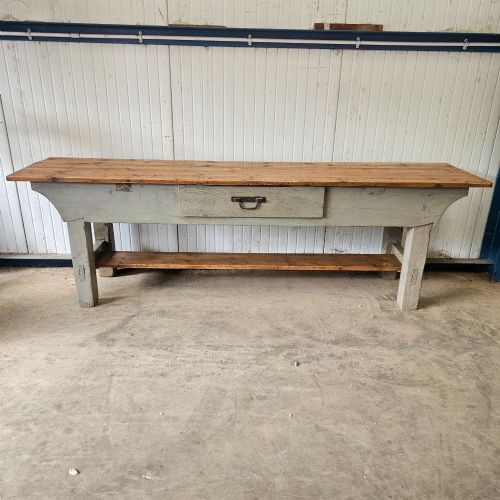
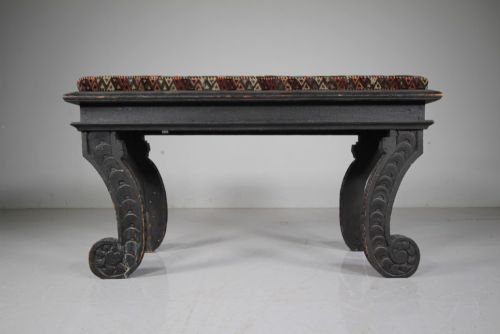
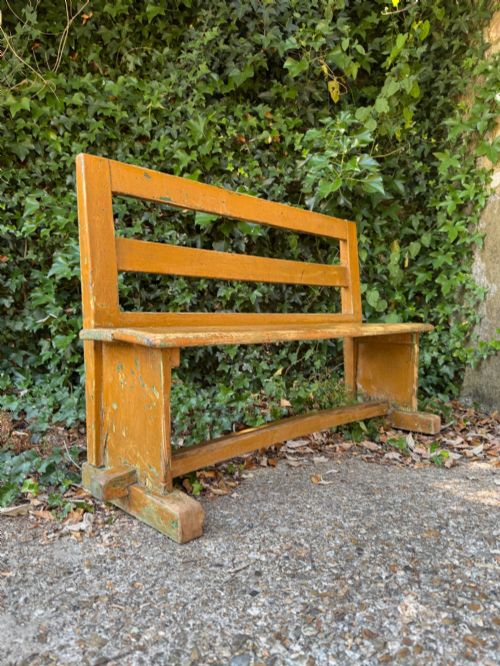
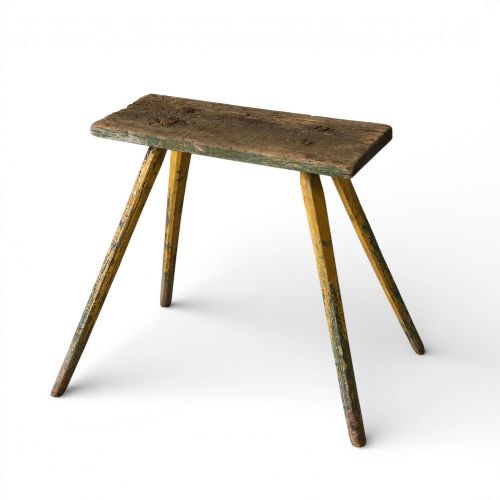
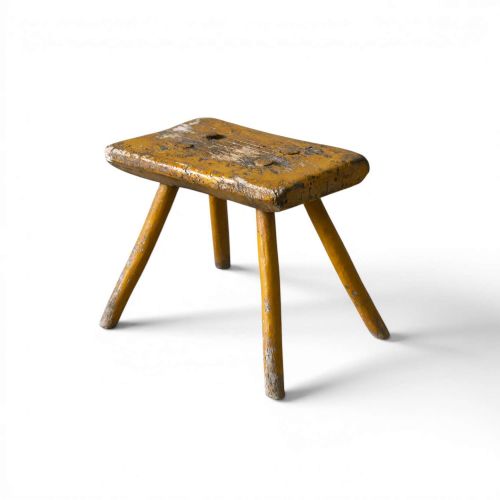
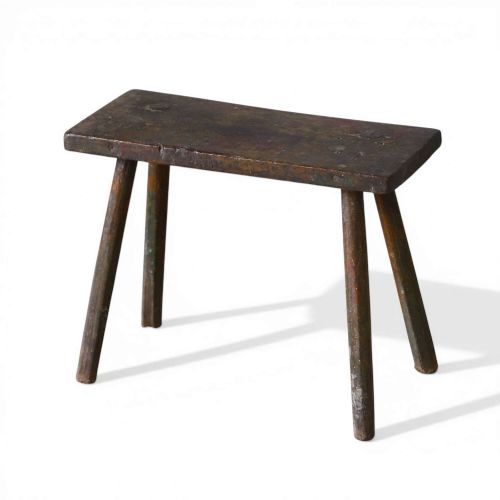
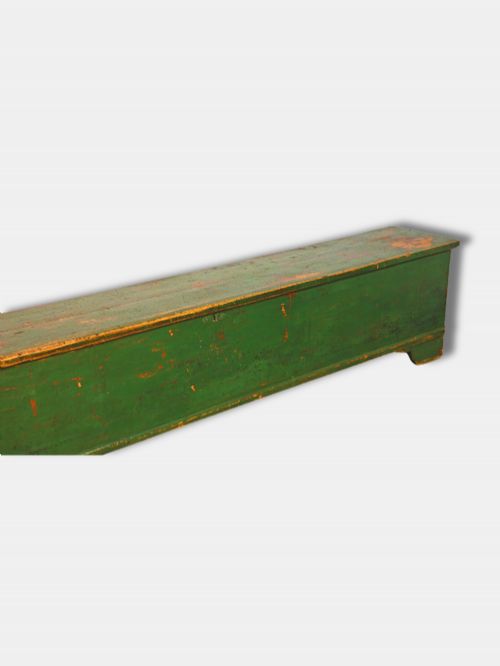
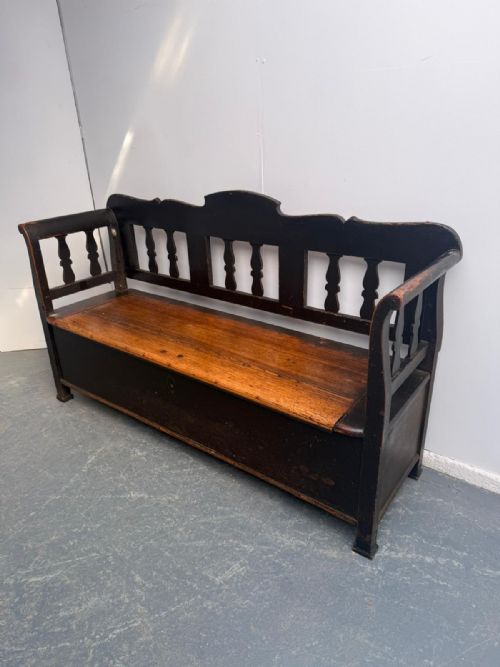
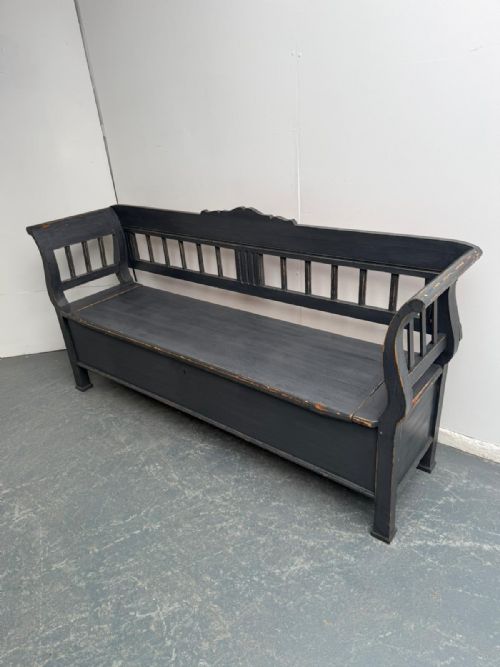
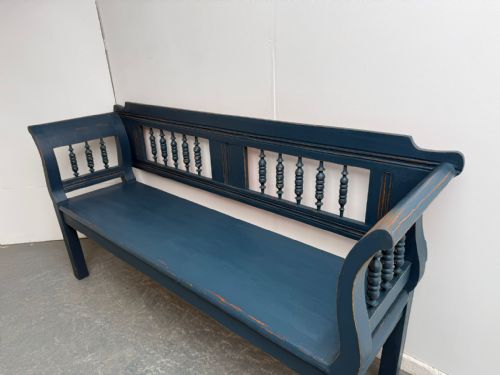
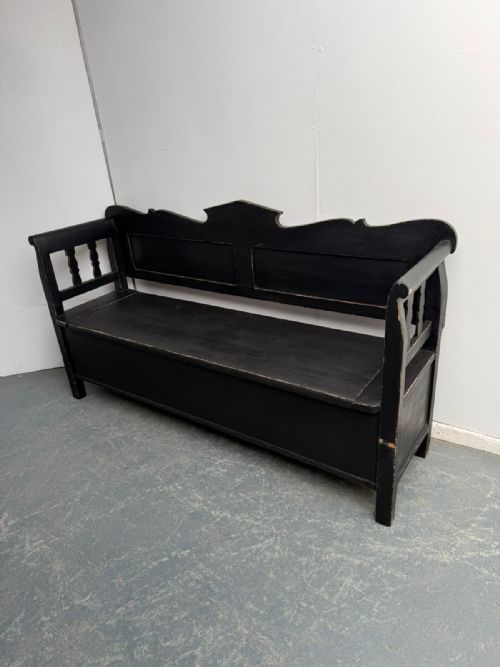


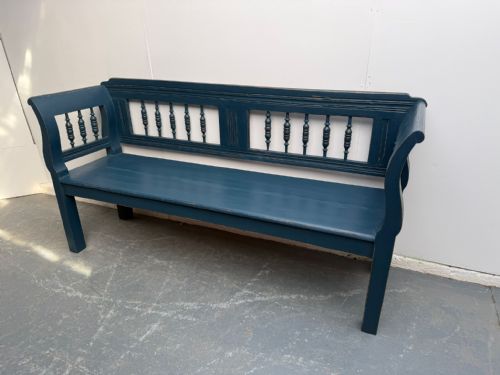

Vintage Painted Pine Bench
A vintage painted pine bench brings rustic character to a hallway or kitchen with its weathered surface and enduring country charm.
Vintage Painted Pine Bench
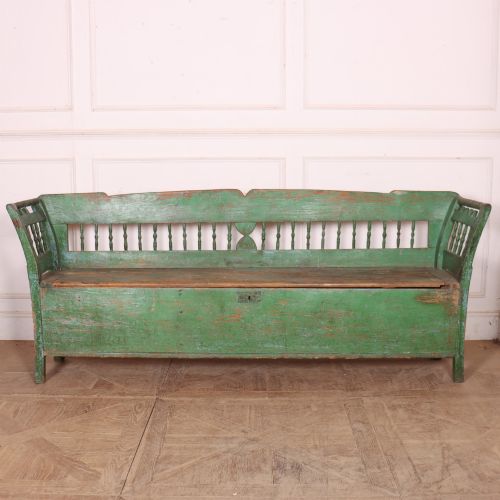
A vintage painted pine bench is a practical seating item constructed from softwood timber and finished with decorative or protective pigment. Buyers examining this page encounter various forms ranging from simple English country seats to substantial Hungarian three-seater settles.
The pieces span multiple periods including the Georgian and Victorian eras, alongside 19th-century examples from English, French, Austrian, and Swedish workshops. Regional styles dictate the architectural proportions and the application of surface colour.
The most common formats on this page include long dining benches, high-backed settle benches with integrated storage boxes, and simpler window seats. Each object reflects the utilitarian needs of rural households adapted for modern domestic interiors.
How they were made
Constructed primarily from solid pine timber, these benches rely on traditional joinery methods suited to utilitarian furniture production. Makers utilised local softwood boards, often reinforcing joints with iron fixings or wooden pegs to withstand daily domestic use.
Surfaces were coated in oil- or water-based paint, frequently surviving in original hues such as ochre, green, blue, black, or cream. Over decades of service, this pigment weathered naturally to create distinct patination across the wood.
Listings feature pine benches spanning the 18th, 19th, and early 20th centuries, originating from English, French, Swedish, Austrian, and Hungarian traditions.
What varies in quality
The distinction between standard utility items and superior examples rests upon the survival of original surface decoration and structural integrity. Benches retaining undisturbed early paintwork command greater interest than stripped or repainted pieces.
Proportion and regional detail also define the upper tier of the range, particularly in pieces featuring integrated storage boxes, panelled backs, or documented provenance such as chapel markings.
The Vintage Painted Pine Bench Glossary
- Settle bench
- A wooden bench featuring a high back designed to block draughts and often incorporating a box seat beneath the hinged lid. This form was common in European farmhouses and vernacular interiors.
- Patination
- The natural surface alteration, softening of edges, and wear acquired by wood and paint over long periods of use. It serves as an indicator of age and authenticity.
- Softwood
- Timber derived from conifers, predominantly pine in the context of these regional European benches. It was chosen for its accessibility and ease of working.
- Box settle
- A variation of the settle that includes a compartment beneath the seat for storing blankets or household goods. The lid doubles as the seat base.
Vintage Painted Pine Bench: Frequently Asked Questions
How do I identify original paint?
Original paint exhibits natural craquelure, consistent wear patterns around high-contact areas, and multiple underlying layers visible through losses. These physical indicators develop slowly over generations of handling.
Modern repainting often feels flat, lacks the depth of historic pigment, and shows uniform coverage without the expected accumulated friction marks.
Where were these benches used?
These seating forms originated in diverse rural settings, including farmhouses, provincial taverns, cottages, and chapels across Britain and continental Europe. They served as communal dining seats or draught-excluding hallway furniture.
Their robust construction allowed them to withstand heavy daily demands in working domestic environments before entering the antique market.
How do I care for a painted surface?
Preserving historic paint requires avoiding harsh chemical cleaners, modern solvents, and abrasive cloths that can strip fragile pigment. Gentle dusting with a dry microfibre cloth is generally sufficient.
Maintain stable indoor humidity levels to prevent the underlying pine timber from expanding or contracting excessively, which can cause the paint layer to flake.
Can I use these benches outdoors?
Historic painted pine benches are designed for interior use and lack weather-resistant exterior treatments. Exposure to dampness and direct sunlight causes the softwood to rot and the historic paint to degrade rapidly.
Keep them in dry, temperature-controlled indoor spaces to protect both the timber structure and the original surface decoration.