




Victorian Pine Box Settle
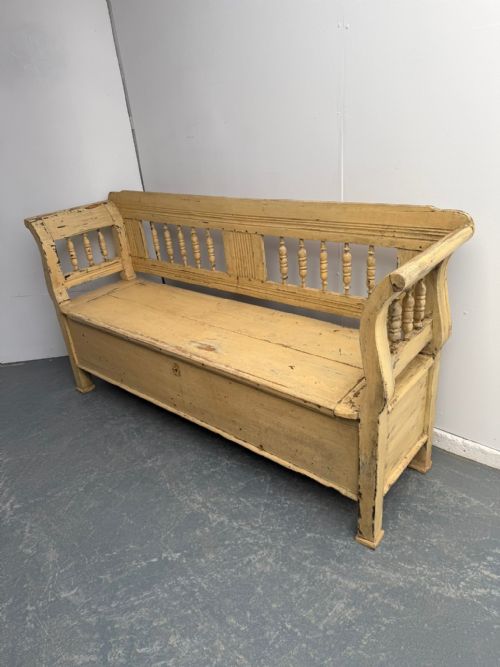
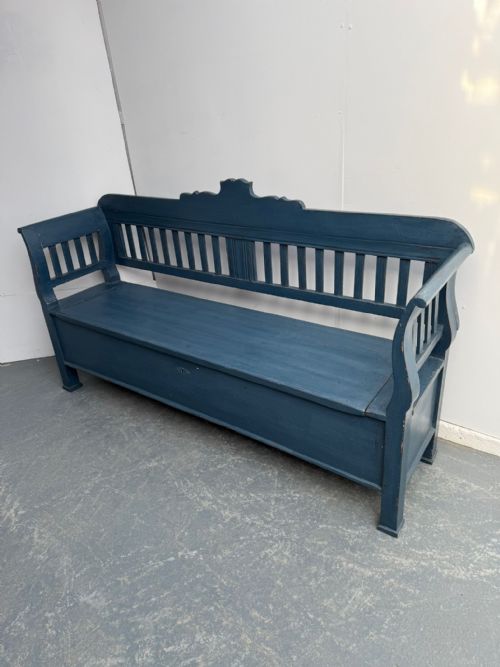
These Victorian pine box settle pieces combine practical storage with traditional seating, offering a robust centrepiece for a hallway or kitchen.
Victorian Pine Box Settle
A victorian pine box settle provides a high-backed seating structure incorporating a concealed storage compartment beneath the seat. These items emerge primarily from the nineteenth century, functioning historically as seating near firesides or within hallways.
The inventory on this page highlights pieces identified across Victorian and nineteenth-century periods, often associated with Hungarian folk art styles and European country aesthetics. Configurations commonly accommodate two, three, or four sitters alongside narrower slim hallway formats.
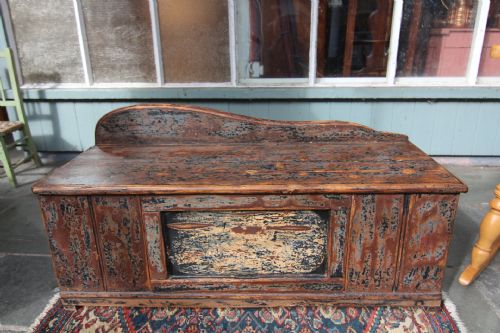
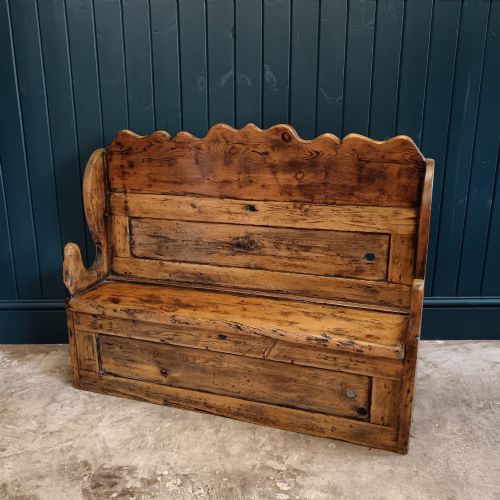
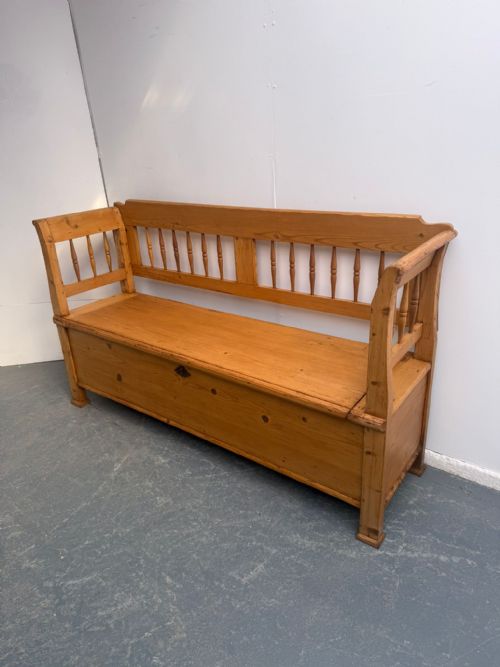
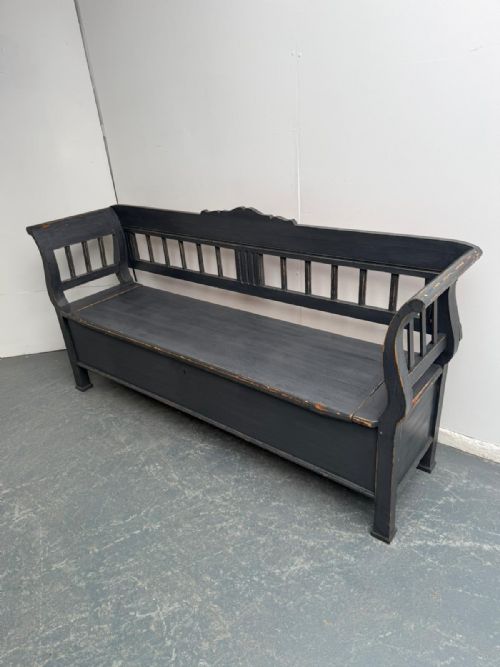
The physical form combines a solid panelled backrest and arms with a hinged seat lid granting access to the interior storage box. Variations encompass both waxed natural timber finishes and painted surfaces in cream, grey, blue, black, or polychrome decoration.
Distinctions in quality and execution
The integrity of the original timber and the survival of early or untouched paint surfaces largely determine the character of a piece. Examples retaining their initial polychrome schemes or well-waxed patination present stronger visual authenticity than those with stripped or heavily restored exteriors.
Proportion and scale also distinguish individual items, ranging from slender hallway benches to substantial four-seater box settles. The retention of original hardware, including hinges and internal partitions, contributes further to the integrity of the construction.
Some Hungarian box settles arrive with spindle backs that let a stray cushion vanish entirely into the mechanism.
The Victorian Pine Box Settle Glossary
- Box settle
- A wooden bench featuring a high back and a lidded seat box designed for storage. This form kept draughts away from the sitter while providing space for household goods.
- Monks bench
- A convertible form of seating associated with the period, often incorporating a folding backrest that pivoted to form a table surface.
- Polychrome
- Painted in multiple colours. This decorative treatment appears on folk art pieces from European country traditions.
- Pitch pine
- A dense, resinous variety of pine timber utilised for durable furniture and pews. It offers a distinct grain pattern compared to standard softwoods.
- Settle bench
- A long wooden seat with solid arms and a high back. These items served multiple household purposes in nineteenth-century interiors.
Victorian Pine Box Settle: Frequently Asked Questions
What is a Victorian pine box settle?
A Victorian pine box settle is a wooden bench featuring a high back and a built-in storage compartment beneath the lifting seat. These pieces originate from the nineteenth century and combine seating utility with enclosed storage space.
Such furniture suited farmhouse kitchens and hallways where space and multi-purpose utility mattered. The enclosed back helped block draughts in older properties.
Where were these settles made?
Many examples on record originate from Hungarian workshops, representing European country and folk art traditions of the nineteenth century. Other pieces reflect broader Victorian country and rustic farmhouse aesthetics.
Local craftspeople built them using readily available softwood timbers like pine, often applying simple painted finishes or wax coatings.
How do I care for a painted settle?
Maintain painted pine settles by keeping them away from direct heat sources and sudden humidity changes to protect the surface layer. Dust gently with a dry cloth and avoid harsh chemical cleaning products.
Waxed variants benefit from occasional application of traditional beeswax to nourish the timber and preserve the patination over time.
How do I use a box settle today?
A box settle functions effectively in a hallway, boot room, or kitchen as a combination of seating and discrete storage for shoes, blankets, or household items. The high back creates a defined architectural element against a wall.
Placement in larger spaces allows the bench to serve as a freestanding focal point that highlights nineteenth-century country craftsmanship.