
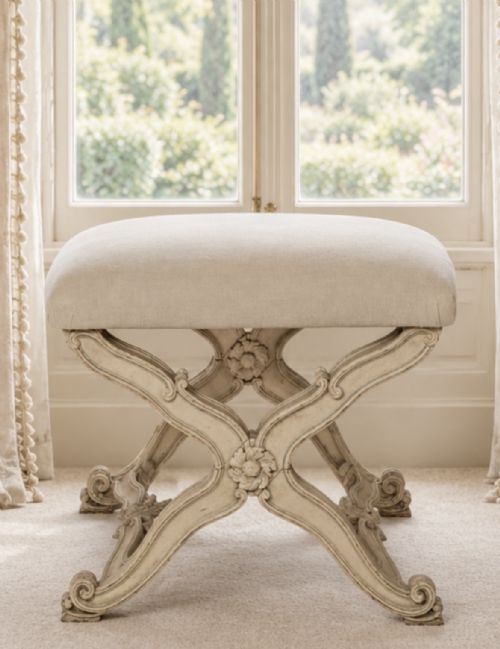


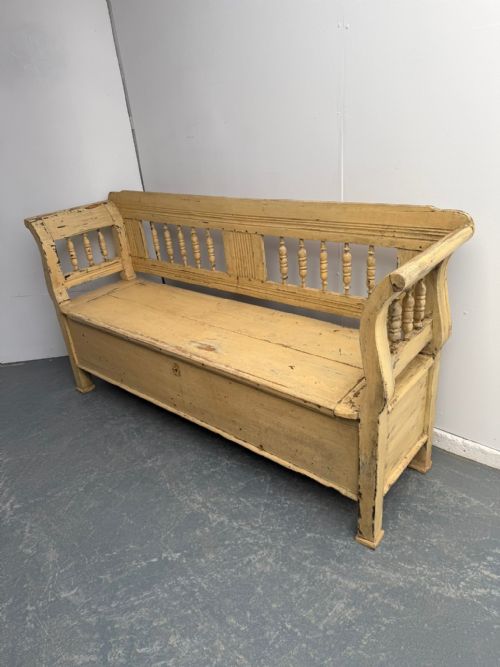


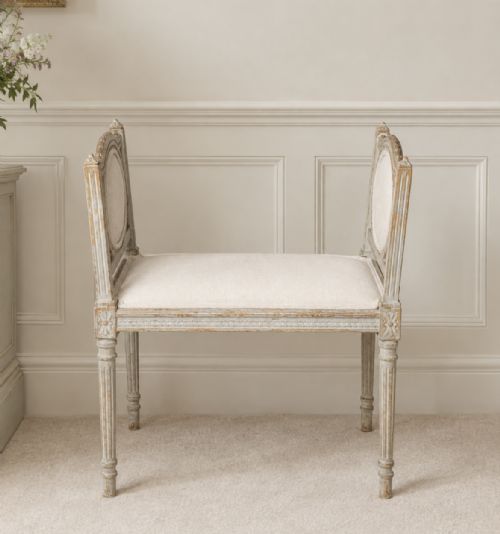


Cream Painted Wooden Bench
A cream painted wooden bench offers a versatile seating option, combining traditional craftsmanship with a bright finish.
Cream Painted Wooden Bench
A cream painted wooden bench encompasses seating furniture finished in pale paint, appearing in styles from Gustavian and French Chateau to Victorian Country. Buyers searching for a cream painted wooden bench will encounter forms ranging from long settles and multi-seater sofas to smaller window seats and stools.
The pieces date across several centuries, with examples originating from 18th century Sweden and Italy through to Victorian Britain and the early 20th century. Pine and general wood constructions form the basis for these items, often decorated with painted surfaces and occasionally complemented by fabric or cane details.
How they were made
These items utilise wood such as pine and satinwood, shaped through traditional carpentry and carving techniques. Surfaces receive layers of paint to create the distinctive cream appearance recorded in the pieces.
Some Hungarian box settles managed to hide enough storage beneath the seat to keep an entire household's winter woollens out of sight.
What varies in quality
Quality rests upon the depth of the hand-carved detailing on the wooden frame and the original integrity of the painted surface. Pieces showing distinct regional styles, such as Swedish Gustavian or Hungarian folk art, display superior artistic design.
The choice of underlying timber, from standard pine to finer satinwood, alters the refinement of the finished seat. Structural longevity depends on the joinery executed during the construction of the frame.
The Cream Painted Wooden Bench Glossary
- Gustavian
- A Swedish neoclassical design style characterised by restrained carved decoration and pale painted finishes. It emerged during the late 18th century.
- Settle
- A wooden bench featuring a high back, solid arms, and often a box compartment beneath the seat for storage. These pieces were historically used in draughty hallways.
- Bergere
- An enclosed upholstered armchair or settee with wooden frames and exposed woodwork. The sides are traditionally filled with cane or upholstery.
- Box Settle
- A heavy wooden bench integrating a hinged lid that opens to reveal storage space inside the base. This form dates back centuries in European vernacular furniture.
- Satinwood
- A durable yellowish wood often used for fine cabinet-making and decorative furniture. It takes a high polish and accepts detailed ornamentation.
Cream Painted Wooden Bench: Frequently Asked Questions
What periods do these benches come from?
The available items span from the 18th century through to the early 20th century. Examples include pieces from the Victorian era and Edwardian period alongside continental European designs.
Earlier items often originate from Sweden or Italy, reflecting regional furniture traditions of those centuries. Later pieces showcase influences from French provincial and British country styles.
Are these benches comfortable for daily use?
Comfort varies depending on the specific form of the seating, as many historical designs prioritise formal posture or utility. Stools and wooden settles offer firm seating without padding.
Settees and window seats that include upholstered cushions or fabric panels provide a softer seat. Adding loose textiles can increase comfort for everyday living.
How do I care for the painted finish?
Maintaining painted wooden furniture requires gentle dusting with a dry or slightly damp cloth. Avoid harsh chemical cleaners that might strip or discolour the paint surface.
Keep the items away from direct heat sources and strong sunlight to prevent the wood from warping and the paint from cracking over time.
How do I distinguish regional styles?
Regional characteristics appear in the carving motifs and the overall silhouette of the wooden frame. Swedish Gustavian pieces display crisp neoclassical restraint and pale tones.
Hungarian and Italian examples often feature distinct folk art painting techniques and heavier timber construction. French designs typically utilise curved cabriole lines and carved floral decorations.