


Antique Rush Seat
An antique rush seat brings centuries of vernacular craftsmanship into modern interiors through woven marsh grass and timber frames.
Antique Rush Seat
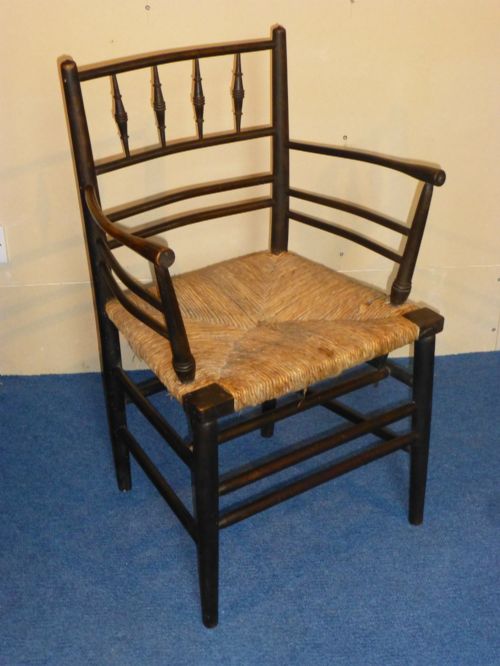
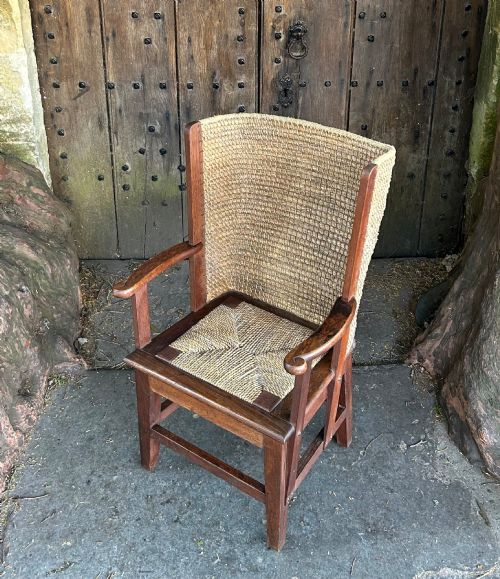
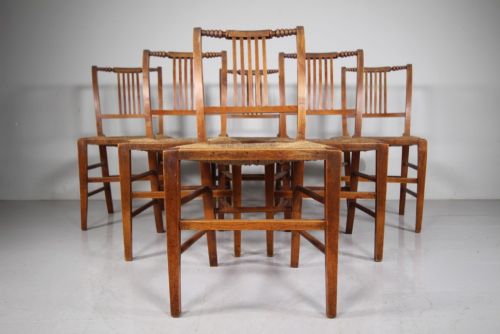
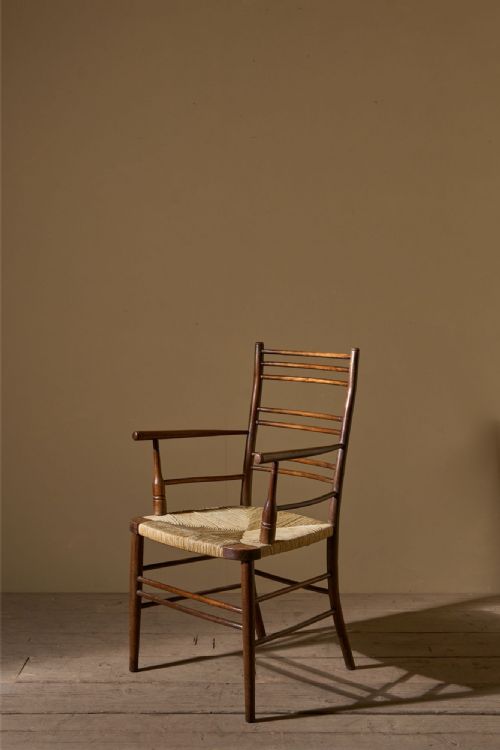
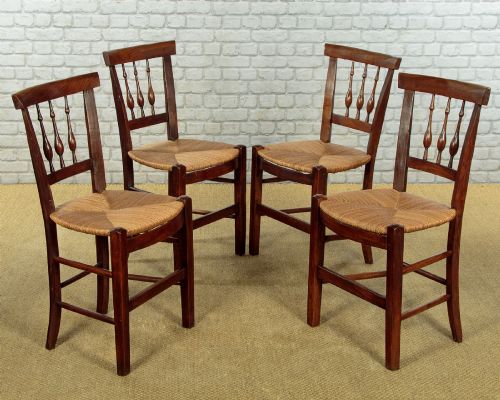
When you search for an antique rush seat, you are looking at utilitarian seating constructed across the eighteenth, nineteenth, and early twentieth centuries, featuring woven marsh grass seats integrated into wooden frames. These pieces originate from regional English vernacular traditions, French provincial workshops, and Arts and Crafts studios.
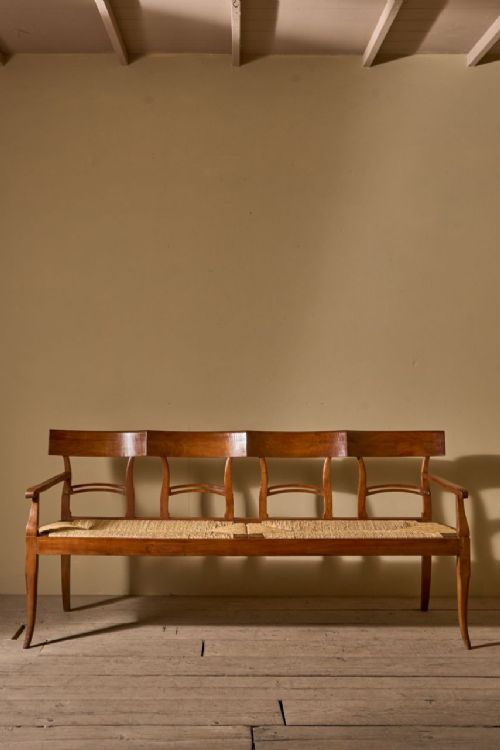
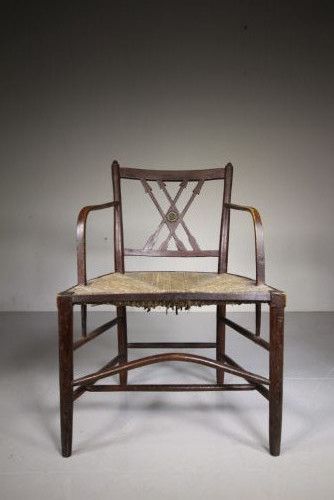
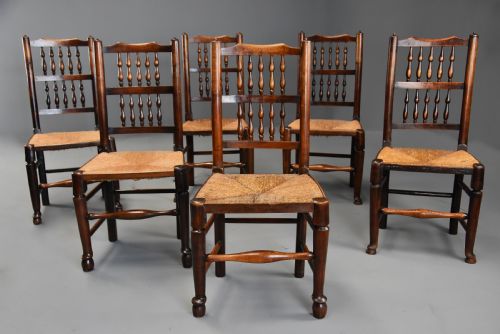
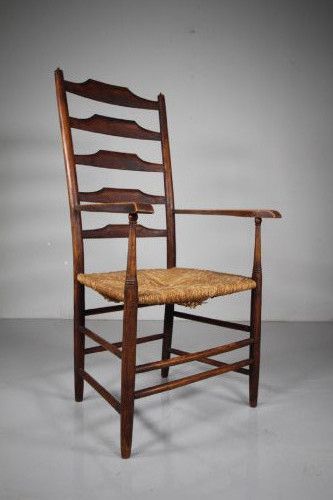
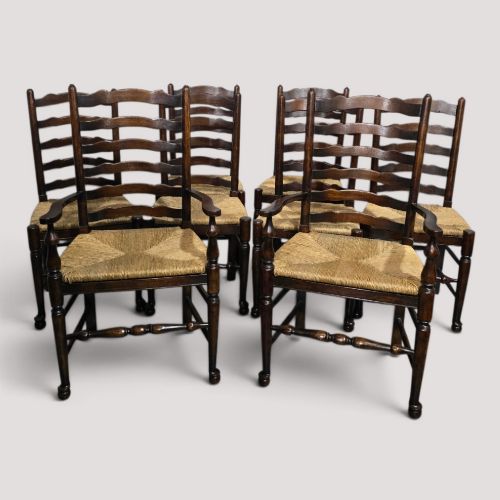
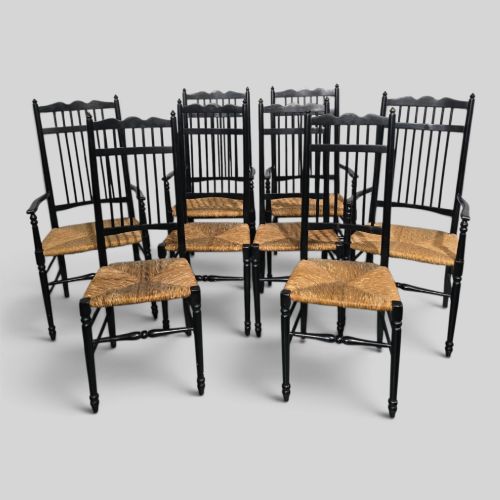
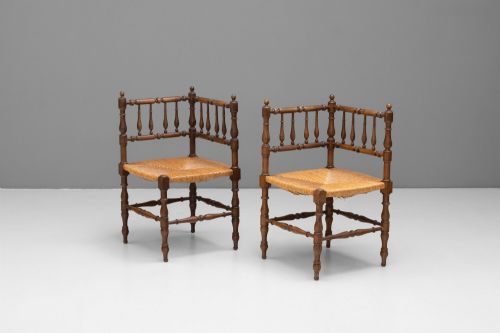
The forms on this page range from modest ladder-back dining chairs and robust kitchen armchairs to high-back side chairs, low rocking chairs, benches, stools, and corner chairs. Dining chairs frequently appear in matched sets of four, six, eight, or ten, while armchairs and benches serve as solitary accent pieces.
Regional variations span Lancashire and Cheshire ladder-backs, oak and ash Windsor forms, and lighter beech frames influenced by Morris & Co. The designs prioritize practical utility and bodily comfort above elaborate ornament, relying on the contrast between pale timber and textured plant fibre.
How they were made
Makers constructed the timber frames using native hardwoods such as oak, ash, elm, beech, fruitwood, and cherrywood, often turning spindles on a lathe and joining them with mortise and tenon joints. Many provincial examples display pegged joints and turned stretchers that provide structural rigidity to the undercarriage.
The seats are hand-woven using dried marsh rushes twisted into cords and laced tightly around the seat rails in a distinctive four-way diagonal pattern. This weaving technique creates a resilient, flexible surface that yields slightly to the sitter while maintaining its overall tension over decades of use.
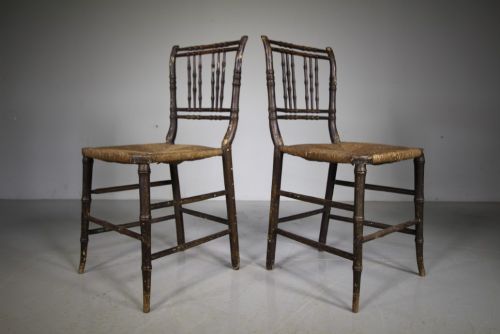
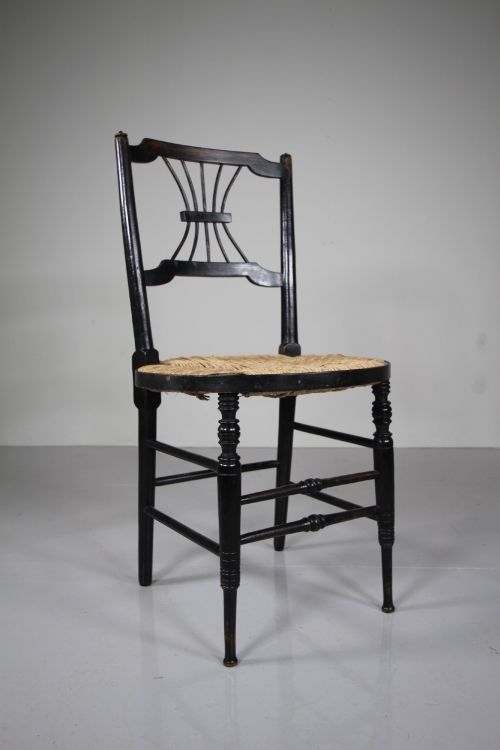
Listings feature oak, ash, elm, beech, and fruitwood frames alongside painted, ebonised, and natural timber surfaces across multiple centuries.
What varies in quality
Quality rests in the integrity of the timber frame, the tightness of the joinery, and the density of the rush weave. Earlier Georgian and regional country pieces exhibit superior timber selection and hand-turned spindle work compared to mass-produced later variants.
The preservation of the original surface patina - whether bare polished wood, early paint, or ebonisation - dictates the visual authority of the piece. Well-executed repairs or untouched original webbing distinguish workshop standards from later provincial utility work.
William Morris·Philip Webb·Philip Clissett·Rossetti
The Antique Rush Seat Glossary
- Rush
- Dried marsh grass utilised for weaving traditional seat pads. It creates a durable, fibrous surface that develops a polished sheen with long-term use.
- Ladder back
- A chair frame featuring horizontal slats between the rear upright posts. This traditional vernacular design provides robust back support.
- Vernacular
- Everyday domestic furniture built by regional craftspeople using local materials rather than following metropolitan fashion trends.
- Spindle back
- A chair design incorporating numerous thin turned wooden rods in the backrest. These elements distribute weight evenly and reduce the overall weight of the frame.
- Patina
- The surface texture and deep coloration developed by wood and woven rush through handling, light exposure, and age over generations.
Antique Rush Seat: Frequently Asked Questions
How do I care for an antique rush seat?
Keep the woven marsh grass away from direct moisture and excessive dryness to prevent the natural fibres from becoming brittle. Regular dusting with a soft brush maintains the material without damaging the twisted strands.
Condition the wooden frame occasionally with appropriate wax polish while avoiding the woven seat itself. Allowing air circulation around the chair prevents mildew accumulation in damp environments.
How do I distinguish regional chair styles?
Regional attribution relies on timber choices, turning profiles on the back posts, and construction habits. Lancashire and Cheshire pieces often feature characteristic multi-tiered ladder backs and substantial ash or elm frames.
French provincial examples typically incorporate curved Louis XV style rails in oak or beech, while Arts and Crafts pieces showcase ebonised finishes and simplified structural geometry.
Are these chairs comfortable for daily dining?
Traditional rush seats offer a surprisingly supportive and flexible surface because the woven marsh grass yields slightly to the body. Their ergonomic proportions reflect centuries of domestic testing for long evening meals.
Dining chairs and carvers provide upright posture support suitable for daily use around a table. Pairing them with standard dining tables requires checking the seat height against the table apron.