

Antique Rummer Glasses
Antique rummer glasses are sturdy drinking vessels spanning Georgian and Victorian periods, prized for their generous bowls and heavy pedestals.
Antique Rummer Glasses
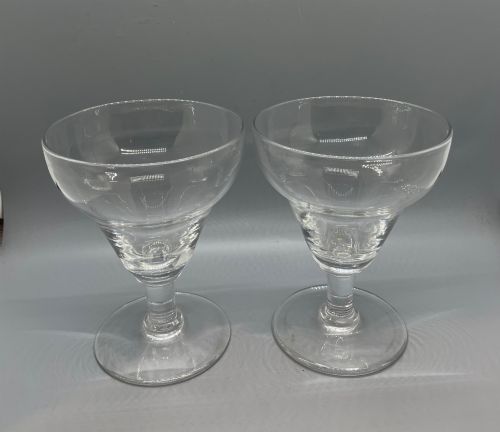
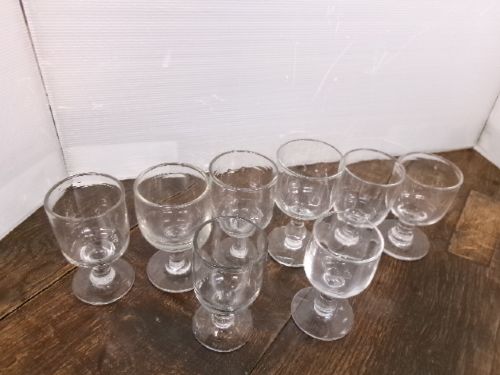
When you search for antique rummer glasses, you encounter robust drinking vessels primarily originating from the Georgian and Victorian eras, alongside continental examples. These pieces function as substantial goblets designed for ale, wine, and spirits, often featuring deep ovoid or pan-top bowls atop sturdy stems and feet.
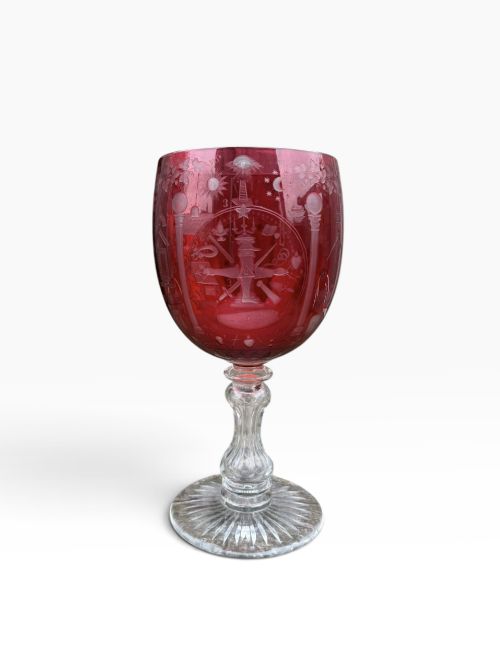
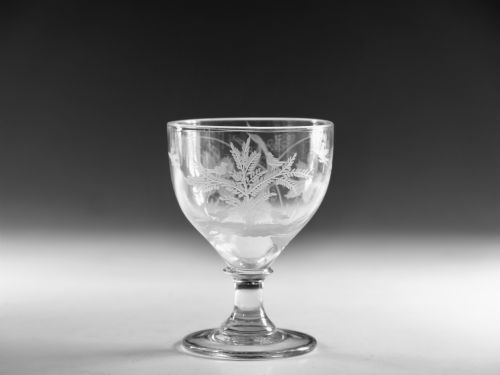
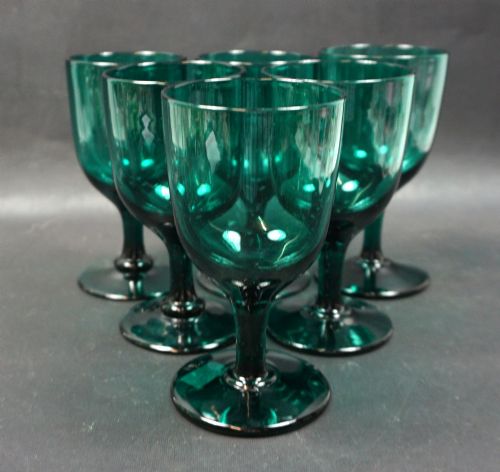
The English tradition dominates the selection, frequently displaying commemorative engravings of hops and barley, bridge scenes, or armorial motifs. Alongside these plain and cut lead-glass pieces, coloured glass variations in green, amber, cranberry, and turquoise appear across the listings.
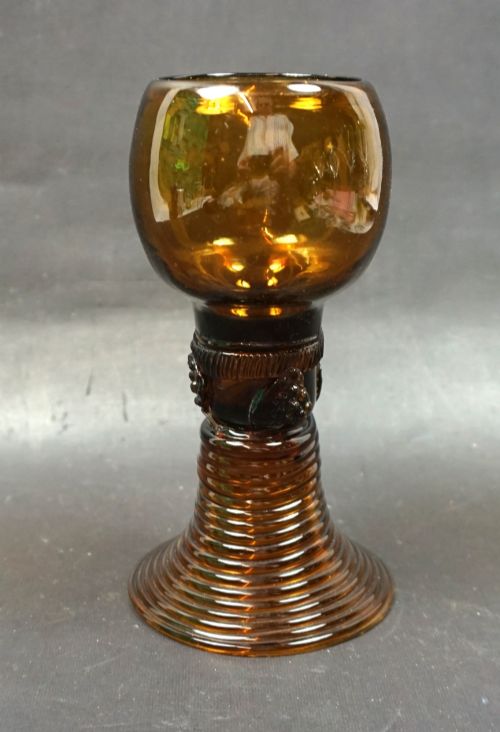
Continental pieces surface as roemers and hock glasses, notably from German, Bohemian, and French workshops. These bring enamelled heraldry, gilded surfaces, and coiled or hollow stems into the mix, expanding the range beyond standard British tavern and parlour forms.
Materials and production methods
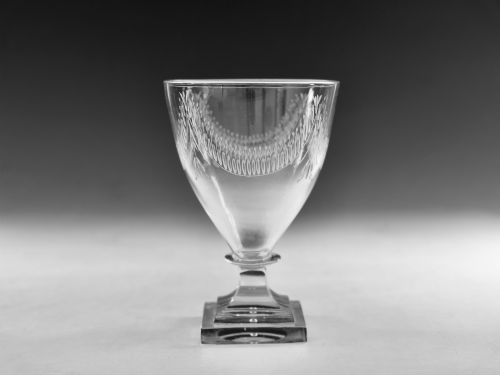
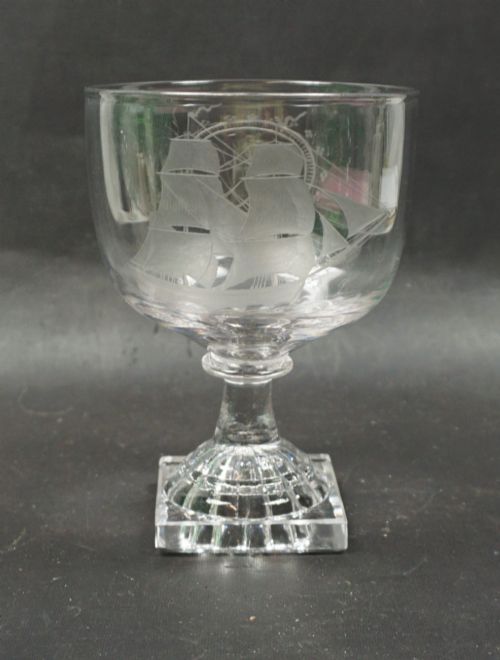
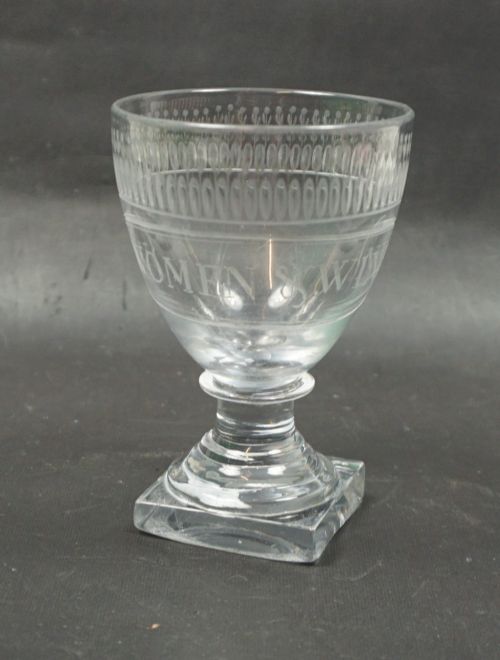
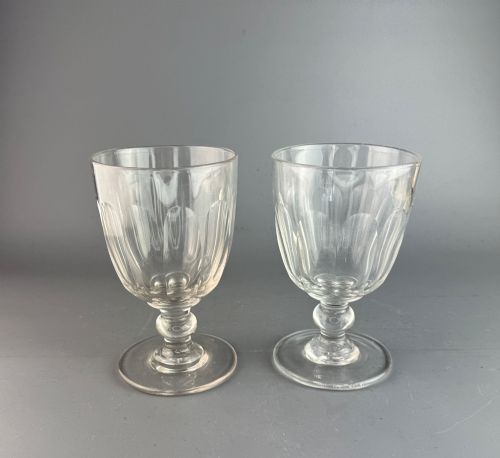
Makers utilised lead glass, lead crystal, and flint glass to achieve clarity and weight, shaping the metal by hand-blowing molten material into moulds or free-blowing the forms. Heavy square lemon-squeezer bases and cut facets required skilled handling while the glass remained hot.
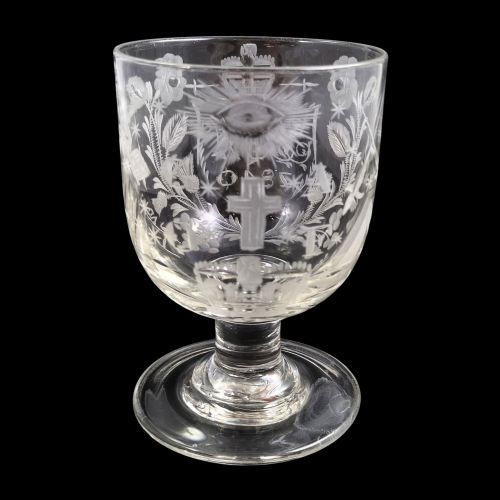
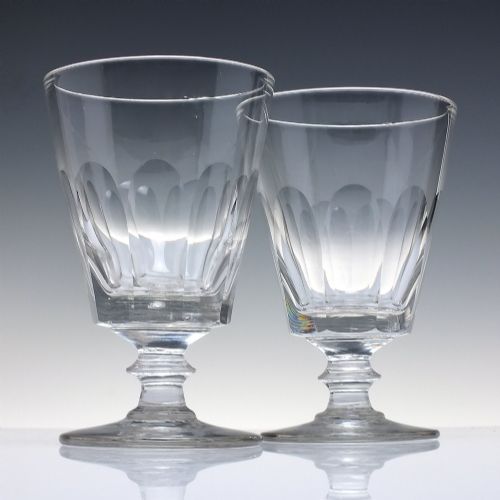
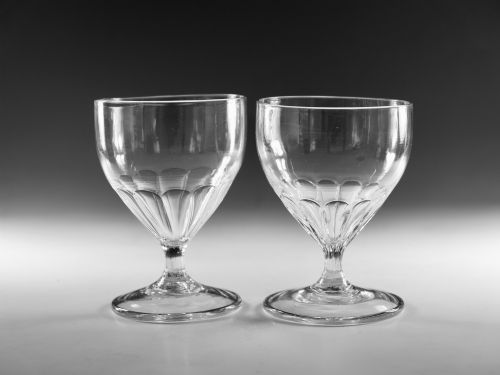
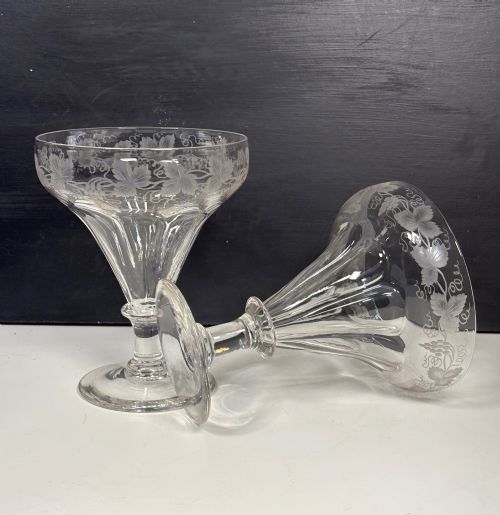
Decoration relied on wheel-engraving and etching to apply detailed motifs like hops, barley, and architectural bridges directly to the bowl surface. Enamelling and gilding finished continental roemers, while optic-blown fluting created patterned panels on Victorian pan rummers.
One small Georgian rummer bears the unapologetic social instruction engraved directly onto its bowl: Women and Wine.
Assessing quality and character
Quality rests in the heaviness of the metal, the crispness of the wheel-engraving, and the balance of the proportions between bowl, stem, and foot. Heavy crystal pieces with sharp cutting and deep, detailed pictorial engraving sit at the upper end of the scale.
The presence of uncommon colours, such as turquoise or deep amethyst, alongside specific historical subjects like masonic symbols or named bridges, elevates the interest of a piece. Simpler, plain-stemmed domestic glasses offer a quieter, utilitarian charm.
The Antique Rummer Glasses Glossary
- Rummer
- A large drinking glass or goblet used for ale, wine, or spirits during the eighteenth and nineteenth centuries. These vessels typically feature capacious bowls on short stems.
- Roemer
- A continental European drinking glass, often green or amber, characterised by a large spherical bowl sitting on a cylindrical stem wrapped in applied prunts or coiled trails.
- Lemon-squeezer base
- A square, pressed glass foot with sloping sides resembling the kitchen utensil of the same name. This form provided exceptional stability for heavy Georgian drinking vessels.
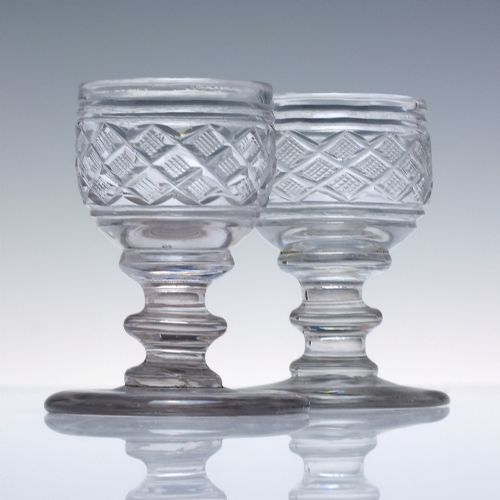
- Hobnail cut
- A decorative surface pattern of small, pointed pyramids cut into the glass using a wheel. It creates a highly tactile texture catching the light.
- Pan top
- A straight-sided bowl shape that flares slightly outward toward the rim, common on nineteenth-century drinking glasses.
Antique Rummer Glasses: Frequently Asked Questions
What were antique rummer glasses used for?
These vessels served as everyday and tavern drinking glasses for ale, punch, wine, and spirits. Their large capacities suited generous servings during social gatherings and dinners.
Over time, specific forms evolved for different drinks, ranging from heavy ale glasses engraved with agricultural motifs to smaller dram glasses for spirits.
How do I distinguish Georgian from Victorian rummer glasses?
Georgian examples often display hand-blown ovoid bowls, plain stems, and square lemon-squeezer feet or kick-up bases. Their engraving tends to be naive or finely wheel-cut with hop and barley motifs.
Victorian pieces frequently utilise heavier moulded forms, pan tops, and extensive optic fluting or mechanical pressing. The glass metal can also feel noticeably heavier and brighter due to changing industrial practices.
What are roemer glasses?
Roemers are traditional continental drinking glasses, particularly associated with Germany and Bohemia. They are usually fashioned from green or amber glass with characteristic rounded bowls.
The stems often feature applied glass prunts or coiled threads designed to provide a secure grip for greasy hands during medieval and later feasts.