

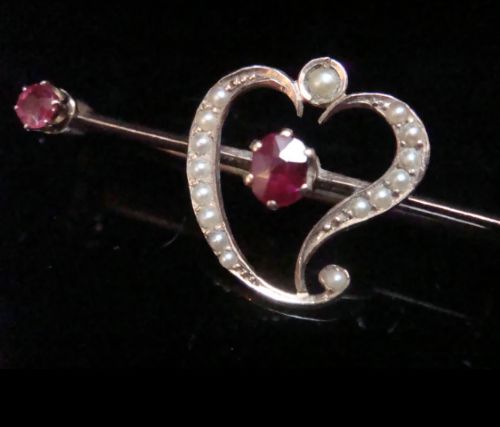


Antique Ruby Pin
An antique ruby pin carries the rich red glow of past centuries in a wearable form.
Antique Ruby Pin
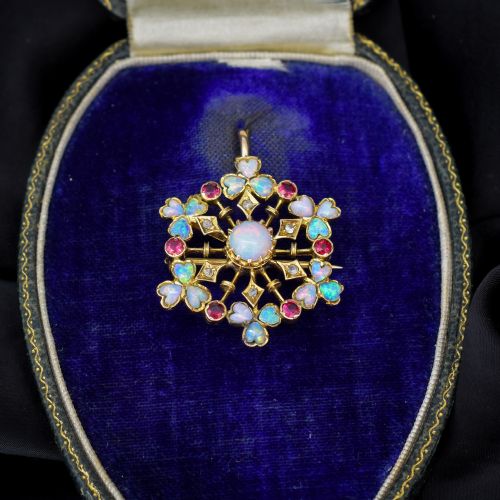
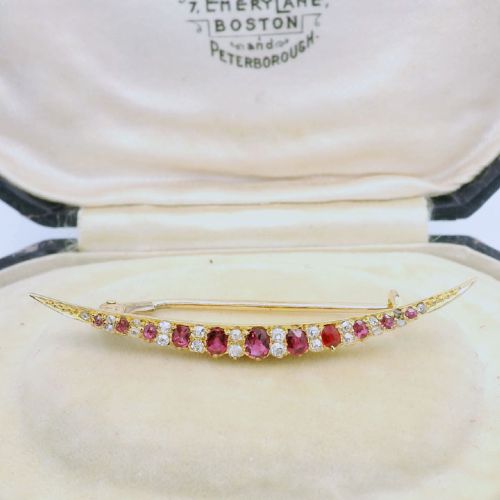
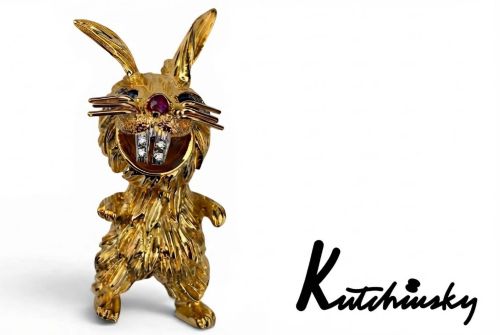
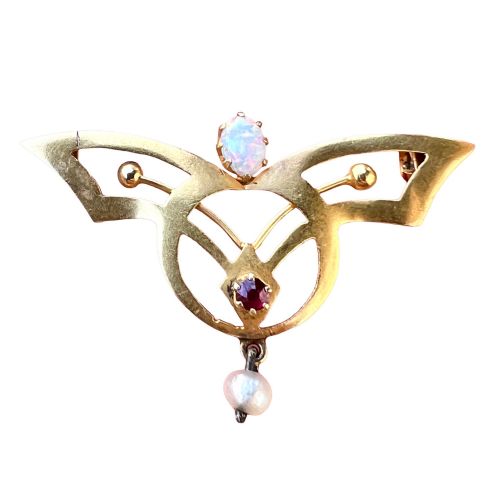
An antique ruby pin is a decorative fastening worn on clothing, combining precious gems with metals from periods spanning the Georgian era to the mid-twentieth century. These jewels take diverse shapes, with crescent forms, floral sprays, insects, and birds appearing frequently across the selection.
Many items function as convertible pieces, operating as both a brooch and a pendant to offer multiple ways of wearing the jewellery. Materials range from silver and gold in various carat weights to platinum, paired with natural rubies, diamonds, pearls, and opals.
How they were made
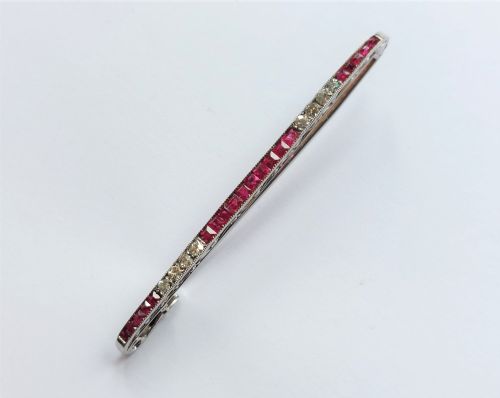
Goldsmiths and jewellers utilised yellow and rose gold, often combining silver with gold in earlier pieces to enhance the whiteness around diamond settings. Platinum emerges in later Edwardian and Art Deco designs, providing a strong, fine wire framework for intricate bar brooches and shaped mounts.
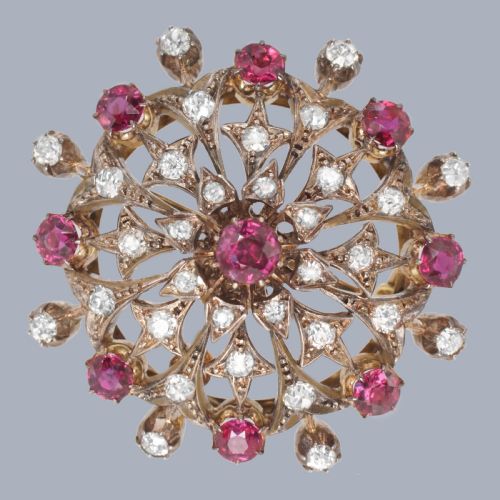
Rubies are set alongside diamonds, pearls, and sometimes paste stones using claw, bezel, or flush techniques appropriate to the period. Metals are cast, hand-beaten, or drawn into wire to form delicate motifs such as swallows, flowers, crescent moons, and insects.
Antique Ruby Pin Retail Price Guide 2026
Typical asking prices for ruby pin among the pieces listed under this phrase on Sellingantiques today, from the lower quarter to the upper quarter. They describe what is for sale here now, not the wider market.
The listings span the Victorian, Edwardian, and Art Deco eras, featuring gold, silver, and platinum paired with rubies, diamonds, and opals.
What varies in quality
The distinction between ordinary and exceptional examples lies in the depth of colour and clarity of the rubies, coupled with the harmony of the overall design. Master jewellers balanced stone weight with delicate metalwork, ensuring that the mount complemented rather than overwhelmed the gems.
Superior pieces display fine hand-finishing on the reverse as well as the front, with secure gemstone settings and well-balanced proportions. The integration of supporting stones like old-cut diamonds or natural pearls elevates the standing of a piece within its historical period.
The Antique Ruby Pin Glossary
- Crescent brooch
- A curved, moon-shaped pin design that gained immense popularity during the late nineteenth and early twentieth centuries. These pieces typically graduate in stone size from the tips to the centre.
- Paste
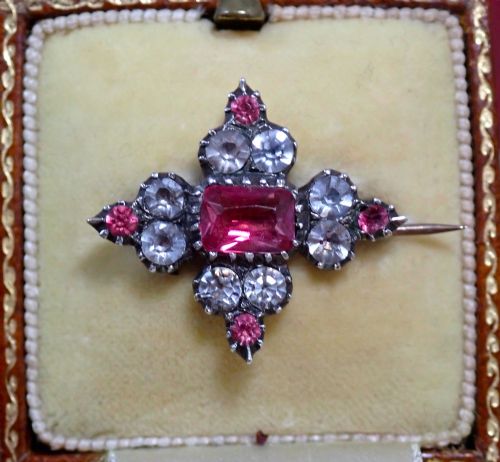
- Hand-cut glass used in historic jewellery to imitate gemstones or provide colourful accents. Georgian and Victorian paste work displays remarkable skill and brightness.
- Bar brooch
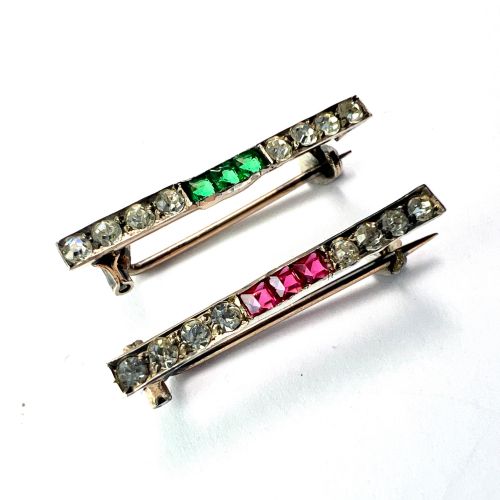
- A narrow, horizontal pin layout featuring gemstones or central motifs mounted on a metal rod. This style dominated the Edwardian and Art Deco periods.
- Stickpin
- A long pin with an ornamental head designed to secure cravats, lapels, or hats. They share many decorative motifs with larger brooches from the same eras.
- Old-cut diamond
- A diamond cut by hand before modern machinery standardisation, featuring a smaller table and a higher crown. These stones produce a softer, candlelit sparkle.
Antique Ruby Pin: Frequently Asked Questions
How do I wear an antique ruby pin safely?
Secure the pin on heavier fabrics like wool, velvet, or structured jacket lapels to support the weight of the gold and gemstones. Ensure the safety catch or C-clasp functions properly before fastening it to your garment.
For convertible pieces that also double as pendants, remove the pin stem or tuck it securely when hanging the jewel from a chain. Avoid wearing them on delicate silks or thin cottons that might tear under the weight.
How can I tell the period of a ruby brooch?
Examine the metalwork and the style of the gemstone cuts, as Georgian pieces often feature closed-back foil settings while Victorian examples introduce rich yellow gold and natural motifs. Edwardian and Art Deco pieces lean towards platinum, lighter gold shades, and geometric or floral symmetry.
Look at the pin mechanism on the reverse, since older C-clasps without locking mechanisms give way to safety catches and barrel clasps in later decades. Hallmarks and stampings, where present, offer precise clues to the year and country of origin.
Were these pins used for mourning jewellery?
Some Victorian and Georgian ruby pieces incorporated dark elements like paste, enamel, or specific motifs to remember departed loved ones. Rubies were chosen alongside pearls to symbolise tears and everlasting affection in remembrance tokens.
Not all ruby pins served this purpose, as many celebrated betrothals, birthdays, or simply the changing seasons through floral and animal designs. The context depends entirely on the surrounding stones and any inscriptions found on the reverse.