
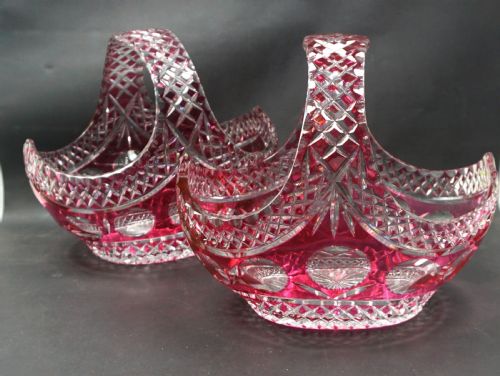


Antique Ruby Glass Pair
An antique ruby glass pair brings deep crimson colour and symmetry to a mantelpiece or table, forged in glowing hues from the Victorian era and beyond.
Antique Ruby Glass Pair
An antique ruby glass pair comprises matching vessels in rich red tones, spanning mantel lustres, decanters, vases, and oil lamps designed to sit balanced in a room. These symmetrical sets survive from the eighteenth, nineteenth, and early twentieth centuries, shaped by English, Bohemian, and continental makers.
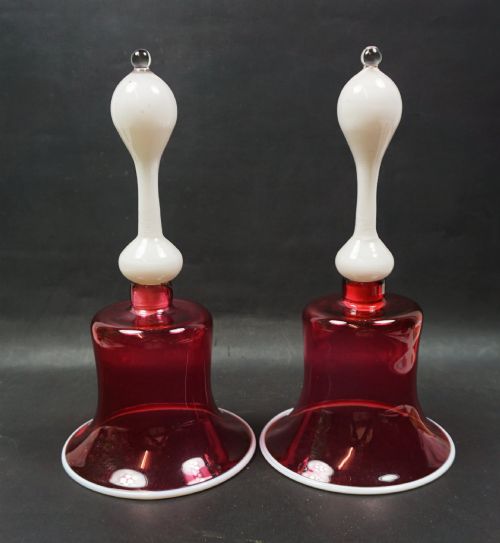
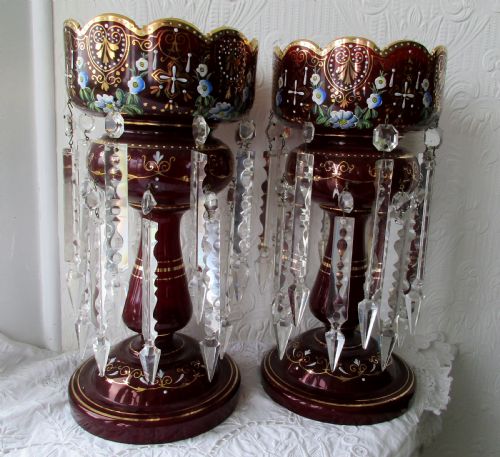
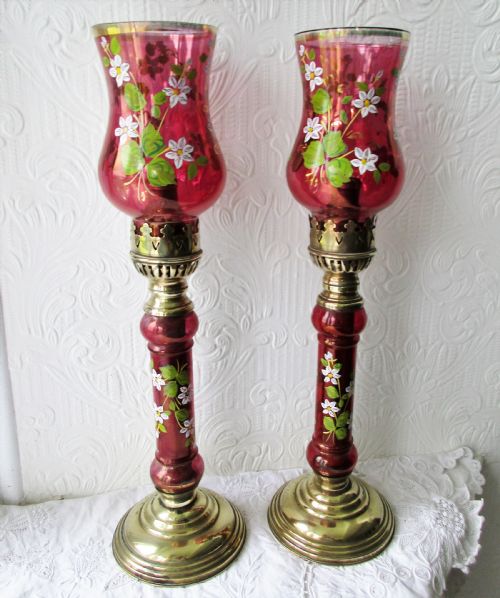
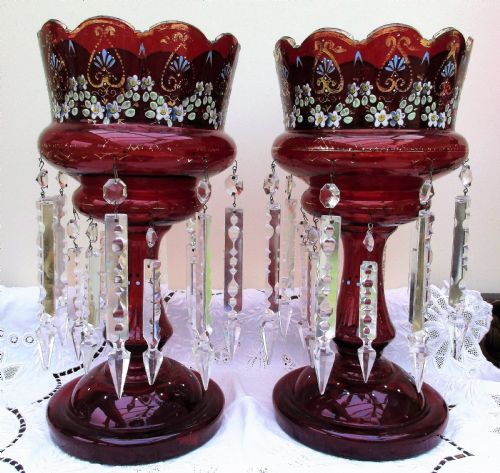
The most common forms on this page include Victorian mantel lustres hung with glass prisms, alongside table lamps, decanters, and hand bells rendered in cranberry and ruby shades. Many pieces combine deep red glass with clear crystal overlays, brass mountings, enamel, and gilt detailing to create a striking decorative effect.
How they were made
Glassmakers achieved the distinctive red hue by adding gold or copper oxide to the molten batch, creating solid ruby glass or layered overlay glass where a clear crystal core receives a red casing. Artisans then shaped the vessels by blowing and pressing, frequently employing flash glass techniques to cut back the outer red layer and reveal the clear crystal underneath.
Decoration involved wheel engraving, etching, and hand-gilding with gold leaf, alongside applied enamel details depicting botanical or avian motifs. Many items also integrated brass collars, silver plating, and cut crystal prisms to complement the intense red body.
Some nineteenth-century oil lamps feature hunting themes etched into the ruby shades to brighten dark winter evenings.
What varies in quality
Quality rests on the depth and clarity of the red colour, the precision of the cut or engraved decoration, and the crispness of any gilding or enamel work. Finer examples show sharp wheel-cut facets through the ruby overlay down to the clear crystal, whereas simpler items rely entirely on plain surface colour.
The degree of hand-finishing defines the better pieces, seen in deeply etched bird and vine motifs, intact gilt highlights, and matching proportions across both items in the pair. Original matching components, such as correct hanging prisms on lustres or matching stoppers on decanters, separate complete survivals from assembled sets.
Val St Lambert
The Antique Ruby Glass Pair Glossary
- Mantel lustre
- A decorative glass vase fitted with a ring of hanging crystal prisms designed to reflect candlelight from a fireplace surround. These stands are typical of nineteenth-century drawing rooms.
- Overlay glass
- A technique where a layer of coloured glass is fused over a body of clear crystal, allowing artisans to cut away parts of the outer layer to expose the contrasting colour underneath.
- Peg lamp
- An oil lamp featuring a small font with a solid glass or metal peg at the base intended to drop directly into a candlestick or wall bracket. They provide adjustable lighting when paired with matching chimneys and shades.
- Flash glass
- A vessel made by dipping a molten gather of clear glass into a small amount of coloured glass before blowing, producing a thin skin of colour that is easily carved or acid-etched.
Antique Ruby Glass Pair: Frequently Asked Questions
How do I clean antique ruby glass?
Wash pieces gently by hand in lukewarm water using mild washing-up liquid and a soft cloth, avoiding harsh abrasives that might scratch the surface or wear away gilding.
Take particular care around painted enamel details, gilt rims, and delicate hanging prisms, and dry each item thoroughly with a lint-free towel.
What is the difference between ruby and cranberry glass?
Ruby glass gets its deep, intense crimson colour from gold or copper compounds added during the melting process, resulting in a dark and saturated tone.
Cranberry glass typically displays a lighter, pinker hue reminiscent of the fruit juice, though nineteenth-century makers and modern collectors often use both terms interchangeably.
Were mantel lustres used for lighting?
Mantel lustres served primarily as decorative ornaments rather than practical light sources, though the crystal prisms caught and refracted the flickering glow of nearby candles.
They were displayed symmetrically on fireplace mantels as fashionable garnitures throughout the Victorian period.
How can I tell if a pair is genuine Victorian?
Examine the base for genuine wear marks, pontil scars left by the glassblower's rod, and the slightly uneven thickness characteristic of nineteenth-century hand-blown production.
Inspect the weight, the style of the cut engraving, and any brass or silver-plated mountings to confirm the period against known manufacturing techniques.