


Antique Bohemian Glass Beakers
Antique bohemian glass beakers bring rich colour, heavy engraving, and nineteenth-century craftsmanship directly to a table.
Antique Bohemian Glass Beakers
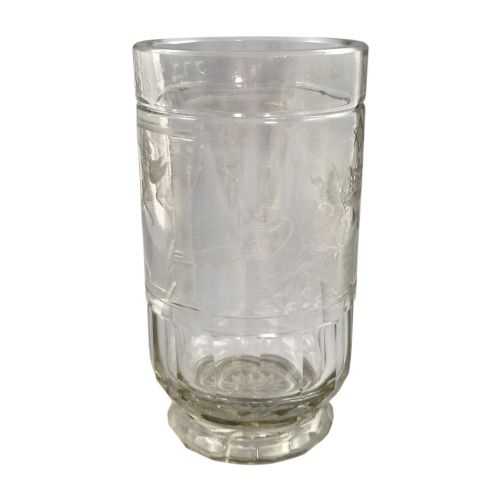
Antique bohemian glass beakers encompass tall drinking vessels, robust tumblers, and heavily decorated cylindrical forms originating from Central Europe during the nineteenth century. These objects bridge the gap between functional glassware and ornamental display pieces, often taking the form of substantial tumblers or tankards.
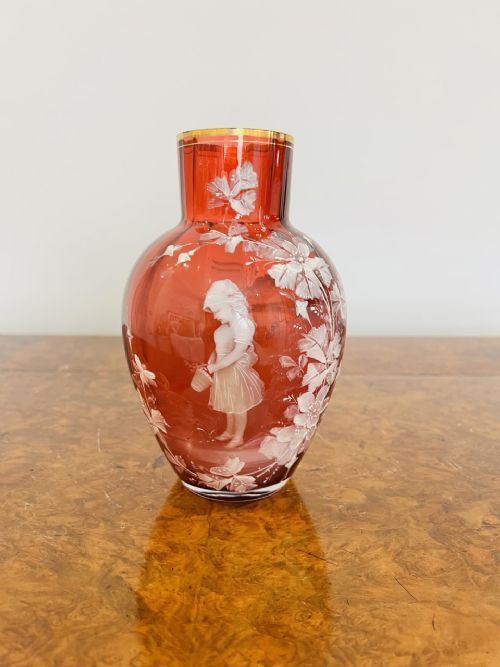
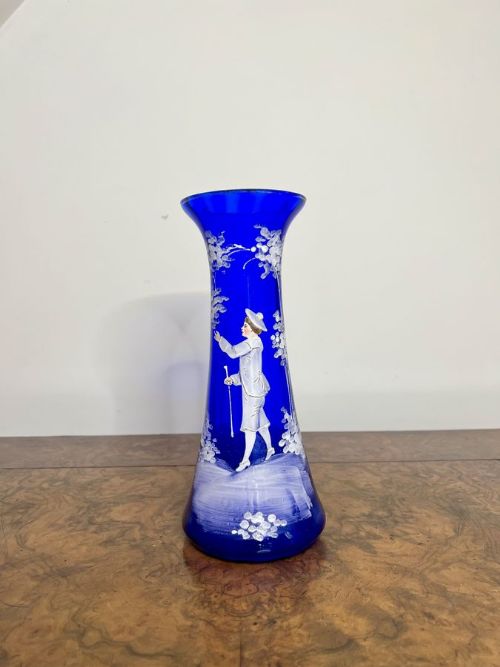
The pieces appearing on this page span the Victorian era, alongside specific regional movements like Biedermeier and German Historismus. Makers utilised striking coloured grounds, notably ruby red and rich cobalt blue, combined with detailed engraving and gilding.
Collectors encounter both individual ceremonial vessels and paired sets designed for display or cabinet collections. The forms range from simple tapered cylinders to massive ritual items and lidded tankards featuring painted panels.
How they were made
Artisans produced these vessels using heavy lead or potash glass, blown into moulds or free-blown before undergoing extensive hand-finishing. The signature colours often relied on flash glass techniques, where a thin layer of coloured glass was fused over a clear body to allow deep wheel-engraving.
Decoration involved intricate wheel-cutting, gold leaf application, and precise enamel painting in white and polychrome shades. Engravers cut deep architectural or figurative motifs through the coloured surface to reveal the clear glass beneath.
Listings feature Victorian and mid-nineteenth-century dates, utilising ruby flash glass, gold leaf, and enamel paint across beakers, tankards, and vases.
What varies in quality
The standard of the wheel-engraving dictates the upper tiers of quality, separating crisp, deeply carved heraldic or floral scenes from shallow, hasty surface etching. Superior pieces display precise line work and sharp relief that catch the light effectively.
The application of gold leaf and enamel painting also marks distinct grades of craftsmanship, with finer examples retaining crisp brushwork and heavy gilding rather than flat, faded pigment. Weight, clarity of the glass ground, and the richness of the ruby or blue flash layers further define the better specimens.
The Antique Bohemian Glass Beakers Glossary
- Ruby flash glass
- Clear glass coated with a thin layer of red glass before being cut or engraved. This technique creates high contrast when the engraver cuts through the red layer.
- Wheel-engraving
- A traditional cold-working technique using small rotating wheels of stone or copper fed with an abrasive slurry. It creates deep, precise cuts in the glass surface.
- Biedermeier
- A Central European design style spanning the first half of the nineteenth century. It prioritises clean lines, domestic utility, and functional elegance over ornate excess.
- Enamel paint
- Opaque vitreous or oil-based pigments applied to the exterior of the glass. Firing bonds the colours permanently to the vessel wall.
Antique Bohemian Glass Beakers: Frequently Asked Questions
How were bohemian glass beakers used?
These vessels served various roles ranging from functional drinking vessels for beer and wine to ceremonial objects for fraternal or Masonic gatherings. Many substantial pieces functioned primarily as mantelpiece ornaments or cabinet displays rather than daily tableware.
Heavier examples, such as tankards and large beakers, were built to withstand regular handling, while finely gilded or painted display items remained protected in glass cabinets.
How do I date antique bohemian glass?
Dating relies on stylistic markers, cutting depth, and colour chemistry typical of nineteenth-century production periods. Victorian and mid-century pieces often exhibit distinct enamel palettes and heavier wheel-cut engraving.
Comparing the pontil mark, wear on the base, and specific decorative motifs helps narrow the decade of manufacture within the broader Victorian era.
Are these glass beakers safe to use?
Most collectors treat antique glass as display items rather than functional tableware due to age, historical value, and potential wear. Hand-washing in lukewarm water without harsh detergents is standard practice for preservation.
Sudden temperature changes can stress nineteenth-century glass, making hot liquids and modern dishwashers entirely unsuitable for these historical pieces.
What is flash glass?
Flash glass consists of a thick base of clear or pale glass coated with a very thin skin of intensely coloured glass. This layered construction allowed nineteenth-century artisans to carve away the outer colour and expose the clear material underneath.
The resulting contrast gives engraved bohemian glassware its characteristic two-tone visual depth and sculptural relief.