


Bohemian Ruby Crystal Glasses
These bohemian ruby crystal glasses and associated vessels bring deep colour and brilliant cutting from nineteenth and twentieth century workshops into modern rooms.
Bohemian Ruby Crystal Glasses
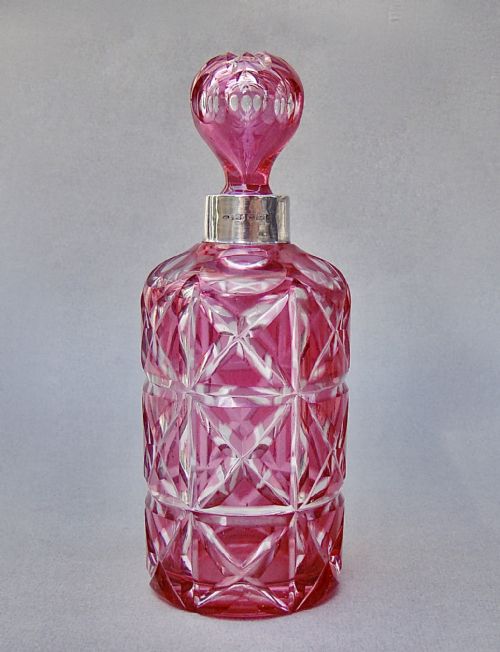
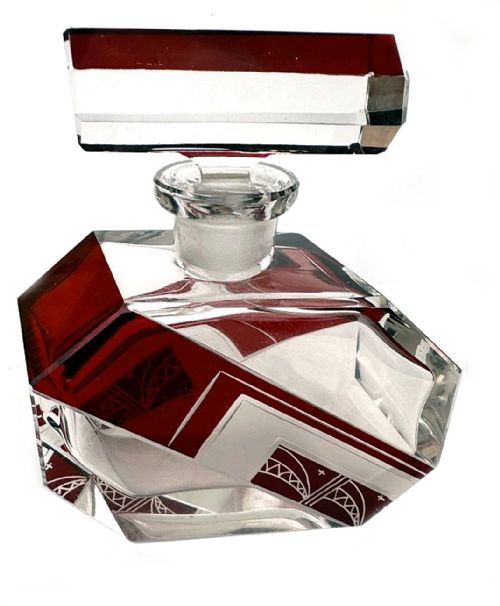
When you search for bohemian ruby crystal glasses, you are looking at richly coloured decorative and functional vessels produced across various periods including the Victorian era, eighteen-eighties, nineteen-tens, and nineteen-thirties. The selection on this page centres on items such as mantel lustres, scent bottles, vases, candlesticks, tumblers, wine glasses, and bowls.
The Victorian and eighteen-eighties pieces often appear as substantial pairs of lustres hung with glass prisms, or as heavy cut glass and flash glass vases. Later twentieth century examples shift toward cleaner Art Deco lines, seen in perfume bottles and matching sets of wine glasses.
Continental craftsmanship defines the origin of these items, with Bohemian glasshouses dominating the production of flash glass and cut crystal. Buyers most frequently meet Victorian mantel lustres and ruby glass vases alongside smaller items like silver-mounted scent bottles.
How they were made
The primary material foundation relies on ruby glass, cranberry glass, and clear crystal, often manipulated through overlay techniques where a thin layer of red glass covers a colourless base before cutting. Craftsmen then removed sections of the outer ruby layer by hand to expose the clear glass beneath, creating sharp geometric or floral patterns.
Decoration extended beyond cutting to include detailed surface gilding and polychrome enamelling, which added opaque colour and metallic highlights to the rich red body. Metalwork mounts, such as silver collars on scent bottles, demonstrate how glassmakers collaborated with silversmiths during the early twentieth century.
Production methods evolved from nineteenth century heavy press and hand-cut techniques toward more streamlined Art Deco styling by nineteen-thirty. Engraving also played a significant role, with artisans cutting delicate motifs directly into the surface of tumblers and vases.
Victorian mantel lustres doubled as light-catchers to brighten gloomy nineteenth-century parlours before electric bulbs took over.
What varies in quality
Depth and saturation of the ruby colour distinguish different grades of glass, alongside the clarity of the underlying crystal. Pieces created with flash glass show distinct layers where the red colour overlays clear glass, and the precision of the wheel-cut facets determines the crispness of the light refraction.
The complexity of the hand-applied gilt and enamel ornamentation marks the division between standard production ware and finer examples. Lustres and candlesticks depend heavily on the presence and integrity of their matching cut glass prisms, which complete the silhouette and diffuse light.
The weight of the crystal and the stability of any accompanying metal mounts, such as Birmingham silver collars, contribute to the overall substance of the object. Twentieth century items show variation in the sharpness of their Art Deco cutting compared to earlier Victorian decorative vessels.
Harold Bushell & Co·Karl Palda
The Bohemian Ruby Crystal Glasses Glossary
- Flash glass
- A thin layer of coloured glass fused over a colourless glass base before being cut away to reveal the contrasting layer beneath. This technique allowed makers to achieve deep ruby tones while maintaining internal clarity.
- Mantel lustre
- A decorative two-piece or multi-piece vessel designed for a fireplace mantel, featuring hanging crystal prisms that catch and refract ambient light. These typically date from the Victorian period.
- Ruby glass
- A type of decorative glass coloured by the addition of gold or copper compounds during the melting process. It produces a deep red hue characteristic of nineteenth century Bohemian production.
- Cranberry glass
- A transparent pinkish-red glass created using gold chloride in the batch, commonly utilised for nineteenth and early twentieth century tableware and scent bottles.
- Cut crystal
- Glass shaped and patterned by holding the vessel against a rotating abrasive wheel. The resulting facets enhance the brilliance and weight of the material.
Bohemian Ruby Crystal Glasses: Frequently Asked Questions
What are mantel lustres used for?
Mantel lustres served primarily as decorative garnitures placed on fireplace mantelpieces during the Victorian era. Their hanging crystal prisms were designed to catch the flickering light of lamps and candles.
Beyond their decorative function, they added symmetry and status to formal nineteenth century reception rooms. Today, they remain statement display pieces for mantels or sideboards.
How do I identify Bohemian glass?
Bohemian glass is frequently identified by its heavy lead crystal content, deep ruby coloration, and skilled wheel-cutting techniques. Makers in the region specialised in flash glass overlays and detailed enamel work.
Examining the base and the precision of the cut facets often reveals the continental origin. Stylistic cues like Victorian lustre forms or Art Deco geometric cutting also point to Bohemian workshops.
What is the difference between ruby and cranberry glass?
Ruby glass generally exhibits a deeper, richer red hue and was achieved through various metallic oxide additives. Cranberry glass tends to have a lighter, pinker translucent quality produced specifically with gold chloride.
Both materials were widely utilised in nineteenth century Bohemian and Victorian glassware. The distinction lies primarily in the tone of the red colour and the specific chemical recipe used in the furnace.
How should I clean antique glass?
Antique glass requires gentle hand washing in lukewarm water with mild, non-abrasive soap. Harsh chemicals and sudden temperature changes can damage fragile surfaces, especially those with gilt or enamel decoration.
Items with metal mounts, such as silver-collared scent bottles, should be kept dry around the fittings. Prisms on lustres are best removed and cleaned individually before being reattached.