


Cut to Clear Ruby Glass
Cut to clear ruby glass pieces are striking double-layered vessels that bring depth and rich colour to any room.
Cut to Clear Ruby Glass
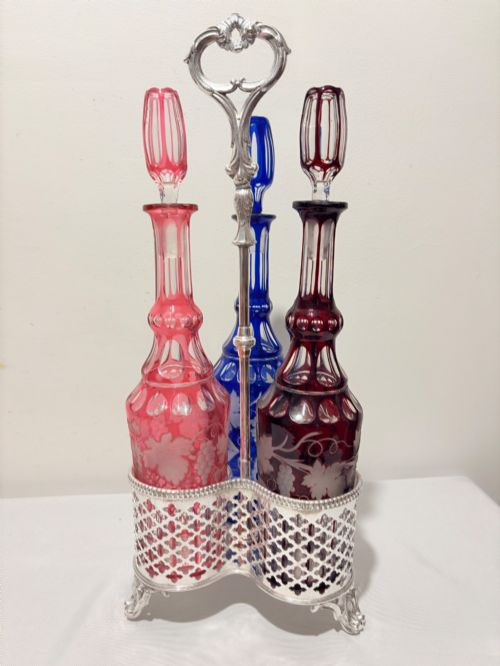
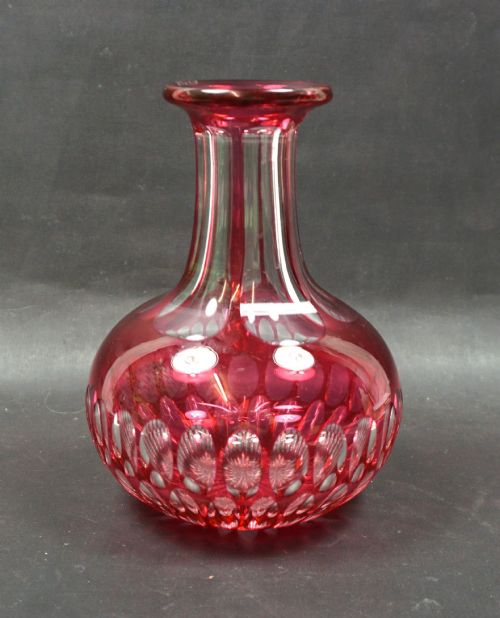
Cut to clear ruby glass pieces comprise decorative glassware, vases, decanters, and tumblers originating mainly from Victorian and twentieth-century periods. These items display a deep red outer layer cut away to reveal colourless glass beneath.
The most common examples on this page are Bohemian and Victorian Bohemian items, alongside Belgian pieces from the nineteen thirties. Collectors encounter bowls, plates, beakers, and scent bottles alongside standard drinking vessels.
Makers such as Val Saint Lambert and designers like Charles Graffart appear among the twentieth-century pieces. Earlier nineteenth-century items rely on traditional Bohemian and Victorian manufacturing centres.
How they were made
Glassmakers created these objects by fusing a layer of ruby red glass over a core of clear glass or lead crystal. This casing technique required skilled thermal control during the initial blowing stage.
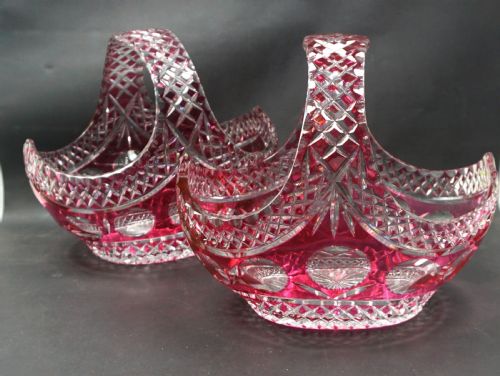
Artisans then cut through the coloured outer layer using abrasive wheels to expose the clear glass underneath. Engraving and faceting produced intricate geometric or floral patterns across the surface.
Victorian scent bottles hide potent perfumes behind heavy red casings, ready to revive a swooning guest.
What varies in quality
Quality rests on the depth and precision of the cutting, where crisp facets demonstrate superior craftsmanship over soft or shallow incisions. The weight and clarity of the underlying lead crystal also dictate the piece's standing.
Colour saturation plays a vital role, as superior items exhibit an even ruby tone without cloudiness in the glass. Engraved details that show fine line work distinguish the finest decorative baskets and vases from standard production.
Val St Lambert·Charles Graffart
The Cut to Clear Ruby Glass Glossary
- Ruby Glass
- Glass coloured with gold or copper compounds to achieve a deep red hue. This material forms the outer casing of the items.
- Cranberry Glass
- A transparent pinkish-red glass created using gold chloride. It appears in carafes and scent bottles.
- Lead Crystal
- Heavy glass containing lead oxide that increases brilliance and weight. It provides the clear base for overlaid vessels.
- Overlay
- A manufacturing method where a layer of coloured glass is fused over a distinct layer of clear glass. Cutting through this top layer reveals the base material.
- Faceting
- The process of grinding flat planes into the glass surface. This technique catches the light and emphasises the two-layer structure.
Cut to Clear Ruby Glass: Frequently Asked Questions
What is cut to clear ruby glass?
Cut to clear ruby glass is a type of layered glassware featuring a vibrant red outer casing over a colourless crystal base. Artisans cut through the red layer to expose the clear glass beneath, creating high-contrast decorative patterns.
Items range from Victorian tablewares and scent bottles to twentieth-century vases and decanters. The technique allows for intricate geometric and floral designs that catch the light.
How do I date these glass pieces?
Dating relies on stylistic clues, manufacturing techniques, and specific design markers recorded by makers. Victorian and nineteenth-century pieces often display heavy Bohemian engraving and traditional faceted panel work.
Mid-twentieth-century examples, such as those from Belgian workshops, showcase cleaner Art Deco lines and modern forms. Comparing the weight, colour tone, and cutting style helps distinguish earlier items from later ones.
How should I display cut to clear glass?
Display these vessels near natural light sources to emphasise the contrast between the ruby red exterior and the clear glass cuts. Placing them on windowsills or illuminated shelves enhances their rich colour.
Keep pieces away from high-traffic edges where accidental knocks might occur. Grouping items like goblets, decanters, and baskets together creates a strong visual focal point.