

Antique Rosewood Tilt Top
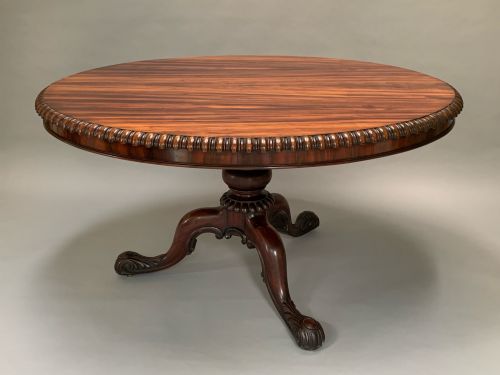
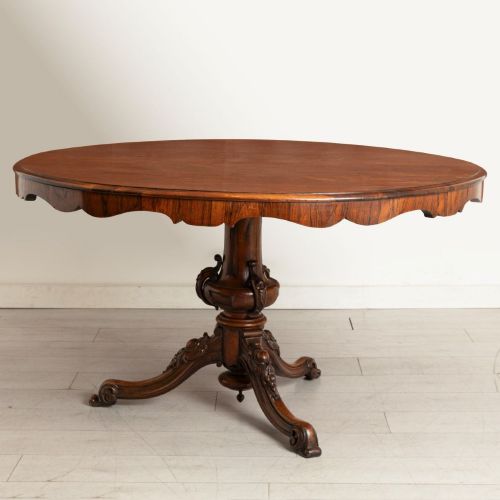
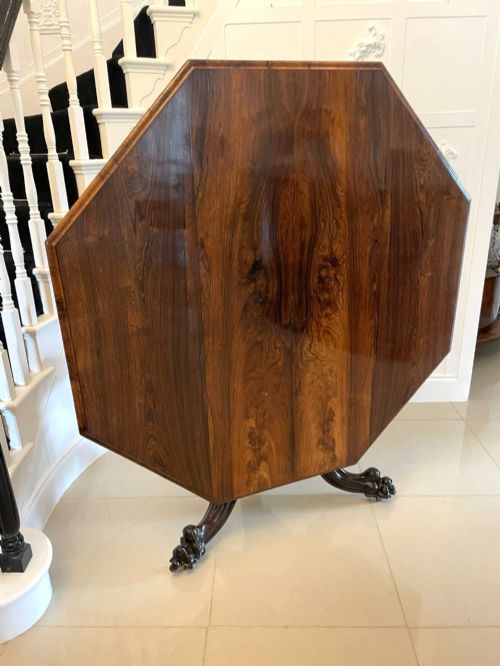
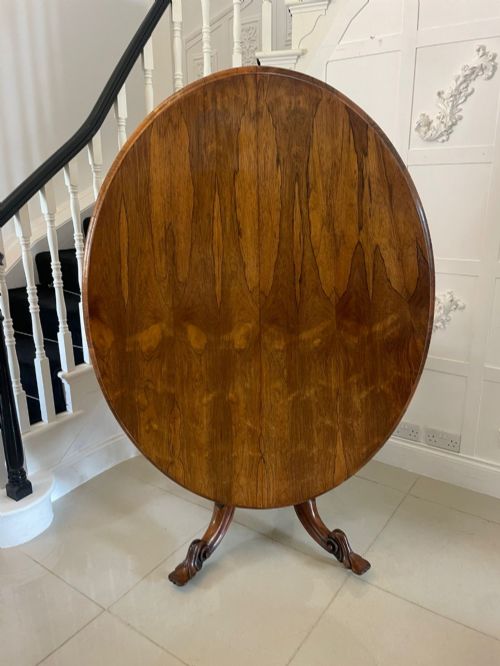
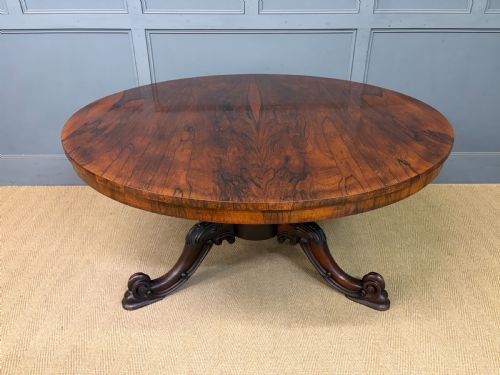
An antique rosewood tilt top brings deep reddish-brown grain and a clever pivoting mechanism into a room, serving as both dining surface and space-saving console.
Antique Rosewood Tilt Top
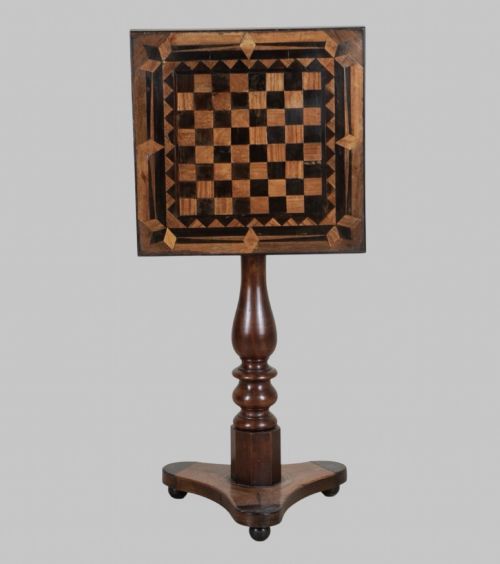
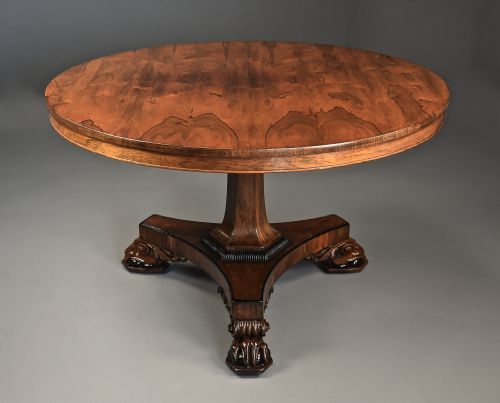
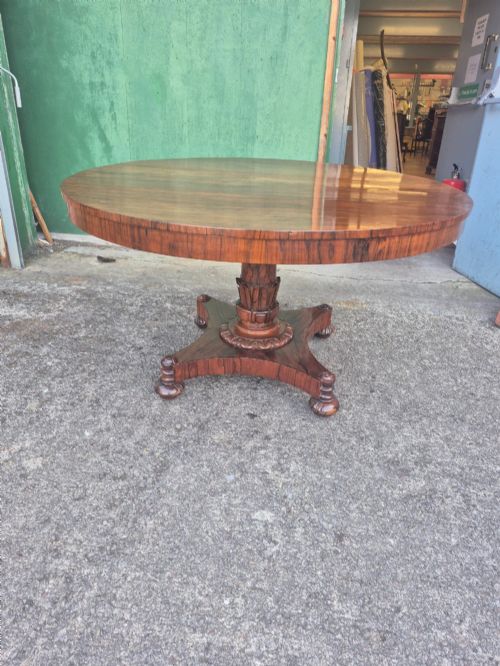
When you search for an antique rosewood tilt top, you are looking at heavy, dark timber tables designed to pivot vertically when not in use. The examples on this page span the Regency, William IV, and Victorian periods, alongside Georgian and nineteenth-century pieces.
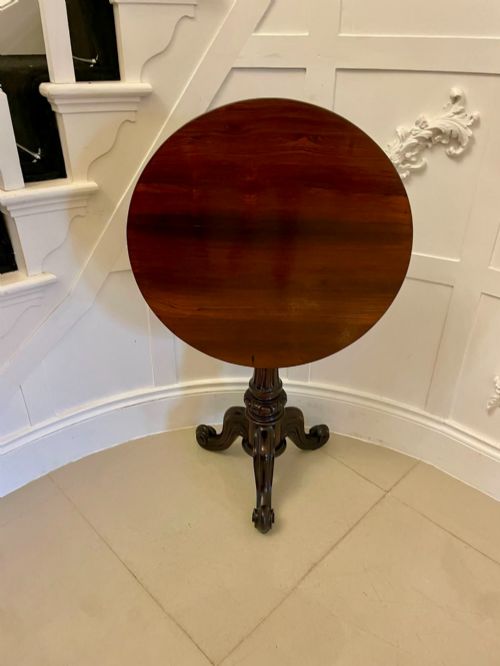
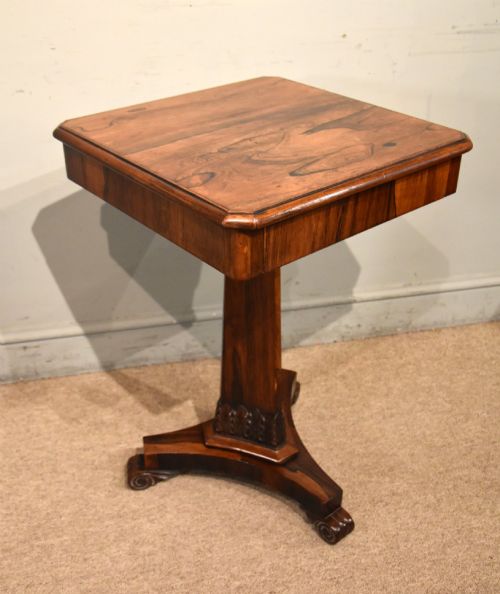
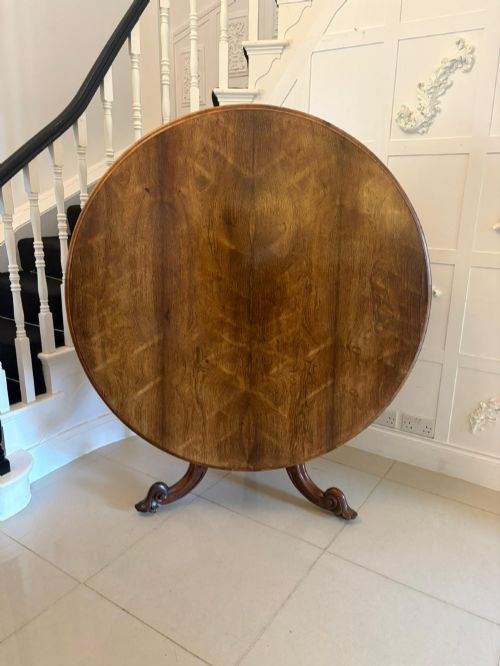
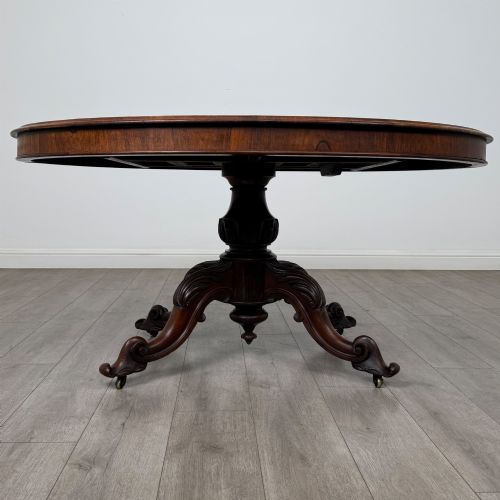
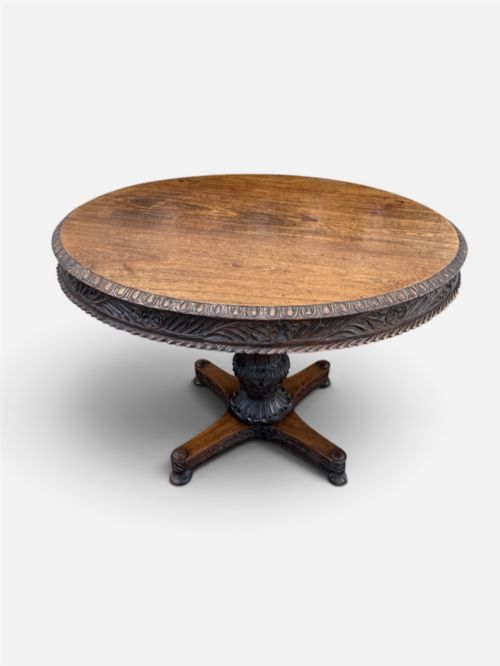
Most items meeting this description function as breakfast, dining, or loo tables, resting on heavy turned or carved solid bases with tripod or platform feet. You will also encounter smaller wine tables, occasional tables, and breakfast tables sharing the same pivoting mechanism.
Origin points across the evidence include English workshops, Irish makers, Anglo-Indian craftspeople, and continental pieces such as those from Genoa. Forms vary from circular breakfast tables to ovular loo tables and square or oval centre tables.
Materials and construction methods
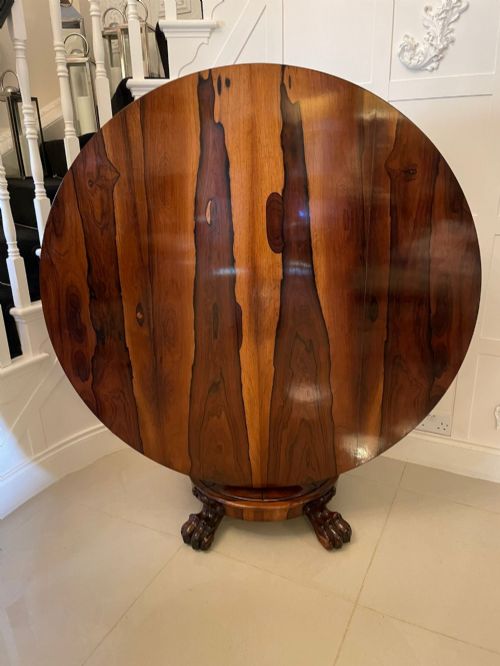
Cabinetmakers utilised dense, heavily figured rosewood, frequently applied as a fine veneer over secondary timbers or worked as solid timber for structural bases. The grain patterns dictate much of the visual character, supplemented by contrasting details in satinwood, boxwood, and mahogany.
Makers integrated brass elements, such as intricate inlay work and heavy castors on the feet, alongside parcel gilding and mother of pearl inlay on Anglo-Indian pieces. The central tilt mechanism relies on a sturdy wooden or metal catch that secures the circular or ovular top firmly in a horizontal position.
Listings feature rosewood combined with satinwood, boxwood, mahogany, and brass inlay across Regency, William IV, and Victorian periods.
Distinctions in construction and design
Superior examples demonstrate exceptional figured timber selection across the entire table top, matching grain patterns meticulously at the centre seams. Poorer specimens rely on flat, plain timber planks with minimal natural variation.
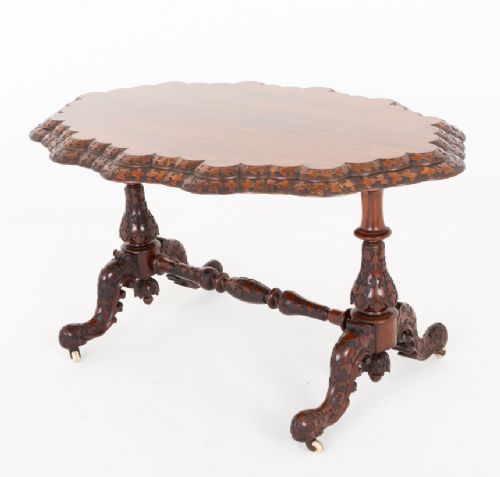
The sophistication of the carved base dictates upper tiers of manufacture, separating simple turned pedestals from heavily carved tripod or platform structures featuring acanthus leaves and scrollwork. Maker attribution to known firms like Gillows or Peters of Genoa frequently aligns with this elevated level of carving and joinery.
Gillows·Peters of Genoa
The Antique Rosewood Tilt Top Glossary
- Tilt top
- A table construction allowing the horizontal surface to pivot vertically on a central hinge. This feature enabled the furniture to stand flat against a wall when not in use.
- Loo table
- A large round or oval card and parlour table popular during the nineteenth century. These tables almost universally incorporate the tilting mechanism to clear floor space.
- Breakfast table
- A dining table designed for morning meals rather than formal evening banquets. They typically feature a single central pedestal and a circular or ovular tilt top.
- Veneer
- A thin layer of highly figured rosewood applied over a stable secondary wood base. This technique allowed makers to display dramatic grain patterns without exhausting timber supplies.
Antique Rosewood Tilt Top: Frequently Asked Questions
Can I use this table for daily dining?
These tables served primarily for dining and breakfast use historically, making them well-suited for everyday meals. The sturdy pedestal bases provide ample legroom around the perimeter.
Protect the polished rosewood surface from heat and moisture using placemats and coasters. Wipe away spills immediately to prevent water rings from forming in the shellac finish.
How do I tell a Regency tilt top from a Victorian one?
Regency pieces often display cleaner classical lines, sometimes incorporating brass inlay, parcel gilding, or delicate reeded pedestals. They date from the early decades of the nineteenth century.
Victorian examples tend toward heavier proportions with robust, deeply carved floral pedestals and bolder scrollwork on the base. The timber selection on Victorian pieces frequently exhibits very dark, highly figured grain.
Where should I place a tilt top table in my home?
Position the table in the centre of a room as a focal point, or tilt the top vertically to stand it against a wall when floor space is required. They suit reception rooms, large hallways, and libraries.
Keep the timber away from direct sunlight and strong heat sources such as radiators to prevent the rosewood veneer from drying out or splitting over time.