



Brown Rosewood Tilt Table
A brown rosewood tilt table combines rich dark timbers with a top that pivots for storage, offering both practicality and elegance for the home.
Brown Rosewood Tilt Table
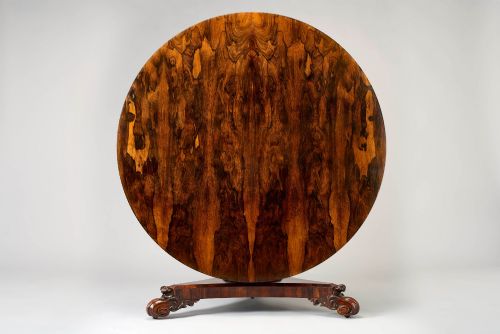
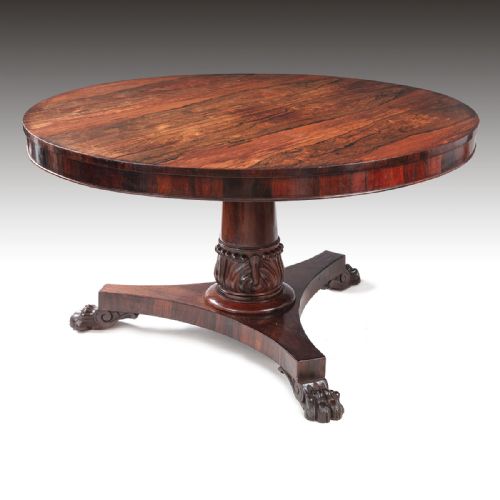
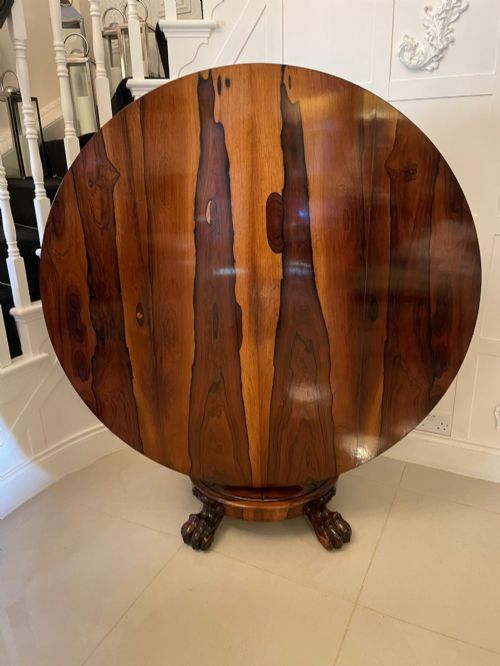
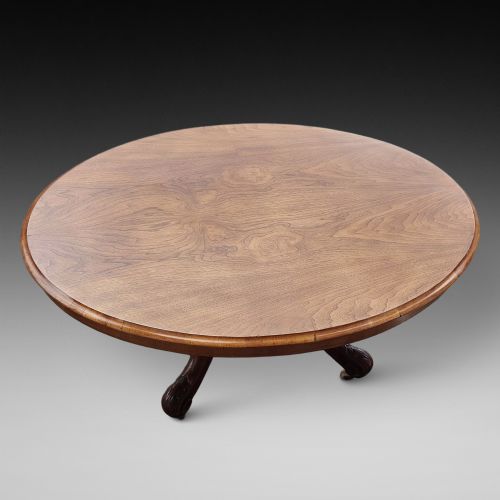
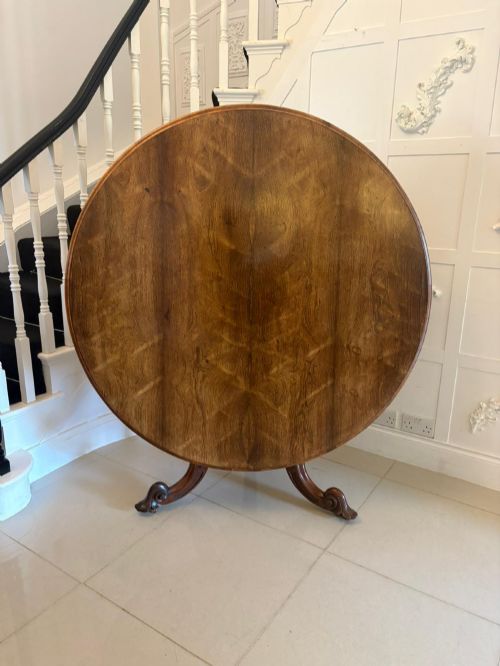
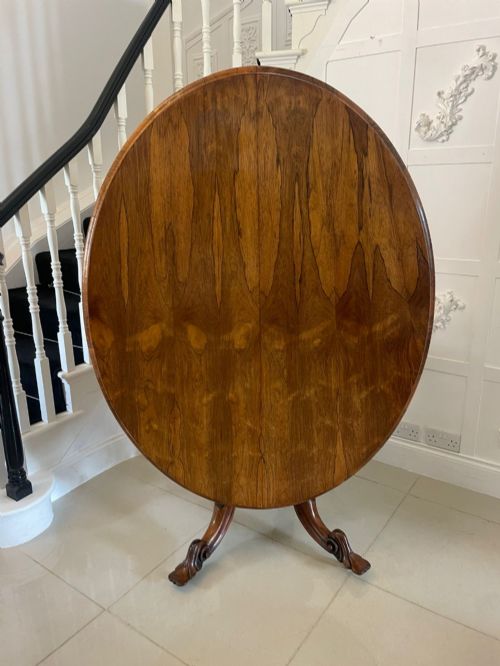
A brown rosewood tilt table brings together the rich, dark tones of dense timber with a hinged mechanism designed to tip the top upright when not in use. These pieces primarily date from the Georgian, Regency, William IV, and Victorian periods, often serving as dining, breakfast, centre, or occasional tables.
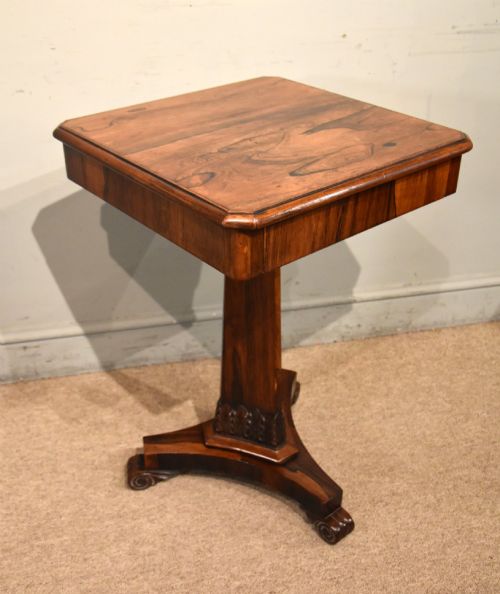
Surviving examples span circular dining formats, square tops, and large loo tables supported by central pedestals. Many pieces incorporate pivoting surfaces that allow the table to tuck against a wall to save space in period rooms.
Materials and Construction
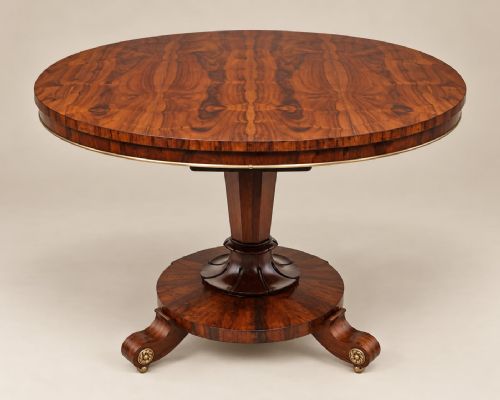
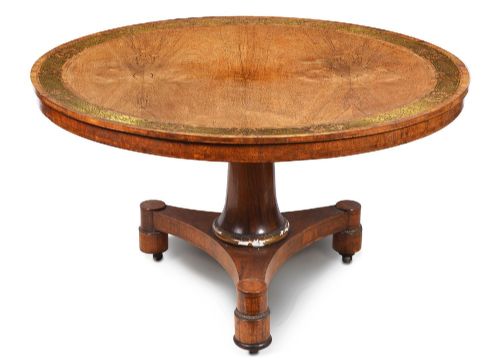
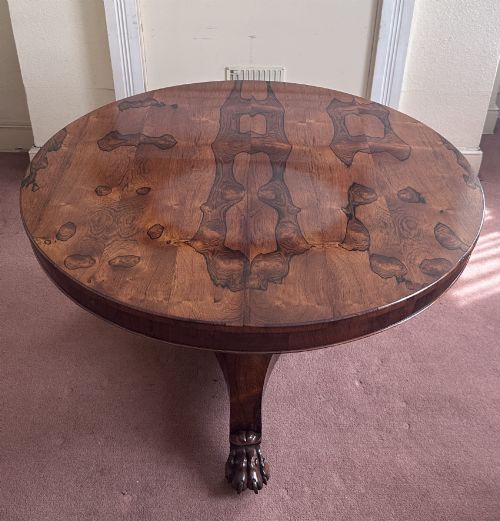
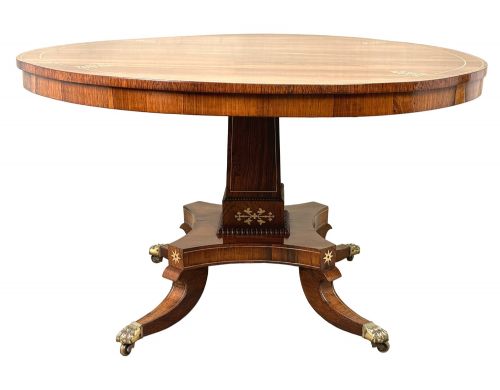
Cabinet makers utilised dense, richly figured rosewood veneers and solid timbers, sometimes pairing the primary wood with secondary materials such as mahogany, satinwood, and goncalo alves. Brass inlay and mother of pearl were frequently embedded into the timber to create contrasting decorative borders.
The pivoting mechanism relied on a sturdy catch and a robust central pedestal, which often stood on a platform base with carved paw feet or castors. Joinery techniques ensured the heavy top remained stable in both the horizontal and vertical positions.
Brown Rosewood Tilt Table Retail Price Guide 2026
Typical asking prices for brown rosewood tilt table among the pieces listed under this phrase on Sellingantiques today, from the lower quarter to the upper quarter. They describe what is for sale here now, not the wider market.
Card players of the past relied on loo tables for evening games, leaving behind sturdy surfaces designed specifically for late-night wagers.
Assessing Quality and Craftsmanship
Quality rests in the grain of the rosewood timber and the precision of any brass or mother of pearl inlay. Better examples display balanced figuring across the entire surface without clumsy repairs or mismatched veneer sections.
The weight and smoothness of the tilt mechanism indicate superior construction. A well-balanced pedestal and solid base ensure the table remains firm when loaded.
Peters of Genoa·James Winter of Wardour Street in London
The Brown Rosewood Tilt Table Glossary
- Tilt top
- A hinged table top that pivots to a vertical position for storage against a wall. This mechanism was common on breakfast and occasional tables.
- Pedestal table
- A table supported by a single central pillar rather than four corner legs. This design provides extra legroom for diners.
- Goncalo alves
- A dense exotic hardwood with striking contrasting grain patterns, sometimes used alongside rosewood in table construction.
- Loo table
- A large round table popular in the 19th century, designed for evening card games and social gatherings.
- Inlay
- A technique where contrasting materials like brass or satinwood are embedded into recesses within the wood surface.
Brown Rosewood Tilt Table: Frequently Asked Questions
How do I use a tilt table?
Release the under-table catch to pivot the top into a vertical position. This allows the piece to rest flat against a wall when floor space is needed.
Return the top to the horizontal position and secure the latch before placing items on the surface.
Can I use this for everyday dining?
These tables function well for daily meals, provided you use heat mats and coasters to protect the polished wood. The central pedestal design also offers ample legroom for seating.
Ensure spills are wiped away promptly to maintain the condition of the rosewood finish.
How do I date a rosewood table?
Examine the pedestal design, base configuration, and overall style to determine the period. Regency and William IV pieces often feature brass inlay and heavy platforms, while Victorian examples tend toward carved tripod bases.
Construction marks and timber choices also provide clues to the approximate decade of manufacture.
How do I care for rosewood furniture?
Keep the wood away from direct sunlight and strong heat sources to prevent the timber from drying out or fading. Dust regularly with a soft, dry cloth.
Apply quality furniture wax sparingly when the surface begins to look dry, buffing gently to maintain the sheen.