

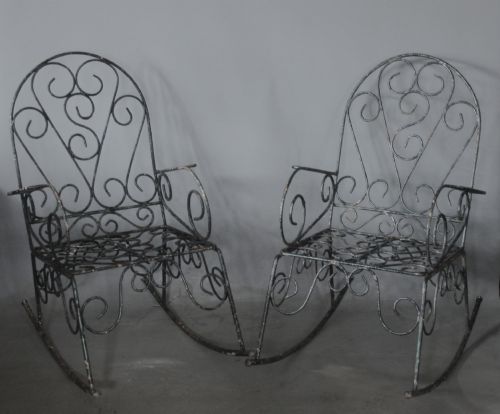
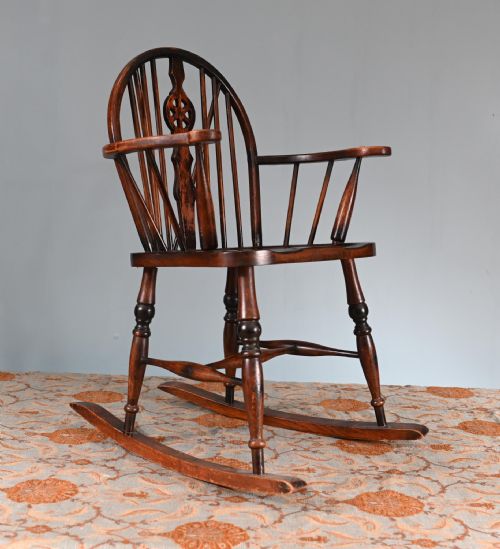

Antique Rocking Armchair
An antique rocking armchair offers a slow, steady motion and solid timber construction that modern seating simply cannot match.
What these antique rocking armchairs are
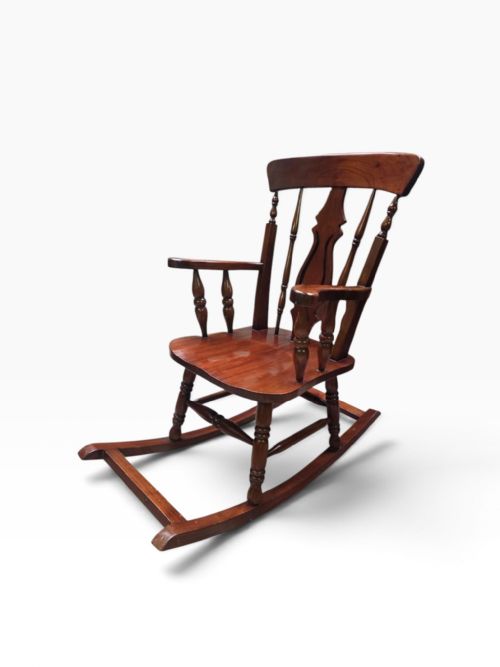
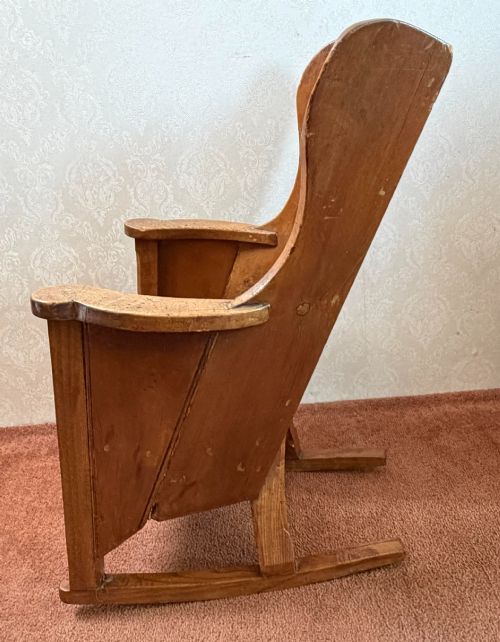
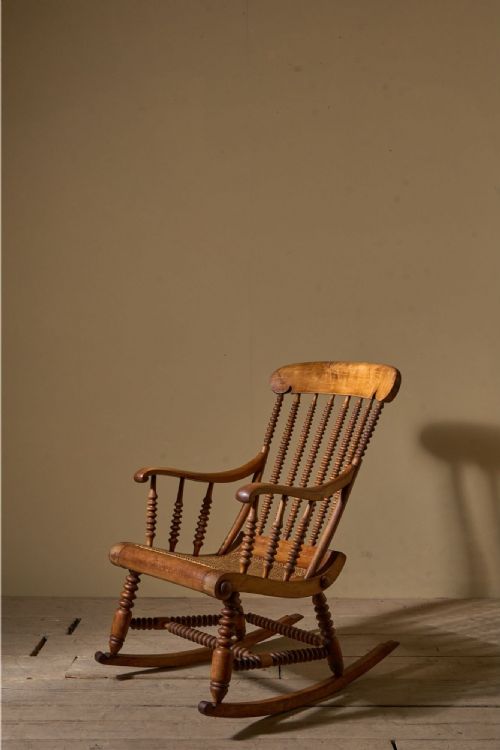
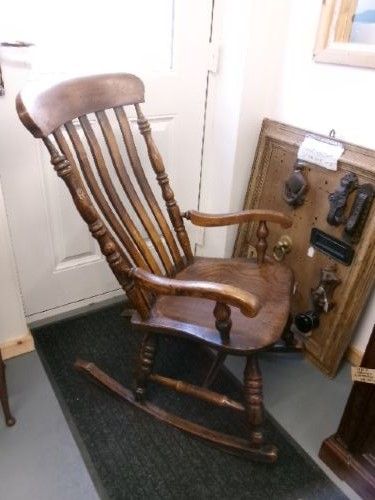
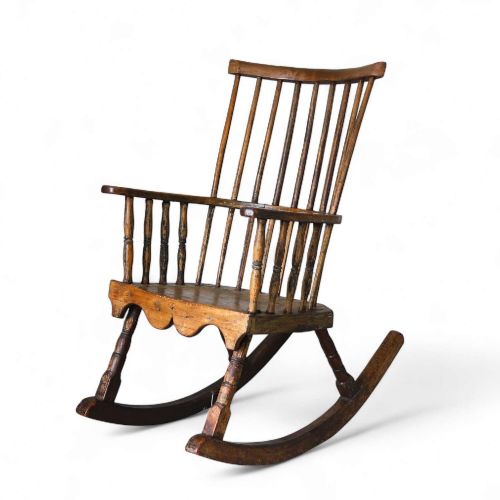
An antique rocking armchair is a seating form designed for gentle movement, combining standard chair frames with curved wooden rockers beneath the legs or feet. Buyers searching this phrase encounter a diverse selection spanning country kitchen chairs to formal parlour seats.
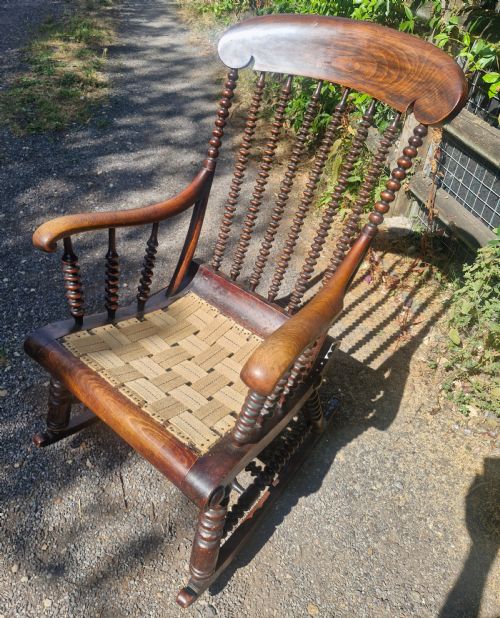
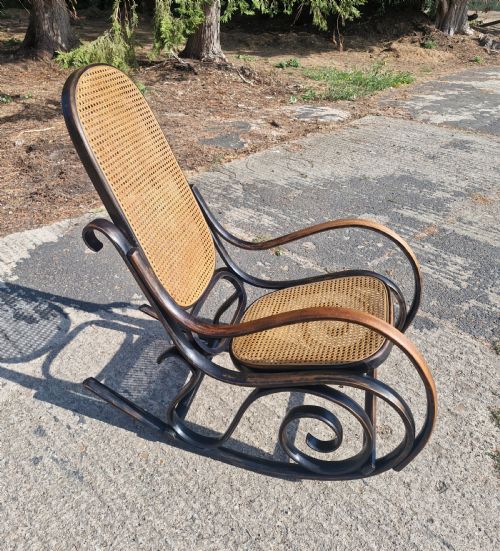
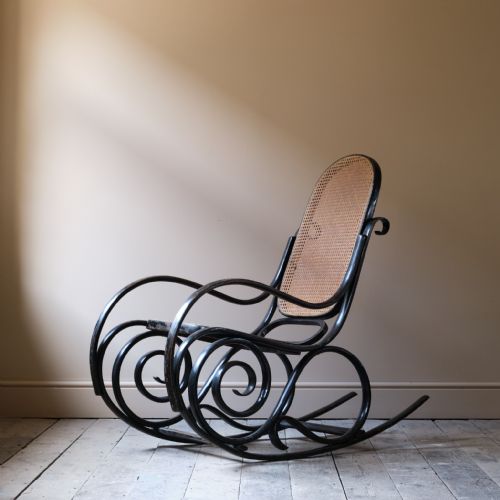
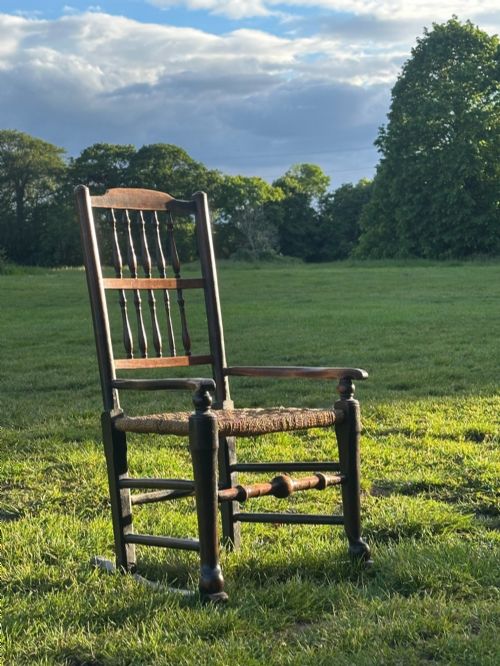
The material record shows significant variety in timber choice, with mahogany, oak, walnut, ash, elm, beech, and ebonised wood appearing across different examples. Regional vernacular styles sit alongside more finished Victorian pieces.
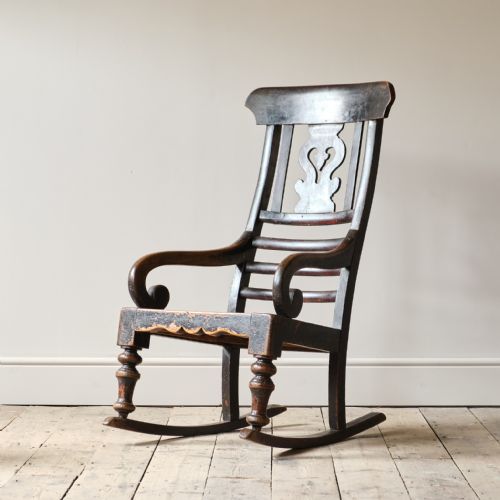
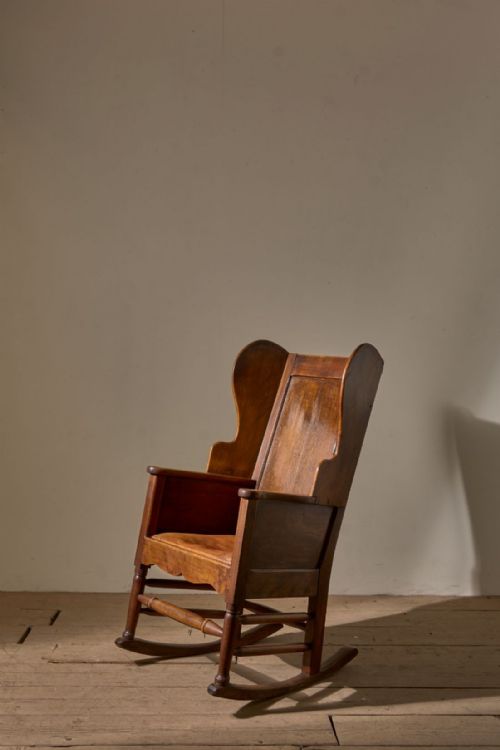
Most pieces seen here belong to the nineteenth century, including specific Victorian examples and earlier traditional forms. Forms range from low fireside chairs to high-backed Windsor variants and children's sizes.
How they were made
Maker construction relies heavily on traditional joining techniques, utilising solid hardwoods such as ash, elm, mahogany, and beech for the primary frames. Turned spindles, bentwood components, and carved details shape the structural supports.
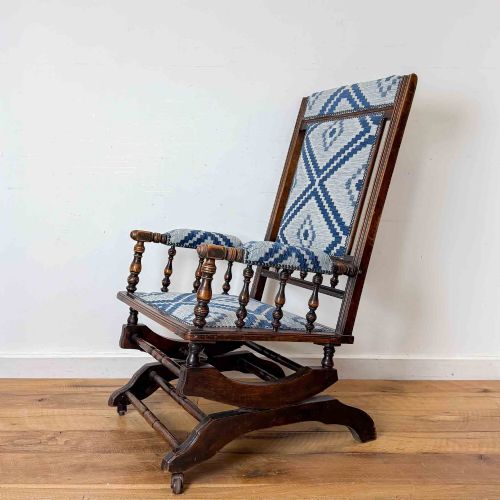
Upholstery and decorative elements incorporate leather, velvet, brass studs, and wood inlay to finish specific parlour and study armchairs. Many country models retain plain timber seats paired with lath-back, slat-back, or Windsor configurations.
Retail Price Guide 2026
Typical UK retail prices for rocking armchair, calculated from the Sellingantiques database of over a million retail prices indexed since 2003. This retail price guide relies exclusively on Sellingantiques data; no external sources or auction records are used, so the figures do not describe the wider market.
At least one child-sized rocking armchair exists in the archive, proving that small Victorians also needed to unwind.
What varies in quality
Quality separates primitive utility pieces from high-status urban furniture through the selection of timber and the precision of the turning. Ash and elm country rockers demonstrate robust local carpentry, whereas mahogany Victorian armchairs display refined cabinet-making skills.
The harmony of the proportions and the wear patterns on the curved rockers dictate the overall integrity of the piece. Integrated upholstery, brass accents, and fine wood inlay elevate the decorative standard of the framework.
The Antique Rocking Armchair Glossary
- Windsor chair
- A wooden chair built with a heavy solid wooden seat into which the legs and back spindles are separately bored and wedged.
- Bentwood
- Wood that is steamed and bent into curved shapes, commonly seen in late nineteenth-century seating.
- Lath back
- A chair back constructed with horizontal or vertical flat wooden slats.
- Splat back
- A chair featuring a central vertical strip of wood down the middle of the backrest.
- Ebonised
- Wood finished with a dark stain or paint to imitate the appearance of ebony.
Frequently Asked Questions
Where were these chairs used?
These chairs served primarily in domestic spaces such as kitchens, firesides, nurseries, and studies.
Lower models sat comfortably beside hearths, while larger study armchairs provided relaxed seating for reading and working.
How do I date a rocking chair?
Dating relies on examining the timber species, construction joints, turning styles, and overall design characteristics.
Nineteenth-century examples often display machine-assisted turnings or distinct Victorian upholstery styles alongside regional vernacular traits.
Are these chairs comfortable for daily use?
Many of these chairs provide a deep, supportive seat shaped by historical comfort requirements.
Upholstered models and high-backed Windsor forms offer substantial back support paired with the gentle movement of the rockers.