
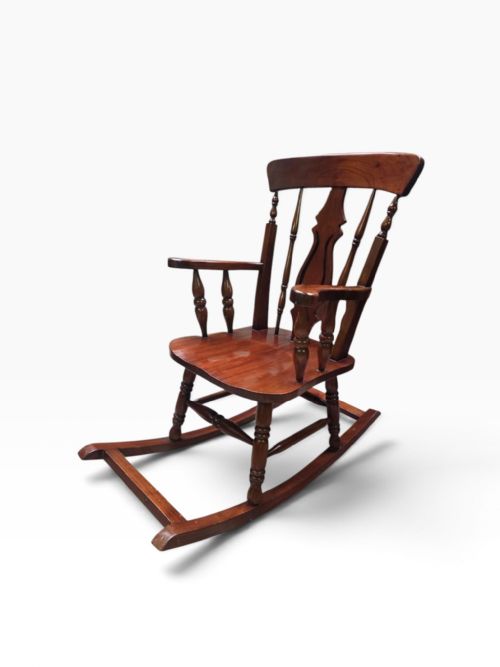
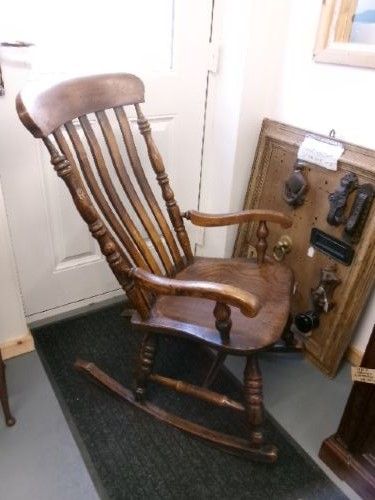
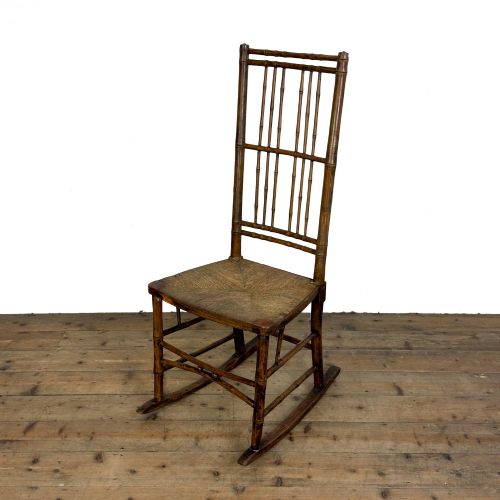
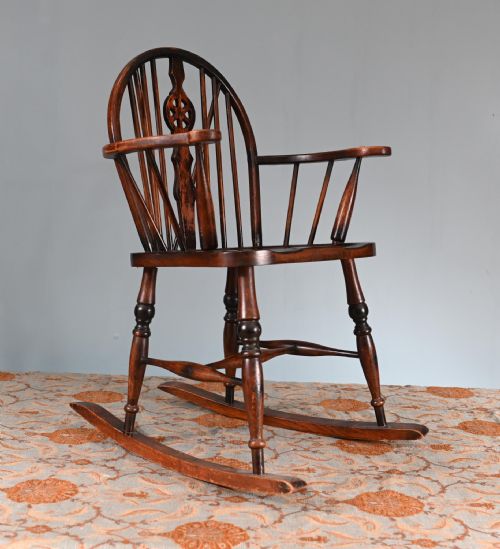


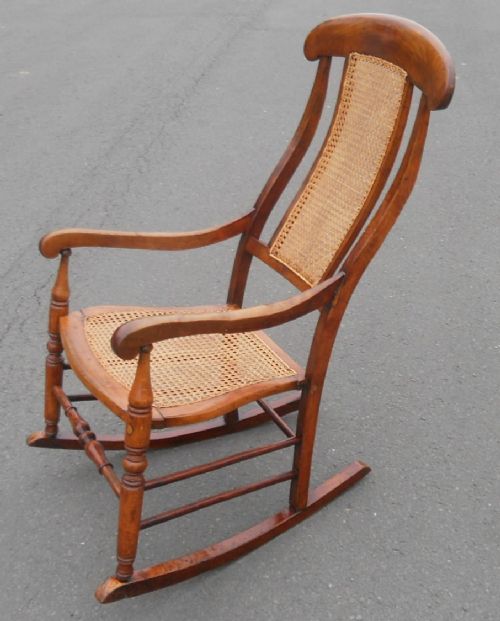

Carved Back Rocking Chair
A carved back rocking chair brings traditional motion and solid woodwork into a room, offering both character and comfort.
Carved Back Rocking Chair
A carved back rocking chair combines traditional seating with curved rockers for gentle movement. You encounter forms ranging from heavy farmhouse styles to lighter parlour pieces.
The evidence shows these chairs span periods from the late seventeenth century through the Victorian era and into the early twentieth century. Victorian examples and various Windsor designs appear most frequently on this page.
Makers utilised distinct regional styles, producing items like Yorkshire farmhouse models and wheelback Windsor chairs. Seating heights and back heights vary depending on whether the piece served a fireside, nursery or formal room.
Materials and construction methods
Makers built these chairs using timber such as mahogany, elm, beech, oak and birch, often selecting dense woods to withstand the continuous motion of rocking. Solid wooden seats frequently feature moulded panels or fitted cane inserts.
Construction techniques include traditional joinery, steam bending for curved components, and spindle turning. Decorative elements involve carved details, inlaid woods, faux bamboo shaping, and turned bobbin bars.
Listings feature items spanning the 1700s, Regency, Victorian, Edwardian, and 1930 periods.
Assessing quality in carved rocking chairs
Quality rests in the selection of timber and the crispness of the carved or turned details. A well-constructed chair maintains tight joints and balanced proportions across the rockers.
The integration of decorative elements like inlay, brass accents or cane work distinguishes standard workshop production from finer examples. Preservation of original surface finishes and structural integrity dictates the standing of each piece.
The Carved Back Rocking Chair Glossary
- Windsor
- A chair built with a solid wooden seat into which the legs and back spindles are tenoned directly. This form provides sturdy everyday utility.
- Cane
- Woven material made from rattan or bamboo peel used to form light, flexible seats and backs. It adds a textural element to the wooden frame.
- Inlay
- Decorative technique where contrasting pieces of wood or other materials are inserted into recesses within the primary surface. This method creates flat ornamental patterns.
- Spindle
- A turned wooden rod used vertically in chair backs to support the sitter. Spindles are often shaped on a lathe for uniformity.
- Aesthetic Movement
- Design style of the late nineteenth century focusing on visual beauty rather than narrative meaning. Pieces from this movement often incorporate clean lines and Japanese-inspired motifs.
Carved Back Rocking Chair: Frequently Asked Questions
How do I identify a Victorian rocking chair?
Victorian rocking chairs often display dense timber construction, dark finishes, and ornate carved or turned details. They frequently appear in styles associated with the nineteenth century.
Look for specific construction traits like moulded seats, applied inlay, or cane panels that align with nineteenth-century manufacturing methods.
Where should I place a rocking chair?
These chairs suit living rooms, studies, and bedrooms, offering a comfortable seat for reading or fireside relaxation. Ensure there is adequate clearance behind the rockers for smooth movement.
Because they combine decorative carved backs with functional motion, they work well as focal points in traditional or eclectic interiors.
How do I care for wooden rocking chairs?
Maintain the timber by dusting regularly with a soft cloth and avoiding placement near direct heat sources that can dry out the wood. Protecting the surface preserves the original finish.
Periodically check the joints and the base of the rockers to ensure stability during regular use.