


Traditional Wooden Rocking Chair
A traditional wooden rocking chair offers a comforting rhythm for the fireside, shaped by centuries of vernacular craftsmanship.
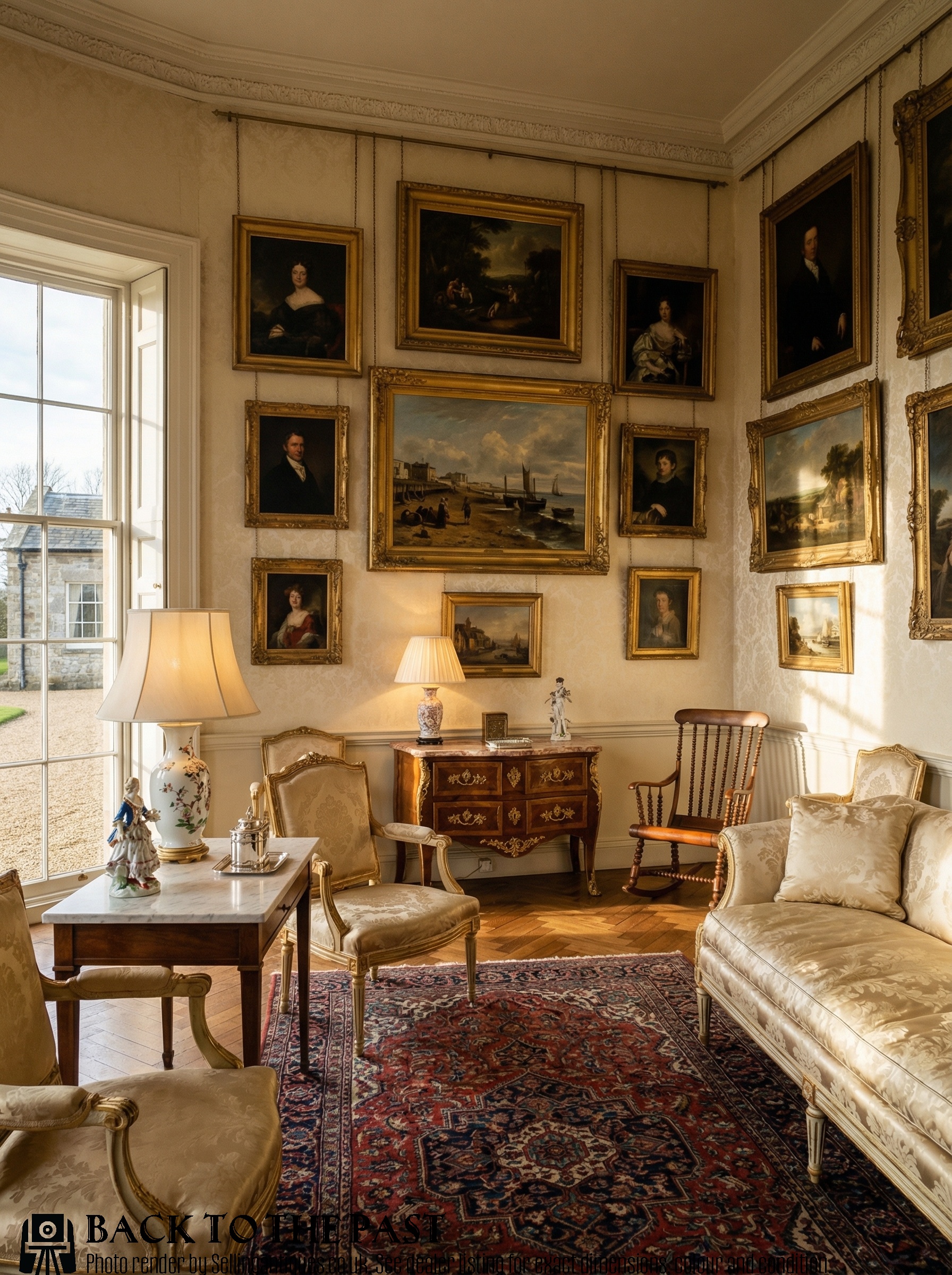
Traditional Wooden Rocking Chair
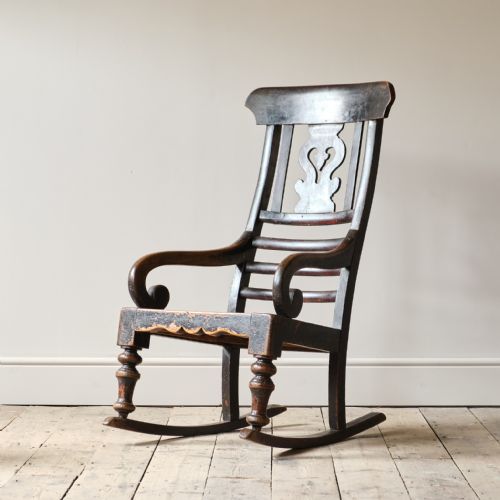
A traditional wooden rocking chair brings a tactile, domestic history into a room through vernacular forms built for comfort. You will most frequently encounter 19th-century Victorian examples, alongside Edwardian variations and earlier country styles.
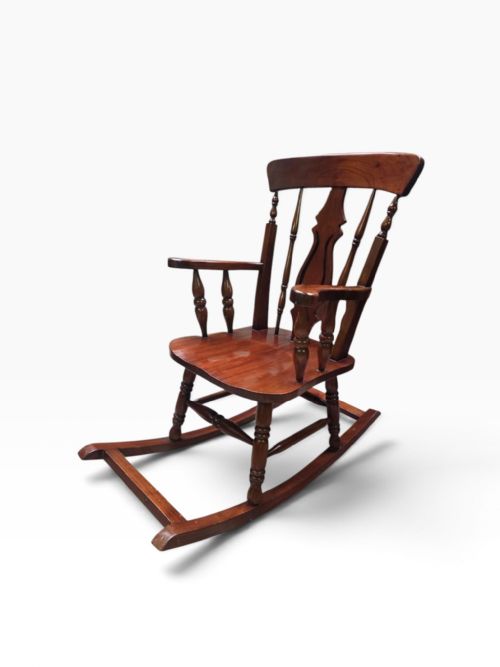
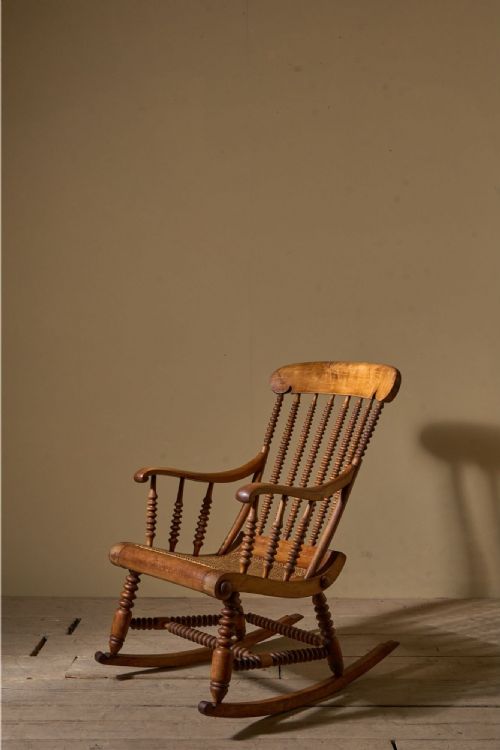
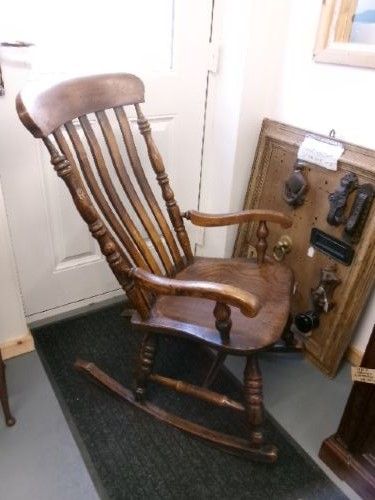
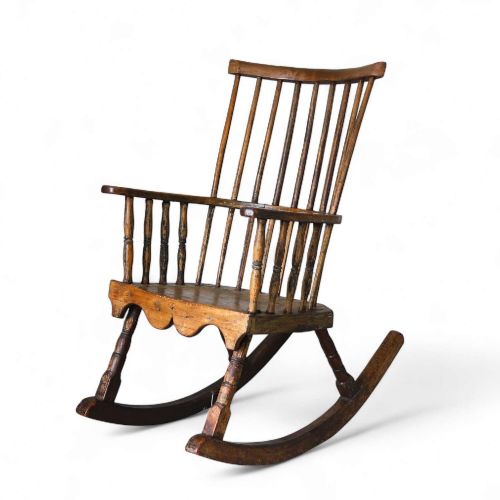
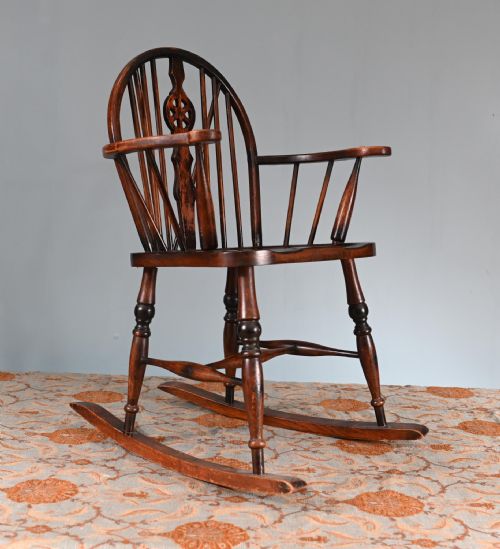
The selection ranges from robust Windsor armchairs and ladder-backs to smaller child's versions and bobbin-framed seating. These pieces emerge from diverse traditions, including English country workshops, American designs, and Scandinavian output.
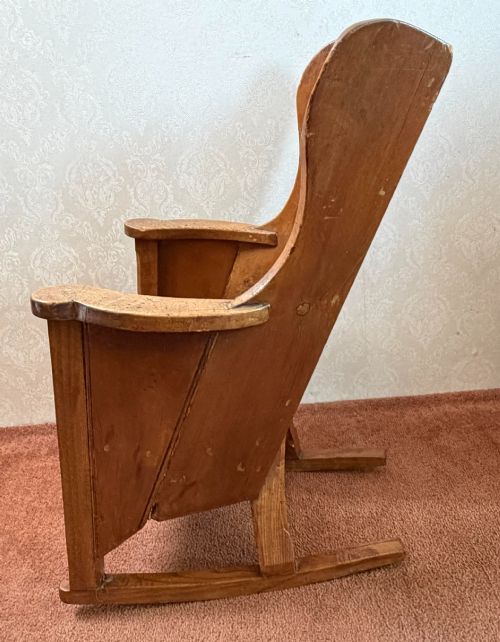
Makers utilised local woods to construct utilitarian seats intended for daily use beside the hearth or in the nursery. Their enduring appeal lies in the straightforward joinery and the visible grain of the timber.
How they were made
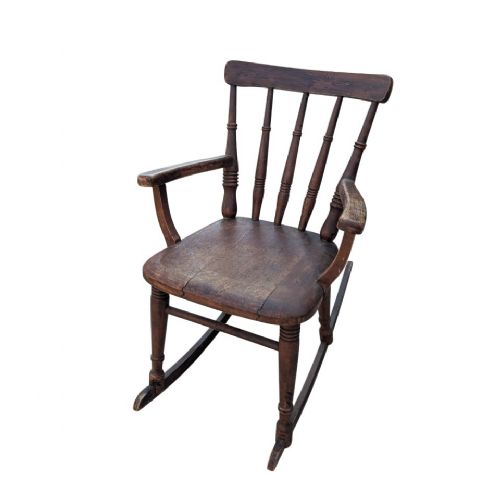
Traditional makers built these chairs using solid hardwoods such as oak, beech, elm, ash, and mahogany, often pairing different timbers for the seat and frame. Comb-back and Windsor designs relied on steam-bending and turned spindles fitted securely into shaped wooden seats.
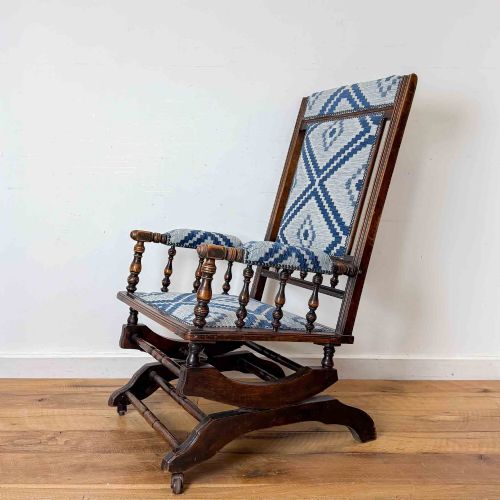
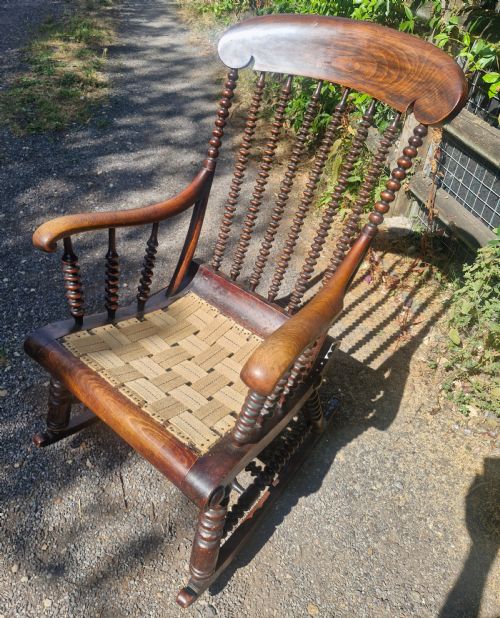
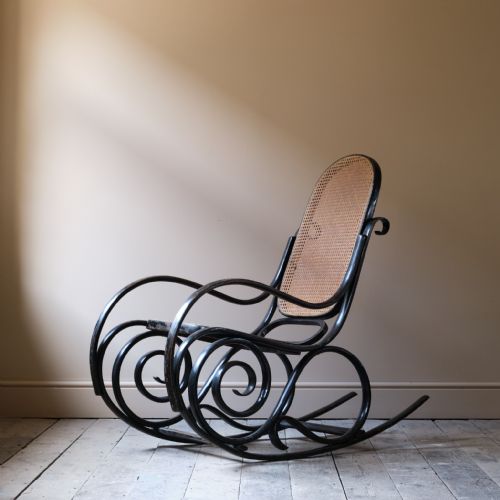
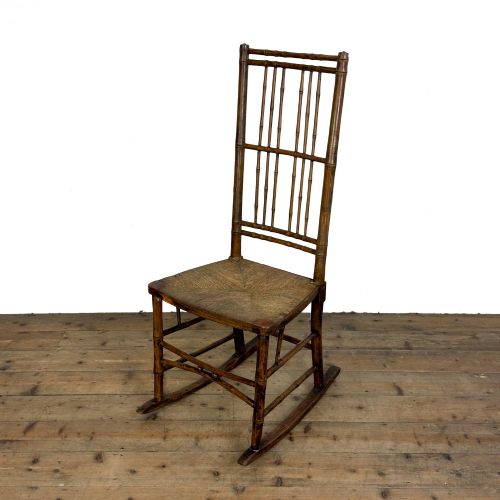
Many chairs feature woven elements like cane, rush, or sea grass to form supportive seats and backs within the wooden frame. Surface finishes varied from original paint and polished mahogany to simple waxed elm and ash.
A small child peering from a low spindle-back rocker proves that 19th-century toddlers enjoyed gentle motion just as much as adults.
What varies in quality
Quality rests upon the integrity of the timber selection and the precision of the underlying construction, such as tightly fitted spindles and robust arm joints. Chairs fashioned from dense woods like oak and elm with well-balanced rockers demonstrate superior durability.
The sophistication of the turning - seen in bobbin-framed or spindle-back examples - separates utilitarian seating from finer vernacular pieces. Retaining an original surface, whether early paint or polished mahogany, elevates the character of the chair.
The Traditional Wooden Rocking Chair Glossary
- Windsor
- A chair built with a solid wooden seat into which the legs and back spindles are directly wedged and tenoned. This construction method provides notable strength and has been utilised for centuries.
- Bobbin-turned
- A style of furniture leg or framing shaped on a lathe to resemble a string of rounded bobbins or spools. It was particularly popular in 19th-century vernacular furniture.
- Comb-back
- A Windsor chair variation where the top rail resembles the spine of a comb, with vertical spindles rising through a low back. This form offers distinct ergonomic support.
- Ladder-back
- A chair featuring horizontal wooden slats, or ladders, set between the upright rear posts. These slats are frequently curved to fit the contours of the sitter's back.
- Vernacular
- Everyday furniture made by regional craftsmen using local materials and traditional methods, rather than following formal metropolitan styles.
Traditional Wooden Rocking Chair: Frequently Asked Questions
What woods were used for these chairs?
Craftsmen utilised whatever local hardwoods were readily available, leading to chairs made from oak, beech, elm, ash, and mahogany. Different parts of the same chair often employed different timbers.
Elm was frequently chosen for shaped seats due to its resistance to splitting, while ash and beech provided flexible strength for spindles and bent parts.
Are child's rocking chairs authentic?
Child's rocking chairs are period pieces built down in scale for nurseries and children's rooms during the 19th century and earlier. They display the same vernacular construction as full-sized examples.
Workshop makers applied identical Windsor, ladder-back, and bobbin-turned techniques to create these smaller domestic items.
How should I care for a vintage rocking chair?
Maintain the wood by applying suitable wax polish sparingly to nourish dry timber and preserve the historic surface finish. Avoid placing the chair near direct heat sources.
Regularly check the stability of the joints and the wooden rockers to ensure the frame remains secure during use.