



Antique Revolving Seat
An antique revolving seat provides flexible height or motion, bringing mechanical ingenuity to desks, pianos, and ship cabins.
Antique Revolving Seat
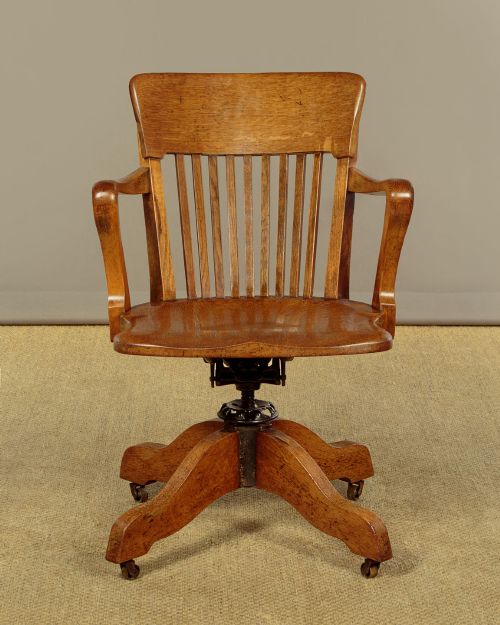
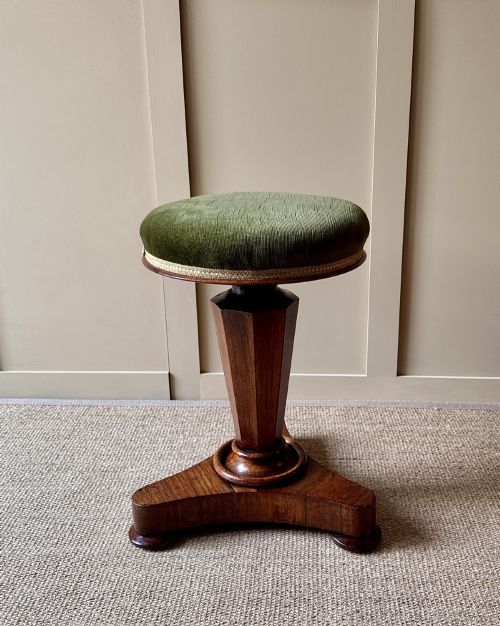
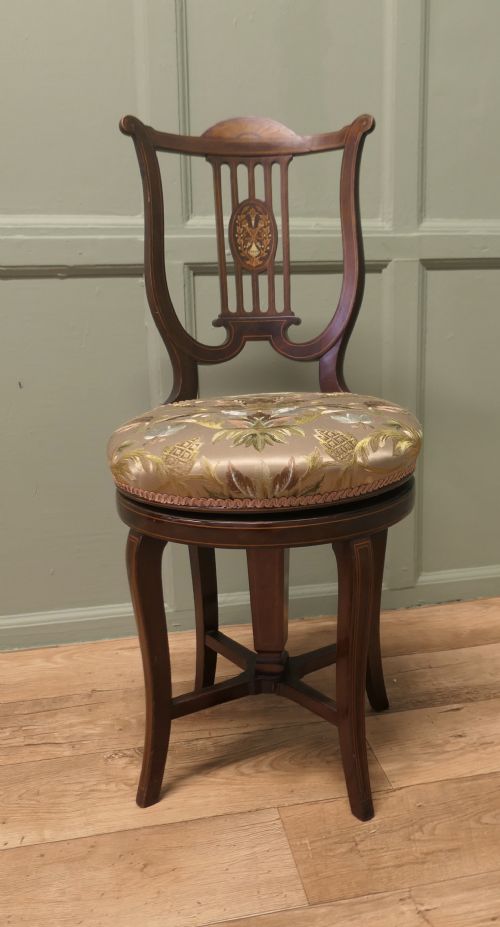
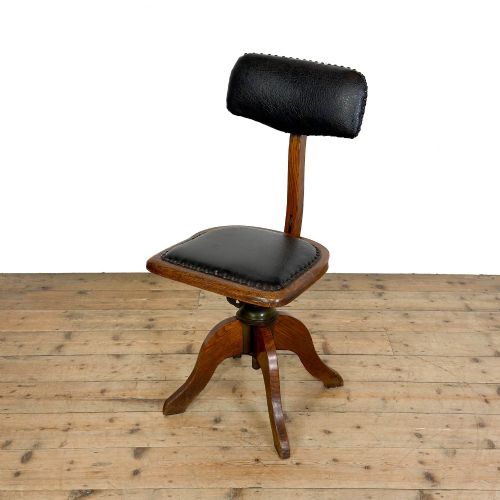
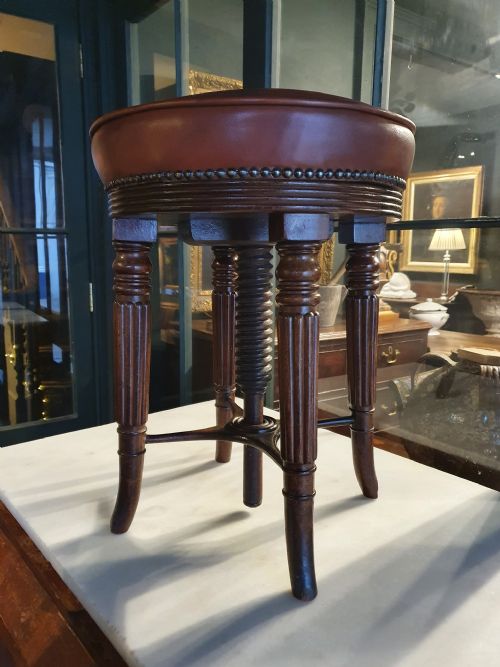
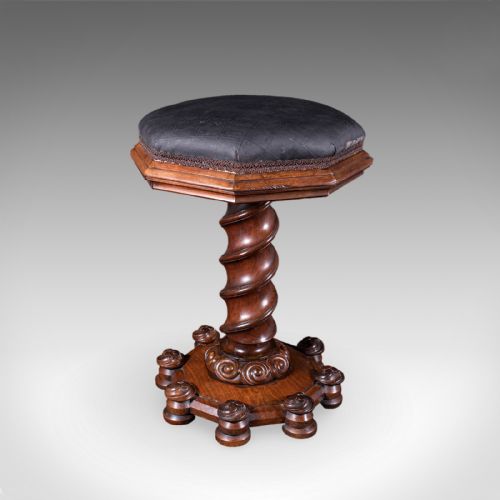
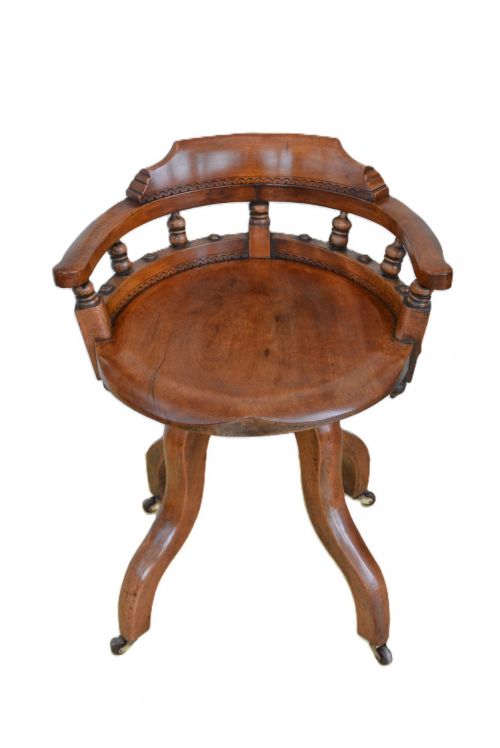
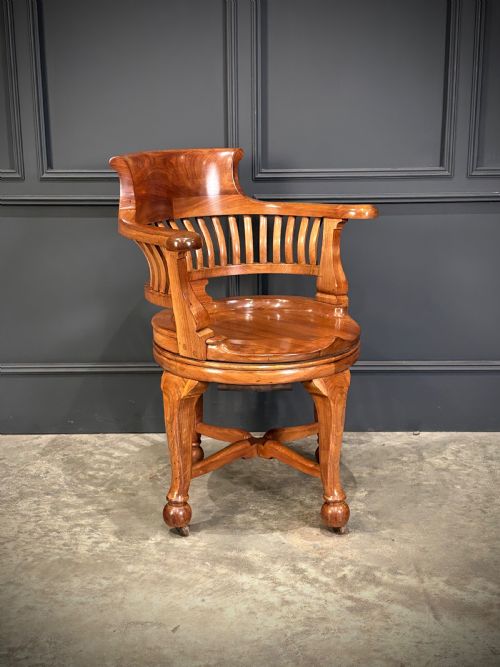
When you search for an antique revolving seat, you are looking at task furniture built to swivel or adjust in height for specific practical uses. The forms span robust desk chairs, piano stools, music chairs, and ships chairs originating from the nineteenth and early twentieth centuries.
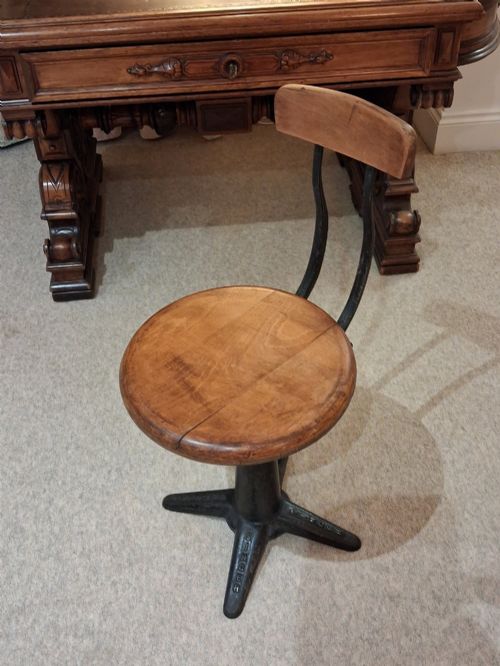
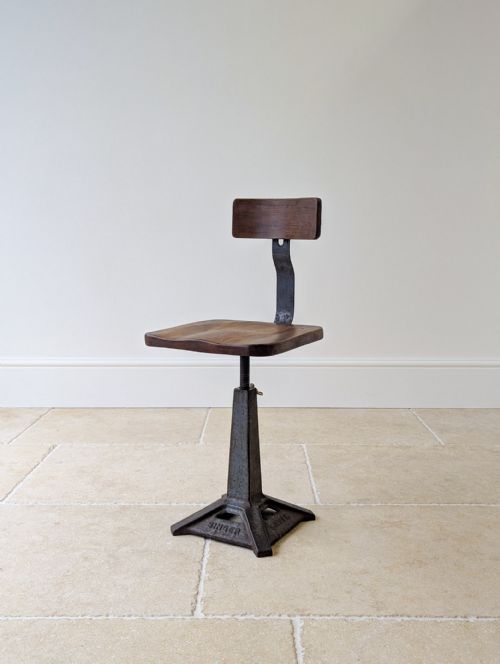
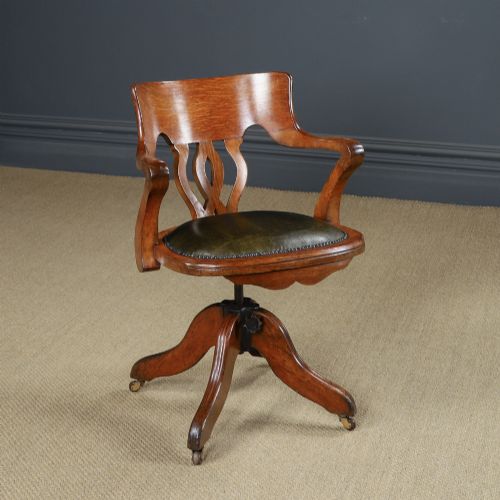
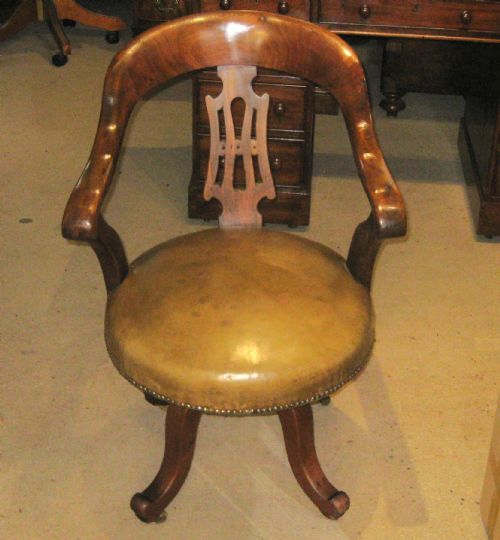
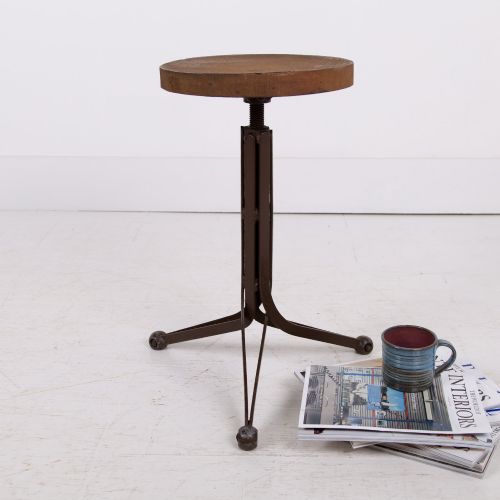
Victorian mahogany and walnut desk chairs dominate the selection, often featuring upholstered leather pads and swivel mechanisms. Alongside them appear oak office armchairs, rosewood music stools, and industrial cast iron variants from the Edwardian period and earlier.
Examples stretch across recognisable stylistic revivals including Gothic, William IV, and Sheraton influences. Whether designed for a domestic piano or a ships cabin, each piece relies on a central rotating shaft or screw mechanism to function.
Assessing Standard
Quality rests in the weight of the timber, the crispness of the carved details, and the engineering of the swivel mechanism. Dense mahogany or figured walnut indicates a superior selection compared to standard secondary woods.
The sophistication of the adjustable screw or pivoting pivot distinguishes standard workshop output from finer production. Original leather upholstery and intact cast iron hardware elevate the standing of a piece.
Antique Revolving Seat Retail Price Guide 2026
Typical asking prices for revolving seat among the pieces listed under this phrase on Sellingantiques today, from the lower quarter to the upper quarter. They describe what is for sale here now, not the wider market.
Ships chairs and chapel organist stools prove that Victorian seating had to stay firmly planted while the building or vessel rocked.
Jennens and Bettridge·Gillows
The Antique Revolving Seat Glossary
- Swivel
- A mechanical joint that allows the upper seat portion to turn fully on its base. This rotation relies on a central pin or threaded iron spindle.
- Rise and fall
- An adjustment mechanism allowing the seat height to increase or decrease by turning the top. This movement is commonly found on piano and music stools.
- Lyre back
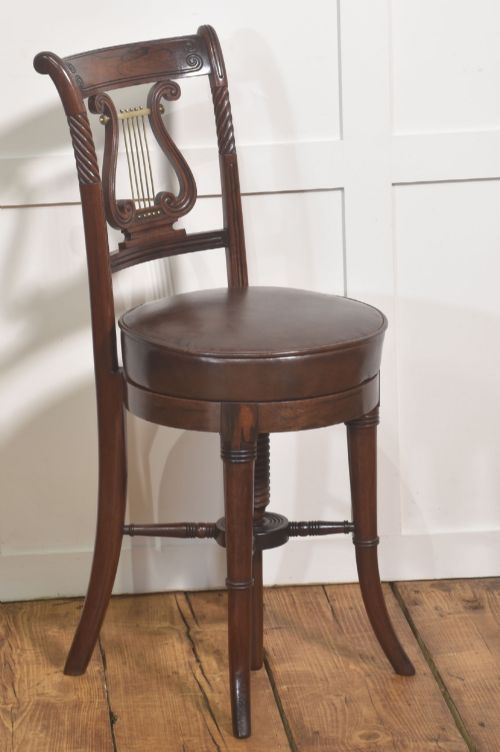
- A chair backrest shaped in the outline of a classical musical instrument. It frequently appears on nineteenth-century music and piano seating.
- Papier-mâché
- A composite material made of paper pulp mixed with glue and resin, pressed into moulds. Jennens and Bettridge utilised this technique for decorative Victorian stool tops.
- Gothic Revival
- An architectural and decorative style inspired by medieval forms, featuring pointed arches and heavy carving. This aesthetic recurs on nineteenth-century walnut desk chairs.
Antique Revolving Seat: Frequently Asked Questions
How do I adjust the height?
Many piano stools and music seats adjust by rotating the wooden top clockwise or counter-clockwise on a central threaded screw. This motion raises or lowers the sitting platform relative to the base.
Other designs rely on metal pins or friction levers concealed beneath the seat frame. Turning the seat itself or operating the riser allows you to set the desired working height.
Where were these seats used?
These pieces served specific functional environments including offices, studies, music rooms, and ships. Desk chairs and clerks seats provided mobility for administrative work.
Music stools and piano seats accommodated players requiring height adjustments, while heavy oak or iron variants served maritime vessels and organ lofts.
Are the mechanisms sturdy?
Period revolving mechanisms are constructed from durable iron, brass, and hardwood components designed for heavy daily use. Many retain smooth rotation and secure height settings after a century or more.
Proper maintenance and light lubrication of the central screw thread preserve the mechanical integrity. Avoid forcing a stuck pivot to prevent stress on the surrounding timber.
How do I date an office chair?
Dating relies on timber choice, fastening methods, and the style of the turning or carving. Early examples utilise solid mahogany or walnut with hand-cut joinery.
Edwardian and later pieces often incorporate steam-bent oak, steel box mechanisms, and cast iron bases. Comparing the leg profile and armrest shape to documented period forms clarifies the decade of manufacture.