
Antique Religious Artwork
Antique religious artwork spans centuries of devotional canvas, panel and bronze, bringing centuries of sacred narrative and solemn portraiture into a modern interior.

Antique Religious Artwork
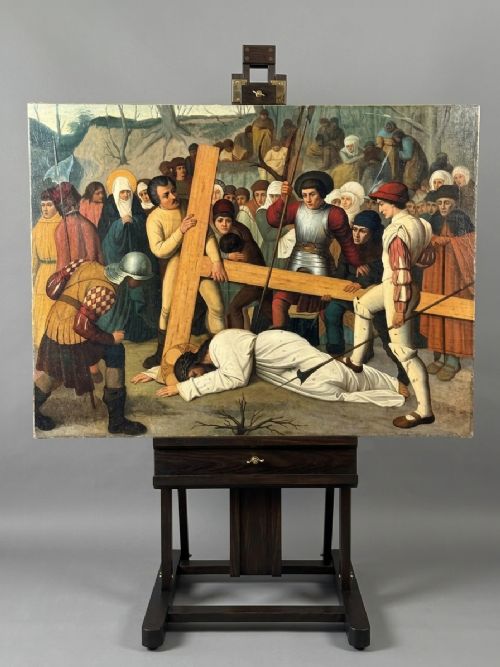
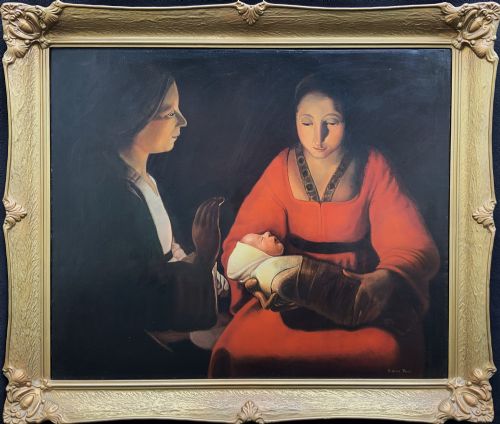
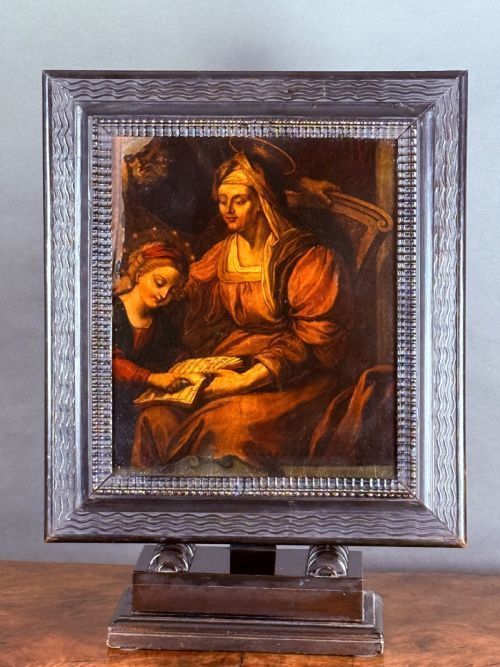
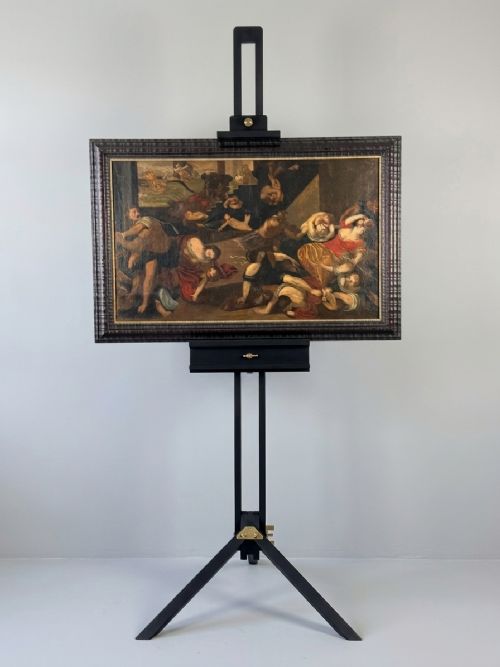
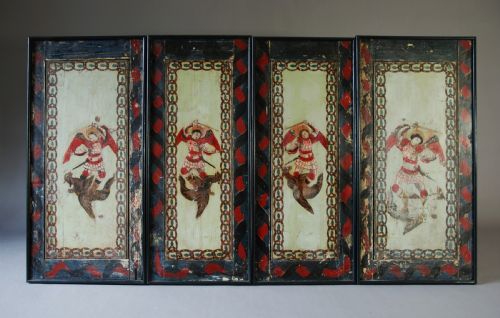
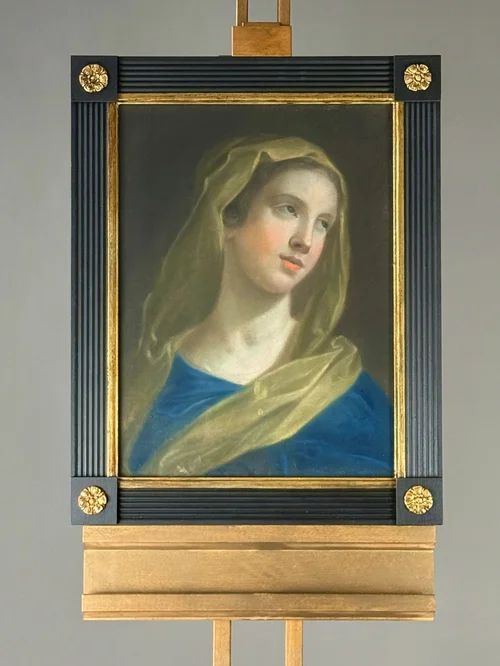
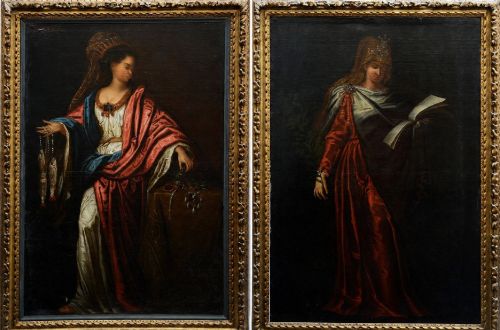
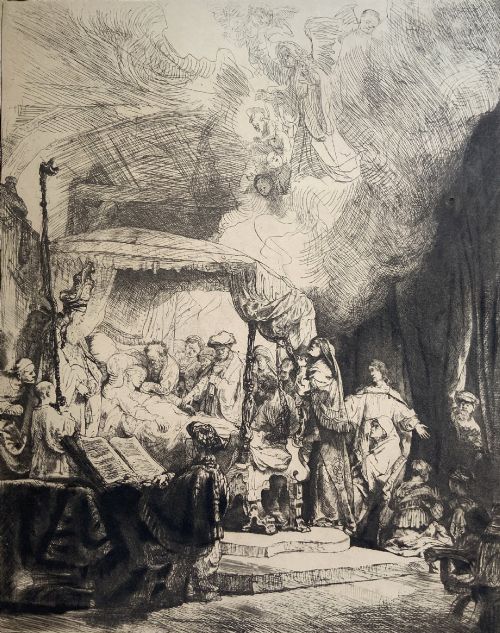
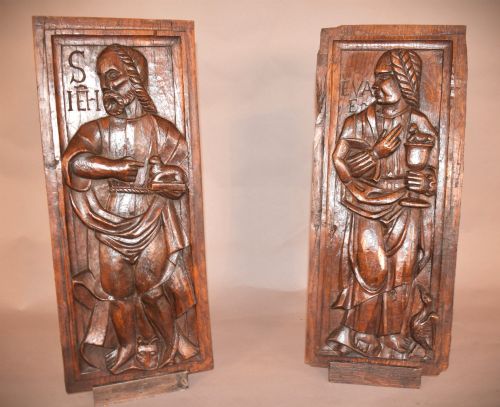
These pieces encompass centuries of devotional imagery, spanning oil paintings, carved wooden panels, engravings and bronze figures dedicated to sacred subjects. When collectors search for antique religious artwork, they encounter devotional oil paintings, hand-painted pine panels and reverse glass mezzotints created to adorn private chapels, churches and domestic spaces.
Materials and construction methods
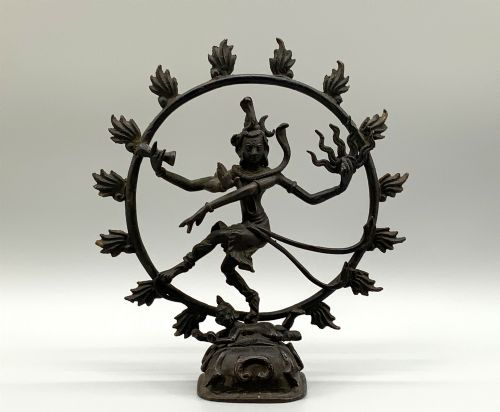
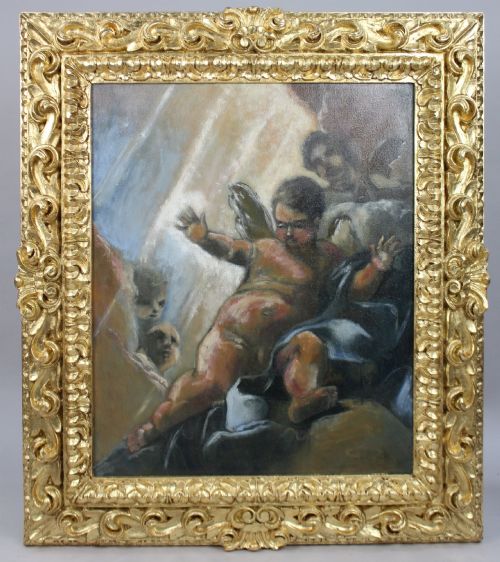
Makers utilised oil paint on canvas and wood panels as the primary mediums for narrative scenes and portraits, frequently enclosing them within carved giltwood frames. Artisans also employed tempera and gold leaf on canvas, copper Limoges enamel plaques, paper for engravings and etchings, and cast bronze for sculptural figures.
Techniques range from fine oil glazing practiced by old master schools to naive brushwork on pine panels and delicate reverse glass mezzotint printing. These traditional methods ensure the survival of rich pigment layers and intricate surface details across centuries.
Antique Religious Artwork Retail Price Guide 2026
Typical asking prices for religious artwork among the pieces listed under this phrase on Sellingantiques today, from the lower quarter to the upper quarter. They describe what is for sale here now, not the wider market.
The inventory includes Italian, Spanish, French, and Russian pieces created in Renaissance, Baroque, and Victorian styles.
Factors that distinguish finer pieces
The integrity of the original support, whether canvas, panel or copper, alongside the presence of period carved giltwood frames, influences the standing of a piece. Works attributed directly to recognised European schools or documented circles of painters command greater scholarly interest.
The Antique Religious Artwork Glossary
- Old Master
- A European painter of skill who worked before about eighteen hundred, or a painting by such an artist. These works form the cornerstone of early devotional fine art collections.
- Reverse glass mezzotint
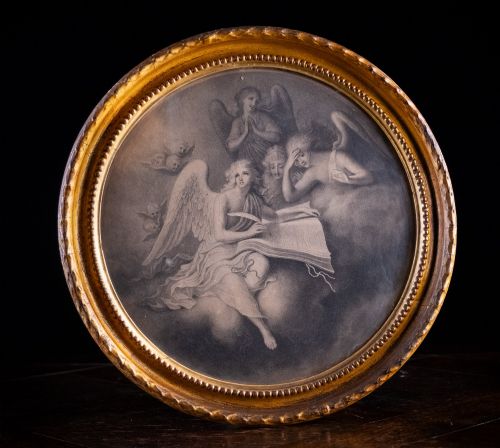
- A print transferred to glass and painted or inked from behind, producing a luminous image. This delicate technique requires careful handling to preserve the sealed layers.
- Limoges enamel
- Vitreous enamel fused to a copper plate, typically originating from the French city of Limoges. These small plaques often depict detailed religious scenes with rich colouration.
- Giltwood
- Wood that has been treated with gold leaf or gold paint, commonly used for ornate frames. Carved giltwood surrounds enhance the visual weight of devotional paintings.
- Temperating
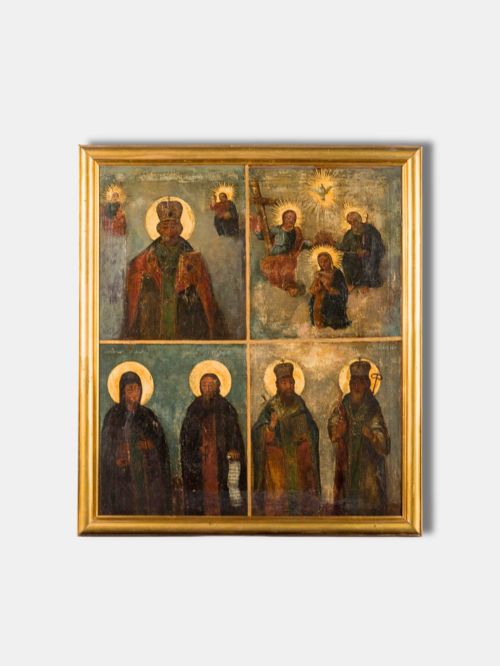
- A permanent correction term note: Tempera. A fast-drying painting medium consisting of coloured pigment mixed with a water-binder agent, often egg yolk. It produces a durable matte finish seen in early icons and panels.
Antique Religious Artwork: Frequently Asked Questions
How were these religious artworks displayed?
Devotional paintings and panels were historically hung in private domestic chambers for personal prayer or placed within household shrines and chapels. Larger canvases served as altarpieces in churches, while smaller engravings and miniatures offered portable focal points for daily contemplation.
Over time, collectors transitioned these sacred pieces into domestic living areas, where their rich narratives and historical frames complement traditional and eclectic interiors alike.
What subjects appear most frequently?
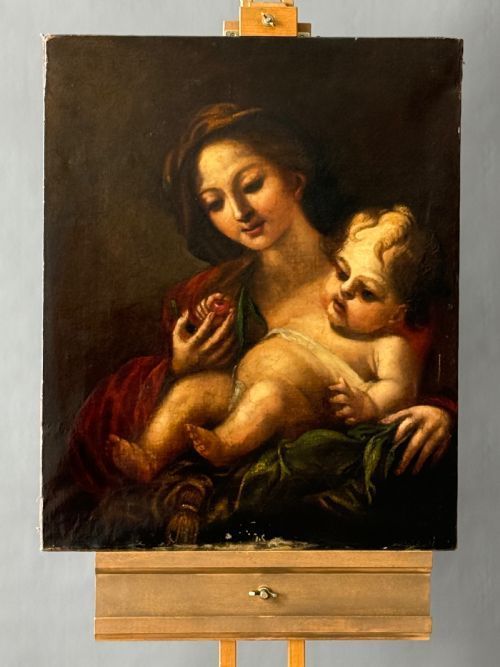
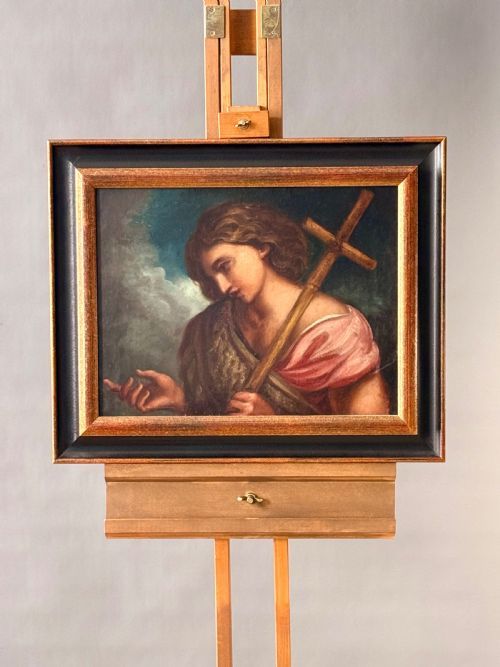
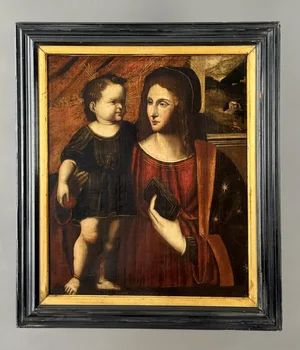
The Virgin Mary and Child motif dominates many compositions, alongside scenes from the life of Christ such as the Nativity and the Passion. Other common subjects include Old Testament narratives like David and Goliath, and portraits of saints including Saint Sebastian and Saint Francis de Sales.
These themes reflect the spiritual priorities and artistic commissions of European workshops across the sixteenth, seventeenth, and eighteenth centuries.
How do I distinguish regional European schools?
Italian schools often display classical grace, soft sfumato lighting, and Renaissance compositional balance. Spanish and Flemish works frequently employ dramatic chiaroscuro, intense emotional expressions, and deep, saturated colour palettes characteristic of the Baroque period.
Examining the handling of drapery, facial types, and framing conventions helps attribute pieces to specific geographic traditions such as the Emilian, Madrid, or Hessian schools.
How should I care for antique oil paintings?
Keep canvases and wood panels away from direct sunlight, high humidity, and rapid temperature fluctuations to prevent cracking or warping of the paint layer. Dust surfaces gently with a soft, dry brush and avoid applying liquid cleaners or household solvents.
If structural conservation is required, consult a professional art restorer rather than attempting repairs on aged oil paint or delicate giltwood frames.