


Antique Red Settee
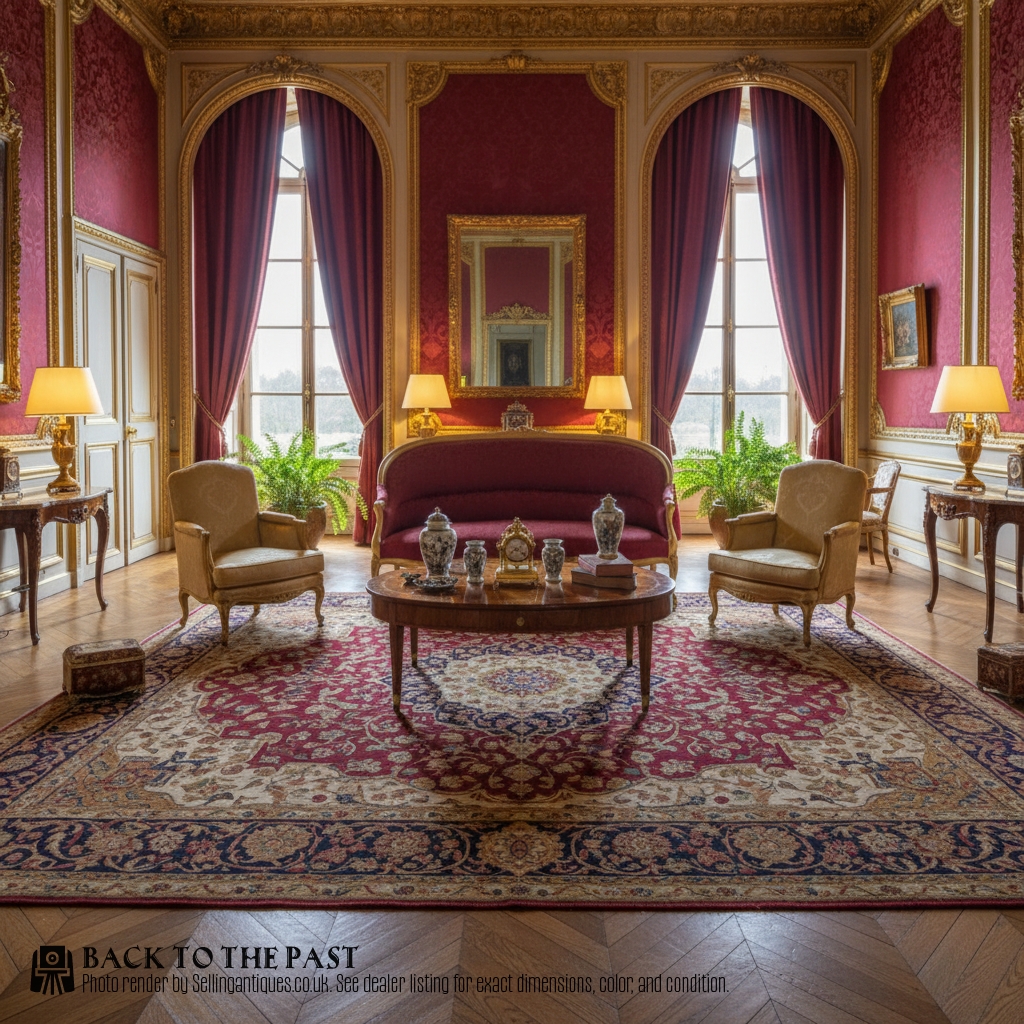
An antique red settee brings rich crimson textiles and centuries of timber framing together to anchor a room with distinct character.
Antique Red Settee
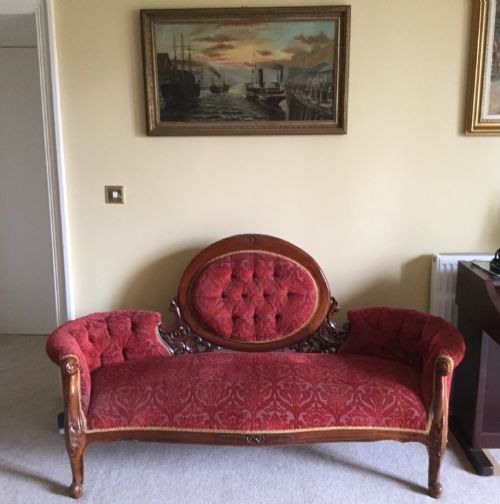
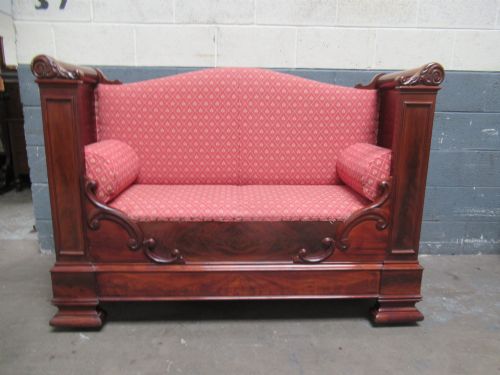
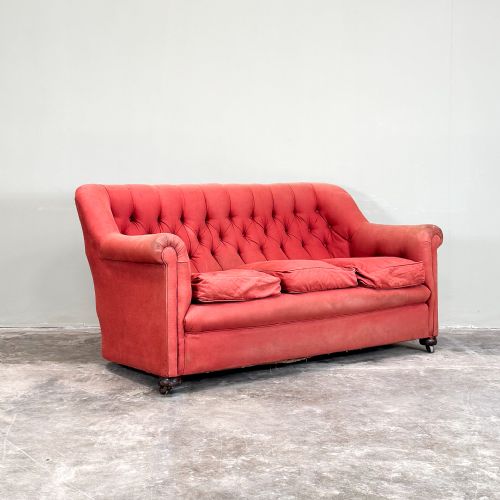
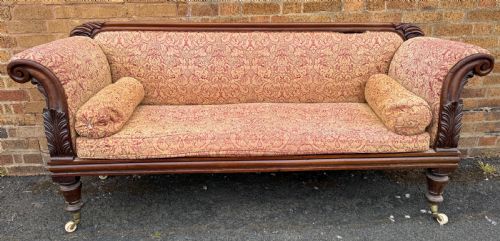
When searching for an antique red settee, buyers encounter formal Victorian Chesterfields in crimson leather, Edwardian parlor seating, and carved mahogany frames upholstered in deep crimson brocade, velvet, or damask.
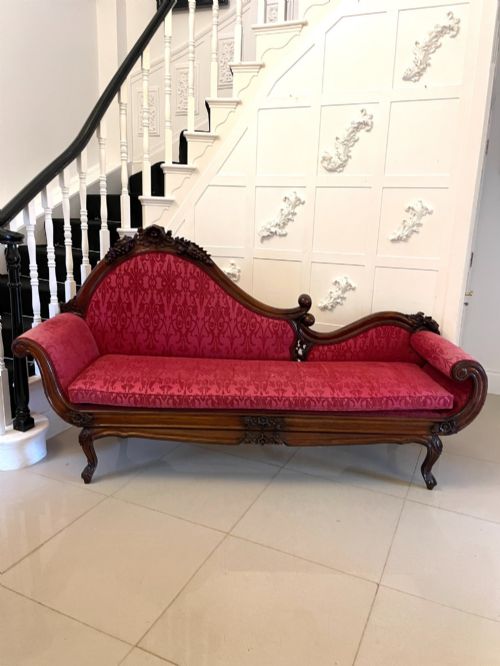
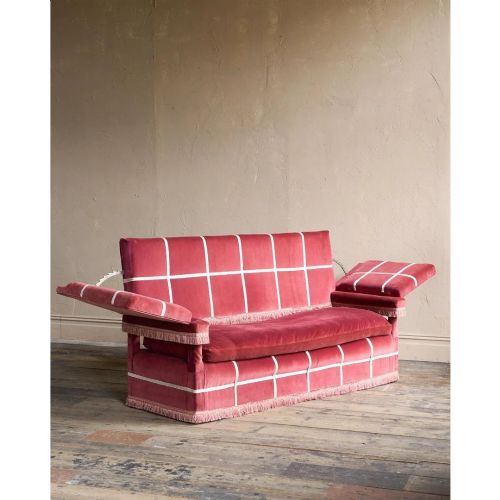
The selection ranges from nineteenth-century scroll-end sofas and chaise longues to Arts and Crafts walnut designs and twentieth-century deep-seated versions.
Originating predominantly from British, French, and broader European workshops, these seating options combine sturdy wooden frames with rich red textile coverings.
How they were made
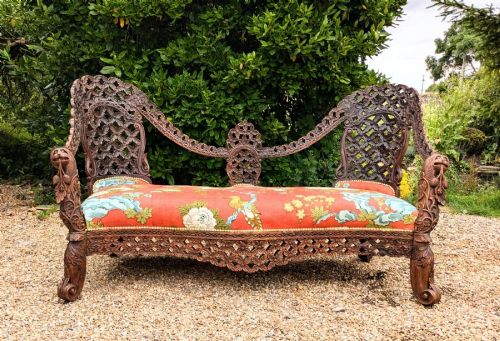
Makers constructed the structural frames from solid hardwoods like mahogany, walnut, and oak, often incorporating detailed hand-carved elements, turned wooden legs, and ebonised finishes.
Upholstery techniques relied on traditional horsehair stuffing, sprung bases, and deep buttoning secured with durable brass tacks.
Textiles applied to these frames included wool damask, silk velvet, heavy brocade, and dyed leather.
The selection spans Georgian proportions, Victorian scroll ends, Arts and Crafts minimalism, and twentieth-century styles.
What varies in quality
The standard of a piece depends heavily on the integrity of the underlying hardwood frame and the depth of the original joinery, distinguishing sturdy architectural builds from lighter decorative pieces.
Quality also shows in the precision of hand-carved ornamentation, the resilience of the traditional sprung base, and the weight and weave of the chosen red textile.
Baumann·Hampton and Sons·Jas Shoolbred·John Tesch
The Antique Red Settee Glossary
- Chesterfield
- A deep-buttoned, upholstered sofa traditionally featuring arms and back of the same height. This style is frequently found in red leather or heavy fabric.
- Chaise Longue
- An upholstered long chair designed for reclining, combining the backrest of a sofa with the seat of a bench. Examples often feature a single raised scroll end.
- Brocade
- A rich, heavy fabric woven with a raised pattern, often utilised for formal nineteenth-century upholstery in deep red colourways.
- Ebonised
- Wood finished to resemble ebony through a staining and polishing process. This technique provides a dark contrast to bright red or patterned upholstery.
- Scroll-End
- A sweeping, curved arm or frame termination reminiscent of a scroll. It is a common feature on nineteenth-century mahogany and walnut seating.
Antique Red Settee: Frequently Asked Questions
How do I clean a vintage leather settee?
Vintage red leather benefits from gentle dusting and the application of specialised leather balms to maintain flexibility. Avoid harsh chemical cleaners that strip natural dyes and dry out the hide.
Allow any conditioner to absorb fully before regular use to preserve the original surface sheen and prevent cracking.
Are these settees comfortable for daily use?
Many nineteenth and twentieth-century models feature traditional sprung bases and generous padding designed for long periods of seating. Comfort levels vary depending on whether the internal suspension relies on tight webbing or heavy steel springs.
Pieces with deep seats and sturdy upholstery offer a supportive sit suited to everyday living spaces.
How do I identify a Victorian sofa?
Victorian seating is typically characterised by substantial mahogany or walnut frames, dark polished finishes, and heavy textile upholstery. Details such as button-tufting, turned wooden legs, and carved scroll ends are standard markers of the period.
Earlier nineteenth-century examples often display bolder architectural proportions, while later variants lean towards lighter aesthetic or Edwardian influences.
Can I reupholster a period settee safely?
Reupholstering historic furniture is common practice, provided the work respects the original construction methods and frame integrity. Traditional materials like horsehair and hessian can be reinstated to maintain period accuracy.
Choosing a suitable red textile, such as a heavy damask or leather, helps preserve the intended visual weight of the design.