
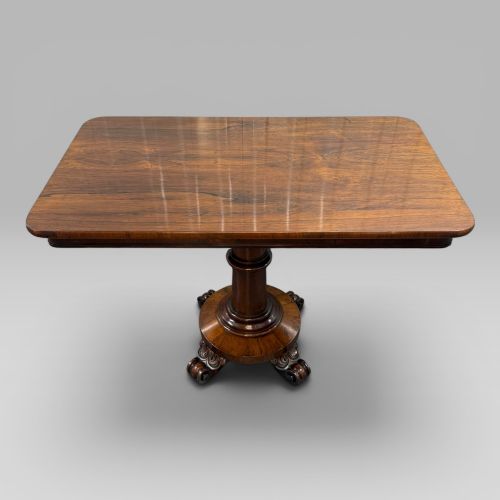

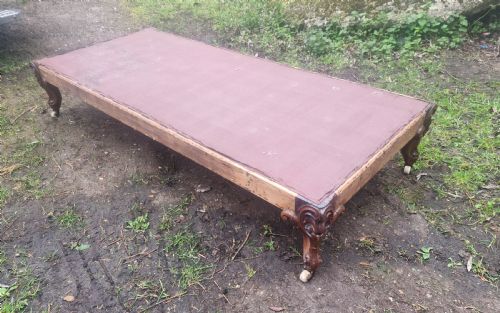


Antique Rectangular Centre Table
An antique rectangular centre table anchors a room with presence, offering a surface meant to be walked around rather than pushed against a wall.
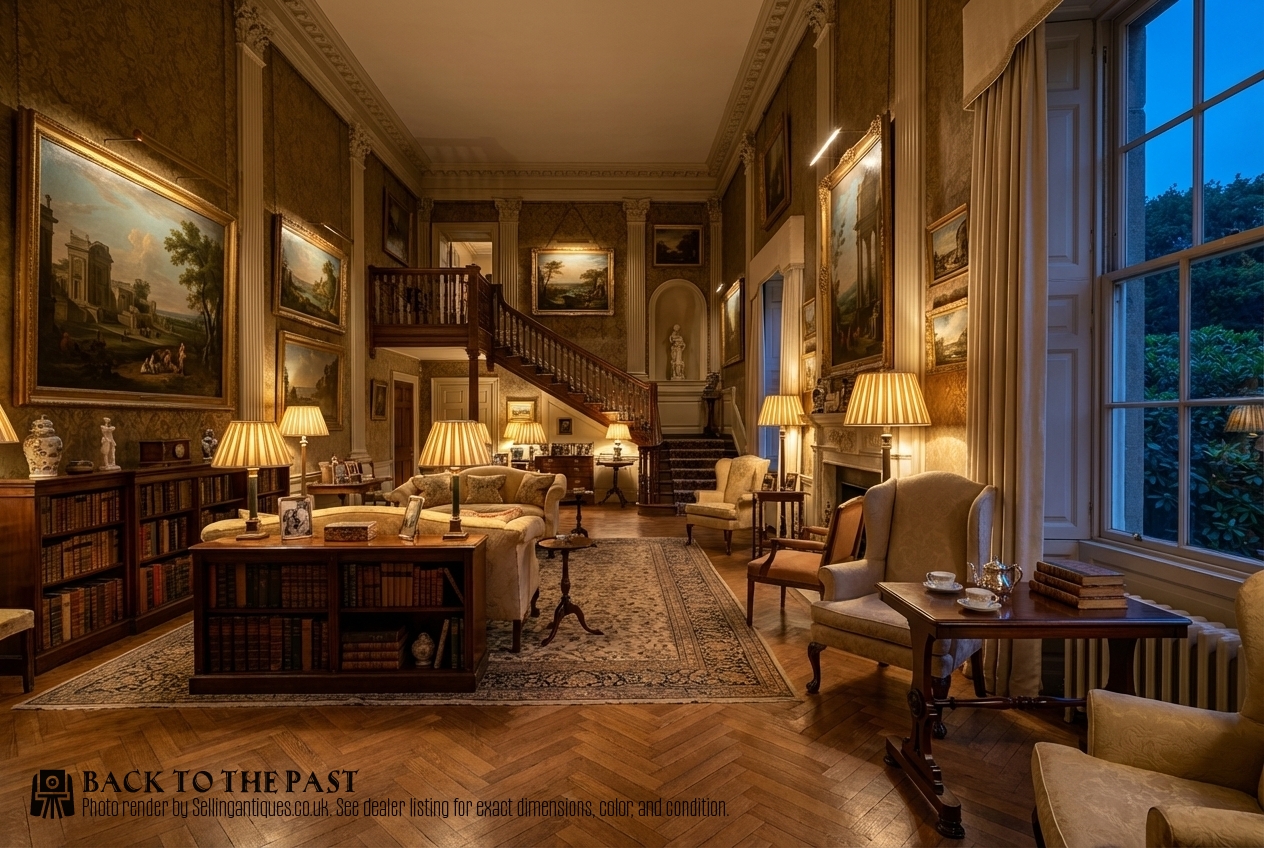
Antique Rectangular Centre Table
An antique rectangular centre table serves as a freestanding focal point designed to be viewed from every side within a room. You encounter these pieces primarily in mahogany, rosewood, and oak, spanning periods from the eighteenth century through the Victorian era and into the early twentieth century.
The form encompasses dedicated centre tables alongside related breakfast, writing, and occasional tables that share the same rectangular footprint. Makers historically placed these pieces in the middle of principal rooms to hold lamps, books, or decorative objects.
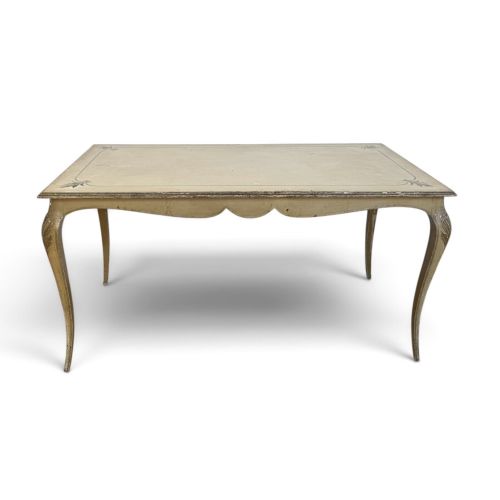
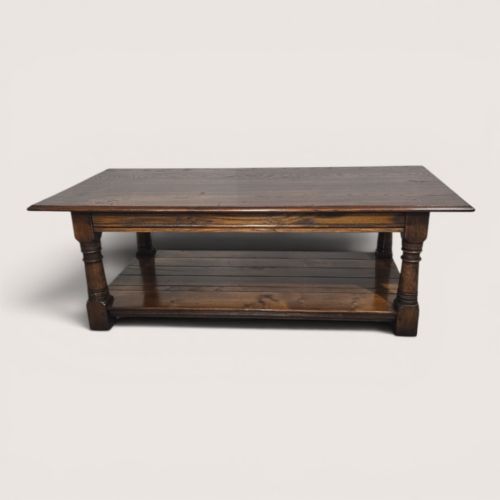
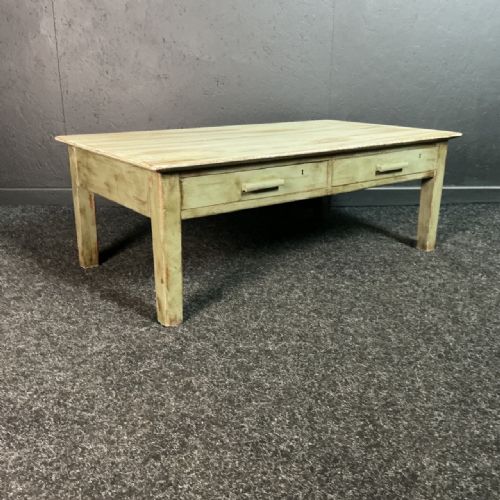
The selection ranges from George III and Regency designs to French Louis XV revival and Chinese Qing Dynasty carved hardwood pieces. Lower coffee table adaptations also appear frequently, reflecting later conversions of older formats.
How they were made
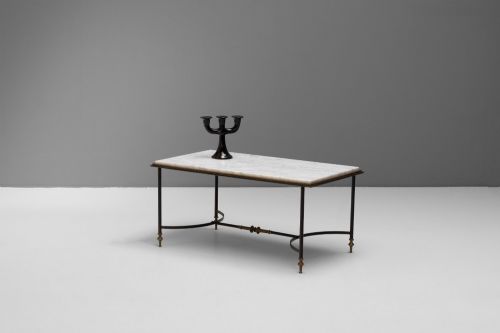
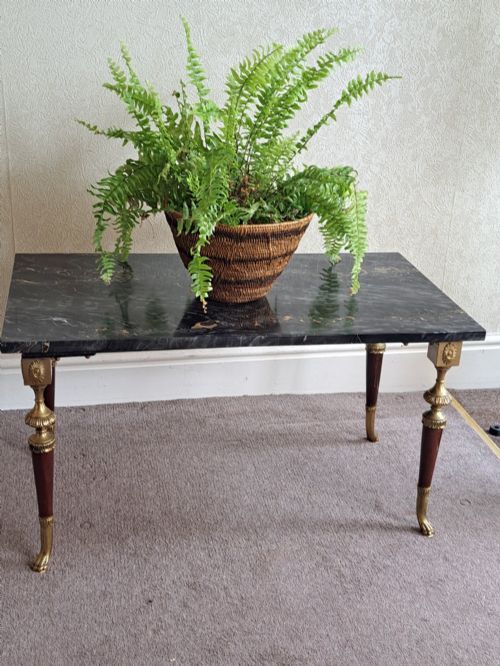
Cabinetmakers constructed these tables using solid and veneered timbers such as mahogany, pollard oak, walnut, and rosewood over sturdy timber frames. Selected pieces incorporate inset marble panels or gilded surface details.
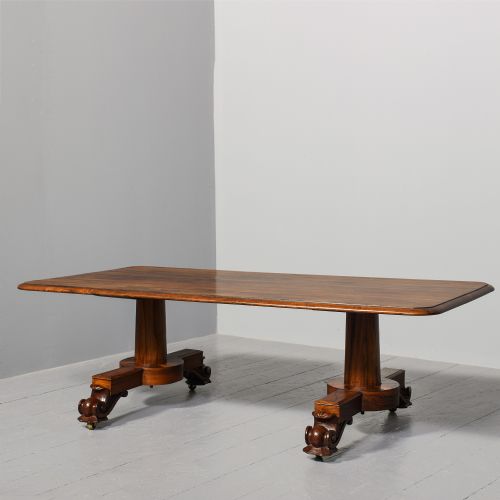
Joinery techniques include turned columns, splayed legs, and bird-cage supports, frequently mounted with brass castors for mobility. Carved ornamentation, crossbanding, and figured wood veneers define the decorative execution across different stylistic periods.
Some tables hide a clever bird-cage mechanism that lets the top spin like a lazy Susan before folding flat.
What varies in quality
Quality reveals itself in the selection of timber veneers and the crispness of carved details rather than standard measurements or basic utility. Finer examples display carefully matched grain patterns, substantial brass mounts, and robust structural framing.
The integrity of the original construction, from the stability of the central column to the fit of inset marble tops, separates standard pieces from exceptional ones. Tables retaining their original surface patination and uncompromised joinery command greater appreciation.
James Winter and Sons
The Antique Rectangular Centre Table Glossary
- Tilt top
- A mechanism allowing the tabletop to pivot vertically for storage or convenience when not in use.
- Pollard oak
- Timber taken from trees that were cut back to promote a dense cluster of branches, producing a heavily figured, speckled grain pattern.
- Bird-cage support
- A rotating wooden block arrangement beneath the tabletop that permits the surface to turn and tilt independently.
- Crossbanding
- A decorative border of veneer laid around the perimeter of a tabletop with the grain running perpendicular to the centre.
- Rouge marble
- A deep reddish ornamental limestone commonly used for contrasting tabletops, particularly in French and Chinese pieces.
Antique Rectangular Centre Table: Frequently Asked Questions
Where do you put a centre table?
Place an antique rectangular centre table in the middle of a room where it can be approached from all four sides. It works effectively as a room divider or a central display surface.
Ensure there is sufficient walking space around the perimeter so the proportions of the table can be fully appreciated.
How do I tell Regency from Victorian?
Regency tables typically display classical restraint, clean architectural lines, and fine rosewood or mahogany veneers influenced by Neoclassical design. They often feature brass inlay or reeded columns.
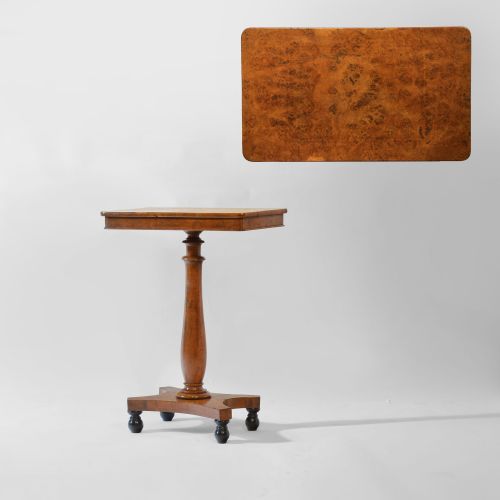
Victorian pieces tend to be heavier in scale, utilising rich burr woods, elaborate carving, and bolder proportions associated with revival styles.
Can I use one as a coffee table?
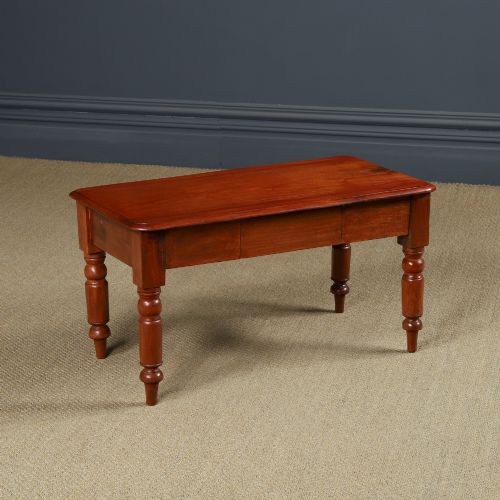
Many examples on the market function successfully as coffee tables, either through period height reduction or by selecting low occasional formats. Check the height dimensions to match your seating.
Original proportions vary from dining and breakfast heights down to lower coffee table formats.
What is a tilt top table used for?
A tilt top allows the table to be tipped against a wall when floor space is needed for other activities. The mechanism combines a pivoting block with a central column.
This practical feature was common in Georgian and Regency dining and breakfast rooms.