
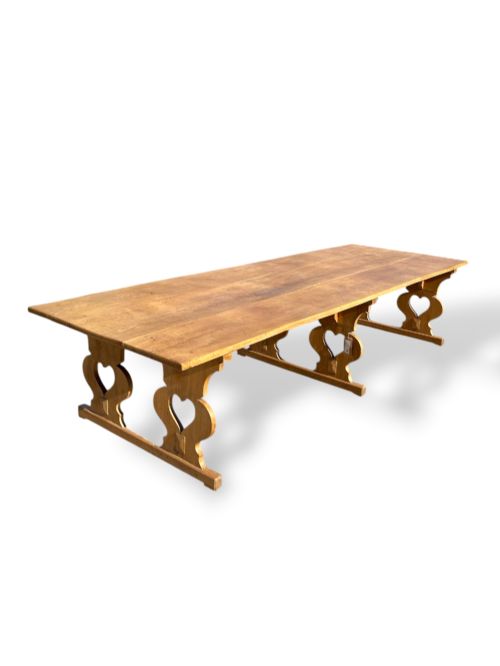
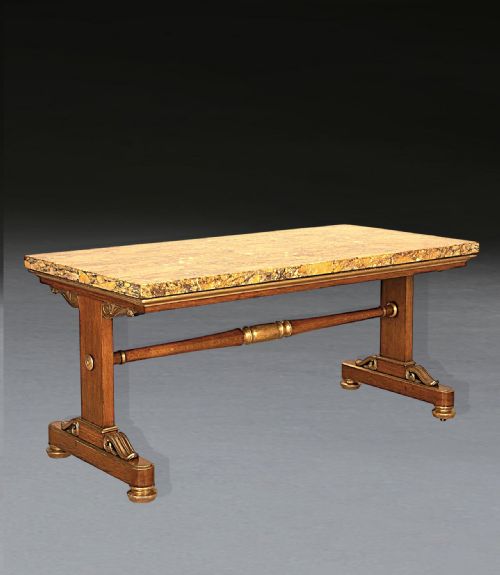


English Oak Centre Table
An english oak centre table anchors a room with solid grain and substantial presence, offering a sturdy surface designed to stand free in the middle of a space.
English Oak Centre Table
An english oak centre table appears across several distinct periods, spanning from seventeenth-century provincial work to nineteenth-century revival pieces and later twentieth-century iterations. Buyers searching for an english oak centre table will encounter diverse forms ranging from large architectural library pieces and drum tables to simpler planked coffee tables and occasional rounds.
The materials used across these pieces extend beyond plain timber into more decorative finishes, incorporating pollard oak, burr oak, and satinwood alongside marble tops and giltwood accents. Forms vary from sturdy rectangular refectory styles and octagonal tables to circular wine and lamp tables designed for central placement.
Earlier examples date back to the late seventeenth and eighteenth centuries, bearing the hallmarks of Queen Anne and Jacobean styles, while nineteenth-century Regency and Victorian interpretations bring bolder classical influences. These tables function equally well as writing surfaces, breakfast tables, or low coffee tables depending on their height and proportions.
Materials and Construction
Makers utilised solid oak alongside decorative veneers such as pollard oak and burr oak to create rich grain patterns across the primary surfaces. In grander Regency and Victorian examples, timber is paired with Siena marble tops, giltwood details, leather inserts, and contrasting satinwood or yew wood inlay.
Construction techniques range from heavy planking and traditional joinery found in rustic farmhouse pieces to fine cabinetmaking involving curved drum structures and turned pedestals. Iron fittings appear on certain larger dining and utility tables, while polished finishes highlight the natural figure of the wood.
Listings feature oak centre tables spanning from the early seventeenth century through the Art Deco period, incorporating marble, leather, and giltwood.
Assessing Craftsmanship and Distinction
The distinction between ordinary and exceptional pieces lies in the selection of timber figures, where burl, pollard, and figured grain create striking visual depth on the top surface. Superior examples demonstrate refined cabinetmaking in curved drum forms, precise parquetry inlay, and harmonious integration of contrasting materials like marble and giltwood.
Proportion and structural integrity define the upper tier of these tables, ensuring that large centre pieces retain balance without heavy sagging or clumsy alterations. Maker attribution, through stamped signatures or documented workshops, further separates standard regional items from high-end London commissions.
James Winter and Sons·E Gomme for Heals
The English Oak Centre Table Glossary
- Pollard oak
- Timber taken from a tree that has been pruned close to the trunk to encourage dense, knotty growth. This creates highly decorative swirling patterns across table tops.
- Burr oak
- An abnormal growth on the tree where grain grows in a deformed swirl, producing richly textured veneers prized in cabinetmaking. It yields deep, mottled patterns when polished.
- Drum table
- A circular library table with a deep frieze containing drawers, typically supported on a central pillar and tripod base. Regency makers favoured this substantial form for central room placement.
- Siena marble
- A yellow-brown Italian marble featuring dark grey or purple veins, frequently utilised for classical table tops. It provides a striking contrast to warm oak timber frames.
English Oak Centre Table: Frequently Asked Questions
Where should I place a centre table?
These tables are designed to stand free in the middle of a room rather than pushed against a wall, allowing access from all sides. They work effectively in large entrance halls, libraries, or living spaces as a functional focal point.
Ensure there is sufficient clearance around the perimeter for movement, particularly with larger octagonal or circular models.
How do I care for an antique oak surface?
Maintain the timber by applying traditional beeswax periodically to nourish the grain and preserve the finish. Avoid placing tables in direct sunlight or near heat sources to prevent the wood from splitting.
Use coasters and felt pads beneath objects to protect polished surfaces from moisture and heat marks.
What is the difference between a centre table and a coffee table?
Traditional centre tables were built at standard table or writing height to stand in the middle of principal rooms for display or use. Many lower examples sold today have been adapted down to coffee table height for modern seating arrangements.
Check the height measurements carefully to determine whether a piece functions as a low surface or a standard table.
How can I tell a Regency table from a Victorian one?
Regency pieces often display classical restraint with clean architectural lines, rosewood or satinwood crossbanding, and sometimes giltwood or marble additions. Victorian examples tend to be heavier and more robust, embracing Gothic revival carving or elaborate burr oak veneers.
Examining the construction methods underneath often reveals the technological shifts between these two nineteenth-century eras.