


Antique Pug Sculpture
An antique pug sculpture brings character and loyalty to a room, capturing the distinct wrinkles and solemn gaze of the breed in enduring materials.
Antique Pug Sculpture
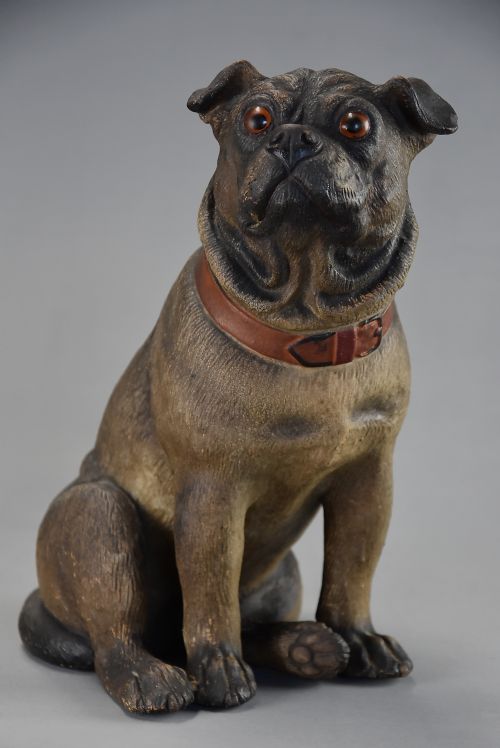
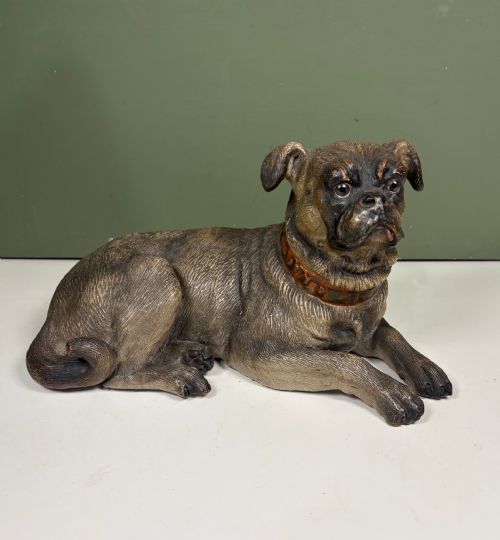
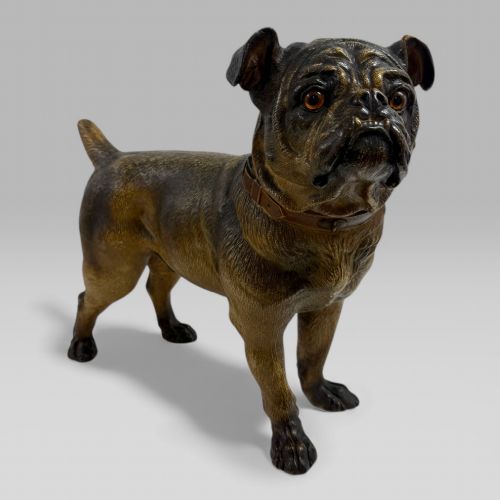
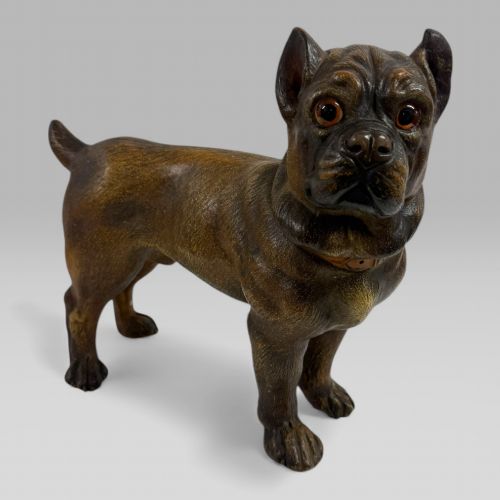
When you search for an antique pug sculpture, you are looking at nineteenth and early twentieth-century depictions of the breed in terracotta, bronze, and pottery. These figures range from small desk accessories to life-size models created by European workshops.
The most common examples you will meet on this page are Austrian terracotta models and cold-painted bronze figures. Many of these pieces originate from the late nineteenth century, reflecting the Victorian and Edwardian fascination with realistic animalier art.
The forms vary from simple decorative figurines to functional items such as inkwells. Some pieces capture a single seated puppy, while others present imposing life-size sculptures with hand-painted details.
How they were made
Terracotta models were shaped in moulds and fired before receiving detailed surface decoration and paint. Artisans carefully rendered the facial folds and coats of the dogs by hand after the initial firing process.
Bronze figures utilised the lost-wax casting method to capture fine textures. These bronzes were frequently finished with cold-painted enamel, a technique where colour was applied to the metal surface without subsequent firing.
What varies in quality
The preservation of original surface decoration distinguishes better examples from heavily restored ones. In cold-painted and terracotta pieces, the survival of the early painted finish dictates the integrity of the object.
Bernard Bloch Austria·Maison F. Mack
The Antique Pug Sculpture Glossary
- Terracotta
- A porous fired clay used widely for nineteenth-century European animal figures. It allows for crisp surface modelling before being painted.
- Cold-painted bronze
- Bronze sculpture finished with paint applied directly to the cold metal surface rather than fired in a kiln. This technique was a speciality of Austrian workshops.
- Inkwell
- A small desk container for liquid ink, frequently incorporated into figural animal sculptures during the Victorian period. These often feature a hinged lid hiding the well.
- Animalier
- A nineteenth-century artistic movement dedicated to the realistic representation of animals. Sculptors in this tradition focused on accurate anatomy and lifelike poses.
- Black Forest
- A term for nineteenth-century wood carvings originating from the German and Swiss mountain regions. These pieces often took the form of realistic animals and functional desk wares.
Antique Pug Sculpture: Frequently Asked Questions
What materials were antique pug sculptures made from?
These sculptures appear in terracotta, pottery, bronze, and glass. Many pieces utilise cold-painted enamel over metal or decorated surfaces on fired clay.
Workshop production relied heavily on terracotta and bronze, capturing the distinct physical traits of the breed through moulded and cast techniques.
How do I identify a Vienna bronze pug?
Vienna bronzes typically feature cast metal bodies finished with cold-painted enamel colours. These pieces are often smaller in scale and display high precision in anatomical detail.
Makers in this tradition focused on realistic animal subjects, frequently incorporating functional elements like inkwells into the design.
Were these pug figures used as desk accessories?
Many nineteenth-century examples served a practical purpose alongside decoration. Inkwells formed a popular category where the dog's head or back lifted to reveal the ink reservoir.
Desk sculptures combined utility with the Victorian appreciation for realistic animal companions in the study or library.
How do I date a terracotta pug sculpture?
Dating relies on stylistic markers from the nineteenth and early twentieth centuries, such as Victorian animalier conventions and Edwardian manufacturing methods. Evidence points strongly toward the period between 1880 and 1920.
Examining the base, the wear of the paint, and the manufacturing technique helps place the object within this timeframe.