
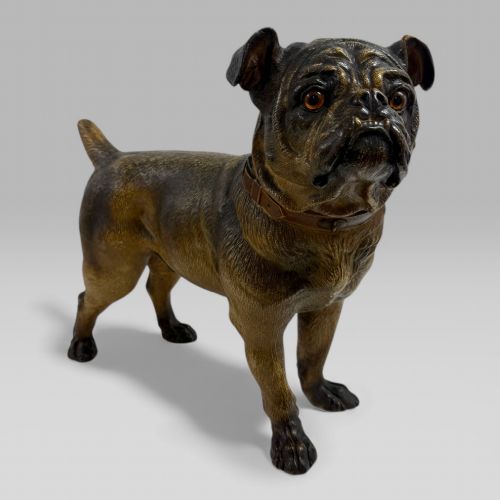


Terracotta Dog Figurine
These terracotta dog figurine examples span the nineteenth and early twentieth centuries, bringing character and domestic history to any interior.
Terracotta Dog Figurine
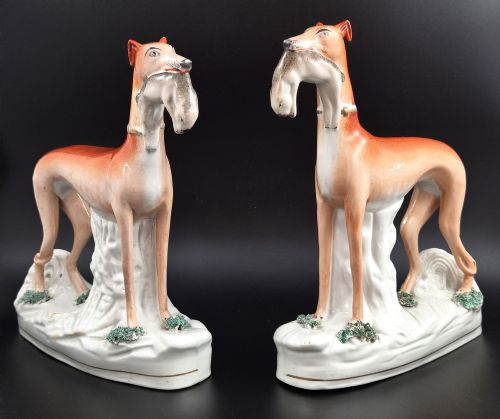
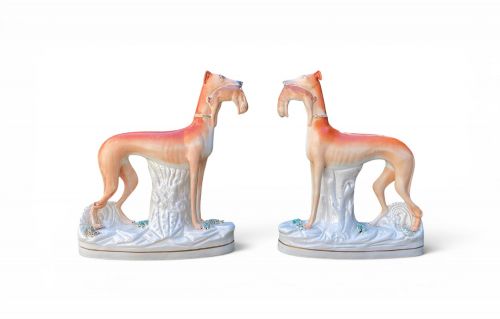
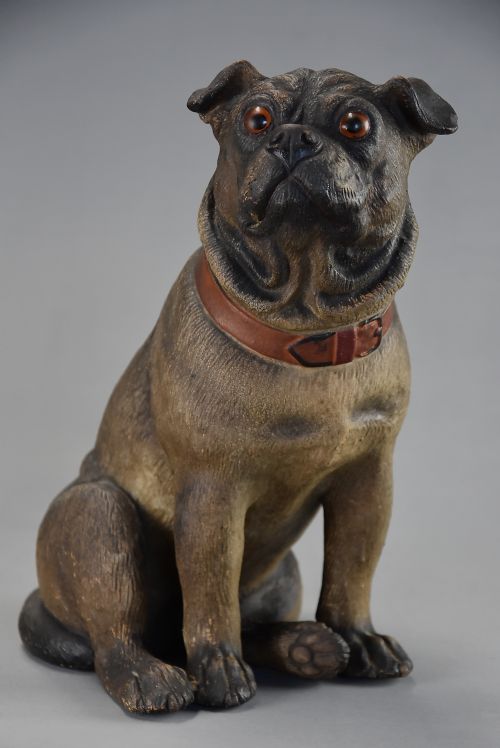
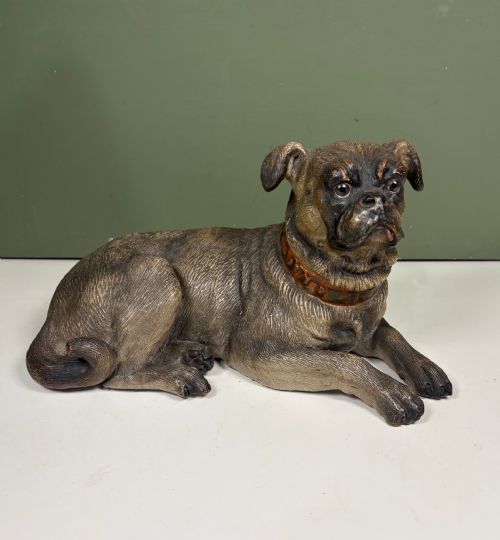
A terracotta dog figurine captures domestic and sporting animals across various periods, most frequently appearing as Victorian Staffordshire spaniels or greyhounds and Austrian pug sculptures. These decorative ornaments range from modest pottery figures to life-size sculptures made in England, France, and Austria. Buyers seeking this phrase encounter pairs of hunting dogs with hares alongside individual seated breeds.
The domestic display of these animals reflects historical tastes in interior decoration, particularly during the Victorian and Edwardian eras. Staffordshire pottery figures and continental models dominate the available selection, often finished with lead glaze or enamel paint. Each piece serves as a tactile record of past animalier artistry.
How they were made
Makers shaped these pieces from earthenware and terracotta before applying glazes, enamel paint, or glass elements. Firing clay required precise kiln temperature control to achieve the stable bodies seen in nineteenth-century workshops.
Surface decoration involved hand-painting enamel details or applying lead glaze over the fired clay body. Continental studios occasionally utilised cold painting techniques, adding superficial colour after the final kiln firing.
Listings feature 19th Century, Victorian, 1880, 1910, 1850, 1920, and 1900 periods, utilising earthenware, terracotta, glaze, glass, ceramic, lead glaze, enamel paint, and enamel.
What varies in quality
Artistic execution dictates the distinction between standard pottery figures and superior animalier sculptures. Life-size examples and signed works by notable makers display anatomical precision and careful surface modelling that lesser commercial items lack.
Thomas Parr·Foucher·Bernard Bloch·Royal Dux
The Terracotta Dog Figurine Glossary
- Terracotta
- A porous fired red earthenware clay used widely for sculptural models and pottery figures. It serves as the primary structural material for continental dog sculptures.
- Staffordshire pottery
- Ceramics produced in the Staffordshire region of England, famous for utilitarian and decorative figures including pairs of spaniels and greyhounds. These items were staples of nineteenth-century mantelpiece decoration.
- Animalier
- A nineteenth-century artistic movement focusing on the realistic depiction of animals. Sculptors in this style worked in bronze, terracotta, and other media to capture naturalistic postures.
- Lead glaze
- A glossy coating applied to ceramic surfaces before firing to waterproof the clay and provide a smooth sheen. It appears frequently on nineteenth-century British pottery.
Terracotta Dog Figurine: Frequently Asked Questions
Are these figures waterproof?
Most nineteenth-century terracotta and earthenware figures feature porous clay bodies beneath thin lead glazes or enamel paint. They are designed exclusively for indoor decorative display rather than outdoor garden use.
Exposing these antique ceramics to moisture can damage the painted surfaces and cause the underlying earthenware to degrade over time.
How do I clean my figurine?
Dust the surface gently using a soft, dry brush to remove particles without disturbing delicate enamel paint or aged glazes. Avoid liquid cleaners and damp cloths, which can penetrate porous terracotta and cause staining.
Regular dry maintenance preserves the original surface finish better than any chemical intervention.
Why are spaniels found in pairs?
Victorian mantelpiece decoration traditionally relied on symmetry, leading potters to produce Staffordshire spaniels as matching left-and-right facing pairs. Placing them at either end of a fireplace or shelf created a balanced domestic arrangement.
Single figures often survive independently due to breakage or separation over the decades.
What is cold painting?
Cold painting involves applying oil or enamel colours to a terracotta sculpture after the final kiln firing without reheating the piece. This technique allowed continental workshops to achieve vibrant polychrome finishes on pug dogs and animalier figures.
Because the paint was not fused to the clay by heat, surviving examples require careful handling to prevent flaking.