


Antique Pug Dog Statue
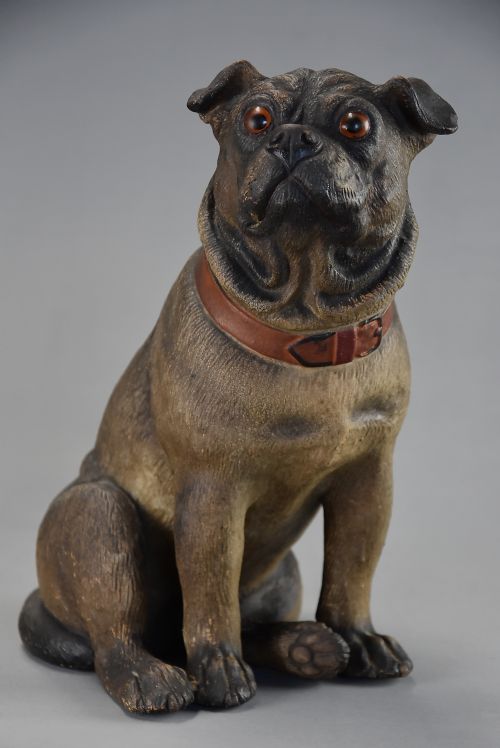
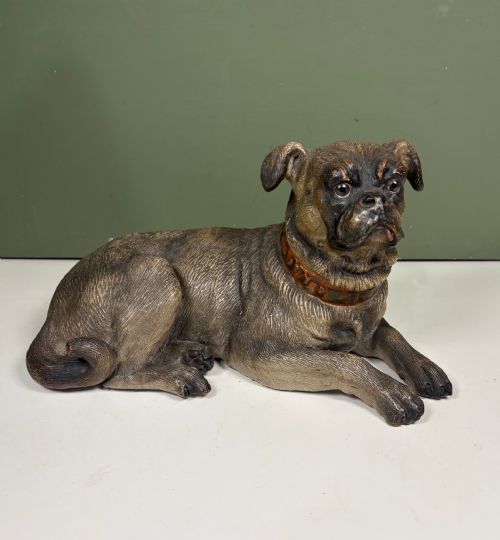
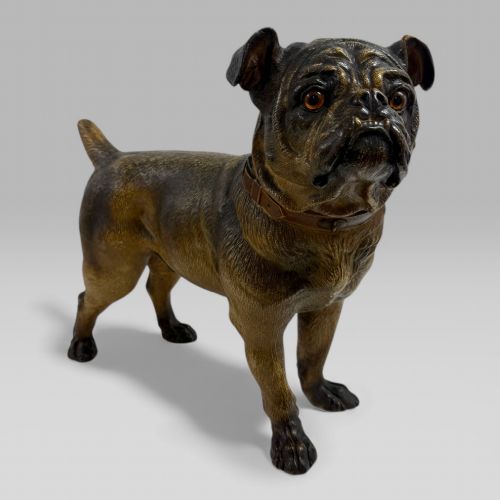
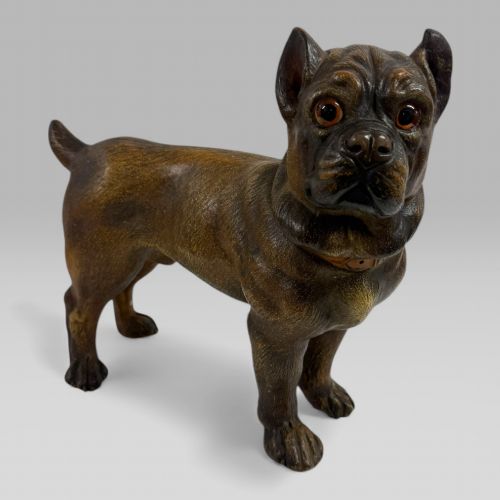
An antique pug dog statue captures the distinct character of the breed in terracotta, pottery, or bronze, offering a delightful centrepiece for a collector.
Antique Pug Dog Statue
The pieces listed on this page span the Georgian, Victorian, and Edwardian eras, encompassing both small decorative ornaments and life-size models. Terracotta and pottery dominate the forms, alongside cold-painted bronze and glass.
Austrian workshops and Staffordshire potteries produced the majority of these sculptures, ranging from seated postures to pairs of figures. You are most likely to meet terracotta models originating from Austria or earthenware figures from Staffordshire.
How they were made
Makers utilised terracotta and earthenware as primary mediums, shaping the clay to render the folds and expressions peculiar to the breed. Artisans then applied paint and ceramic glaze to finish the surfaces.
Materials recorded across the inventory include terracotta, glass, earthenware, pottery, bronze, and ceramic glaze.
What varies in quality
The standard of modelling dictates the quality, separating lifelike anatomical accuracy from stiffer, more generic interpretations of the animal. Master modellers captured the personality and proportions of the breed with precision.
The preservation of original painted surfaces and glazes significantly alters the character of the piece. Crisp detail in the terracotta moulding or bronze chasing distinguishes superior examples from simpler production.
Bernard Bloch Austria
The Antique Pug Dog Statue Glossary
- Staffordshire pottery
- Earthenware produced in the Staffordshire potteries of England. These works often include hand-painted details typical of the nineteenth century.
- Cold-painted bronze
- Metal sculpture painted with non-heat-set paints after casting. This technique was favoured for small animal figures during the nineteenth century.
- Animalier
- A nineteenth-century artistic style focusing on the realistic depiction of animals. Sculptors in this tradition studied anatomy closely.
- Glaze
- A vitreous coating fused to ceramic pottery through firing. It provides a glossy finish and seals the porous earthenware body.
Antique Pug Dog Statue: Frequently Asked Questions
What periods do these pug statues date from?
The pieces span the Georgian, Victorian, and Edwardian periods, primarily covering the nineteenth and early twentieth centuries.
Dating relies upon the materials used, the style of the modelling, and the specific pottery or foundry traditions of the era.
Where were most antique pug sculptures made?
Origins divide mainly between Austrian workshops producing terracotta models and English potteries in Staffordshire creating earthenware figures.
Continental makers often produced larger or life-size sculptures, while English potteries favoured mantelpiece figures and pairs.
What materials are commonly found in these pieces?
Terracotta and pottery form the vast majority of the sculptural works, accompanied by ceramic glazes and applied paint.
Bronze figures also appear, frequently finished with cold-painted pigments to render the colours of the dog's coat.
How were cold-painted bronze pugs decorated?
Artisans applied non-heat-set oil or varnish paints directly onto the finished bronze casting without a secondary firing.
This technique permitted intricate shading on the face and wrinkles, though the paint remains susceptible to wear over time.
Did Staffordshire potteries make pug pairs?
Staffordshire potteries occasionally produced matched pairs of earthenware pugs for domestic display on mantelpieces.
These ceramic figures reflect the domestic tastes of the Victorian period and typically feature hand-painted markings.