


Antique Pottery Tureen
These antique pottery tureen pieces bring heavy transfer prints and moulded majolica onto the dining table with genuine period weight.
Antique Pottery Tureen
When you search for an antique pottery tureen, you encounter vessels designed for serving soups, sauces, vegetables, and game at the formal dining table. The pieces span Georgian, Victorian, and Edwardian periods, including large soup tureens, smaller sauce tureens, vegetable dishes, and novelty animal forms.
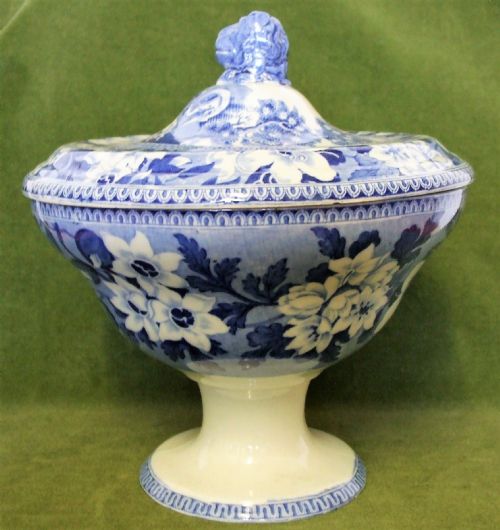
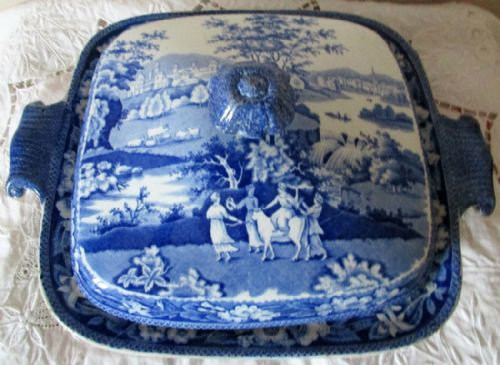
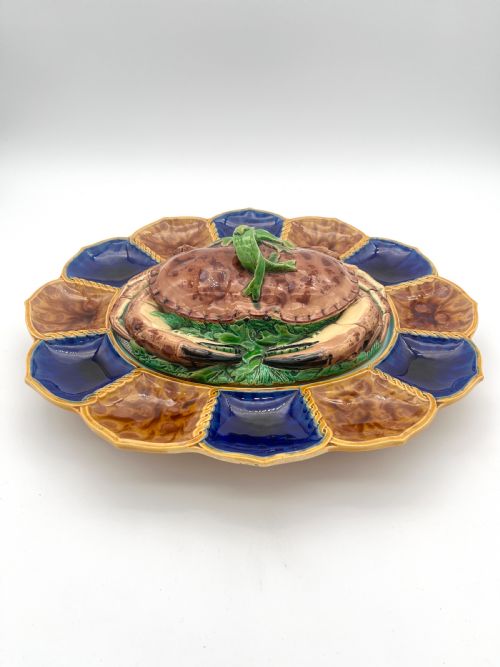
The most common versions met on this page are blue and white transfer-printed earthenware vessels from the Georgian and Victorian eras, often complete with matching covers and stands. Alongside these standard table pieces, moulded majolica and faience tureens shaped as hens, crabs, and cabbages appear frequently.
Geographically, English Staffordshire potteries dominate the selection, alongside factories from Minton, Wedgwood, and Spode, with occasional Spanish examples like Alcora Talavera. These vessels served practical dining functions before transitioning into decorative display items in modern interiors.
How they were made
Potters utilised earthenware, pearlware, and ceramic bodies shaped through throwing, moulding, or pressing. Moulded animal and vegetable tureens required intricate two-part moulds to capture realistic feather, shell, and leaf textures.
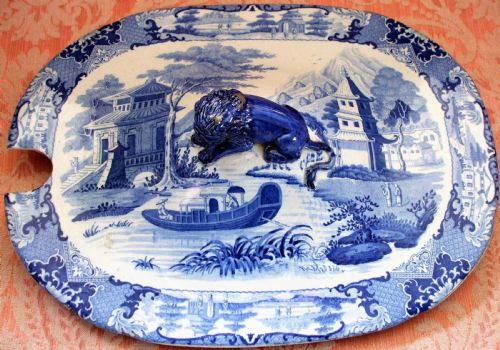
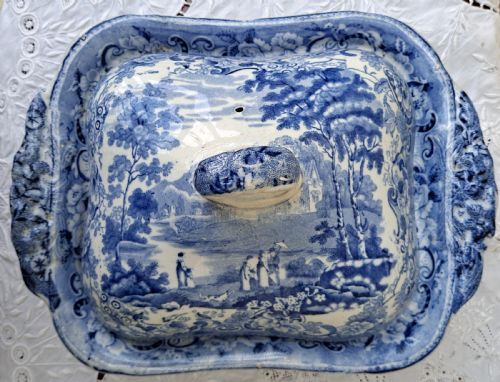
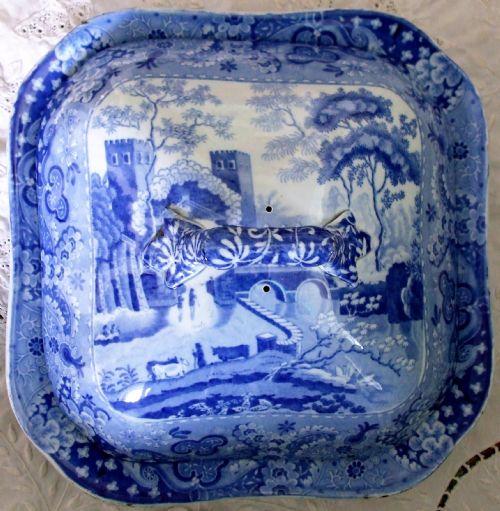
Decoration relied heavily on blue and white transfer printing, where engraved copper plates transferred detailed landscape and architectural scenes onto the clay body. Other pieces received hand-painted polychrome enamel details or rich lead glazes, tin glazes, and flow blue effects fired in kilns.
Listings feature earthenware, pearlware, and tin-glazed ceramic materials spanning the eighteenth and nineteenth centuries.
What varies in quality
Quality rests in the crispness of the transfer print and the subtlety of the modelled relief work. Finer pieces maintain sharp lines in complex patterns like Canton River scenes without blurring or ink pooling.
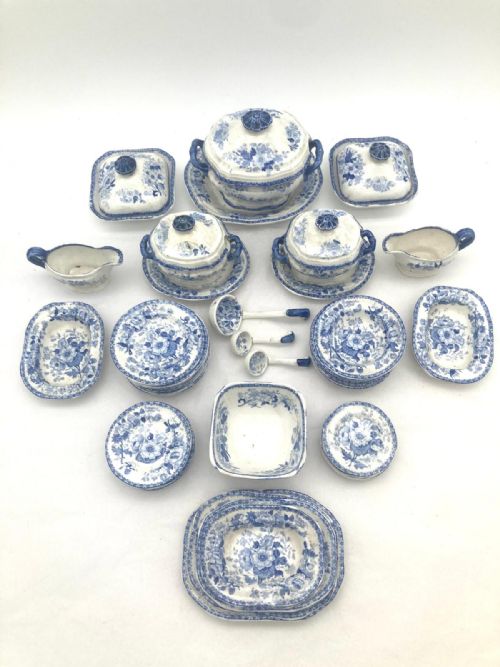
The presence of matching covers, stands, ladles, and original bases elevates a piece significantly. Superior modelling in majolica and earthenware tureens shows careful attention to anatomical or botanical details rather than soft, indistinct moulding.
Robert Hamilton·James Wallace and Co·J and R Clews·John Rogers and Son·John and Richard Riley·Minton·Booths·Ridgway·Spode·Wedgwood·Davenport·Turner·Masons·Ralph Stevenson of Cobridge
The Antique Pottery Tureen Glossary
- Pearlware
- A refined earthenware developed in the late eighteenth century featuring a subtle bluish-white glaze that pooled in recesses.
- Transfer printing
- A decoration technique using a copperplate to transfer engraved designs onto paper and then onto the ceramic surface before firing.
- Majolica
- A colourful, heavy earthenware type glazed with lead and tin oxides, popular during the Victorian period for botanical and animal forms.
- Flow blue
- A transfer printing method where lime or ammonia was introduced during the kiln firing to intentionally blur the cobalt blue design.
- Caneware
- A fine stoneware body with a warm, buff-coloured tone resembling bamboo or unglazed biscuit porcelain, often used for game dishes.
Antique Pottery Tureen: Frequently Asked Questions
What were antique tureens used for?
These vessels held soups, sauces, vegetables, and game dishes at formal dining tables during the Georgian and Victorian periods.
Servants brought them to the table filled from the kitchen, often resting them on matching ceramic stands to protect the linen tablecloth.
How do I date an antique tureen?
Examine the ceramic body, glaze colour, and maker marks stamped or printed on the base. Pearlware bodies and specific transfer patterns point to the Georgian era, while heavy majolica glazes usually indicate the Victorian period.
Maker names and pattern titles recorded in the transfer print offer precise historical attribution.
Where can I display a tureen?
Place large soup tureens on sideboards, dining tables, or open kitchen shelving as focal centrepieces. Smaller sauce tureens and novelty animal pieces fit comfortably on mantelpieces, side tables, or within glass display cabinets.