


Blue and White Tableware
Blue and white tableware brings centuries of botanical scenes, bustling landscapes and classical ruins straight to the dining table.
Blue and White Tableware
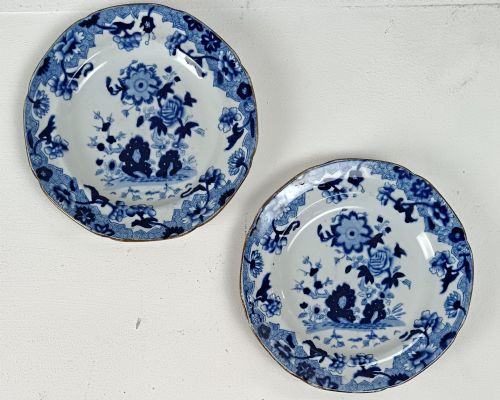
Blue and white tableware spans sturdy earthenware, pearlware, ironstone and delicate soft-paste porcelain from the eighteenth and nineteenth centuries. The selection encompasses practical vessels for daily dining alongside elaborate serving pieces designed for formal meals.
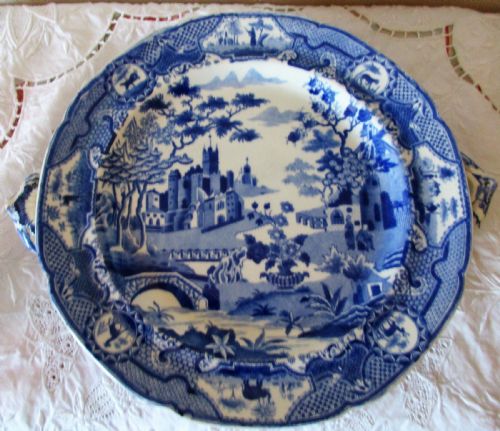
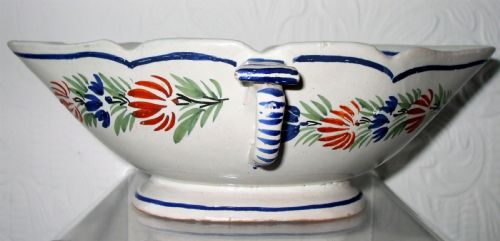
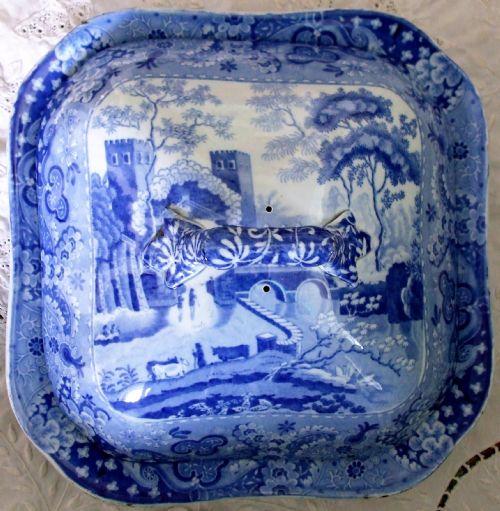
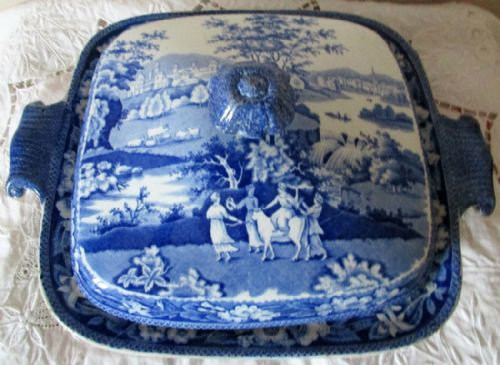
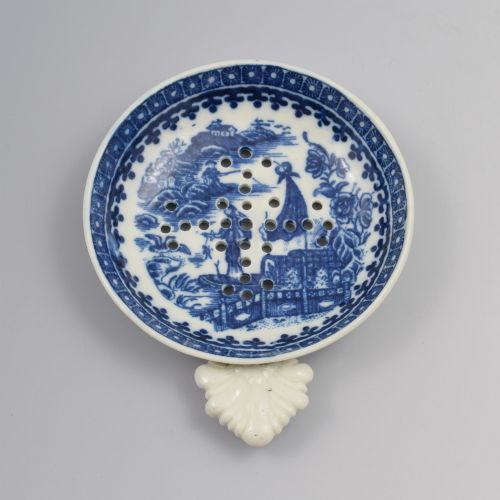
Platters, tureens, sauceboats and tea plates dominate the items gathered here. Pieces originate from prominent English potteries, French faience workshops and European manufactories, reflecting diverse stylistic influences from Chinoiserie to Gothic revival.
Materials and techniques
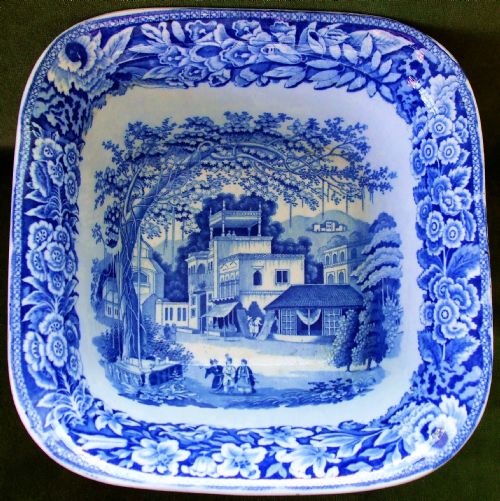
Potters shaped clay bodies on the wheel or pressed them into moulds before applying cobalt blue pigments beneath a transparent glaze. Transfer printing revolutionized production, allowing intricate patterns such as castle scenes and oriental landscapes to be applied with remarkable consistency.
Firing took place in high-temperature kilns where cobalt oxide fused permanently with the glaze, creating deep blues ranging from soft indigo to vibrant cobalt. Porcelain pieces relied on refined clay mixtures fired to vitrification, while ironstone offered exceptional durability for heavy service use.
Listings feature earthenware, porcelain, and ironstone objects spanning the eighteenth, nineteenth, and early twentieth centuries.
Execution and preservation
Quality rests in the crispness of the transfer print and the clarity of the underlying glaze. Superior examples display rich, deep blue tones without blurring or running at the edges of the pattern.
The integrity of the ceramic body and the preservation of moulded details dictate the standing of individual pieces. Potteries known for high artistic standards achieved better definition in relief work and greater symmetry in thrown forms.
Spode·J. & R. Riley·J. & R. Clews·Caughley·Masons·Doulton Burslem·Kuznetsov·Wedgwood·William Adams·Ridgways·Copeland & Garrett
The Blue and White Tableware Glossary
- Transfer printing
- A mechanical method of applying complex designs to ceramics using engraved copper plates and tissue paper. This technique enabled factories to produce uniform patterns on a large scale.
- Pearlware
- A refined earthenware developed by Josiah Wedgwood featuring a faint bluish tinge in the glaze. The tint neutralized the natural cream colour of the clay to mimic Chinese porcelain.
- Ironstone
- A heavy, durable ceramic patented in the nineteenth century that bridged the gap between earthenware and porcelain. It resisted chipping and suited large serving platters and tureens.
- Soft-paste porcelain
- An artificial porcelain compound fired at lower temperatures than hard-paste varieties. It yielded a warm, creamy body with a distinctive glaze pool.
- Chinoiserie
- A European artistic style reflecting Chinese motifs and imaginary oriental landscapes. It appeared frequently on eighteenth-century porcelain and transfer-printed earthenware.
Blue and White Tableware: Frequently Asked Questions
How do I date these ceramics?
Dating relies on maker marks, ceramic bodies, and the technological evolution of transfer printing. Earthenware and pearlware generally indicate earlier nineteenth-century production.
Changes in paste composition and glaze characteristics help distinguish eighteenth-century soft-paste porcelain from later ironstone alternatives.
Can I use them for dining?
Many sturdy earthenware and ironstone pieces remain robust enough for careful daily use. Gentle hand washing preserves the glaze and prevents crazing.
Delicate soft-paste porcelain pieces warrant careful handling and display rather than routine service.
What is transfer printing?
Transfer printing is a process where an engraved metal plate transfers ink onto tissue paper, which is then pressed onto fired ceramic ware. This method replaced hand-painting for many commercial patterns.
It allowed workshops to replicate intricate landscapes and classical scenes across entire dinner services with precision.
Why is the blue sometimes blurry?
Slight blurring happens when cobalt pigment bleeds into the glaze during high-temperature kiln firing. Early transfer printing trials often exhibited this characteristic before techniques were refined.
Crisp outlines indicate precise control over the printing paper and the kiln atmosphere.