


Antique Pottery Jug
An antique pottery jug brings domestic history to hand, offering tactile connection to centuries of craft through earthenware, stoneware, and creamware.
Antique Pottery Jug
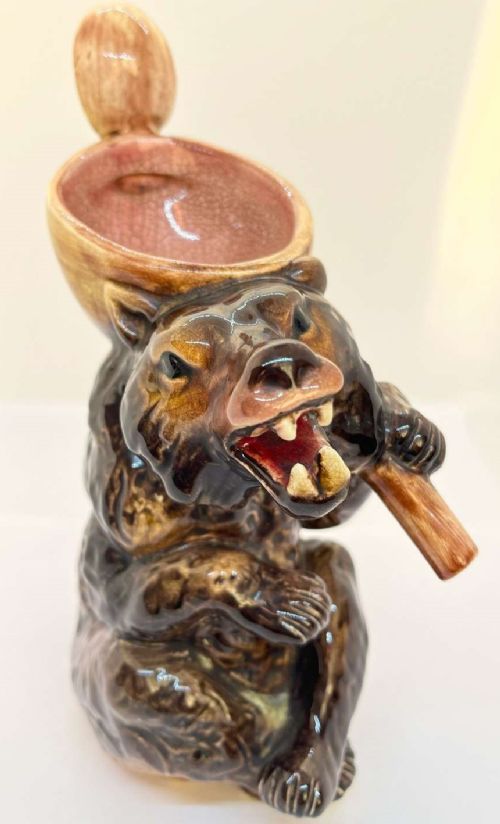
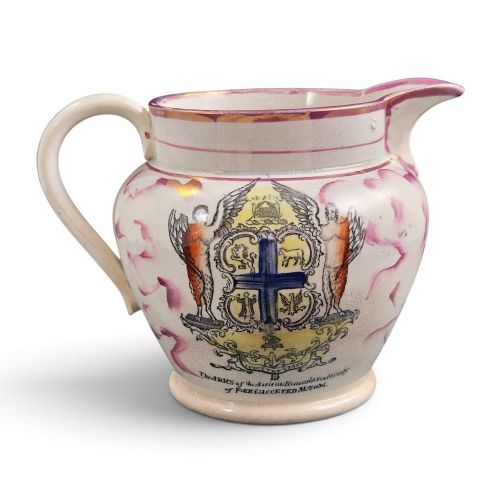
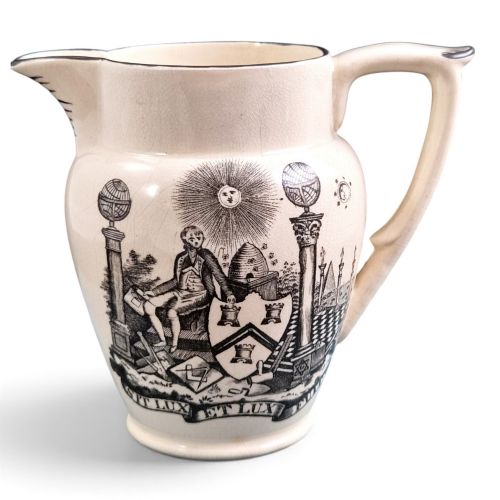
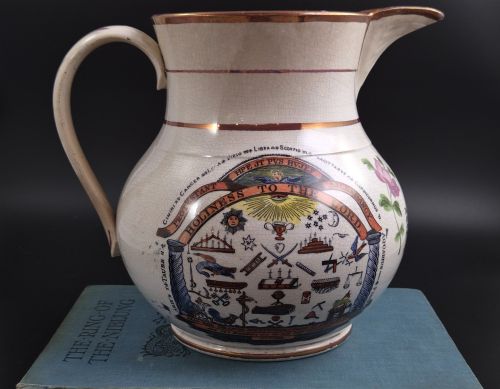
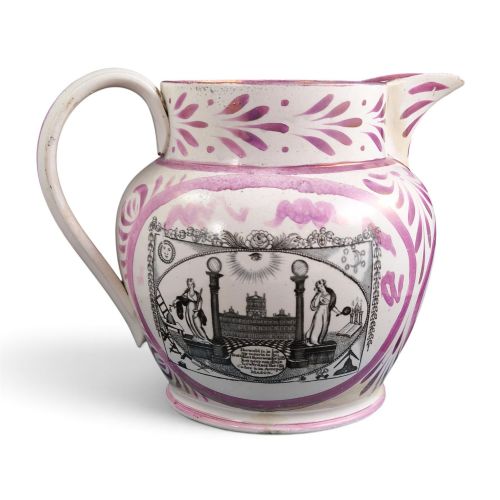
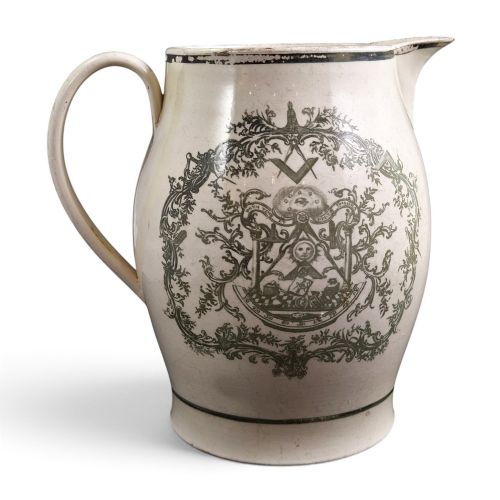
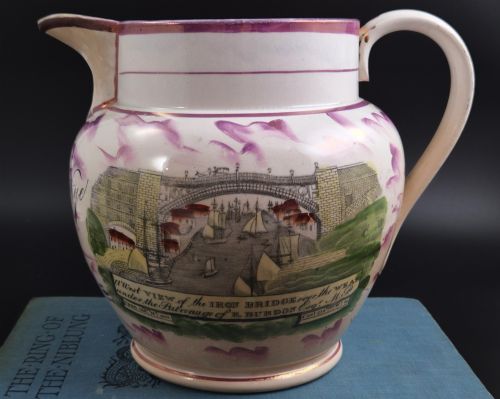
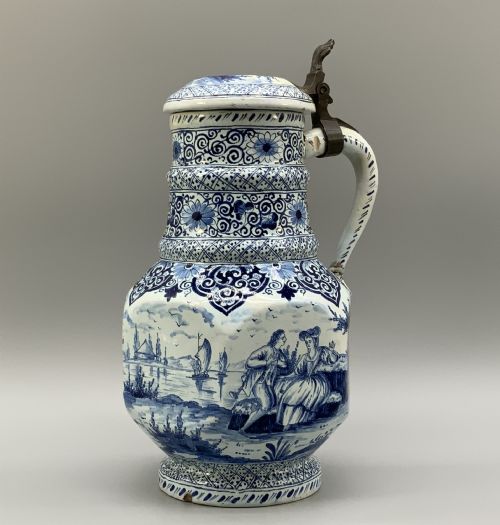
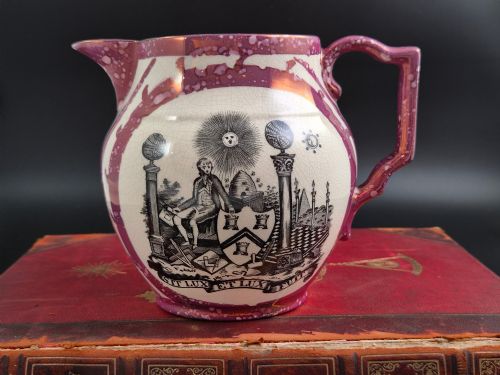
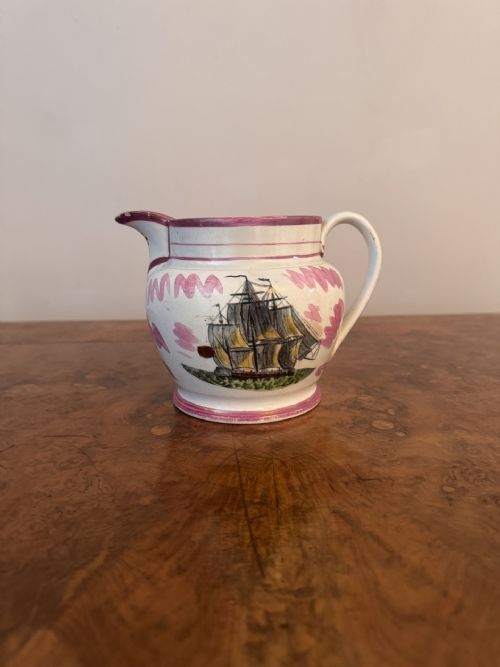
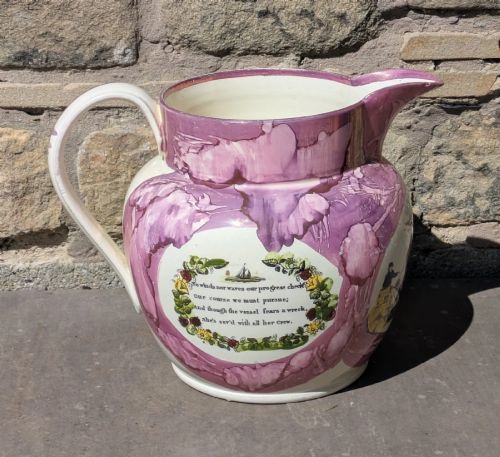
Buyers discover utilitarian containers alongside commemorative vessels adorned with transfer prints, masonic symbols, and maritime themes. Examples span from eighteenth-century Georgian creamware to robust salt-glazed stoneware and tin-glazed delftware.
How they were made
Potters shaped these vessels using earthenware, ironstone, and stoneware clays, often applying metallic or salt glazes to seal the porous bodies. Decoration relied upon hand-painting, polychrome enamels, and black or pink transfer printing to record portraits, landscapes, and civic scenes.
Specialised techniques included splash lustre application, slipware trailing, and pewter mounting, requiring precise kiln management to achieve durable surfaces across creamware and porcelain bodies.
A nineteenth-century cow creamer delivers milk directly from the animal's mouth.
What varies in quality
Quality rests in the crispness of transfer-printing, the depth of the glaze, and the precision of hand-painted polychrome details. Superior examples exhibit balanced proportions, clean handle attachments, and well-defined relief modeling in figurative toby jugs and commemorative pitchers.
The sophistication of the palette and the complexity of commemorative motifs distinguish finer pieces from standard utilitarian wares.
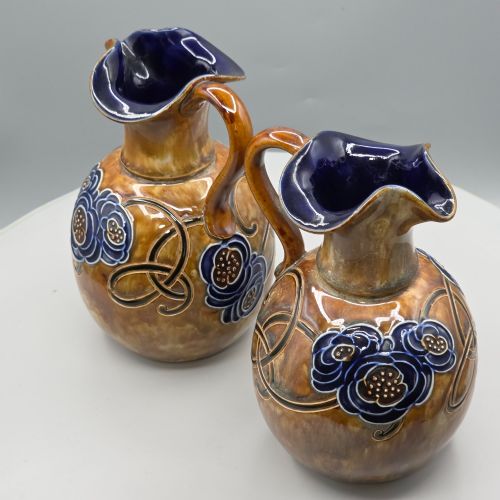
Royal Doulton·Doulton Lambeth·Cantagalli Florence·Keeling & Co·Mayer and Newbold·John Rogers & Son·John Meir and Son
The Antique Pottery Jug Glossary
- Creamware
- A fine earthenware developed in the eighteenth century with a pale yellow or cream-coloured lead glaze. It became a staple of Staffordshire production.
- Transfer printing
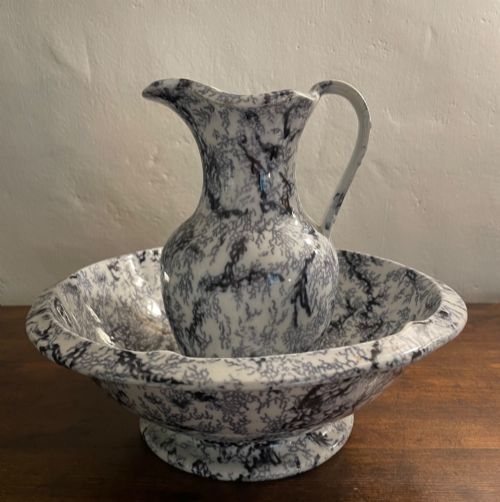
- A decoration technique involving the transfer of an engraved design from a copper plate to paper and then onto the ceramic surface before glazing and firing.
- Lustreware
- Earthenware finished with a metallic glaze that produces an iridescent, reflective sheen. Pink and copper tones feature prominently in nineteenth-century Sunderland pieces.
- Salt glaze
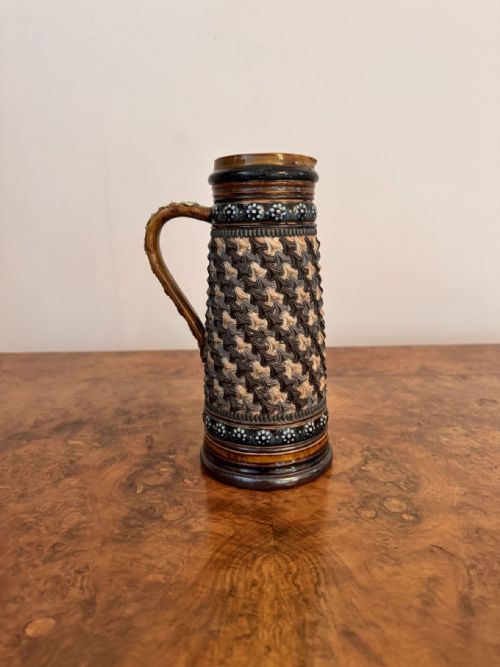
- A ceramic finish created by throwing common salt into the kiln during high-temperature firing, producing a textured surface resembling orange peel.
- Delftware
- Tin-glazed earthenware originating from the Netherlands and England, typically decorated with blue pigments on a white opaque background.
Antique Pottery Jug: Frequently Asked Questions
How do I date an antique pottery jug?
Dating relies upon material composition, glaze characteristics, and decorative motifs such as transfer-printed historical events or named commemorative subjects. Stylistic shifts between Georgian creamware and Victorian ironstone offer clear chronological markers.
Examining the base markings, manufacturing techiques, and wear patterns helps narrow the period of production further.
Were these jugs used daily or displayed?
Many jugs served practical roles in domestic settings for pouring liquids, storing milk, or serving beer. Others functioned as commemorative pieces or decorative items celebrating societies, elections, or maritime events.
Heavily decorated lustre and pearlware vessels often sat on mantelpieces rather than enduring routine kitchen use.
What is the difference between earthenware and stoneware?
Earthenware is fired at lower temperatures, remaining porous until glazed, and forms the body for creamware, majolica, and transfer-printed jugs. Stoneware uses vitrified clay fired at high heat, rendering it naturally impermeable and exceptionally durable.
Salt-glazed flasks and heavy pitchers typically utilise dense stoneware.
How should I care for antique pottery?
Display pottery away from direct sunlight and extreme temperature fluctuations to protect fragile glazes and hand-painted enamels. Gentle dusting with a dry cloth is sufficient for routine maintenance.
Avoid immersing antique earthenware or lustre jugs in water, as moisture can penetrate old glaze crazing.