


Antique Porcelain Sauce Tureen
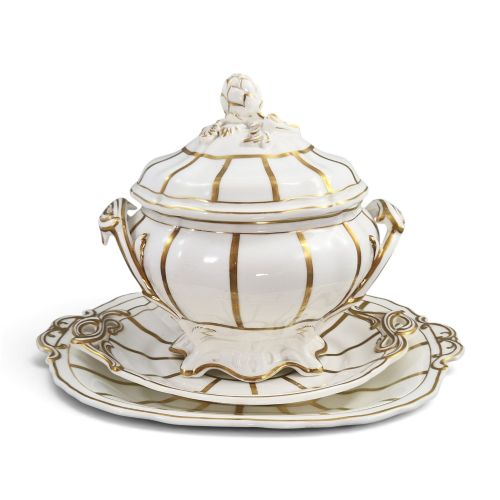
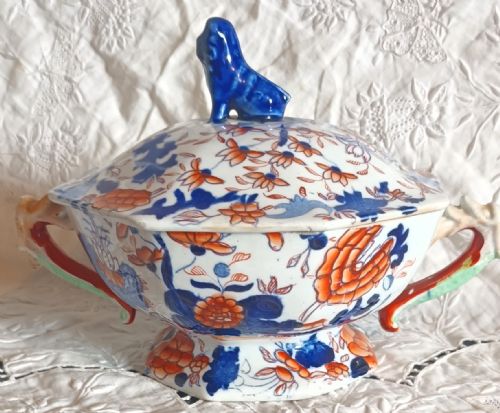
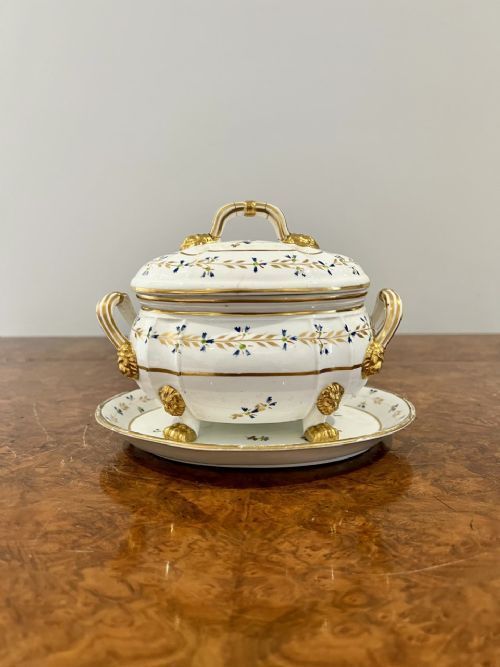
An antique porcelain sauce tureen brings the formal dining table of the eighteenth and nineteenth centuries into focus with its elegant handles and fitted cover.
Antique Porcelain Sauce Tureen
An antique porcelain sauce tureen is a covered vessel designed specifically to hold and serve gravies, creams, and sauces during formal meals. These pieces belong to the broader categories of tableware and dinnerware sets, often accompanied by matching stands and ladles.
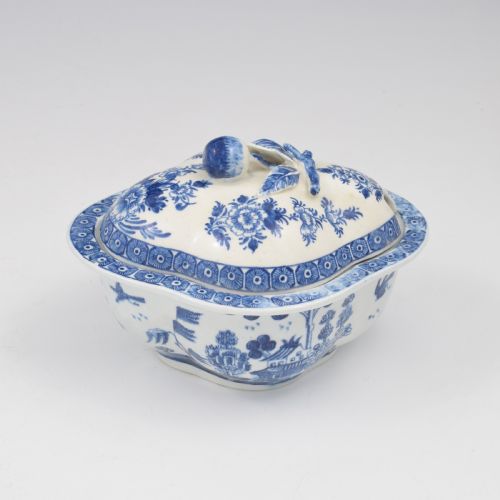
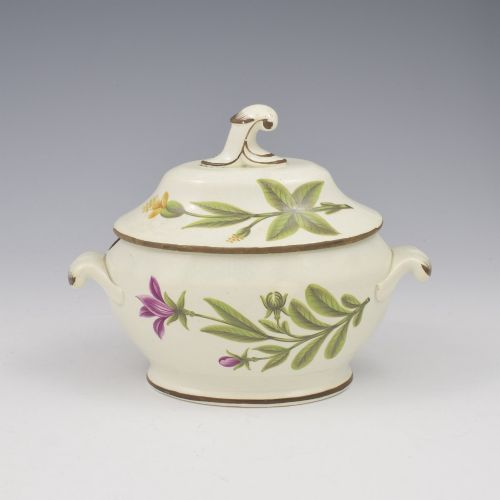
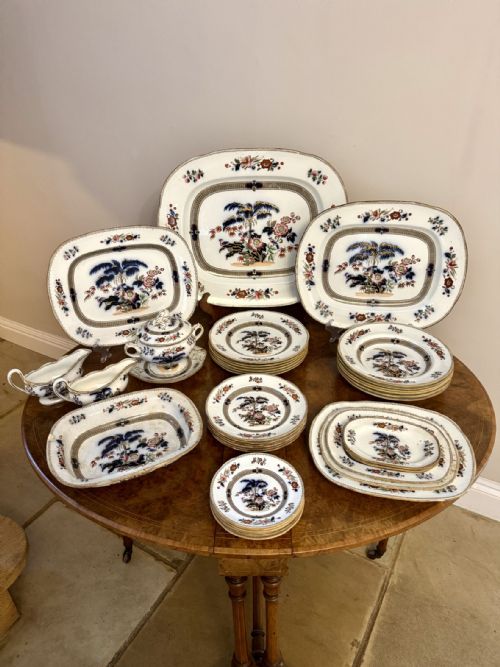
The versions most commonly met on this page span the Georgian, Regency, and Victorian periods, alongside earlier eighteenth-century examples. Forms range from quatrefoil shapes to classic boat designs decorated with botanical prints, blue and white schemes, or Imari palettes.
How they were made
Potters shaped these vessels using porcelain, bone china, ironstone, and soft-paste porcelain, sometimes reinforced with earthenware bodies for durability. Glaze seals the porous clay beneath, providing a smooth, glossy surface suitable for intricate hand-painted designs.
Finishing touches frequently include applied gold leaf for gilt handles and intricate enamel work in patterns such as green mandarin or traditional blue and white. Skilled artisans applied these decorations before a final kiln firing to set the colours permanently.
Listings feature porcelain, ironstone, and bone china forms spanning the eighteenth, nineteenth, Regency, and Victorian periods.
What varies in quality
The distinction between standard domestic wares and superior examples rests on the crispness of the moulding and the delicacy of the porcelain body. Early pieces from established factories exhibit finer potting and more translucent bodies than later mass-produced ironstone alternatives.
Hand-painted precision also dictates worth, separating hurried factory output from meticulously detailed botanical studies or armorial crests. The survival of matching stands, original covers, and auxiliary ladles elevates the integrity of the surviving set.
Davenport Bone China·Derby Porcelain·Swansea Pearlware·Wedgwood·Mason's Ironstone·Crown Derby·Mintons·Flight Barr & Barr·Worcester Porcelain·Chamberlain Worcester·Coalbrookdale·Meissen
The Antique Porcelain Sauce Tureen Glossary
- Sauce tureen
- A small covered serving bowl designed for gravies or sauces at the dining table. They frequently sit upon an integrated or separate ceramic stand.
- Ironstone
- A dense, durable type of earthenware patented in the nineteenth century. It mimics porcelain while offering greater resistance to daily wear.
- Soft-paste porcelain
- An artificial ceramic composition fired at lower temperatures than true hard-paste porcelain. It possesses a warm, slightly creamy glaze often found on eighteenth-century pieces.
- Quatrefoil
- A symmetrical four-lobed shape resembling a four-leaf clover. This outline appears frequently in the cross-section and rim design of Georgian tureens.
Antique Porcelain Sauce Tureen: Frequently Asked Questions
What was a sauce tureen used for?
These vessels held warm gravies, drawn butter, and cream sauces during multi-course meals. The fitted cover kept the contents warm between servings at the dining table.
Servants used the matching ladle to pour the sauce directly onto individual plates. The accompanying stand caught any drips and protected fine dining linens.
How do I care for antique porcelain?
Wash these pieces gently by hand using warm water and mild soap rather than placing them in an automatic dishwasher. Avoid sudden temperature changes to protect the historic glaze from thermal shock.
Store tureens with their covers resting securely or separated by clean linen padding. Handle gilt handles and delicate painted enamels with care during cleaning.
How do I date an antique tureen?
Examine the underside for factory marks, pattern numbers, and impressed ciphers that correspond to manufacturer production periods. The ceramic body itself, whether translucent porcelain or heavy ironstone, offers clues to the era of manufacture.
Stylistic indicators such as Regency neoclassical lines or Victorian rococo revival moulding help narrow the date range. Comparing the painted palette to known factory eras confirms the timeline.
Can I use these for modern dining?
Many collectors use eighteenth and nineteenth-century tableware for special dinners and seasonal gatherings. Careful handling allows these functional antiques to continue their original purpose.
Hot liquids should be introduced gradually to prevent stress on historic ceramics. Hand washing remains essential after any modern culinary use.