



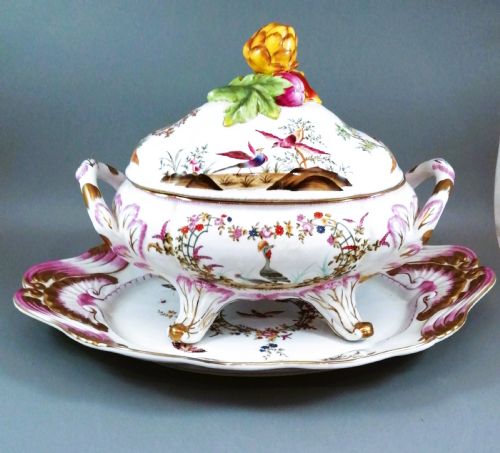


Gilded Porcelain Covered Dish
These gilded porcelain covered dish pieces combine ceramic craft and gold leaf detail across nineteenth century table settings.
Gilded Porcelain Covered Dish
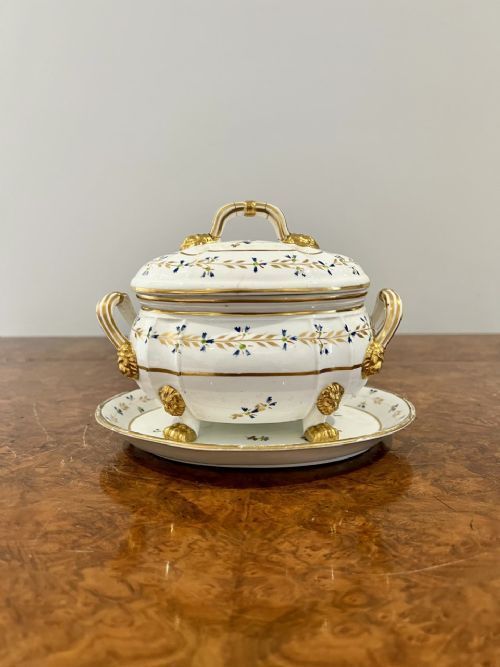
A gilded porcelain covered dish serves table functions through forms such as tureens, sugar bowls, butter dishes, and cheese domes. When searching for a gilded porcelain covered dish, a buyer encounters pieces originating from nineteenth century periods including Regency and Victorian eras, alongside continental and English workshops.
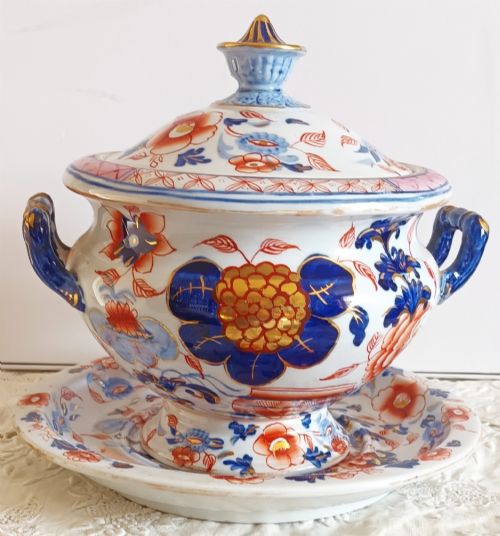
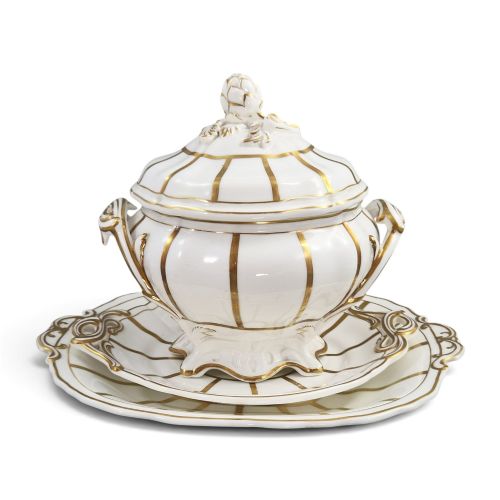
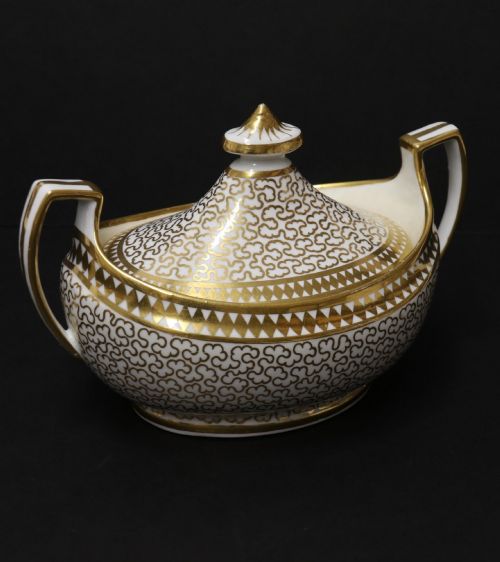
The objects span practical serveware and decorative lidded dishes. Examples range from Chamberlains Worcester sucriers to large soup tureens, displaying styles from Rococo Revival to Imari and Chinoiserie Mandarin patterns.
How they were made
Potters shaped porcelain, bone china, ceramic, and ironstone bodies before applying glaze and enamel colours. Artisans added gold leaf and gilt decoration by hand to handles, rims, and surface motifs.
Firing techniques fixed the enamel and glaze to the ceramic base. Workshops combined moulded ironstone with hand-painted patterns to create durable domestic serveware and decorative lidded vessels.
Gilded Porcelain Covered Dish Retail Price Guide 2026
Typical asking prices for gilded porcelain covered dish among the pieces listed under this phrase on Sellingantiques today, from the lower quarter to the upper quarter. They describe what is for sale here now, not the wider market.
Styles span Regency, Victorian, continental Rococo, and Kakiemon patterns found on butter dishes, sauce tureens, and cheese domes.
What varies in quality
The refinement of the ceramic body and the precision of the hand-painted enamel separate standard domestic wares from exceptional display pieces. Bone china and fine porcelain bodies offer a thinner, more delicate profile than robust ironstone.
The preservation of the gold leaf and gilt details influences the visual balance of the piece. Crisp application of patterns, such as Imari or Kakiemon designs, indicates higher workshop skill.
Davenport Bone China·Chamberlains Worcester·Crown Derby·Flight Barr And Barr·Masons Ironstone·Meissen
The Gilded Porcelain Covered Dish Glossary
- Ironstone
- A heavy, durable type of ceramic developed in the nineteenth century as a robust alternative to porcelain.
- Imari
- A decorative style featuring rich blue, iron-red, and gilt colour schemes inspired by Japanese exports.
- Sucrier
- A small covered bowl specifically designed for holding table sugar during tea service.
- Tureen
- A deep covered dish used for serving soups, sauces, or gravies at the dining table.
- Gilding
- The application of gold leaf or gilt paint to ceramic surfaces for decorative accent.
Gilded Porcelain Covered Dish: Frequently Asked Questions
What is a gilded porcelain covered dish used for?
These covered vessels functioned on dining tables to contain and keep warm soups, sauces, butter, or sugar. Wealthy households utilised them during formal meals and tea services.
In modern settings, collectors display them as decorative table centrepieces or use them for serving during special dinners.
How do I identify a Regency period piece?
Regency items, often dating around eighteen twenty, typically display neoclassical or early revival motifs with hand-painted Imari palettes and refined gilt handles.
Maker marks from Worcester or Derby factories during this era provide further confirmation of the production decade.
What is the difference between ironstone and porcelain?
Ironstone is a dense, heavy ceramic designed for durability in heavy kitchen and dining use. Porcelain and bone china present a finer, more translucent body suited to delicate tea wares.
Both materials received similar rich gilding and enamel painting techniques in nineteenth century workshops.
How should I care for antique gilded tableware?
Wash these pieces gently by hand using mild soap and lukewarm water to protect the delicate gold leaf and enamel decorations. Avoid abrasive sponges and dishwashers entirely.
Store them securely on stable surfaces where handles and lids will not experience accidental knocks.