


Antique Porcelain Dog Statue
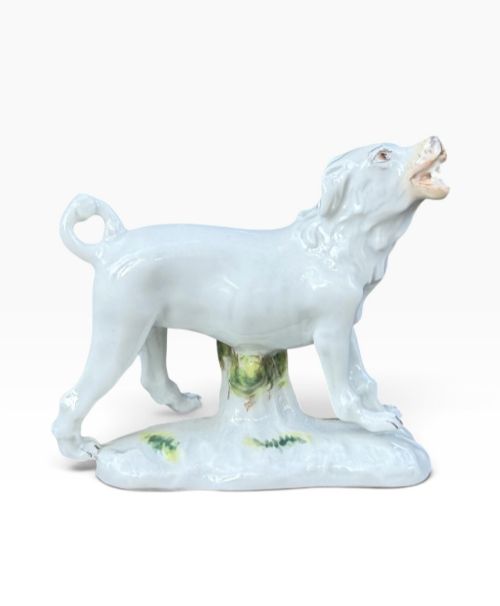
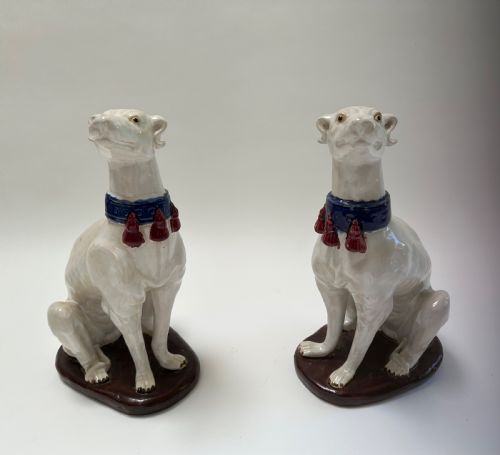
An antique porcelain dog statue brings domestic warmth and sculptural presence to a room, ranging from Staffordshire pairs to Meissen models.
Antique Porcelain Dog Statue
When someone searches for an antique porcelain dog statue, they encounter a diverse range of figures spanning the eighteenth, nineteenth, and early twentieth centuries. These pieces encompass Staffordshire spaniels, poodles, and greyhounds, alongside continental porcelain figures and Asian ceramic guardian lions.
The most common examples on this page are Victorian Staffordshire pairs, often modelled as spaniels or greyhounds seated on hearths. Alongside these, buyers find continental porcelain factories and Japanese Kutani or Hirado works depicting dogs and Buddhist lion figures.
Forms extend from simple decorative figurines and quill holders to large figure groups involving huntsmen or children. Materials vary across porcelain, earthenware, ceramic, and Parian ware, reflecting both British domestic output and international ceramic traditions.
How they were made
Parian ware pieces required specialised unglazed porcelain casting to achieve a matte, marble-like texture suitable for detailed sculptural figures. Chinese and Japanese pieces employed high-fired porcelain and pottery techniques, incorporating pale green glazes and hand-painted pigments.
Some Victorian poodles sport textured clay curls applied individually by hand before firing.
What varies in quality
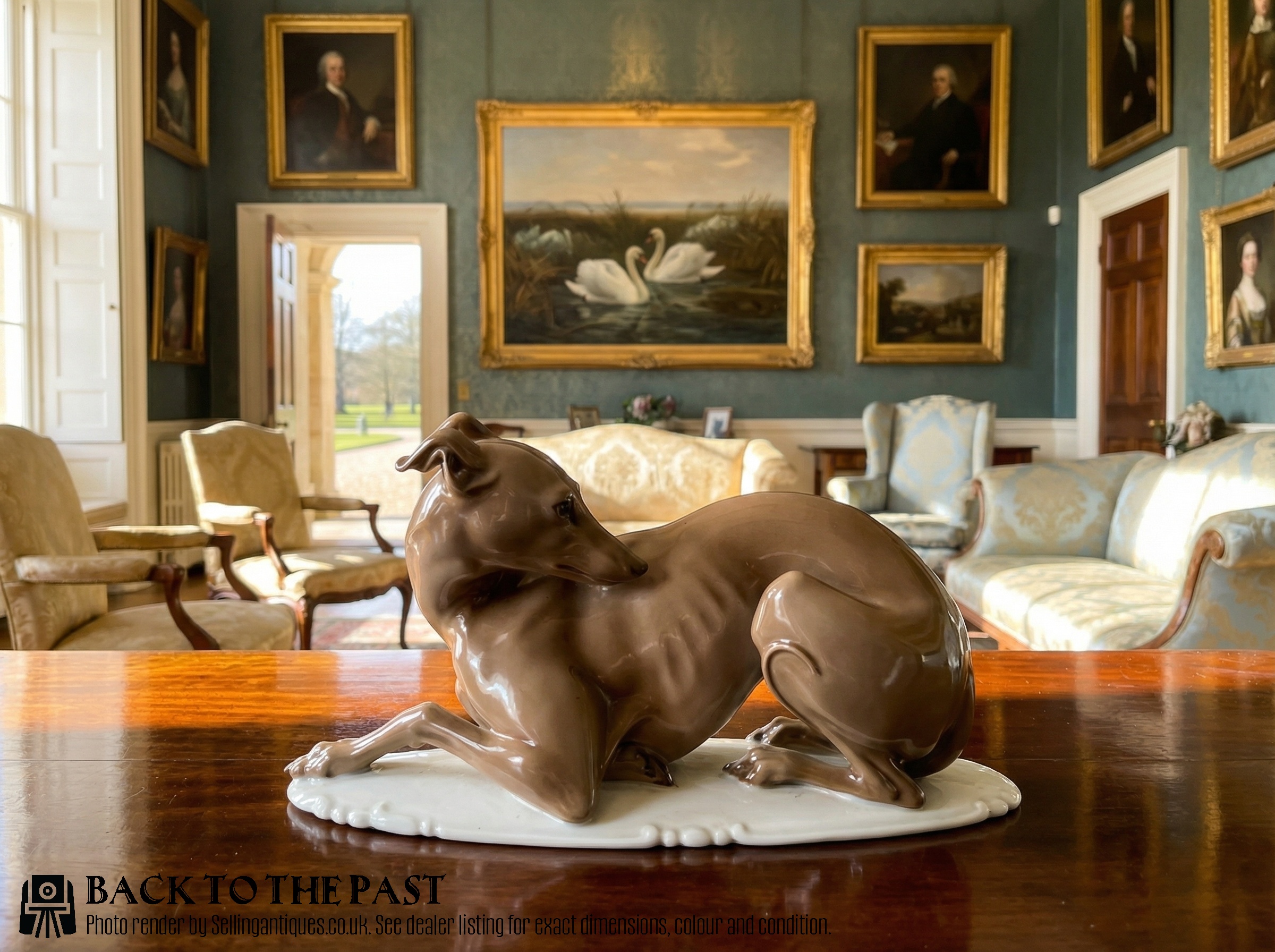
Modelling precision separates superior figures from ordinary production, visible in the naturalism of a hunting dog's pose or the sharpness of moulded facial details. Hand-painted enamelling and the application of gold leaf demand steady brushwork that elevates the finished object.
The crispness of the porcelain or earthenware body indicates the care taken with the original mould and subsequent firing processes. Substantial scale and well-matched pairs demonstrate greater ambition by the maker, whether originating from Staffordshire potteries or European porcelain manufactories.
Meissen·Minton·Wedgwood·Royal Dux·Beswick
The Antique Porcelain Dog Statue Glossary
- Staffordshire
- Earthenware figures produced by numerous potteries in the English midlands region. These pieces are frequently found as matched pairs intended for mantelpiece display.
- Parian Ware
- A fine-grained, unglazed white porcelain developed in the nineteenth century. It imitates carved marble and was utilised for detailed sculptural statuary.
- Blanc De Chine
- A white porcelain produced in China, notable for its smooth glaze and creamy tone. The term translates simply from French as white from China.
- Quill Holder
- A utilitarian desk accessory incorporating a modelled figure. These items held writing quills while serving as decorative desk ornaments.
- Foo Dog
- A traditional western term for Chinese guardian lions, known correctly as shishi or Buddhist lions. They symbolise protection and watch over domestic spaces.
Antique Porcelain Dog Statue: Frequently Asked Questions
How do I identify Staffordshire dogs?
Staffordshire dogs typically appear as seated spaniels, poodles, or greyhounds produced in pairs for nineteenth-century mantelpieces. They are characterised by earthenware bodies, hand-painted details, and often feature gilt highlights or distinct eye markings.
Closer examination reveals characteristic crazing in the glaze and hollow bases moulded with vent holes. Most examples date from the Victorian era through the early twentieth century.
Where were porcelain dogs displayed?
Victorian households traditionally placed pairs of ceramic dogs on either end of the fireplace mantelpiece. They served as comforting domestic ornaments and symbols of loyalty and hearthside protection.
Smaller pieces, such as quill holders or miniature figures, functioned on writing desks or within cabinet displays. Asian guardian lions occupied prominent positions near doorways or within reception rooms.
What is Parian ware?
Parian ware is an unglazed, fine-grained white porcelain developed in the nineteenth century to emulate carved marble. It allowed manufacturers to produce highly detailed sculptural figures without employing traditional glossy glazes.
Statuary figures and hunting dog groups utilised this material for its smooth, matte finish and ability to hold crisp modelling. Copeland and other prominent factories employed the medium for exhibition-quality sculptures.
How do I tell periods apart?
Eighteenth-century pieces, such as Meissen or Qianlong examples, exhibit refined porcelain pastes, intricate hand-painting, and precise potting techniques. Nineteenth-century figures encompass heavier Staffordshire earthenware and crisp Parian statuary.
Early twentieth-century works often reflect Art Nouveau or Art Deco styling through stylised forms and modern factory marks. Glaze types and maker stamps help anchor pieces within specific decades.
Are these figures solid?
Most ceramic and porcelain dog statues are hollow-cast to ensure even firing and prevent cracking in the kiln. Staffordshire earthenware pieces usually feature an opening underneath the base, often accompanied by small firing vent holes.
Some smaller miniature figures and solid Parian pieces may possess greater density, but hollow construction remains standard for larger decorative sculptures. This technique reduced weight and material usage during production.