


Large Royal Dux Sculpture
A large royal dux sculpture brings monumental Edwardian presence and Art Nouveau fluidity to a room through dramatic ceramic forms.
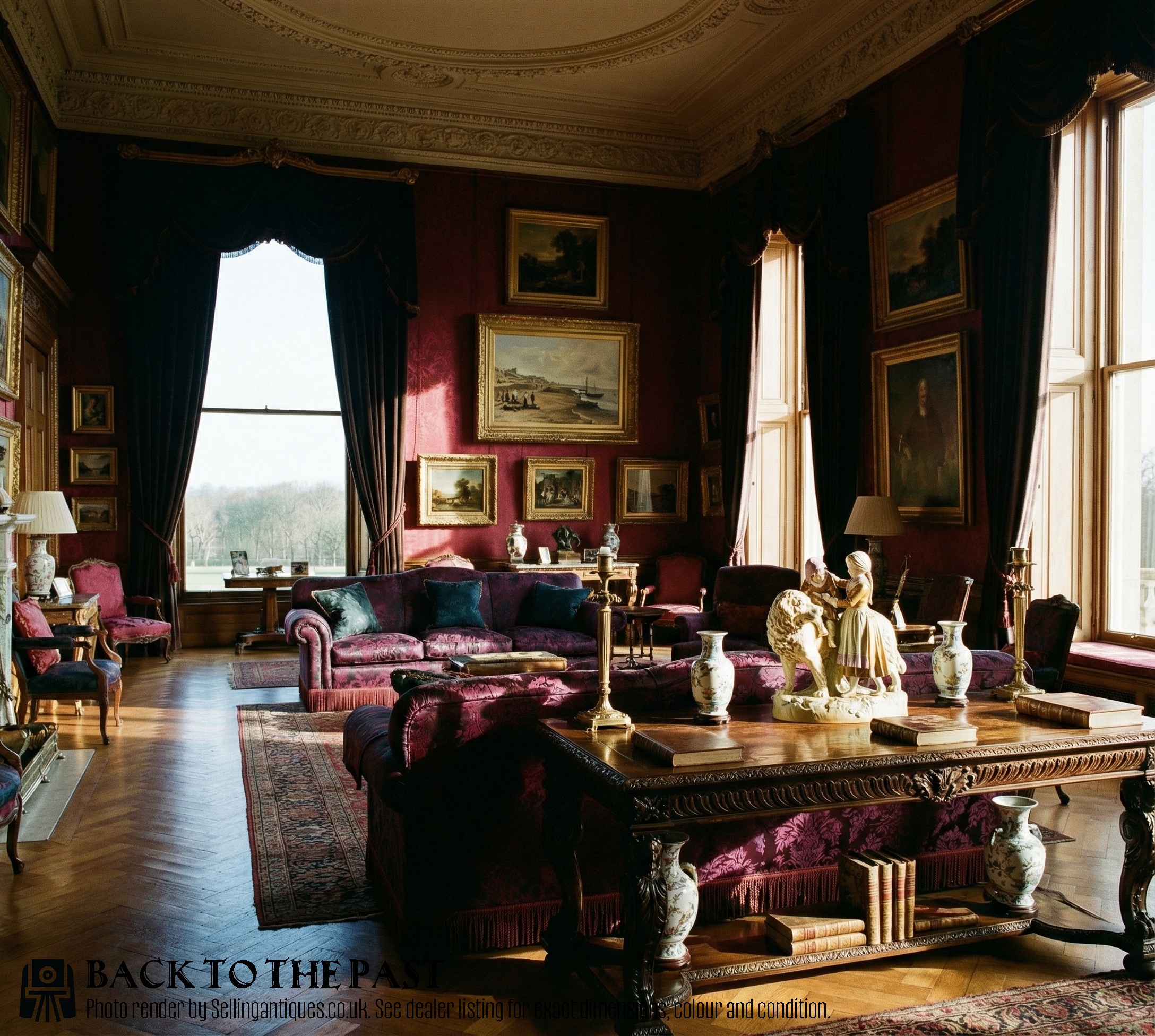
Large Royal Dux Sculpture
A large royal dux sculpture captures the sweeping organic lines of the Art Nouveau movement in monumental ceramic form. These pieces emerge predominantly from the Edwardian era and the early years of the twentieth century, presenting substantial display objects for domestic interiors.
The standard form encountered here is the figural group or single maiden, often incorporating practical elements such as a shell centrepiece or water vessel. Subjects range from graceful female figures and water nymphs to a boy and dog, reflecting the turn-of-the-century fascination with classical and natural motifs.
Makers in this tradition utilise distinct regional aesthetics, linking Bohemian ceramic production directly with the Turn-Teplitz stylistic hub. Collectors searching for these substantial works will find figures, figure groups, and decorative centrepieces spanning the years from eighteen ninety through to the nineteen tens.
How they were made
Production relies heavily upon porcelain and terracotta, shaped into complex figural and sculptural compositions. Workshops employed both glazed finishes and unglazed bisque porcelain to create subtle contrasts in texture across the surface of the body.
Water nymphs are forever trapped mid-splash alongside remarkably steadfast canine companions.
What varies in quality
The ambition of the modelling dictates the visual success of the piece, distinguishing dynamic figural groups from static representations. Sculptures featuring complex drapery or multiple figures demand greater technical mastery during the firing process.
The application of glaze, painted details, and gilding determines the overall crispness of the finish. Subtle tonal variations in the biscuit porcelain and the precision of the hand-painted elements separate standard decorative items from superior works.
H. Schubert·Royal Dux Bohemia
The Large Royal Dux Sculpture Glossary
- Bisque porcelain
- Unglazed ceramic material fired once to produce a matte, porous finish resembling marble. This surface allows for extreme delicacy in modelled details.
- Art Nouveau
- Design style popular around nineteen hundred characterised by flowing, organic lines and natural motifs. It heavily influences the posture and drapery of these sculptures.
- Centrepiece
- Large decorative table ornament designed to command attention from multiple angles. Many examples incorporate a naturalistic shell basin held by figural supports.
- Turn-Teplitz
- Bohemian manufacturing region known for distinctive porcelain and ceramic production. It represents the geographical and artistic origin of these monumental figures.
- Gilding
- Application of gold leaf or gold paint to highlight specific architectural or sculptural elements. It provides a rich contrast against plain bisque surfaces.
Large Royal Dux Sculpture: Frequently Asked Questions
What periods do large royal dux sculptures cover?
These pieces date primarily from the late nineteenth century through to the Edwardian era and the nineteen tens. The surviving examples cluster heavily around the turn of the twentieth century.
Production during this window aligns closely with the height of the Art Nouveau movement in Bohemia. Earlier works from eighteen ninety share stylistic traits with pieces produced up to nineteen twelve.
How were centrepieces used originally?
Large shell centrepieces functioned as decorative focal points on dining tables or sideboards in Edwardian homes. They often held floating flowers or fruit during formal gatherings.
The figural supports surrounding the basin provided both structural integrity and dramatic narrative context. Their scale ensured they dominated the visual field of the room.
How do I style a large sculpture at home?
Place monumental figures on sturdy pedestals or low console tables where their height and three-dimensional form can be appreciated. Ensure adequate clearance around the base so the sweeping contours remain unobstructed.
Pairing these ceramics with neutral backgrounds allows the painted details and gilded accents to catch natural light. Keep surrounding decor minimal to let the figural narrative stand out.
What subjects appear in these sculptures?
Water nymphs, graceful maidens, and watercarriers dominate the figural repertoire of these Bohemian works. Pastoral scenes involving children and animals also feature prominently among the larger groups.
These subjects draw heavily on classical mythology and romanticized rural life popular during the Edwardian period. The narrative poses are chosen specifically to emphasise movement and natural grace.