
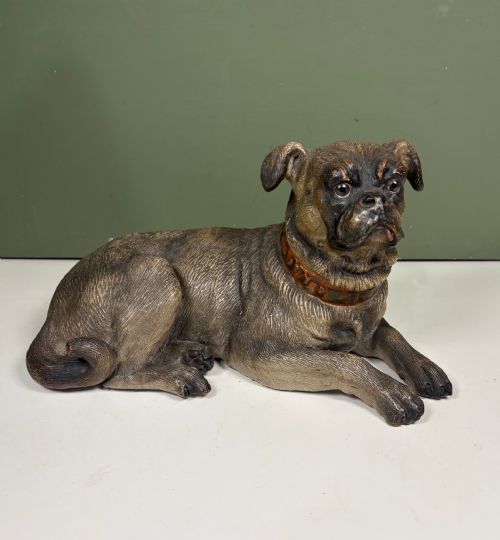
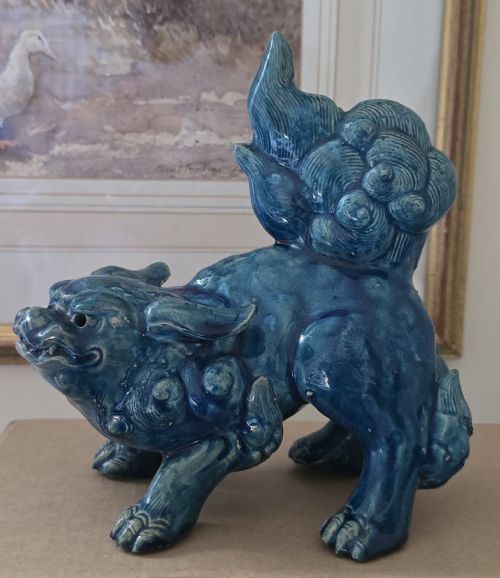


Glazed Ceramic Dog Sculpture
These glazed ceramic dog sculpture pieces bring character to a room, spanning periods from the early nineteenth century to the mid twentieth.
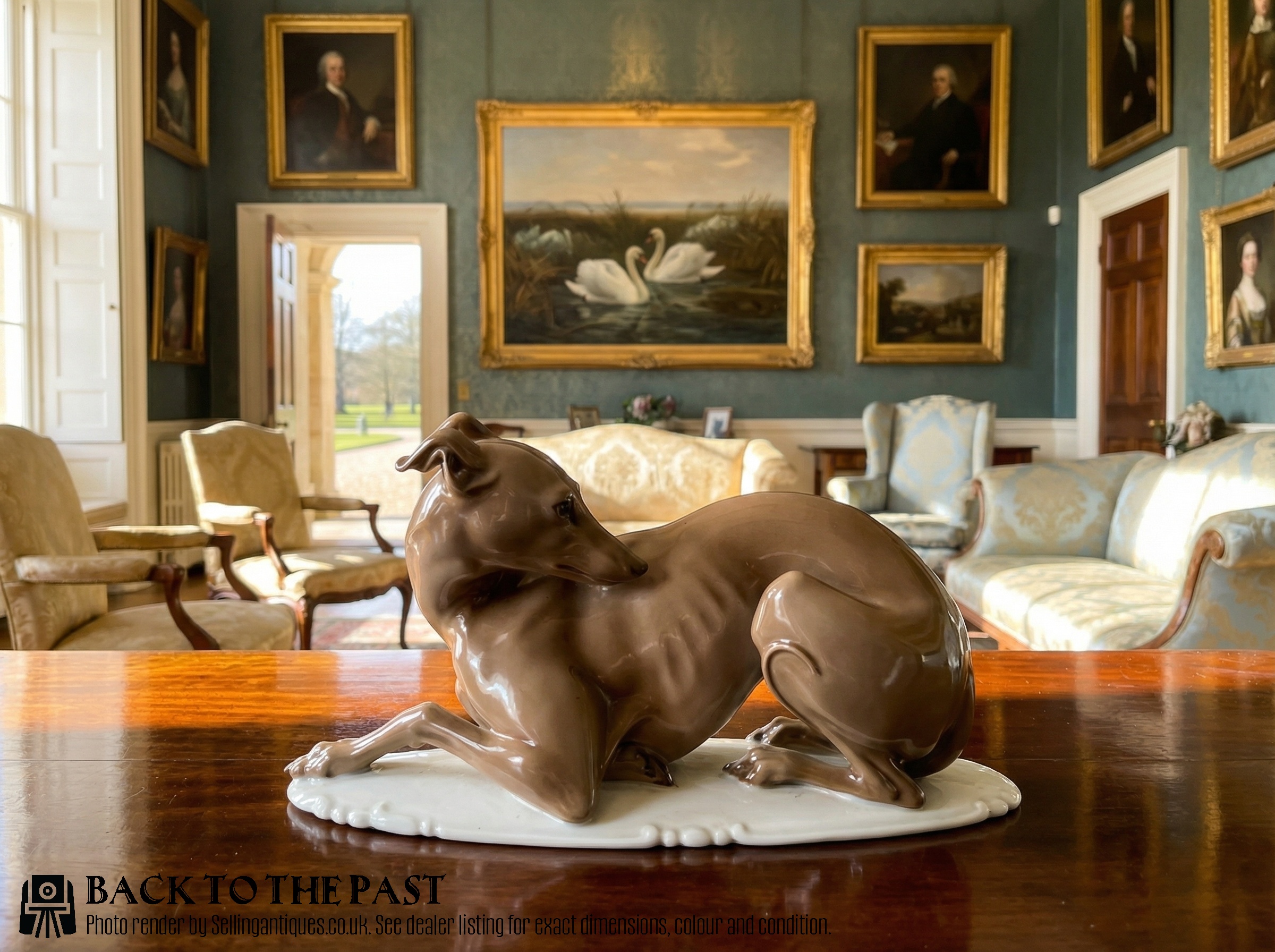
Glazed Ceramic Dog Sculpture
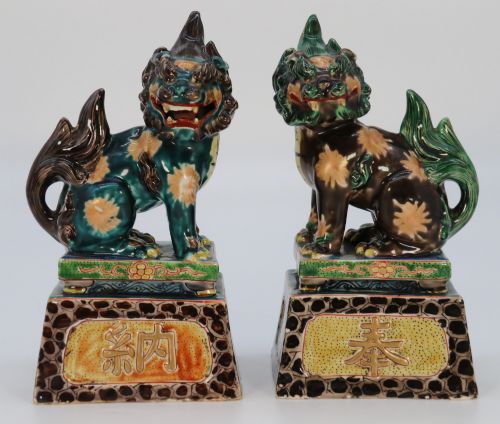
When you search for a glazed ceramic dog sculpture, you are looking at figures that range from European pottery hounds and pugs to Asian porcelain foo dogs and Shishi figures. These objects serve primarily as decorative ornaments and figurines for domestic display, capturing animals in seated, standing or recumbent postures.
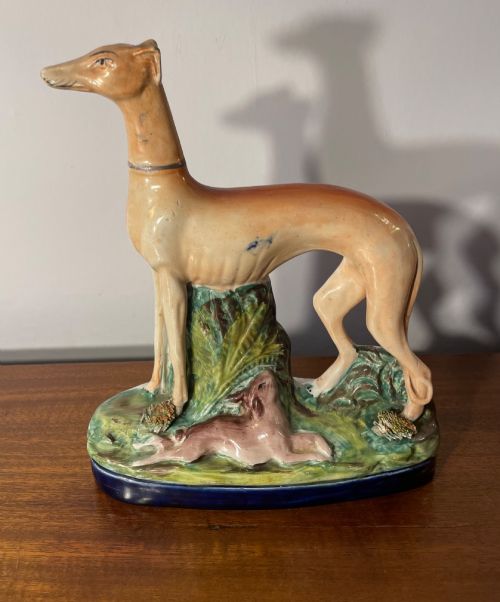
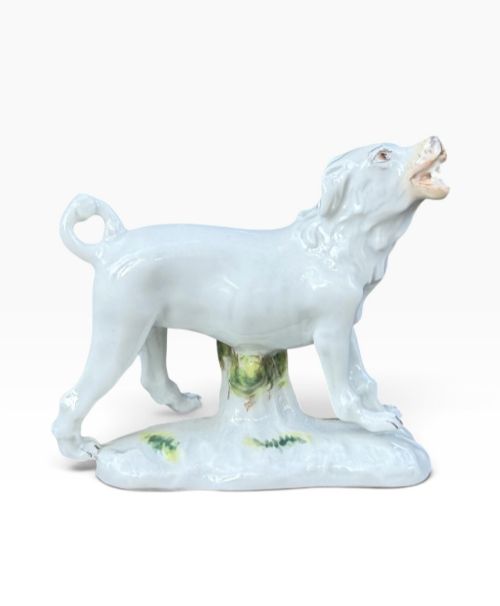
You are most likely to meet Victorian Staffordshire pottery pairs, German porcelain hounds, and Japanese Meiji period examples rendered in Kutani porcelain or turquoise glaze. The forms span individual hounds and pugs alongside groups such as hounds chasing hares or sets of puppies.
The selection encompasses diverse regional traditions, from Italian Majolica dogs to Chinese Qing period enamelled figures. Each piece reflects the specific aesthetic of its origin, whether European domestic portraiture of pets or traditional temple guardian iconography.
How they were made
Firing techniques varied according to the medium, with high-fired porcelain yielding durable, resonant bodies and earthenware requiring lower temperatures beneath heavy lead glazes. Artisans modelled the clay by hand or in moulds before painting intricate details by brush.
Listings feature pieces spanning multiple centuries, utilising materials from porcelain and earthenware to lead glaze and gold leaf across diverse international traditions.
What varies in quality
Quality reveals itself in the modelling of the animal anatomy and the expression captured in the face, distinguishing lively portraiture from stiff execution. Crispness in the rendering of fur, paws and accessories indicates a higher grade of craftsmanship.
The application and depth of the glaze or enamel work set superior pieces apart, showing controlled pooling and vibrant colour rather than flat or muddy surfaces. Preservation of original gilding and enamel details further defines the standard of the piece.
Meissen·Thomas Parr·Rosenthal
The Glazed Ceramic Dog Sculpture Glossary
- Glaze
- A vitreous coating fused to ceramic surfaces by heat to provide colour, pattern and a waterproof finish. It gives these sculptures their characteristic shine.
- Earthenware
- Porous pottery fired at lower temperatures, commonly found in nineteenth-century Staffordshire figures. It requires a glaze to hold liquids and achieve a smooth exterior.
- Porcelain
- A dense, vitrified ceramic made from kaolin, fired at high temperatures until semi-translucent. It allows for finer detail and greater durability than standard pottery.
- Shishi
- A mythical lion dog or Buddhist guardian figure originating in Asian art. These ceramic sculptures often feature turquoise glazes or intricate Kutani porcelain detailing.
- Enamel
- Opaque glass-like pigments applied over fired ceramic bodies and fused in a secondary kiln. They provide the brilliant surface colours seen on Chinese and European figures.
Glazed Ceramic Dog Sculpture: Frequently Asked Questions
How do I date a ceramic dog?
Dating relies on stylistic markers, the type of ceramic body, and the characteristics of the glaze used by the pottery. Victorian pieces often show distinct crazing and hand-painted earthen bases.
Later twentieth-century examples display more uniform porcelain bodies and mechanical manufacturing traces. Comparing the piece to known factory standards helps narrow the decade of production.
Where were these dog figures displayed?
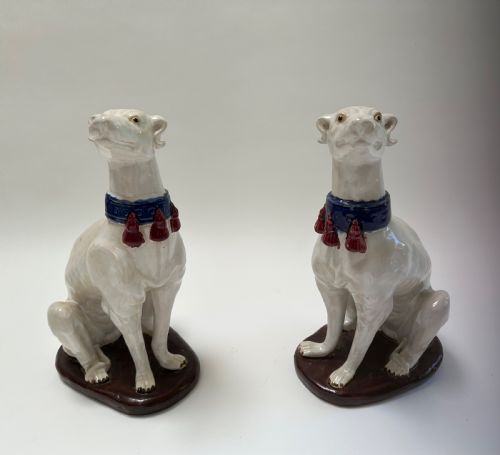
Historically, these figures stood on mantelpieces, sideboards, and parlour tables as decorative ornaments. Pairs of dogs were frequently arranged symmetrically at either end of a shelf.
Today, they function as tabletop accents or cabinet display pieces in living spaces and studies. Their varied sizes allow them to fit easily onto bookshelves or occasional tables.
What is the difference between a hound and a foo dog?
European hound figures, such as those from Staffordshire or Meissen, represent real hunting dogs and domestic pets like pugs and greyhounds. Their forms mimic actual canine anatomy and sporting history.
Foo dogs, or Shishi figures, are mythical Asian guardian lions rooted in Buddhist tradition. They feature stylized manues, fierce expressions, and symbolic attributes rather than realistic dog traits.
How do I care for glazed ceramic sculptures?
Dust the surface regularly with a soft, dry brush to prevent dirt accumulation in the crevices of the glaze. Avoid using harsh chemical cleaners or abrasive cloths that might damage enamel details or gold leaf.
Keep the sculptures away from direct sunlight and areas of high moisture fluctuation to preserve the ceramic body. Handle them firmly by the base rather than protruding ears or tails.