
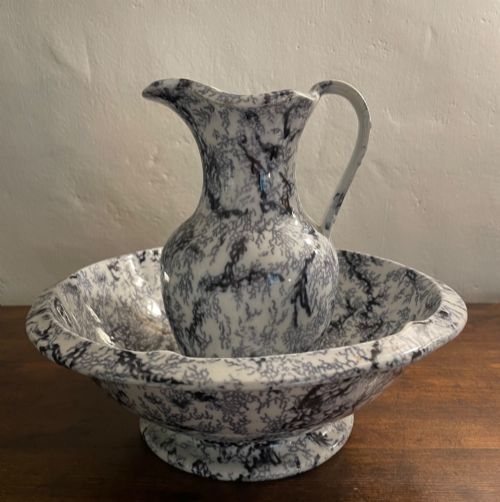
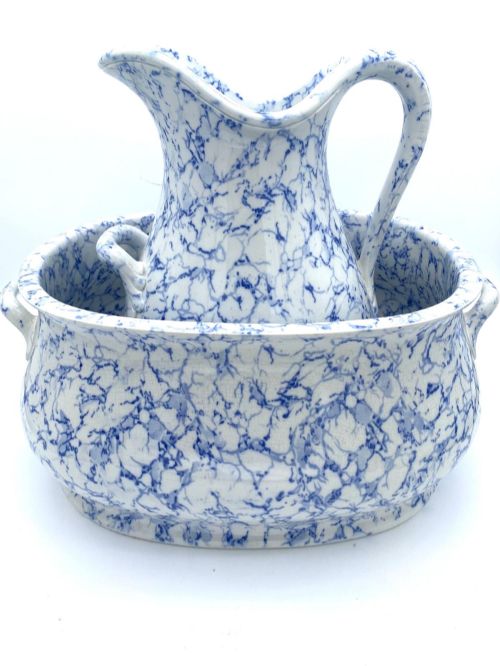
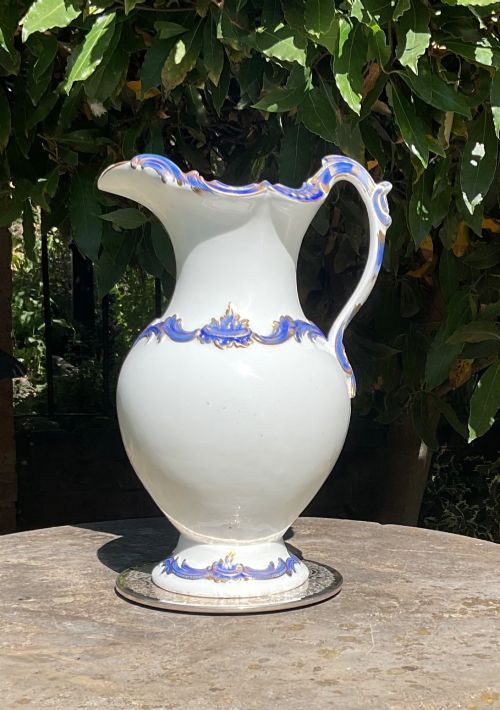
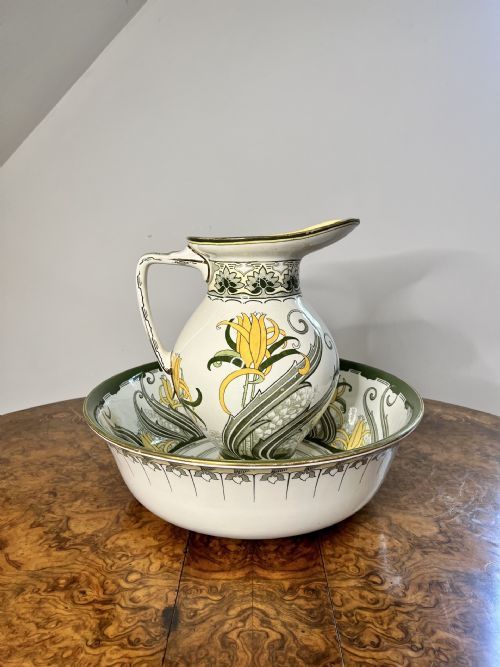


Antique Pitcher and Basin
These antique pitcher and basin sets are functional washing vessels designed for the bedroom before plumbed bathrooms arrived.

How They Were Made
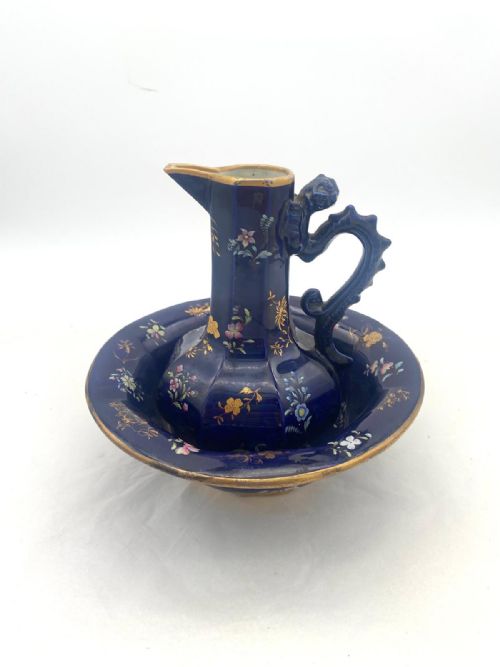
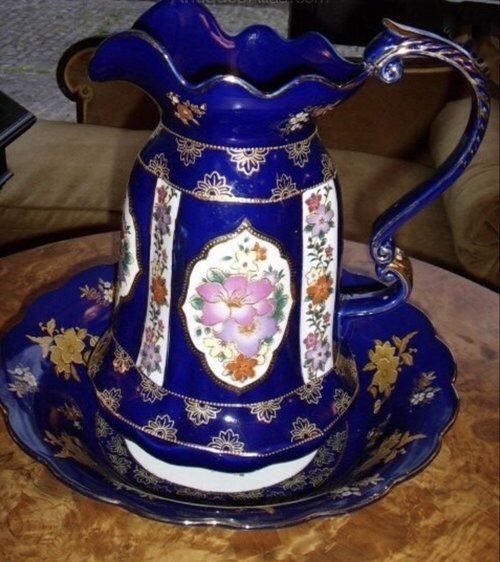
Potters shaped these earthenware, porcelain, and ironstone vessels using traditional moulding and throwing techniques before applying detailed cobalt blue glazes, enamel decoration, or transfer-printed patterns. Glass examples utilised blown cranberry glass forming methods, whilst metal sets involved silver plating and Sheffield plating techniques.
Firing ceramic pieces in kilns required careful temperature control to set the glaze and any added gold leaf or enamel details. Stoneware versions like those from Doulton Lambeth utilised salt glazing methods to achieve durable, impervious surfaces suitable for holding water.
What Varies In Quality
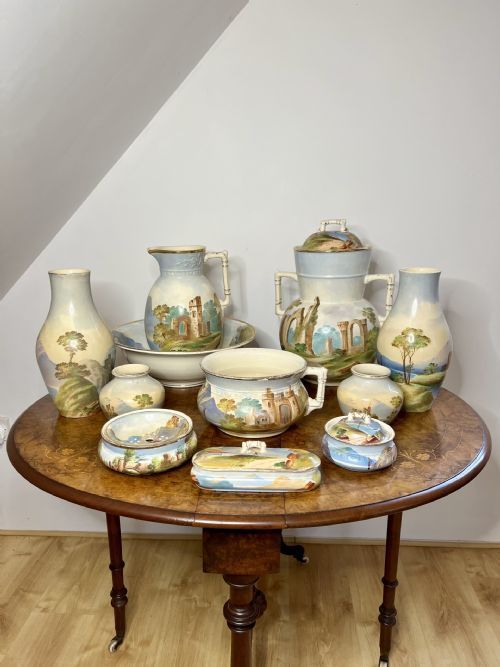
The standard of an antique pitcher and basin depends upon the crispness of the transfer printing or the skill in hand-painted floral and fruit designs. Superior examples display balanced proportions, clean glaze application without pooling or firing blemishes, and robust earthenware or porcelain bodies.
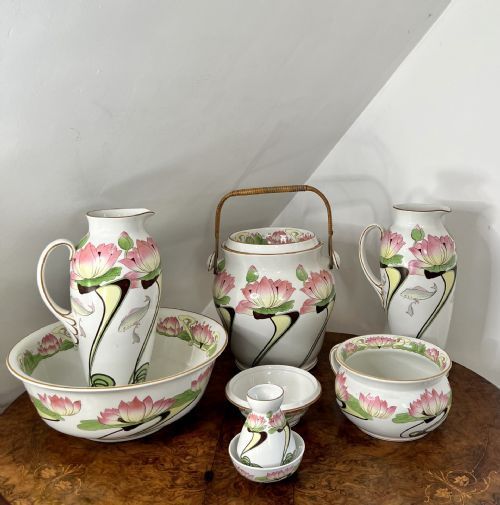
Piecetable completeness and maker attribution also influence the character of a set, as matching basins and jugs originating from established potteries retain stronger integrity. The complexity of the decorative style, such as intricate Art Nouveau moulding or Chinoiserie detailing, marks the distinction between standard utilitarian ware and finer chamber sets.
Minton·Doulon Burslem·Masons Ironstone·Doulton Lambeth·Shelley·Christofle·Robert Hennel
The Antique Pitcher and Basin Glossary
- Flow blue
- A cobalt blue transfer printing style where the colour blurred slightly into the white glaze during firing. This technique created a soft, misty effect popular on nineteenth-century ceramics.
- Ironstone
- A heavy, durable type of earthenware patented in the nineteenth century. It resists chipping better than standard porcelain while maintaining a refined white surface.
- Washstand
- A wooden piece of bedroom furniture specifically built to hold a water pitcher and basin. These stands often included drawer space and towel rails.
- Sheffield plate
- An early form of composite metal made by fusing a thin sheet of silver to a thicker copper base. It predates modern electroplating methods.
Antique Pitcher and Basin: Frequently Asked Questions
How were pitcher and basin sets used?
These sets stood on bedroom washstands to provide water for morning and evening washing. Servants filled the pitcher from kitchen supplies so residents could wash their hands and face without visiting a bathroom.
The deep basin caught the used water, which was later emptied into slop pails. Smaller matching vessels held soap or sponges to complete the bedside washing routine.
How do I date an antique wash set?
Dating relies on maker marks stamped or printed on the base of the ceramic pieces. Stylistic clues such as Art Nouveau curves or heavy Victorian ironstone shapes also point to specific decades.
Material choices help narrow the era, as cranberry glass and flow blue earthenware belong firmly to the nineteenth century. Edwardian sets often show lighter, simpler floral decorations compared to earlier heavy Victorian designs.
Are these sets still watertight?
Most ceramic and glass pitchers remain fully watertight and capable of holding liquid for display purposes. Glazed earthenware and porcelain formed dense bodies during kiln firing that prevent water from seeping through.
Older ironstone and glazed ceramic items withstand normal use, though hairline cracks from historical handling require careful treatment. Displaying them with fresh water poses no issue for sound pieces.
How do I clean an antique ceramic wash set?
Wash ceramic and glass pieces gently using warm water and mild liquid soap with a soft cloth. Avoid abrasive sponges or harsh chemical cleaners that can damage delicate enamel details or gold leaf.
Dry the pieces thoroughly with a lint-free towel to prevent water spots on the glaze. Metal-plated sets require specific silver cleaning agents applied sparingly to preserve the underlying plate.