
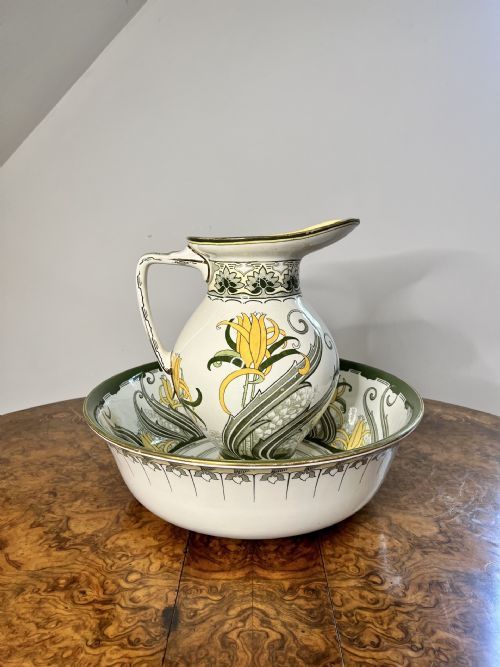
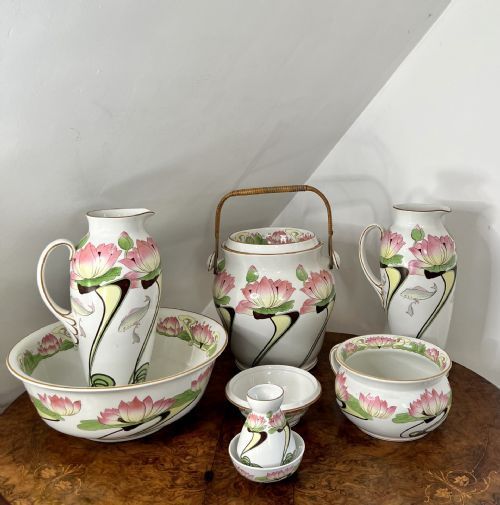
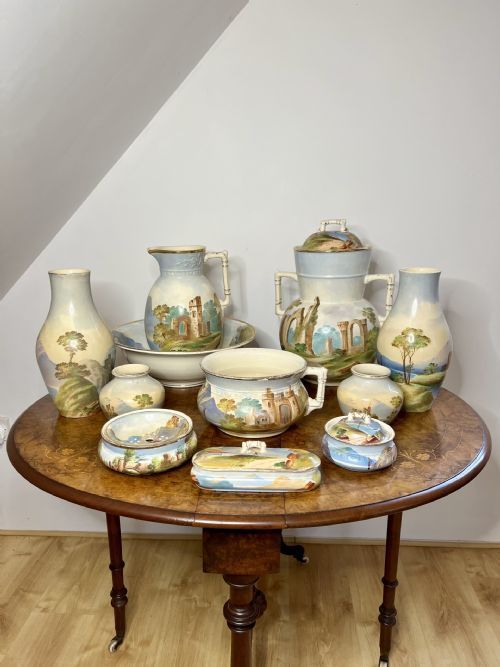


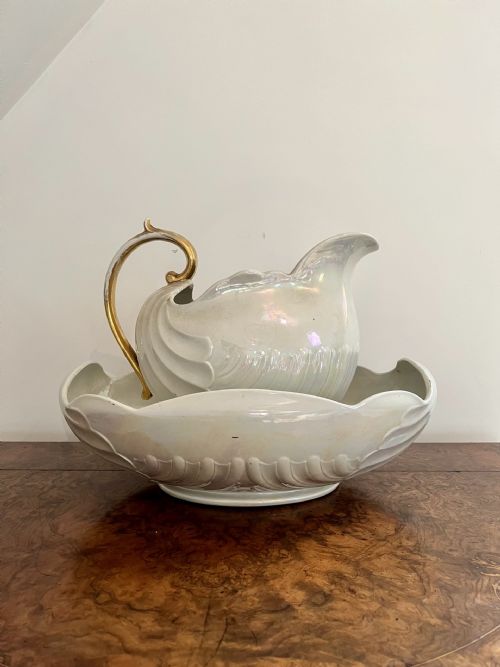


Edwardian Wash Pitcher Basin
These edwardian wash pitcher basin sets bring practical washroom history into the home as decorative vessels, shaped by the needs of early twentieth-century washstands.
Edwardian Wash Pitcher Basin
When you search for edwardian wash pitcher basin sets, you encounter matched pottery assemblies designed to hold water and receive waste before modern indoor plumbing dominated every bedroom. These functional sets include larger pitchers alongside deep basins, serving as complete washware equipment during the Edwardian period and extending into the 1910s and 1920s.
The most common forms on this page take shape as jug and bowl sets or washstand sets, often labelled as bathroom sets or wash basin sets. They originate predominantly from the Edwardian era, spanning production dates around 1900, 1910, and 1920, with stylistic influences touching upon Victorian and Art Nouveau tastes.
Pieces span standard domestic washware to specialist iterations like bentwood wash or shaving stands equipped with their own jug and bowl. Buyers select these items to anchor a traditional washroom aesthetic or to repurpose the generous basins and pitchers as decorative planters and umbrella stands.
How they were made
Makers shaped these vessels using earthenware, porcelain, and glazed ceramic, applying smooth glaze layers to seal the porous clay bodies against water. Some examples incorporate enamel or decorative accents in gold leaf, while others utilise cane elements within associated wash or shaving stands.
Firing techniques allowed potteries to achieve crisp blue and white patterns alongside broader Edwardian and Art Nouveau decorative motifs. Potters combined functional durability with refined surface finishing to withstand daily bedroom use while maintaining ornamental appeal.
Materials recorded across these wash sets include earthenware, porcelain, glazed ceramic, enamel, gold leaf, and cane.
What varies in quality
Quality rests upon the crispness of the ceramic moulding, the evenness of the glaze application, and the artistic control evident in transfer-printed or hand-painted patterns. Superior sets display balanced proportions between the pitcher and the basin, ensuring the spout and handle function practically.
Attribution also lifts certain examples, with named factories or potteries demonstrating finer potting technique and more ambitious decorative programmes compared to unmarked utilitarian wares.
Doulon Burslem·Medway·Mark Jones & Sons·Shelley
The Edwardian Wash Pitcher Basin Glossary
- Earthenware
- A porous pottery body fired at lower temperatures, requiring an impermeable glaze to hold water effectively. It forms the foundation for many utilitarian wash sets.
- Porcelain
- A dense, vitrified ceramic fired at high temperatures, known for its fine white body and resonant quality. It represents a more refined material choice among washware.
- Glaze
- A glassy coating fused to the ceramic surface during firing to render the vessel watertight and hygienic. Its finish can range from glossy to soft sheen.
- Washstand
- A dedicated wooden or metal piece of furniture built to hold the pitcher and basin securely on a top surface. Some configurations include lower shelves for slop buckets and chamber pots.
- Transfer printing
- A decorative technique where an engraved copper plate applies a design onto tissue paper, which is then transferred onto the unglazed or bisque ceramic body. This method enabled consistent blue and white patterns across large production runs.
Edwardian Wash Pitcher Basin: Frequently Asked Questions
How were these sets used originally?
Bedrooms lacked running water during the Edwardian period, so households relied on washstands holding a pitcher of fresh water and a large basin for morning ablutions. Water was poured into the bowl for washing hands and face, with wastewater collected separately.
Servants filled the pitchers daily as part of bedroom maintenance. The complete sets kept personal hygiene contained within private quarters before fitted bathrooms became standard.
Can I use these for fresh water today?
Many antique ceramic pitchers and basins remain physically capable of holding water, but older glazes can develop micro-cracks over time that absorb moisture. It is generally wiser to enjoy them as decorative objects rather than for daily functional use.
Using them to hold dried flowers, umbrellas, or as standalone decorative accents preserves the ceramic material. Modern cleaning products should also be avoided to protect the historic glaze surfaces.
How do I distinguish Edwardian sets from Victorian ones?
Edwardian wash sets typically lean towards lighter, airier aesthetics with simpler floral patterns or softer blue and white designs compared to heavier Victorian styles. Art Nouveau influences also appear frequently in Edwardian pieces, featuring whiplash curves and stylised floral motifs.
The transition around 1900 marked a shift toward cleaner lines in household ceramics. Surviving registry marks and factory names often help anchor pieces securely to this later period.
What should I look for in washstand sets?
A complete matching jug and bowl pairing is the primary consideration for collectors, as pitchers and basins frequently became separated over a century of use. The harmony of the decorative pattern across both pieces determines the visual integrity of the set.
Associated furniture like bentwood stands adds another layer of interest if the original fit accommodates the basin properly. Examining the base of each piece for factory stamps helps confirm originality.